
Let’s get honest for a moment. The best ways to learn guitar faster is FOCUS.
There are millions of guitar videos online.
Thousands of apps.
Endless PDFs filled with boxes, dots, and arrows.
And yet—most guitar players still feel lost the moment the backing track starts.
Their fingers hesitate.
Their solos feel mechanical.
Their fretboard knowledge collapses under pressure.
This isn’t a motivation problem.
It’s not a talent issue.
It’s a systems problem.
Most players don’t need more information.
They need fewer ideas, practiced more deeply, inside a structure that actually reflects how music works.
In this guide, I’ll walk you through the best ways to learn guitar—not as hacks or shortcuts, but as musical principles that build fluency, confidence, and feel. These are the same ideas I’ve seen work for beginners, intermediate players, weekend warriors, and lifelong musicians alike.

If you want the fretboard to feel smaller…
If you want your solos to sound intentional instead of accidental…
If you want to stop guessing and start hearing…
This is your roadmap.
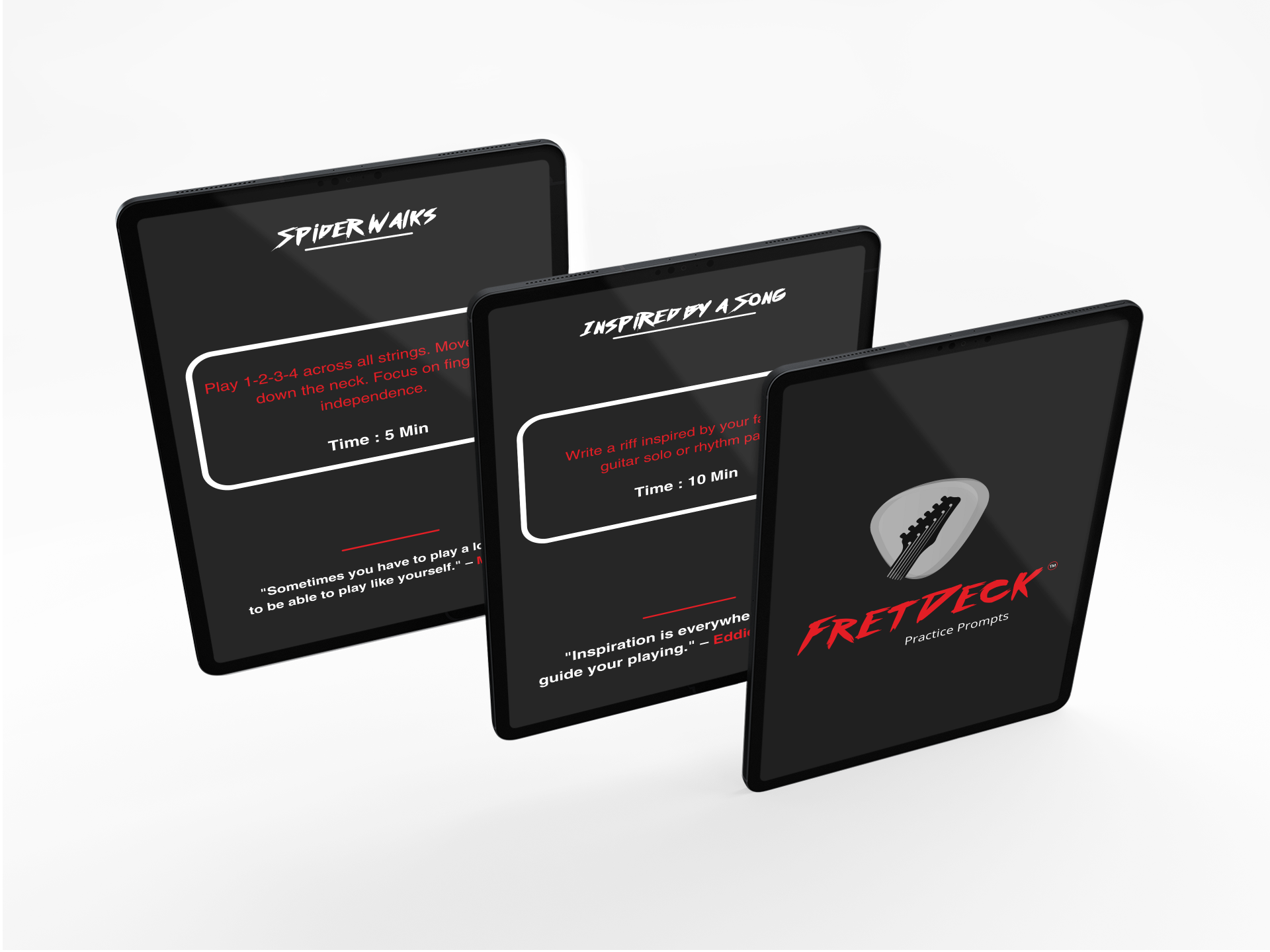
The Simple Guitar Practice System That Eliminates Guesswork
So You Can Stop Stalling… and Start Sounding Better Every Time You Pick Up the Guitar
👉 Get 52 Practice Prompts Now!
1. Learn Fewer Scales—But Learn Them Completely
One of the biggest myths in guitar education is that progress comes from collecting scales.
It doesn’t.
The fastest progress comes from living inside a small set of sounds until they feel familiar.
Start here:
- Minor Pentatonic – blues, rock, soul, grit
- Major Pentatonic – melody, sweetness, movement
- Blues Scale – tension, attitude, storytelling
These three scales cover more real music than most players realize.
If you can:
- play them in multiple keys
- hear them before you play them
- connect them across the neck
…you’re already ahead of the curve.
Everything else builds on this foundation.
The Simple Guitar Practice System That Eliminates Guesswork
So You Can Stop Stalling… and Start Sounding Better Every Time You Pick Up the Guitar
👉 Get 52 Practice Prompts Now!
2. Stop “Knowing” the Fretboard—Start Seeing It
Most players kind of know where notes live.
But when the moment comes to improvise, they freeze.
That’s because memorization alone doesn’t create fluency.
Fluency comes from pattern recognition, root awareness, and repetition with intent.
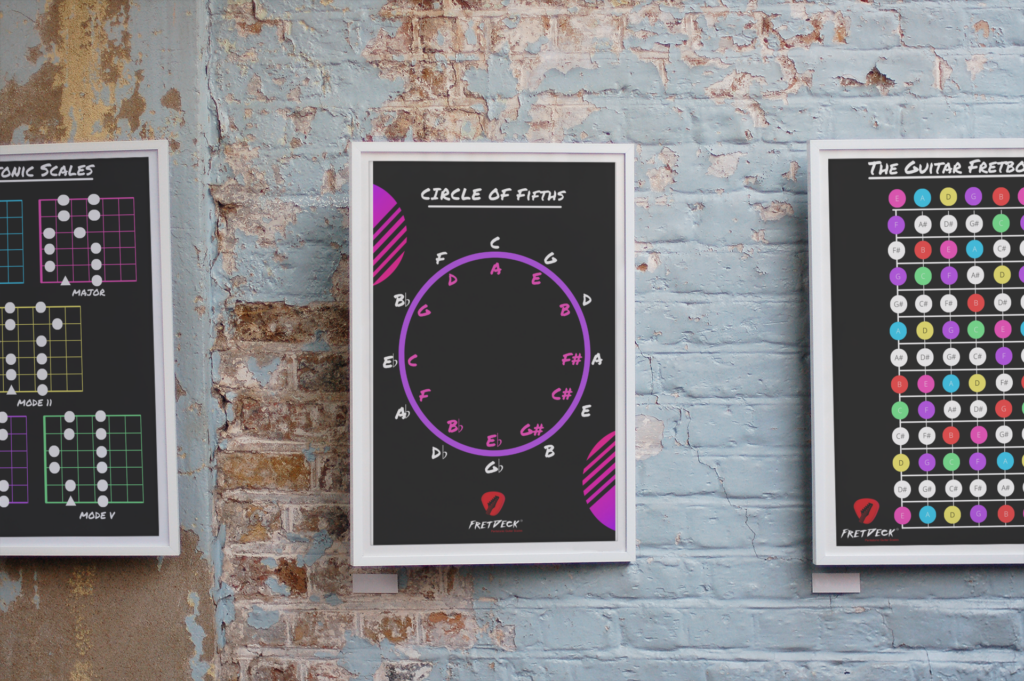
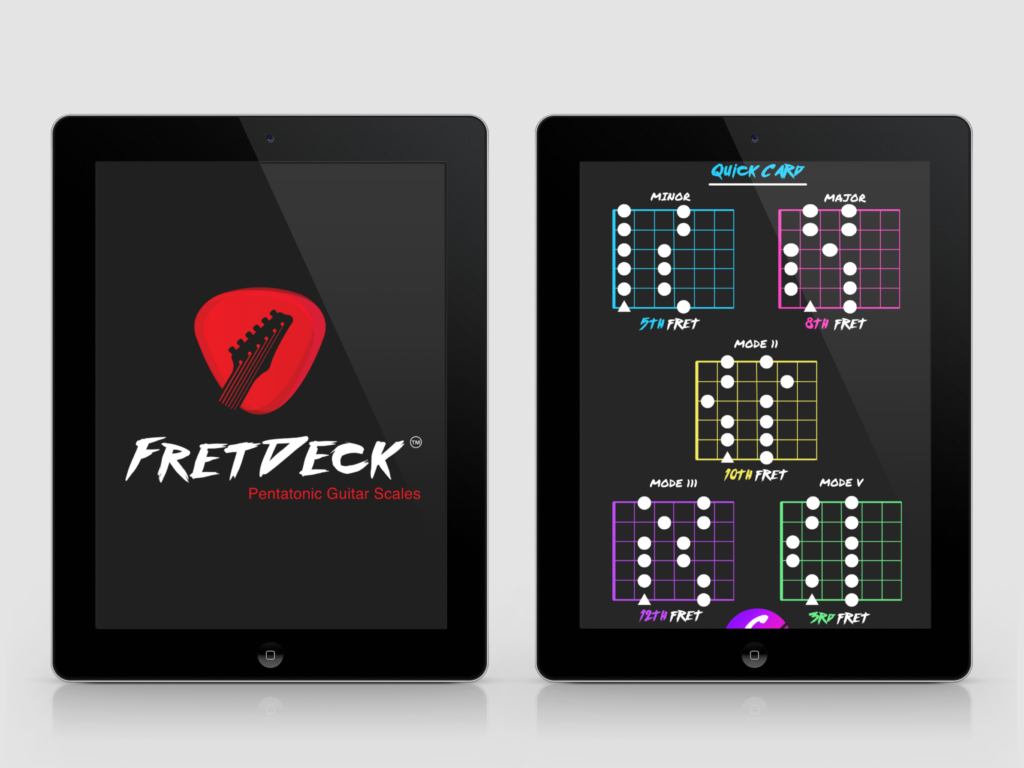
This is why I created FretDeck: Pentatonic Guitar Scales—a tactile, visual system that strips the fretboard down to what actually matters:
- clear root-note awareness
- one shape at a time
- no screen fatigue
- no overwhelm
Each card gives you a single musical idea—and asks you to do something musical with it.
If you want to preview the thinking behind the system, start with my 27 free guitar charts, which show how scales connect across keys without clutter.
👉 Download the 27 Free Guitar Charts here
(No fluff. Just clarity.)
3. Scales Don’t Mean Anything Until You Play Over Music
A scale without rhythm is just a finger exercise.
Music happens when notes interact with time, harmony, and emotion.
Here’s a simple practice that works:
- Pick one key (A minor is perfect)
- Limit yourself to five notes
- Play over a slow backing track
- Focus on space, not speed
Let silence do some of the work.
This is where phrasing is born.
4. Use One String to Learn the Whole Neck
If the fretboard feels like a grid of boxes, flatten it.
Choose one string.
Play a scale horizontally.
Listen to the distance between notes.
This does three powerful things:
- trains your ear
- strengthens interval awareness
- removes shape dependency
Suddenly, the neck feels like a line, not a maze.
5. Learn From Songs—Not Just Exercises
One of the best ways to learn guitar is to sit inside real music.
Choose songs with space and clarity:
- Wish You Were Here – Pink Floyd
- The Thrill Is Gone – B.B. King
- Come As You Are – Nirvana
Play along.
Absorb phrasing.
Notice what isn’t played.
Music teaches restraint better than any scale diagram.
6. Connect Scales to Chords (This Changes Everything)
Scales float.
Chords anchor.
When you connect the two, solos start to mean something.
Use the CAGED shapes:
- play the chord
- overlay the pentatonic
- target chord tones
This turns improvisation into intentional movement, not random motion.
7. Think in Phrases, Not Runs
Great solos feel conversational.
Try this:
- play a short phrase
- pause
- respond
Call and response creates narrative.
Silence is part of the melody.
8. Shrink Big Patterns Into Small Musical Ideas
Instead of practicing five positions, extract micro-licks.
Repeat them.
Transpose them.
Change the rhythm.
This is how vocabulary forms.
9. Sing What You Play (Even If You Hate Singing)
Your voice is your best teacher.
Sing the next note before you play it.
Then match it on the guitar.
This strengthens:
- ear-to-hand connection
- melodic intuition
- expressive control
Your solos will sound more human almost immediately.
10. Use the Blues Note With Intention
The blues scale adds one note—the ♭5.
Use it sparingly.
Slide into it.
Lean on it.
Let it resolve.
Tension only works if release follows.
11. Practice With Prompts, Not Just Time Blocks
Mindless repetition stalls progress.
Targeted prompts accelerate it.
This is the philosophy behind FretDeck and the free charts:
- one idea
- one mission
- one musical outcome
Structure creates freedom.
12. Learn Guitar With Other Humans
You grow faster in community.
Inside Guitar Freaks Hangout, players share:
- riffs
- backing tracks
- progress videos
- real feedback
Music is a shared language.
Practice doesn’t have to be lonely.
Final Thoughts: best ways to learn guitar
The best ways to learn guitar aren’t complicated.
They’re focused.
- Fewer ideas
- More intention
- Real music
- Clear systems
You don’t need another app.
You need clarity, connection, and tools that respect your attention.
👉 Learn Guitar Scales Fast (Without Memorizing a Million Shapes)
https://guitarfreaksblog.com/learn-guitar-scales-fast-without-memorizing-a-million-shapes/
👉 JustinGuitar – Structured Lessons for Guitarists
https://www.justinguitar.com/
The Simple Guitar Practice System That Eliminates Guesswork
So You Can Stop Stalling… and Start Sounding Better Every Time You Pick Up the Guitar
👉 Get 52 Practice Prompts Now!
Related posts: