
There are so many notes on the guitar, and just as many possibilities for how and where to play them. The fretboard can seem like a maze. Six strings. Twenty-two frets (give or take). Dozens of scale positions. So how do you make sense of it? You start by learning guitar fretboard scales.
Whether you’re jamming to blues licks, building jazz lines, or just noodling through a solo, knowing your scales isn’t just helpful—it’s transformative. But we’re not talking about mindlessly running up and down patterns. We’re talking about internalizing the fretboard through scale-based visualization, creative drills, and smart repetition that builds long-term musical fluency.
Let’s break it all down—string by string, shape by shape.
What Are Guitar Fretboard Scales?
A guitar fretboard scale is a visual and physical representation of a sequence of notes that follow a specific pattern of intervals. In plain speak: it’s the road map your fingers follow when soloing, writing riffs, or exploring chords.
Instead of thinking of scales as abstract theory, imagine them as patterns that live across your fretboard—patterns you can slide, stretch, shrink, flip, and rearrange. Every key. Every string. Every position.
That’s the magic of fretboard scales.
Why Learn Guitar Fretboard Scales?
Because it connects everything:

- 🎸 Chord tones become landing zones.
- 🎶 Licks become language.
- 🧠 Your brain starts seeing patterns instead of notes.
The more you learn to visualize scales, the more the neck of your guitar becomes a playground—one where you’re never lost, no matter what key you’re in.
And this isn’t about memorizing 100 shapes. It’s about understanding movement. Let’s start mapping the fretboard with intention.
Download The FretDeck & Pentatonic Secrets Course!
Download Our Course
Step 1: Choose a Scale. Stay in One Position.
Let’s start with the most universal scale of all: the minor pentatonic.
Here’s the A minor pentatonic in 5th position (5th fret of the low E string):
luaCopyEdite|-----------------------------5--8--
B|-----------------------5--8--------
G|-----------------5--7--------------
D|-----------5--7--------------------
A|-----5--7--------------------------
E|--5--8-----------------------------
That’s it. Just five notes repeated across the strings: A, C, D, E, G.
Now the game begins:
- Say each note name out loud as you play.
- Visualize where the root notes live (A).
- Try it ascending, then descending.
- Play in quarter notes with a metronome.
This is where the learning gets locked in. You’re not just “practicing”—you’re teaching your brain to see the fretboard.
Step 2: Move the Scale Horizontally
Once you’ve nailed a shape in one spot, it’s time to move sideways.
Try this:
- Take just string 1 (high E) and play the A minor pentatonic scale horizontally from fret 5 up to fret 17.
- Say each note aloud as you play it.
- Then do the same for string 6 (low E).
This exercise is gold. Why?
Because it connects the vertical shapes (box patterns) to the horizontal scale across the neck. And it builds visual fluency—the superpower of great guitarists.
Step 3: Map the Fretboard Using the Circle of 4ths
Let’s throw in a powerful visualization method: the Circle of 4ths.
Instead of jumping randomly between notes or keys, follow the natural flow of music by moving through this order:
C → F → Bb → Eb → Ab → Db → Gb → B → E → A → D → G
Here’s how to practice:
- Pick a single string.
- Start on C.
- Play through the circle on that string.
- Say each note out loud as you go.
Repeat this for every string.
This method forces your brain to link note names to fret positions—not just scale shapes. And over time, it builds what every guitarist wants:
👉 Fretboard freedom.
Step 4: Add Intervals to the Mix
Once you know where the notes are, you can begin to understand how they relate.
For example, if you start on E at the 7th fret of the A string, here’s how you can find ascending intervals:
- Minor 2nd: 8th fret
- Major 2nd: 9th fret
- Minor 3rd: 10th fret
- Major 3rd: 11th fret
- Perfect 4th: 12th fret
- … and so on.
You don’t need to rush. This is about building interval awareness. Try saying things like:
“From E, the minor 3rd is G.”
Then play it. Say it. Feel it.
This is the foundation of understanding chords, arpeggios, and eventually jazz harmony.
Step 5: Apply Scales to Chord Shapes
Let’s say you just learned this F chord in open position:
luaCopyEdite|--1--
B|--1--
G|--2--
D|--3--
A|--x--
E|--x--
The root note is F (1st fret of the high E string and 3rd fret of the D string).
Now try this:
- Find all the F notes across the fretboard.
- Use your pentatonic scale rooted on F to play around the chord.
- Slide the same shape up the neck to A, C, or E♭—wherever you want to explore.
The fretboard isn’t static. It’s alive. Once you start playing scales around chord shapes, you’re truly improvising.
Practice Prompts
Here are a few daily scale prompts to build muscle memory and visualization:
- 🔁 Play every minor pentatonic position in the key of C.
- 🧭 Use only one string and play the C major scale from fret 1 to fret 20.
- 💬 Say the scale degrees out loud: 1, 2, 3, 4, 5, 6, 7, 1.
- ⏱ Use a metronome. Start at 60 bpm. Go slow. Stay accurate.
- 🎯 Play a note. Find the same note on all six strings without moving your eyes.
These routines lock in more than finger dexterity—they help you feel the fretboard.
The FretDeck Method (Your Secret Weapon)
Want to supercharge your learning?
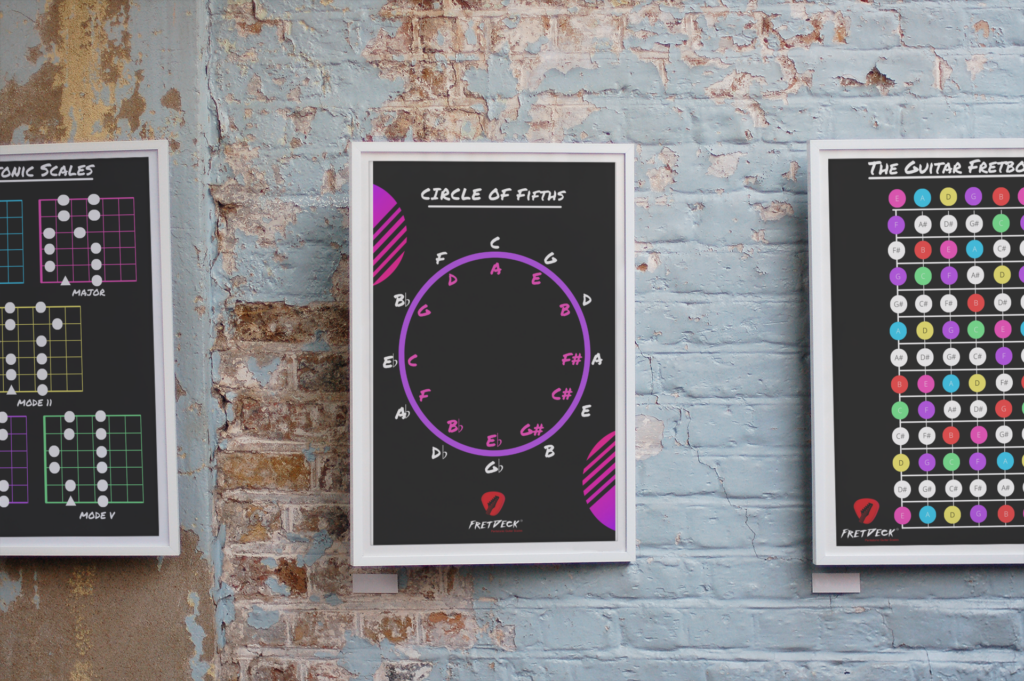
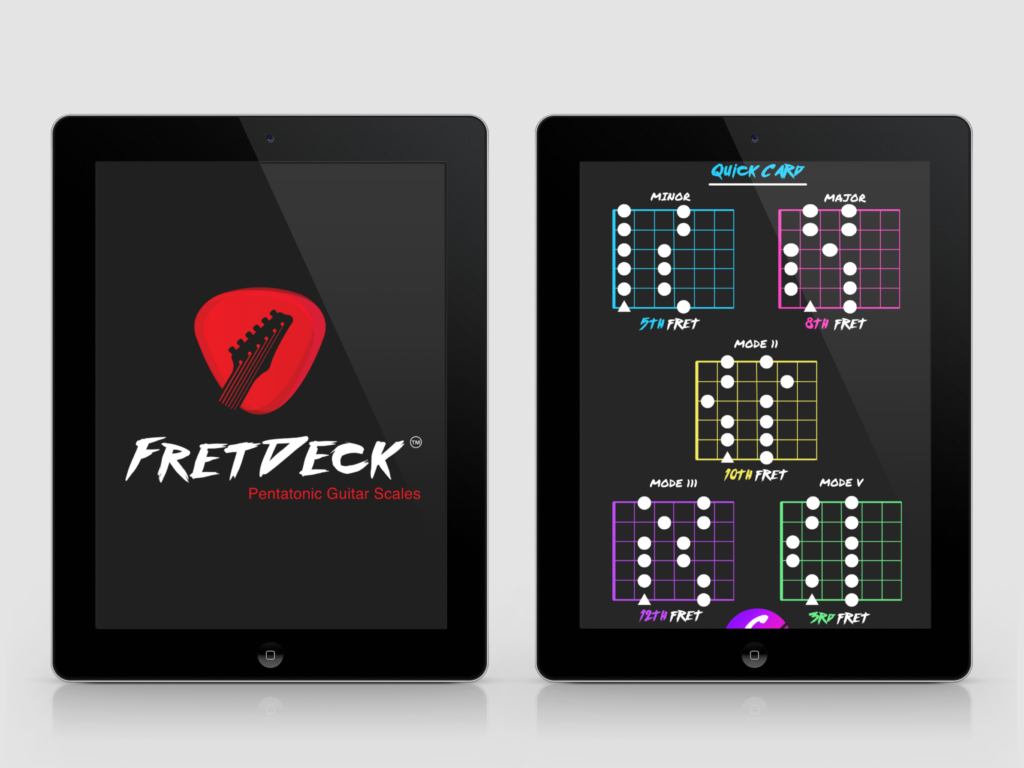
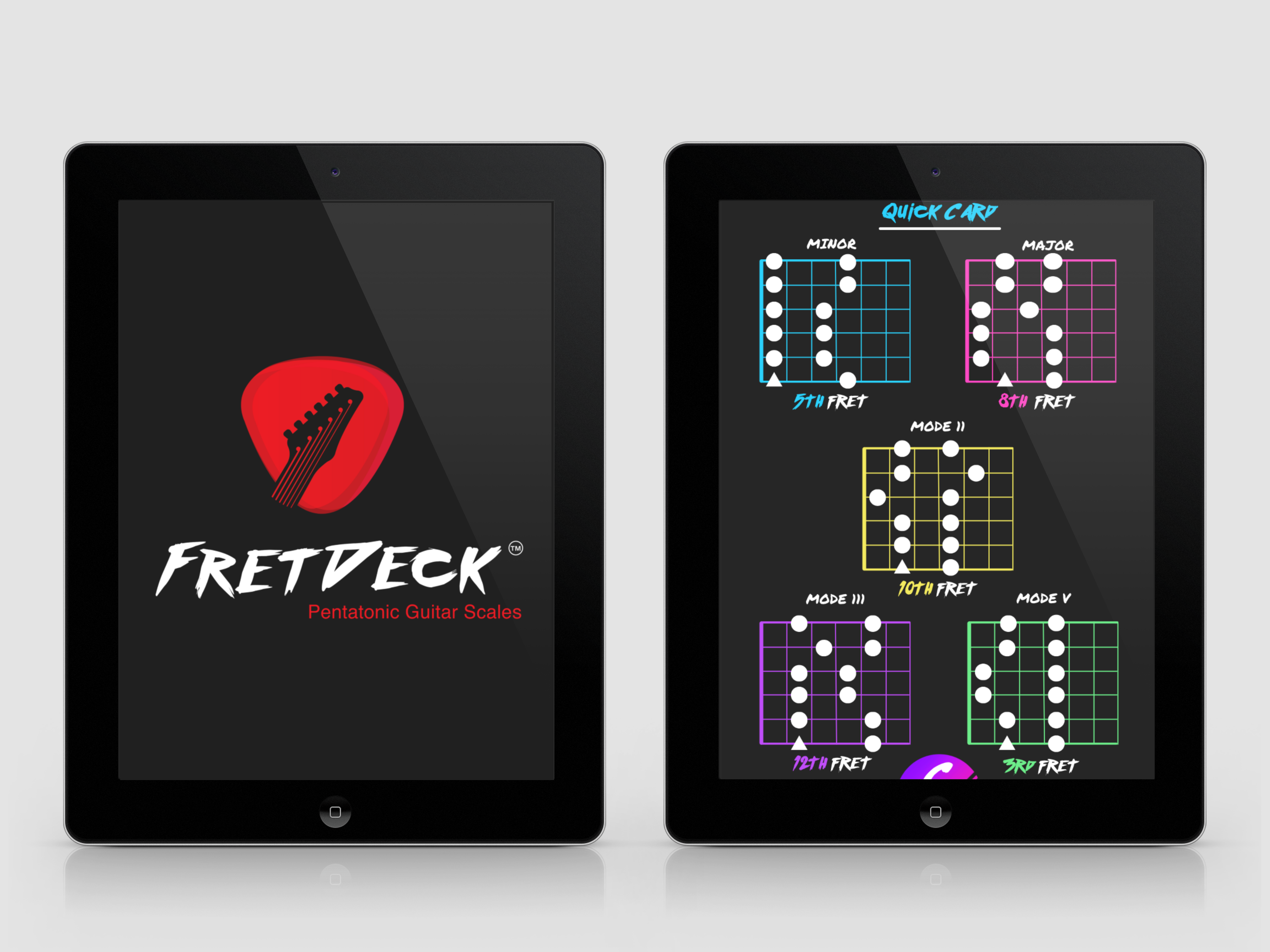
Check out FretDeck. It’s a hands-on tool designed to help guitarists visualize scales, patterns, and fretboard notes using a deck of movable guitar learning cards.
Each card shows:
- A fretboard diagram
- The scale type
- The mode
- The root note location
It’s like having a portable fretboard coach in your back pocket.
You can shuffle it. Quiz yourself. Practice in bursts. FretDeck helps you memorize all 60 pentatonic and major scales in every key—without burning out or getting bored.
Ready to take it up a notch? Join the Guitar Freaks Hangout Discord. Our community is filled with guitar learners, teachers, and pros who share riffs, feedback, and weekly challenges to keep you growing.
Download The FretDeck & Pentatonic Secrets Course!
Download Our Course
Related Posts You’ll Love
- Master the Five Pentatonic Scale Shapes
- The Power of Triads on Guitar
- Learn Guitar Chords in Every Key
And here’s a great external reference on fretboard mastery from Ultimate Guitar’s lesson database.
Final Words: Fretboard Mastery Isn’t About Speed
It’s about seeing.
When you look at your guitar and see intervals, root notes, and scale degrees, you’re not just playing anymore—you’re composing in real time.
And it all starts with one thing: visualizing guitar fretboard scales.
So grab your guitar, lay out your FretDeck, pick a string, and get to work.
You’ve got this.
Join Guitar Freaks Hangout on Discord! 🎸
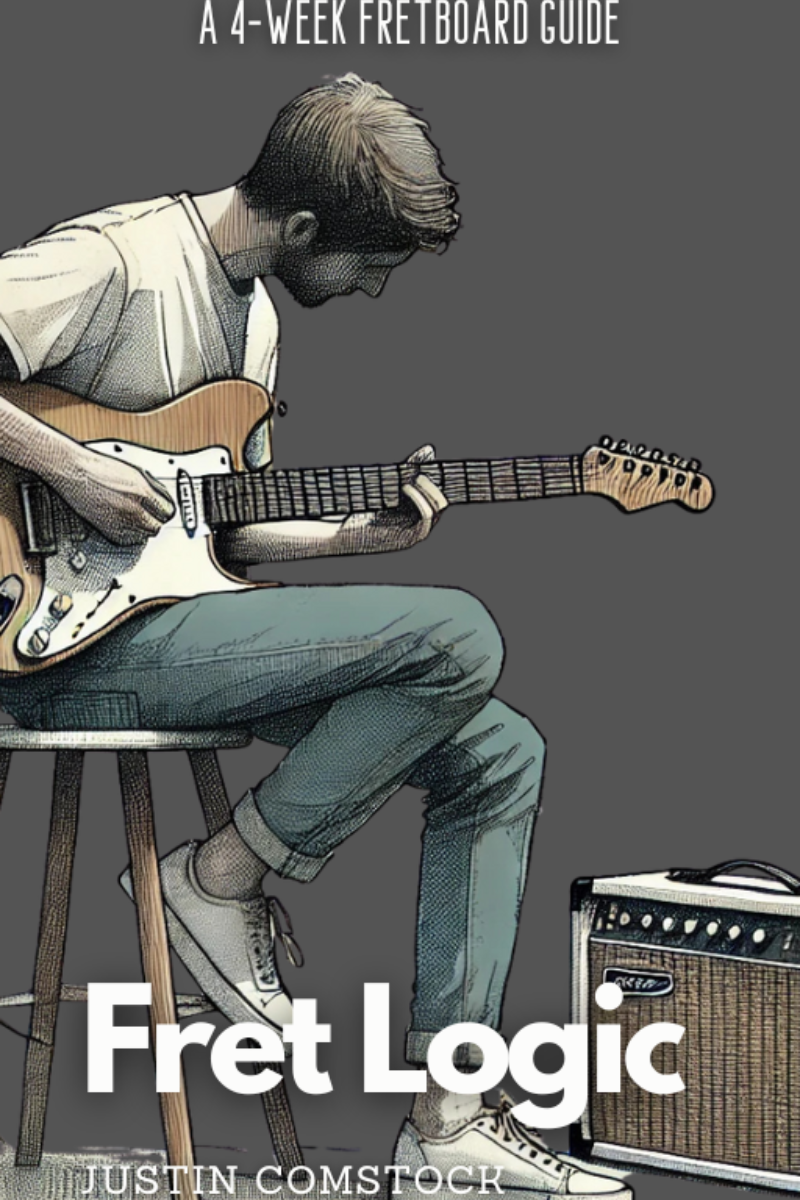
Get Fret Logic FREE!
Join the Guitar Freaks Hangout Discord and get exclusive access to my entire e-book, Fret Logic! Master the fretboard and elevate your solos with this comprehensive guide.
👉 Don’t miss out—join now and download your free copy!
Related posts: