

If you’ve ever thought, “I should probably understand modes on guitar by now,” you’re not alone.
Most guitarists memorize the seven modes — Ionian, Dorian, Phrygian, and the rest — and then freeze when it’s time to use them in a solo. The result? It sounds like a regular scale run… or worse, like you’re playing the wrong notes entirely.
But here’s the truth:
Modes aren’t mysterious — they’re moods.
They’re flavors you’ve already heard on your favorite records. Once you feel them, you’ll never play scales the same way again.
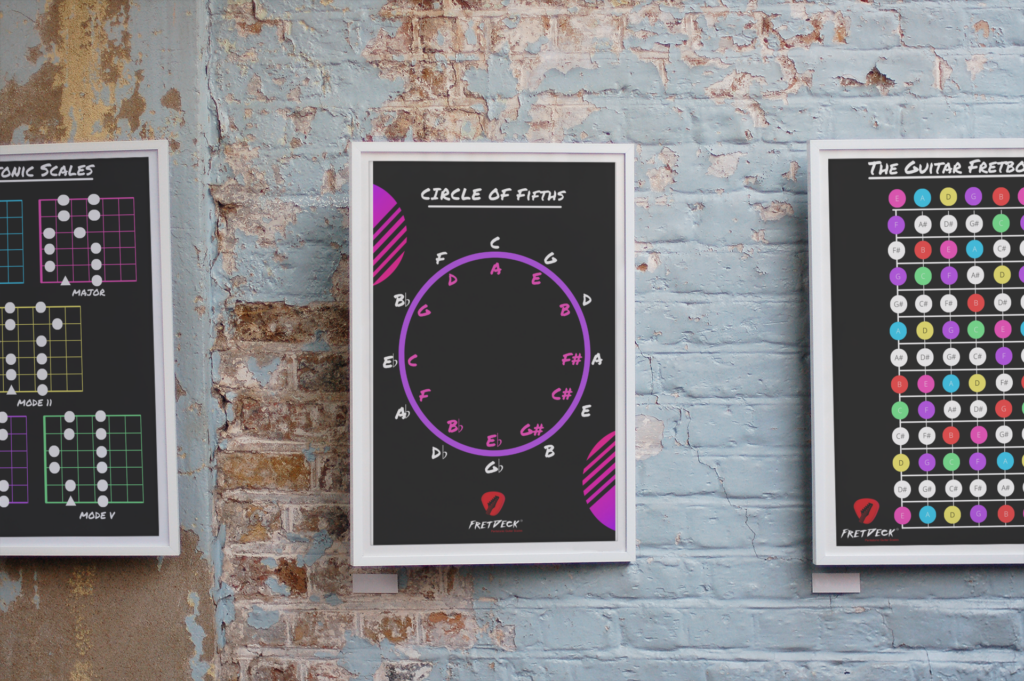
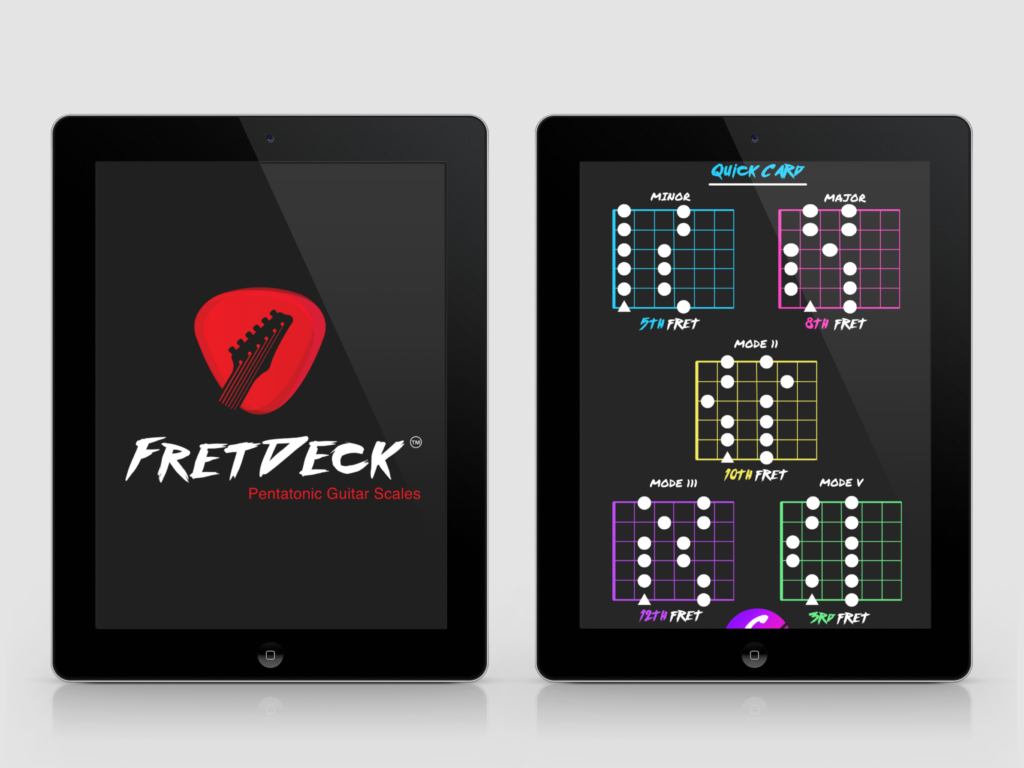
In this guide, you’ll learn what modes really are, how to hear them, and how tools like FretDeck™ make them visual, musical, and completely usable.
🎸 Join the Guitar Freaks Patreon
Get SoloCraft™ + FretDeck™ FREE when you join today.
You’ll unlock the full SoloCraft™ eBook and FretDeck™ Guitar Scales, your roadmap to fretboard mastery and melodic soloing.
Every Friday, I drop a brand-new video lesson so you’ll always have a focused weekly practice plan.
👉 Join now — grab your free copy today.
🎸 Join the Guitar Freaks Patreon!
Get SoloCraft™ E-Book & FretDeck™ FREE!
Join Guitar Freaks on Patreon and instantly unlock my full e-book SoloCraft & FretDeck™ Guitar Scales—your step-by-step guide to fretboard mastery and crafting soulful solos.
New video lesson drops every Friday so you’ve always got a fresh, focused practice plan for the week.
👉 Don’t miss out—join now and grab your free copy!

🎧 What Are Modes on Guitar, Really?
Here’s the biggest myth:
“Modes are just the major scale starting on a different note.”
Technically true. Musically useless.
What matters is which note feels like home — your tonal center.
- Play the C major scale but keep landing on A → you’re hearing A Aeolian (natural minor).
- Emphasize D instead → you’re hearing D Dorian.
Modes aren’t boxes on paper. They’re emotional centers your ear can recognize.
That’s where their magic starts.
🧠 How to Hear Modes Before You Memorize Them
Before you dive into patterns, train your ears.
Grab a D drone track on YouTube and try this:
- D Dorian: D, E, F, G, A, B, C
- D Aeolian: D, E, F, G, A, Bb, C
One note changes — B vs. Bb — but it shifts the entire mood.
- Dorian feels funky, hopeful.
- Aeolian feels moody, cinematic.
That’s how you internalize modes: not by diagrams, but by feeling the difference.
🎸 Why Most Guitarists Get Modes Wrong
Most players run through seven patterns and think they’re “doing modes.”
But unless the chords underneath match, you’re not really in that mode.
Example:
If the band’s in C major, and you play E Phrygian, it’ll sound off.
But if the band plays E minor and you emphasize F (the flat 2), that exotic, Spanish bite appears instantly.
Modes live inside the harmony.
Without the right chord context, they’re just scales.
🛠️ Modal Vamps: Your Secret Practice Weapon
Forget endless scale runs.
Practice over simple modal vamps — short, looping chord progressions built for each mode.
Try these:
- D Dorian: Dm7 → G7
- E Phrygian: Em → Fmaj7
- G Mixolydian: G7 → C
Play slowly.
Let the chords tell you which notes want to resolve, which ones want to hang.
That’s where the real learning happens.
🎯 How FretDeck™ Makes Modes On Guitar Simple
You already know pentatonic scales — and that’s the perfect starting point.
Take A Dorian for example:
- A minor pentatonic: A, C, D, E, G
- A Dorian: A, B, C, D, E, F#, G
Just add B and F# — boom, Dorian.
FretDeck™ shows you:
- Which modal notes to add to your pentatonic boxes
- How each mode overlaps visually on the fretboard
- How to connect modal positions across the neck
You’re not memorizing — you’re expanding what you already know.
👉 Join my Patreon today and get FretDeck™ + Pentatonic Secrets Course FREE.
Learn 60 pentatonic scales, 6 modal chord progressions, and how to solo anywhere on the neck without guessing.
This is your unfair advantage — but only if you take action.
Don’t wait another year to “get” modes.
✍️ Keep a “Mode of the Day” Journal
Make modes stick by writing what you hear and feel.
Every day, pick one mode and jot down:
- The chord vamp you used
- The notes that stood out
- The emotion it created
Example:
“Played G Mixolydian over G7 → C. Loved how the F note tugged against G — sounded bluesy, bright, alive.”
This simple journaling habit builds deep recall.
🎨 Tell a Story with Modal Shifts
The best solos move through modes to tell emotional stories.
Try this in A:
- Start in Aeolian for mood and mystery
- Shift to Dorian for a lift in energy
- Hit Phrygian for tension before resolving
Each mode is a new chapter.
FretDeck™ helps you visualize these transitions so you’re not guessing where to go next.
🤯 Quick Recap: How to Master Modes
- Hear each mode before memorizing it
- Practice with vamps, not just scales
- Expand your pentatonics into modal sounds
- Keep a “Mode of the Day” journal
- Use modal shifts to tell stories in your solos
🎸 Don’t Learn Modes On Guitar Alone
Join our Guitar Freaks Hangout Discord — a supportive community of guitarists trading licks, feedback, and modal experiments.
No egos. No theory snobs. Just players helping players.
👉 Join the Guitar Freaks Patreon today and you’ll get:
- Free FretDeck™ (digital edition)
- Free SoloCraft™ eBook (complete soloing guide)
- Weekly practice lessons every Friday
If you’re serious about mastering modes and unlocking your fretboard, this is the most fun, affordable way to do it.
Join now — grab your free copy today.
🎧 Further Reading
Internal: Learn Guitar Chords in the Key of C — the perfect companion for modal chord vamps.
External: Guitar World: Understanding Modes — practical examples of modes in action.
🎸 Join the Guitar Freaks Patreon!
Get SoloCraft™ E-Book & FretDeck™ FREE!
Join Guitar Freaks on Patreon and instantly unlock my full e-book SoloCraft & FretDeck™ Guitar Scales—your step-by-step guide to fretboard mastery and crafting soulful solos.
New video lesson drops every Friday so you’ve always got a fresh, focused practice plan for the week.
👉 Don’t miss out—join now and grab your free copy!
Related posts: