
If you’ve ever felt stuck memorizing scales, chords, and random YouTube lessons, what you’re missing isn’t talent — it’s a guitar learning framework.
Most guitar players don’t fail because they lack passion.
They fail because they were never shown how everything on the guitar connects.
So they end up doing what almost every guitarist does:
• Memorizing scale boxes
• Learning random riffs
• Watching endless lessons
• Practicing without a clear structure
And after months… or even years… they still feel like they’re wandering around the fretboard without a map.
I know this feeling because I lived it.
But the moment I discovered a guitar learning framework, everything changed.

Let me show you exactly what I mean.
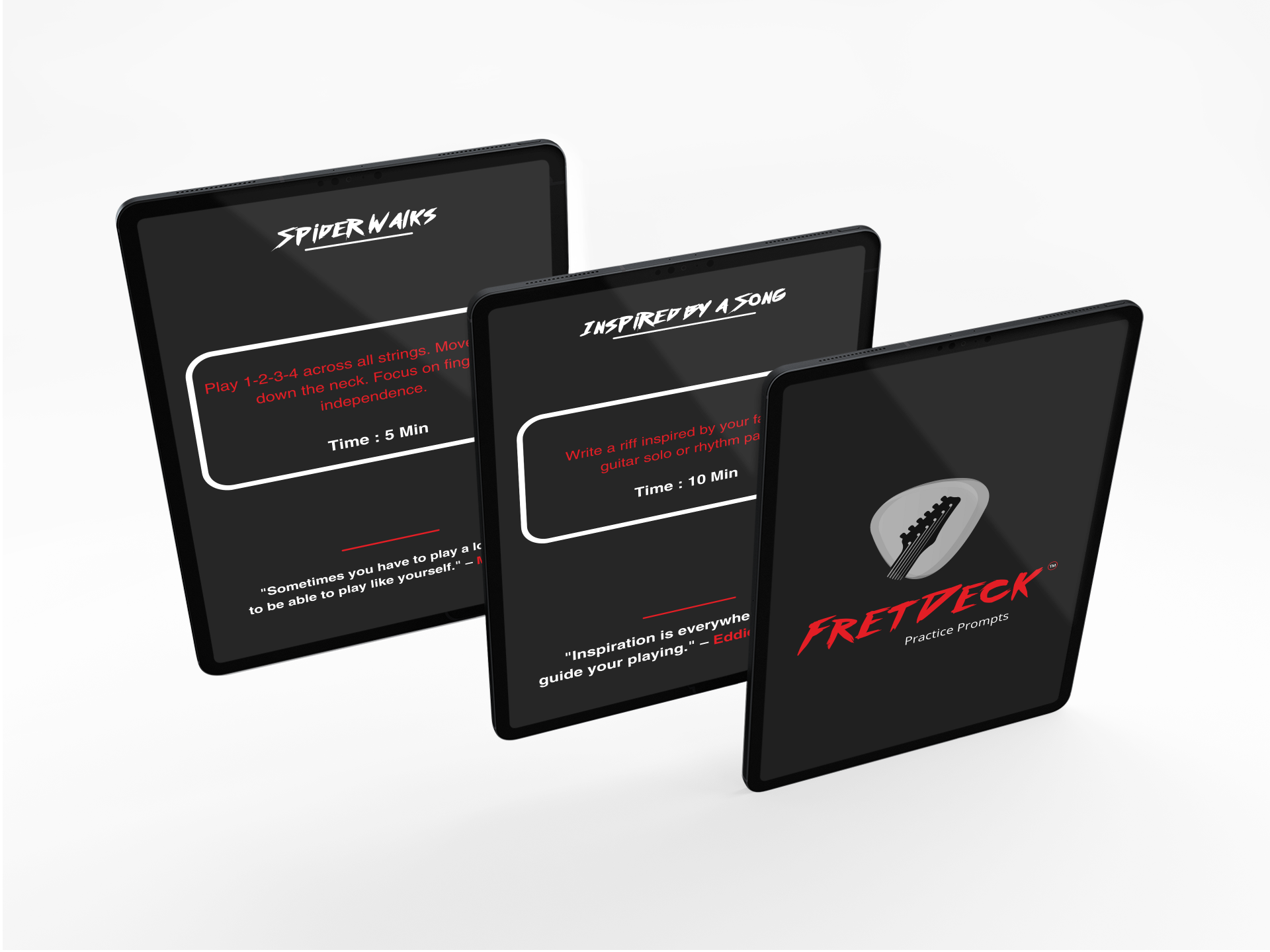
The Simple Guitar Practice System That Eliminates Guesswork
So You Can Stop Stalling… and Start Sounding Better Every Time You Pick Up the Guitar
👉 Get 52 Practice Prompts Now!
The Problem Most Guitar Players Face
When I was learning guitar, I would sit in front of my dad’s record player while classic rock albums spun in the background.
I’d practice the minor pentatonic scale over and over again.
I could play the shapes.
But something was missing.
I didn’t understand:
• how scales connected across the neck
• how chords related to scales
• how to actually make music with what I knew
So I did what most players do…
I learned more shapes.
More licks.
More lessons.
But none of it gave me a system.
It felt like learning thousands of puzzle pieces without ever seeing the picture on the box.
That’s when I realized something powerful.
Great guitar players don’t just practice.
They follow a guitar learning framework.
What Is a Guitar Learning Framework?
A guitar learning framework is a structured system that connects everything you learn on guitar.
Instead of random practice, you build skills in layers.
Think of it like this:
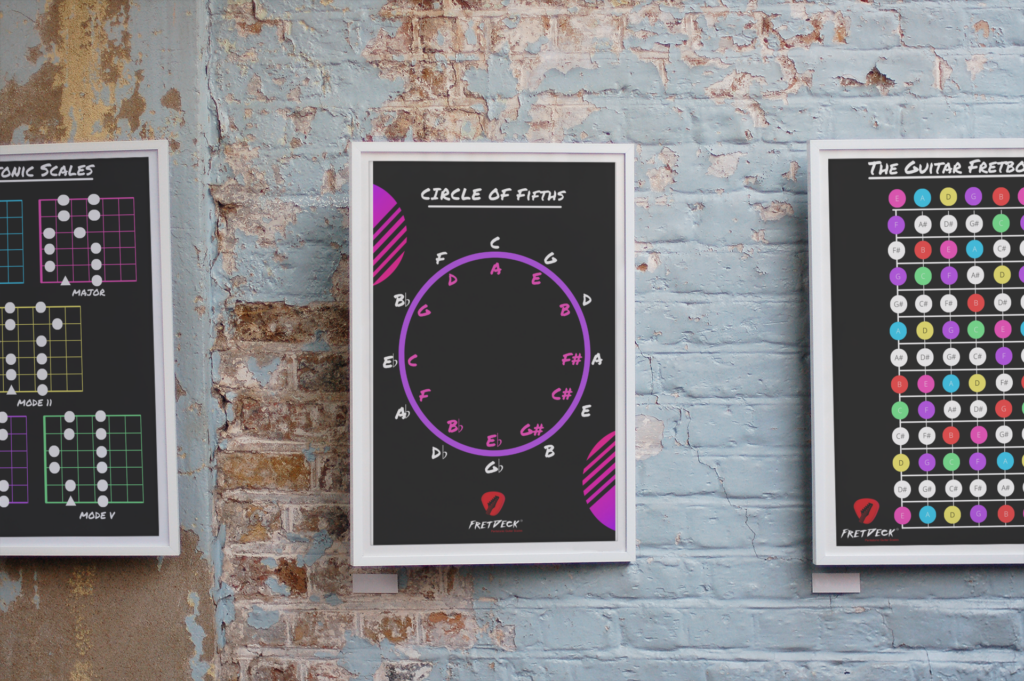
Layer 1 — The Map (Fretboard Understanding)
You learn how notes and shapes connect across the neck.
Layer 2 — The Language (Scales)
You understand how scale patterns work in multiple positions.
Layer 3 — The Structure (Chords)
You see how chords live inside scale shapes.
Layer 4 — The Expression (Improvisation)
You use scales, chords, and phrasing to create music.
Once these layers click together, the guitar stops feeling like 6 strings and 22 frets.
It starts feeling like a connected system.
The 4-Step Guitar Learning Framework
Here’s the simple framework I recommend to every guitarist.
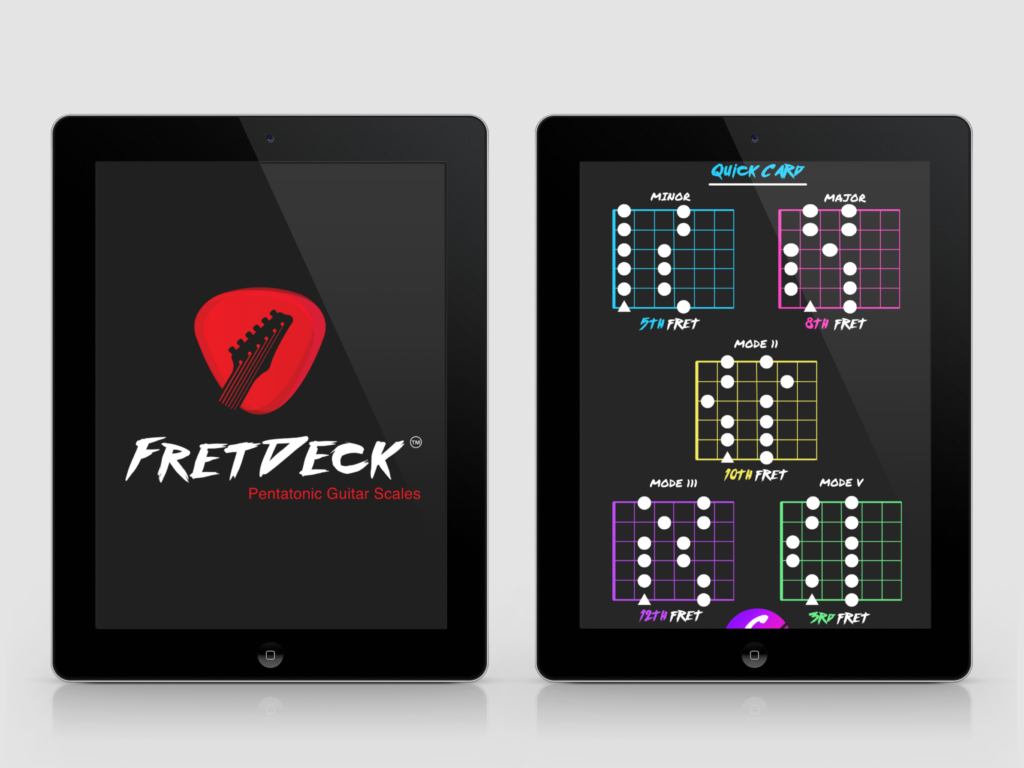
Step 1 — Master the Pentatonic Scale First
If there’s one scale every guitarist should learn deeply, it’s the pentatonic scale.
Why?
Because it appears in:
• blues
• rock
• country
• jazz
• soul
Instead of memorizing random shapes, focus on learning the five pentatonic positions and how they connect.
Once you see how these patterns move across the fretboard, the neck starts to make sense.
If you want to understand the theory behind scales, this guide from
Justin Guitar
is one of the best beginner resources available.
Step 2 — Connect Scales to Chords
This is where most guitar lessons stop — and why so many players feel stuck.
The real magic happens when you see that chords live inside scale patterns.
For example:
In the key of A minor:
Am → C → D → E
These chords exist inside the A minor pentatonic scale.
When you see this connection, improvising becomes easier because you’re no longer guessing notes.
You’re targeting chord tones.
Step 3 — Practice With Musical Prompts
One mistake guitar players make is practicing without direction.
They run scales.
They noodle.
But they don’t train their creativity.
That’s why I started using practice prompts.
Instead of asking:
“What should I practice?”
You get prompts like:
• Improvise using only 3 notes
• Connect two pentatonic shapes
• Build a melody around a triad
• Play a call-and-response phrase
These small creative challenges force your brain to think musically.
And over time, they build real improvisation skills.
The Simple Guitar Practice System That Eliminates Guesswork
So You Can Stop Stalling… and Start Sounding Better Every Time You Pick Up the Guitar
👉 Get 52 Practice Prompts Now!
The Practice Tool That Changed My Playing
Years ago I noticed something about my best practice sessions.
They were always simple and focused.
No screens.
No distractions.
Just a clear prompt and a guitar.
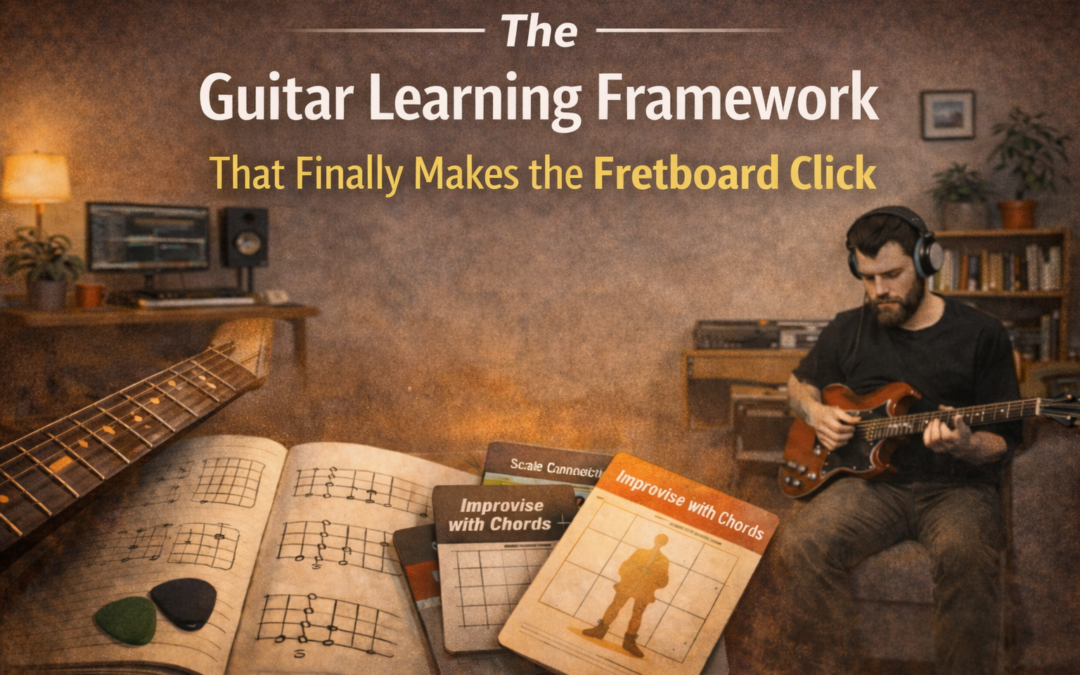
That’s exactly why I created Practice Prompts.
It’s a deck of guitar exercises designed to help players:
• break out of scale boxes
• improvise creatively
• understand the fretboard
• develop musical phrasing
Each prompt gives you a clear mission for your practice session.
Instead of wasting time wondering what to play, you get straight to making music.
You can check them out here:
👉 https://fretdeck.myclickfunnels.com/practice-prompts
Many players tell me it’s the first time their practice sessions actually felt fun and productive.
The Secret Most Guitar Teachers Miss
Here’s the truth most lessons won’t tell you.
You don’t need:
• hundreds of scales
• endless theory
• thousands of licks
You need a framework.
A structure that lets every new thing you learn connect to something else.
That’s what turns practice into progress.
What Happens When the Framework Clicks
Once you follow a clear guitar learning framework, something amazing happens.
You start to:
• recognize patterns across the fretboard
• connect scales to chords instantly
• improvise with confidence
• create your own melodies
Instead of copying guitar players…
You start sounding like yourself.
And honestly?
That’s the real goal.
Final Thoughts
Learning guitar doesn’t have to be confusing.
What most players need isn’t more information.
They need a framework that connects everything together.
Focus on:
- Pentatonic scale mastery
- Chord connections
- Creative practice prompts
Follow that structure long enough and the fretboard will finally stop feeling like chaos.
It will start feeling like home.
The Simple Guitar Practice System That Eliminates Guesswork
So You Can Stop Stalling… and Start Sounding Better Every Time You Pick Up the Guitar
👉 Get 52 Practice Prompts Now!
Continue Your Guitar Journey
If you want more structured practice ideas, check out these resources:
Internal Resource
Learn how to train your playing with structured exercises:
https://guitarfreaksblog.com/guitar-practice-tips/
External Resource
Explore music theory fundamentals at
Berklee College of Music
https://online.berklee.edu/takenote/music-theory-101/
Related posts: