
Finding the right guitar practice method is the secret that separates struggling players from those who get noticeably better every single week. If you feel like you’re just spinning your wheels, a structured approach is exactly what you need. You pick up your guitar, full of hope, ready to finally make some progress.
But then… what do you actually do? You play that same old riff you learned six months ago. You fumble through a couple of chords. You try a scale but lose your place halfway through. Before you know it, 30 minutes have passed, and you don’t sound any better than when you started.
It’s a frustrating cycle. More importantly, it’s the reason most guitar players quit. They blame their “lack of talent” when the real problem is their lack of a plan.
Why You’re Stuck in a Practice Rut
Does this sound familiar? You’re caught in the “Noodling Trap.” Noodling isn’t practicing; it’s just playing what you already know. While it can be fun, it produces zero growth. As a result, you hit a plateau, and you can’t seem to break through it.
You practice without any specific goals. You don’t track your progress. Therefore, you have no idea if you’re actually improving. You might spend an hour with your guitar, but 50 minutes of it is unfocused, unproductive, and ultimately, a waste of your valuable time. This is a clear sign you need to rethink your guitar practice method.
This lack of structure leads directly to frustration. You see others getting better, and you wonder what their secret is. You start to believe maybe you just don’t have “it.” However, the truth is that talent has very little to do with it. Consistent, focused practice is the great equalizer.
The Simple Guitar Practice System That Eliminates Guesswork
So You Can Stop Stalling… and Start Sounding Better Every Time You Pick Up the Guitar
👉 Get 52 Practice Prompts Now!

The Secret is Structure: Goal-Oriented Practice
The first step to breaking free is to stop “practicing” and start “training.” What’s the difference? Training is practice with a specific, measurable purpose. You wouldn’t go to the gym and just randomly lift things. You have a plan: 3 sets of 10 reps, focusing on a specific muscle group.
You must apply this same logic to the guitar. Instead of a vague goal like “get better at chords,” you need a micro-goal. For example, a much better goal is, “I will practice switching from G to C for five minutes, aiming for 20 clean switches per minute.”
Suddenly, you have a target. You have a way to measure success. As a result, every single practice session delivers a small win. These small wins stack up over time, building massive momentum and confidence. Think of each session as laying a single brick. With a plan, you’ll build a house; without one, you just have a pile of bricks.
Furthermore, this approach keeps you engaged. When you have a clear mission, you’re less likely to get bored and start noodling. Your brain is focused on a challenge, which is the key to entering a state of “flow” where learning happens rapidly. For some great foundational ideas, check out our guide on beginner guitar tips.

Our Recommended Guitar Practice Method Blueprint
To make goal-setting easy, you need a framework. A proven guitar practice method doesn’t have to be complicated. In fact, the simpler, the better. We recommend breaking your practice time into four core components. This structure ensures you develop as a well-rounded musician, not just someone who can play one song.
1. Warm-Up (5-10 minutes) First, you need to get your fingers ready. Never skip this. A good warm-up prevents injury and primes your muscles for the work ahead.
- What to do: Simple chromatic exercises (playing frets 1-2-3-4 across all strings), finger stretches, and spider walks. The goal isn’t speed; it’s precision and getting the blood flowing.
2. Technique & Theory (10-20 minutes) This is where you build your raw physical ability and your musical knowledge. Specifically, this is the “eating your vegetables” part of practice. It might not always be the most fun, but it’s what fuels your growth.
- What to do: Focus on one specific thing per session. For example, practice the A minor pentatonic scale. Or, you could work on alternate picking with a metronome. On another day, you might study how to build major triads. By dedicating time to both scales and how they fit into a chord progression guide, you connect the dots between mechanics and music.
3. Repertoire (10-20 minutes) This is where you apply your skills to actual music. The key here is to actively learn, not just play.
- What to do: Pick a song you want to learn. However, don’t try to learn the whole thing at once. Isolate the verse, or just the main riff, or even just two difficult chords. Slow it down and work on it until it’s clean. This is infinitely more effective than stumbling through the entire song over and over. Many great lessons can be found on sites like Guitar World.
4. Fun & Creativity (5-10 minutes) Finally, you must end every session on a high note. This is your reward.
- What to do: Play whatever you want! Noodle, jam over a backing track, try to write a simple riff, or just play your favorite song. This part reminds you why you started playing guitar in the first place: because it’s fun. It ensures you walk away feeling positive and eager to pick up the guitar again tomorrow.
The Simple Guitar Practice System That Eliminates Guesswork
So You Can Stop Stalling… and Start Sounding Better Every Time You Pick Up the Guitar
👉 Get 52 Practice Prompts Now!
Putting the Blueprint into Action
Let’s make this concrete. Here is a sample 30-minute practice routine using our blueprint. You can adjust the times to fit your schedule, but the structure is what matters.
- (Minutes 0-5) Warm-Up: Chromatic scale runs up and down the neck. Go slow. Focus on clean notes and minimal finger movement.
- (Minutes 5-15) Technique: Set a metronome to a slow tempo (e.g., 60 bpm). Practice the E minor pentatonic scale shape, one note per click. Your goal is perfect timing and tone. If you’re looking for scales to learn, start with our guide to learn guitar scales.
- (Minutes 15-25) Repertoire: Work on the intro riff to “Smoke on the Water.” Isolate just that 4-note phrase. Play it 10 times perfectly. Increase your speed only after you can play it cleanly.
- (Minutes 25-30) Fun: Put on a simple rock backing track in E minor from YouTube. Improvise using the E minor pentatonic scale you just practiced. Don’t worry about sounding amazing; just have fun with it.
This focused 30-minute session will do more for your playing than two hours of aimless noodling. You worked on dexterity, timing, theory application, and creativity all in one short block.
5 Practical Tips to Supercharge Your Practice
To get the most out of your new routine, incorporate these powerful habits.
1. Use a Metronome. A metronome is your non-judgmental best friend. It provides the honest feedback you need to develop a rock-solid sense of time. Start slow and only increase the speed when you can play a passage perfectly multiple times in a row.
2. Record Yourself. You don’t hear your own mistakes in real-time. Recording your playing on your phone and listening back is an eye-opening (and ear-opening) experience. It’s the fastest way to identify weaknesses in your timing, tone, and technique.
3. Isolate and Conquer. Don’t practice the parts you can already play. Find the single hardest measure or chord change in a song and loop it relentlessly. Use the “slow-down” feature on YouTube or another app. Master the hard part, and the rest of the song will feel easy.
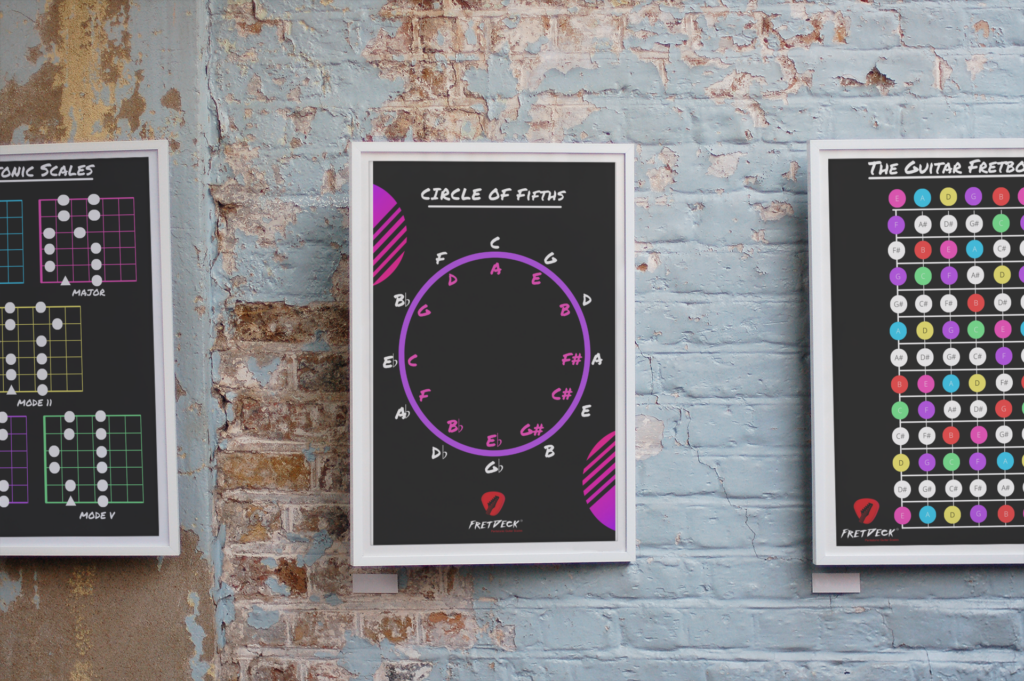
4. Remove the Guesswork. One of the biggest hurdles is deciding what to practice. Tools can help. For example, the physical card deck from FretDeck gives you a focused, randomized prompt for each session, so you can just draw a card and get straight to work.
5. Seek Out New Exercises. Don’t let your technical exercises get stale. Continually look for new challenges to push your fingers and your brain. Fender’s learning platform, Fender Play, offers a wealth of structured lessons and exercises to keep things fresh.
Frequently Asked Questions (FAQ)
Here are answers to some common questions about building a better practice habit.
How long should I practice guitar each day?
Consistency is far more important than duration. A focused, 20-minute daily session is vastly superior to a single, chaotic 3-hour session on the weekend. Start with a manageable amount of time you know you can stick with, even if it’s just 15 minutes.
What’s the best guitar practice method for beginners?
For a total beginner, the best guitar practice method is one that focuses on core fundamentals. Don’t overwhelm yourself. Dedicate your time to three things: learning and switching between 3-4 basic open chords (like G, C, D, Em), practicing a simple strumming pattern, and applying both to one incredibly easy song.
How do I stay motivated when I’m not seeing results?
The key is to redefine what “results” mean. Instead of waiting for a huge breakthrough, celebrate the small victories. Did you play a chord cleaner than yesterday? That’s a result. Did you increase your metronome speed by 2 bpm? That’s a result. Track these small wins in a journal, and you’ll see a clear upward trend that keeps you motivated.
The Simple Guitar Practice System That Eliminates Guesswork
So You Can Stop Stalling… and Start Sounding Better Every Time You Pick Up the Guitar
👉 Get 52 Practice Prompts Now!
Related posts: