

What if the secret to elite fretboard command wasn’t endless scale drills but a simple system of high-speed fretboard flashcards? It’s a concept that feels almost too simple, yet it targets the one core weakness that keeps most guitarists trapped in familiar boxes for years.
You know the feeling. You learn a new lick from a tab, but you have no idea why it works or how to move it. You feel chained to the first five frets, and the rest of the neck is a terrifying, uncharted territory.
This isn’t a problem of talent or dedication. It’s a problem of method. You’ve been trying to memorize a map by walking the same two blocks over and over again, instead of actually learning the street names.
The Fretboard Blackout Zone You Keep Hitting
Does this sound familiar? You pick up your guitar, ready to create something new. But within minutes, your fingers automatically slide back into that same old pentatonic box shape. It feels safe. It feels comfortable.
However, it also feels incredibly limiting.
You watch pro guitarists glide effortlessly from one end of the neck to the other. They connect chords, scales, and arpeggios in a seamless flow of music. For them, the fretboard isn’t a series of memorized patterns; it’s a complete, visible grid. For you, anything past the 7th fret feels like guessing in the dark.
As a result, your solos sound repetitive. Your ability to improvise over anything but the most basic blues progression is non-existent. You might even find yourself avoiding learning new songs because the thought of navigating unfamiliar parts of the neck is just too daunting. This is the “fretboard blackout,” and it’s the single biggest barrier to creative freedom.
What If You Could See the Fretboard Instead of Just Memorizing It?
Most guitarists spend years guessing where to put their fingers. They memorize shapes without understanding why — and the second they try to improvise or learn a new song, they’re lost again.

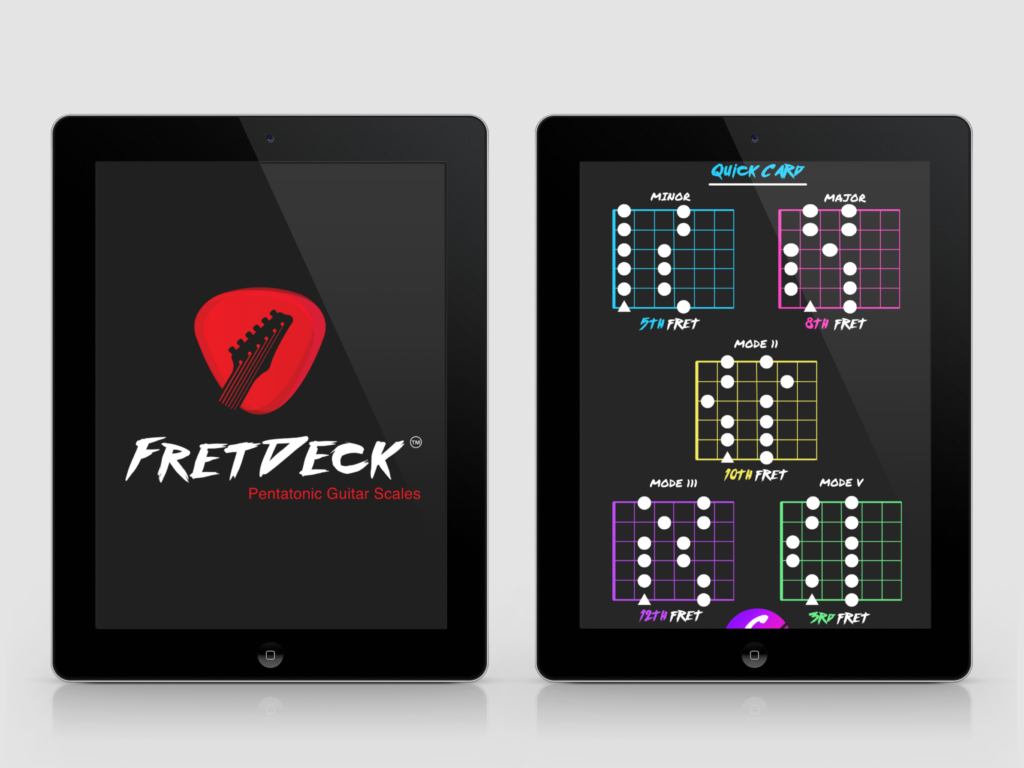
The FretDeck Practice Workstation changes that. It’s the interactive fretboard app that shows you exactly what to play, why it works, and how every note connects — so you finally understand the guitar instead of just copying tabs.
Whether you’re stuck in a rut, tired of noodling the same pentatonic box, or ready to unlock the entire neck — the FretDeck Practice Workstation gives you the visual roadmap to get there. All for just $14/month.
👉 Start Using the FretDeck Practice Workstation Now
The ‘Note Recognition’ Glitch Holding You Back
Here’s the truth most guitar instructors miss: your biggest problem isn’t finger speed. It’s not a lack of music theory knowledge, either. Specifically, it’s the delay between your brain thinking of a note (like “G”) and your fingers instantly knowing where every “G” is on the entire neck.
Think about learning a language. You can’t speak fluently if you have to pause and look up every single word in a dictionary. Similarly, you can’t play fluently if you have to mentally calculate where the notes are.
This slow “note recognition” is the glitch. Pros don’t think, “Okay, the root is A on the 5th fret of the E string, so the fifth is… one, two frets over and… wait…” They just see the relationships. They see the entire grid of notes laid out before them. This is the skill traditional practice misses, but it’s precisely what the right kind of mental training can build.
Why Digital Fretboard Flashcards Are A Game-Changer
This is where the shortcut comes in. Old-school paper fretboard flashcards were a step in the right direction, but they were static and boring. You’d drill the note names, but there was no immediate musical context or feedback. It felt like homework.
However, modern digital tools have transformed this concept into a powerful, interactive engine for learning.
Instead of a static piece of paper, imagine a responsive system that flashes a note name—say, “C#”—and times how quickly you can find and play it on a random string. It gamifies the process, turning dull memorization into an addictive challenge. This is the core of active recall, a learning principle proven to be far more effective than passive review. For example, many modern digital tools help you see notes in the context of scales and chords, which you can read about in this Guitar World article on practice technology.
This is exactly what tools like the FretDeck practice workstation are built to do. They don’t just show you a note; they create a dynamic training environment. As a result, you’re not just memorizing facts. You’re building lightning-fast reflexes that connect your musical brain directly to your fingers. It’s the difference between studying a map and having a live GPS.
What If You Could See the Fretboard Instead of Just Memorizing It?
Most guitarists spend years guessing where to put their fingers. They memorize shapes without understanding why — and the second they try to improvise or learn a new song, they’re lost again.
The FretDeck Practice Workstation changes that. It’s the interactive fretboard app that shows you exactly what to play, why it works, and how every note connects — so you finally understand the guitar instead of just copying tabs.
Whether you’re stuck in a rut, tired of noodling the same pentatonic box, or ready to unlock the entire neck — the FretDeck Practice Workstation gives you the visual roadmap to get there. All for just $14/month.
👉 Start Using the FretDeck Practice Workstation Now
Building Your Fretboard ‘GPS’ One Note at a Time
So, how do you actually use this shortcut? The goal is to install a “Fretboard GPS” in your brain. This system relies on instant recognition, not slow, methodical searching. It’s a skill you build in just a few minutes a day.
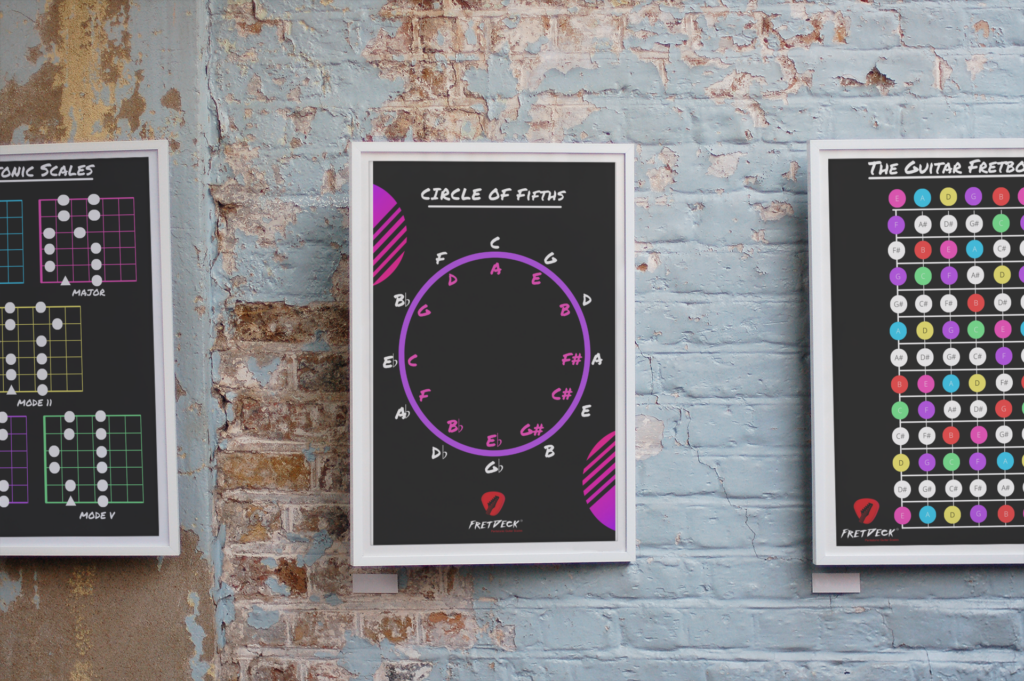
Furthermore, it snowballs. Once you master the natural notes on one string, moving to the next becomes easier because you start recognizing patterns. The distance between E and F is always one fret. The distance between B and C is also one fret. All other adjacent natural notes are two frets apart.
This starts to build a logical framework. Consequently, you stop seeing the fretboard as 132 random locations and start seeing it as an organized, predictable matrix. You begin to understand how to learn guitar scales not as rigid shapes but as collections of intervals you can find anywhere. This deeper level of understanding is precisely what separates the amateurs from the pros, and it is something you can build with focused, flashcard-style training. As you can see on Fender’s own learning blog, breaking down complex topics into small, manageable chunks is key.
The 5-Step Flashcard Shortcut You Can Use Tonight
Ready to put this into practice? Here’s a simple, five-step routine you can do in just 10 minutes to start building that mental GPS with a fretboard flashcards approach.
1. Focus on One String Per Day. Don’t try to learn the whole neck at once. Start with just the low E string. Your only goal for the day is to be able to name any note on that single string instantly.
2. Use Timed Reps. Use a friend, an app, or a random note generator. When a note name appears (e.g., “G”), find it on the low E string as fast as you can. The pressure of a timer forces your brain to build faster recall.
3. Connect It To a Chord. Once you find the note, don’t just stop. If you found “G,” immediately play a G major or G minor barre chord rooted on that string. This connects the abstract note name to a tangible, musical sound, solidifying your understanding of chord progression guide fundamentals.
4. Say the Note Out Loud. As you play the note, say its name out loud. This engages another part of your brain and reinforces the connection. It sounds silly, but it works wonders for memory.
5. Try It In Reverse. Now, randomly place your finger on a fret on that same string. Can you name the note instantly? This tests your knowledge from a different angle and is a fantastic way to check your progress. It’s one of the most powerful beginner guitar tips for building real-world knowledge.
Frequently Asked Questions (FAQ)
How long does it take to learn the fretboard with this method?
While it varies per person, most guitarists who dedicate a focused 10-15 minutes daily to this fretboard flashcards method report significant improvement in as little as two to four weeks. The key is consistency, not cramming.
Can fretboard flashcards help with music theory?
Absolutely. In fact, it’s one of the best ways to make theory practical. When you know where every “root,” “third,” and “fifth” is for any given key, concepts like chord construction and scale modes suddenly click into place. You move from abstract rules to tangible locations on the neck.
What’s better, digital flashcards or physical ones?
Digital fretboard flashcards are generally superior for this task. They offer interactive feedback, gamification, and the ability to track your speed and accuracy over time. They can also present the notes in a random order, which prevents you from simply memorizing a sequence.
By abandoning the slow, grinding methods of the past and adopting this fast-paced, targeted training, you’re not just learning notes. You’re rewiring your brain to see music on the guitar. The “fretboard blackout” disappears, replaced by a clear, navigable map that grants you the freedom to play whatever you hear in your head.
What If You Could See the Fretboard Instead of Just Memorizing It?
Most guitarists spend years guessing where to put their fingers. They memorize shapes without understanding why — and the second they try to improvise or learn a new song, they’re lost again.
The FretDeck Practice Workstation changes that. It’s the interactive fretboard app that shows you exactly what to play, why it works, and how every note connects — so you finally understand the guitar instead of just copying tabs.
Whether you’re stuck in a rut, tired of noodling the same pentatonic box, or ready to unlock the entire neck — the FretDeck Practice Workstation gives you the visual roadmap to get there. All for just $14/month.
👉 Start Using the FretDeck Practice Workstation Now
The Simple Guitar Practice System That Eliminates Guesswork
So You Can Stop Stalling… and Start Sounding Better Every Time You Pick Up the Guitar with fretboard flashcards
👉 Get 52 Practice Prompts Now!
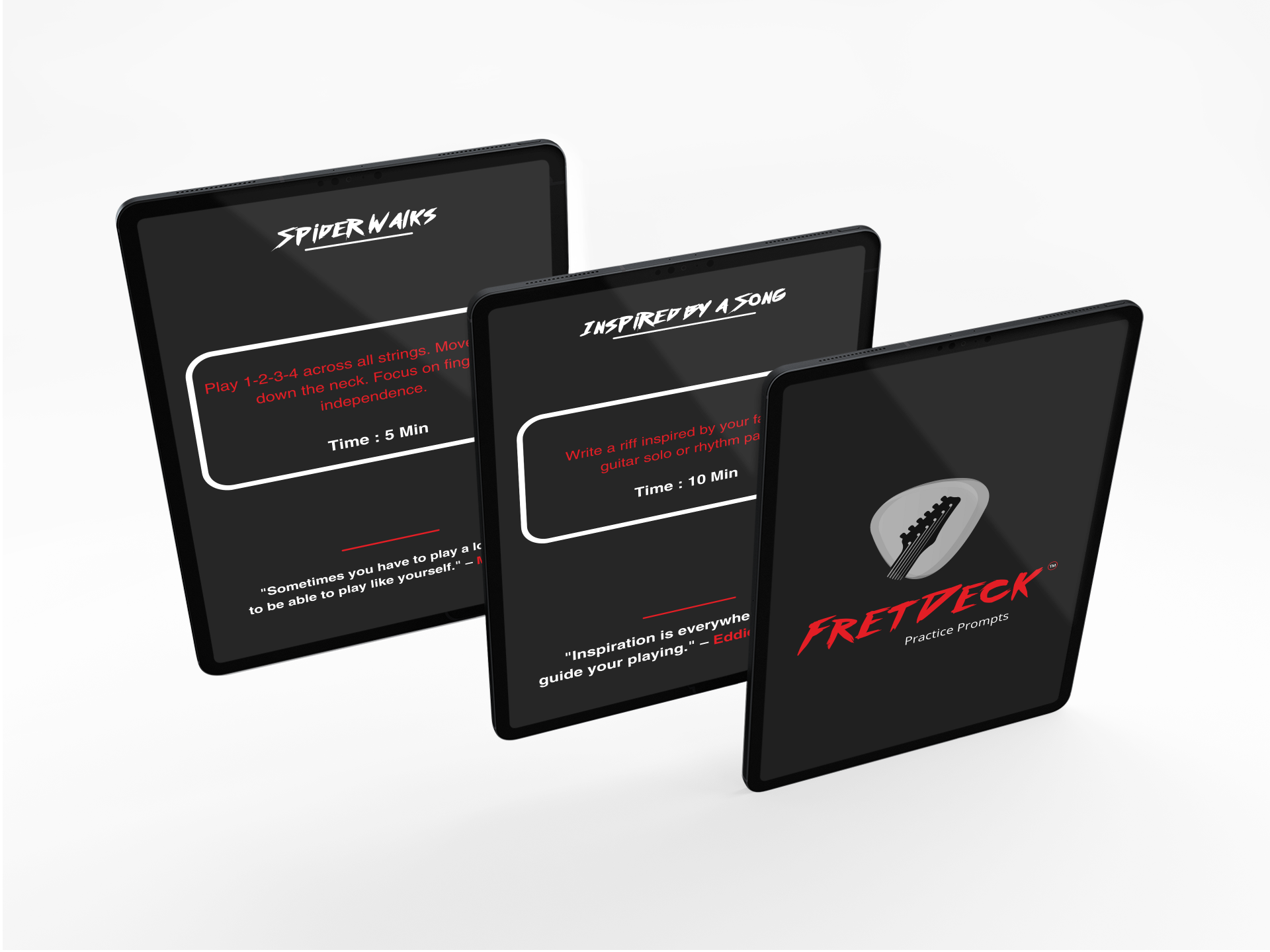
The Simple Guitar Practice System That Eliminates Guesswork
So You Can Stop Stalling… and Start Sounding Better Every Time You Pick Up the Guitar
👉 Get 52 Practice Prompts Now!
Related posts: