
If you want to truly master the fretboard, guitar theory flashcards are one of the most powerful and overlooked tools in your arsenal. You see, they transform abstract concepts into tangible, bite-sized pieces of information you can drill anywhere, anytime. Consequently, you can finally move beyond just memorizing chord shapes and scale patterns and start understanding the music you play.
This simple learning system is the key to breaking through plateaus. Furthermore, it helps you connect the dots between what you hear in your head and what your fingers can do on the guitar. It’s about turning confusion into confidence, one card at a time.
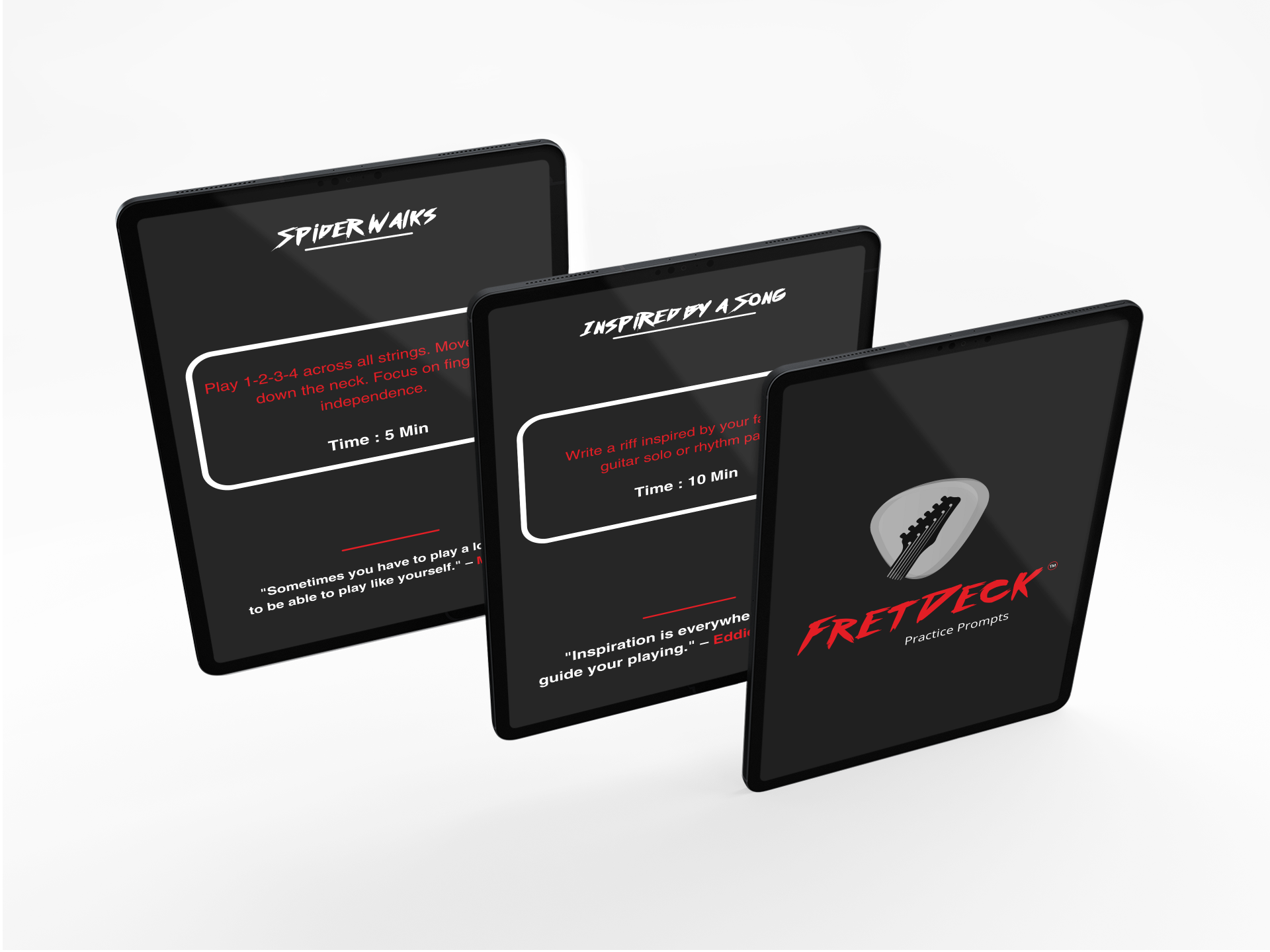
The Simple Guitar Practice System That Eliminates Guesswork
So You Can Stop Stalling… and Start Sounding Better Every Time You Pick Up the Guitar
👉 Get 52 Practice Prompts Now!
The “Fretboard Blindness” That Holds You Back
Does this sound familiar? You pick up your guitar, ready to jam or write a new song. However, you find yourself stuck playing the same three pentatonic boxes you’ve known for years. You want to create a cool solo or an interesting chord melody, but your fingers feel lost on the fretboard.
This is a classic case of “fretboard blindness.” It’s that frustrating feeling of not knowing where the notes are. Specifically, you can’t identify intervals by sight or sound, and you struggle to build chords on the fly. As a result, you rely on muscle memory and TABs, never truly feeling free or creative on your instrument.
You might even spend hours watching YouTube videos or reading theory books. But somehow, the information never sticks. It feels like one big, jumbled mess of circles, numbers, and strange names. This lack of connection between theoretical knowledge and practical application is what keeps so many guitarists stuck in the “intermediate trap” forever.
Why Guitar Theory Flashcards Are a Game-Changer
Now, imagine a different way to learn. Imagine a method that uses proven cognitive science principles to burn musical knowledge directly into your long-term memory. That’s exactly what you get when you start using guitar theory flashcards.
This method works because of two powerful concepts: active recall and spaced repetition.

Active recall means you are actively pulling information out of your brain, rather than passively trying to push it in. For example, looking at a card that says “What is the 5th of G?” forces your brain to work to find the answer (“D”). This is far more effective than just reading that “D is the 5th of G” in a book. It creates stronger neural pathways.
Spaced repetition, on the other hand, is the practice of reviewing information at increasing intervals. You review the cards you struggle with more frequently, and the ones you know well less often. Consequently, your practice becomes incredibly efficient. You spend your limited time focusing on what you actually need to learn, maximizing your results. This is exactly why language learning apps use a similar system; it just works.
From Basics to Breakthroughs: What to Learn First
So, what should you actually put on these magical cards? The beauty of this system is its scalability. You can start with the absolute fundamentals and build up to incredibly advanced concepts.
Here are the essential building blocks every guitarist should master:
- Fretboard Note Names: This is the foundation for everything. Create cards with a blank fretboard diagram and a dot on a single fret. The back of the card should have the note name. Drilling these daily will cure fretboard blindness faster than anything else.
- Intervals: An interval is the distance between two notes. Create cards that ask “What is a Perfect 5th above C?” (Answer: G) or show two notes on a staff and ask you to identify the interval. This skill is crucial for building chords and understanding melody.
- Chord Formulas: Stop just memorizing shapes! Instead, learn the formulas. For example, a card could ask “What is the formula for a major triad?” (Answer: 1-3-5). Another card could ask you to “Spell a G minor 7 chord” (Answer: G-Bb-D-F). This allows you to build any chord, anywhere on the neck. For a deeper dive, check out our chord progression guide.
- Scale Formulas: Just like with chords, understanding scale formulas is liberating. For instance, a card could ask for the “Major scale formula” (W-W-H-W-W-W-H). This knowledge empowers you to build scales from any root note, which is the secret to unlocking improvisation. In addition, you can learn guitar scales with our detailed breakdown.
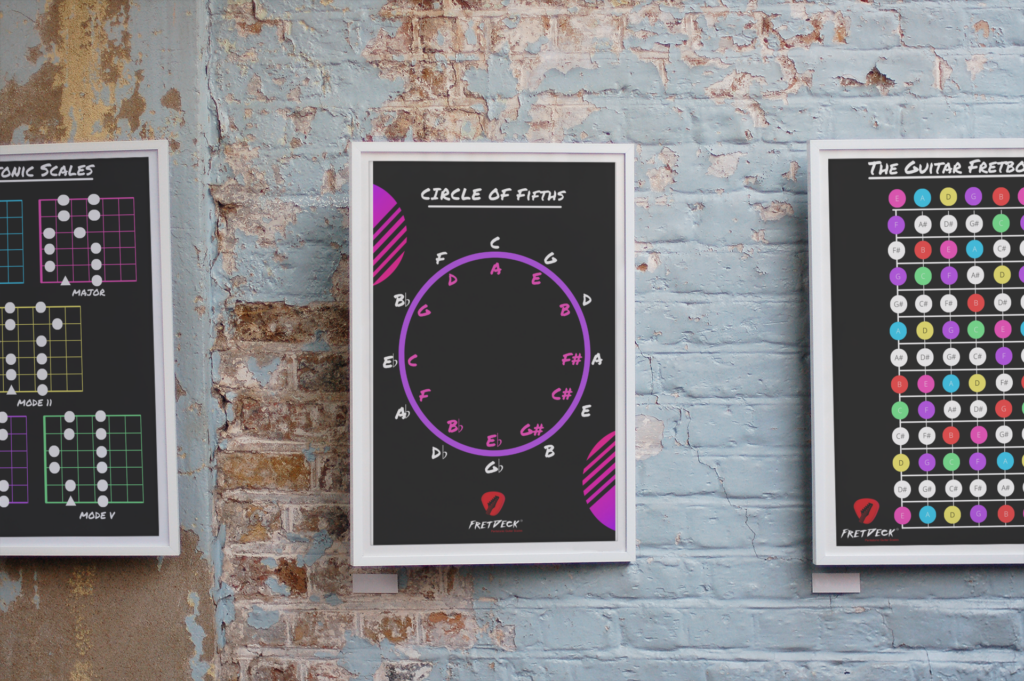
As you master these, you can move on to more advanced topics like modes, arpeggios, and the Circle of Fifths. The possibilities are truly endless.
DIY vs. Digital: Choosing Your Flashcard Weapon
You have two main paths when it comes to creating your flashcard system: the old-school physical route or the modern digital one. Both have their merits.
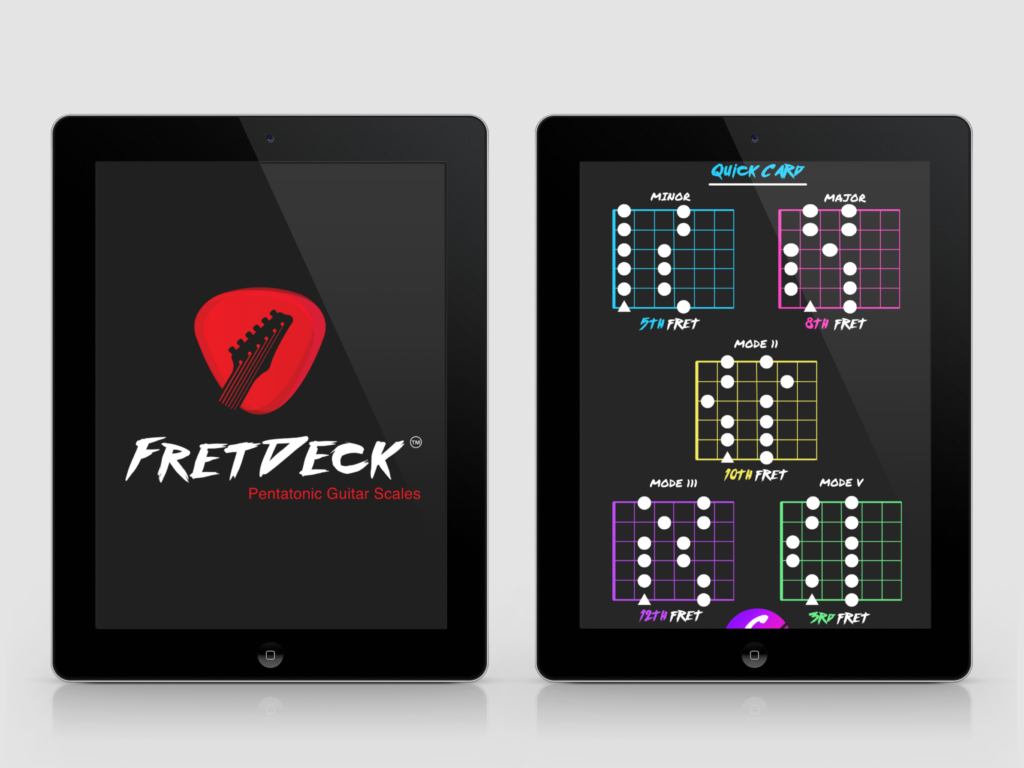
DIY Physical Flashcards: There’s a certain power in the physical act of writing things down. Using simple index cards, you can create a completely customized learning deck. Moreover, the act of writing the question and answer yourself is a form of active learning. You can color-code your decks (e.g., green for notes, blue for chords) and carry a small stack in your pocket for quick drills. Some players even use physical systems like the card-based FretDeck to gamify their practice and get prompts for what to work on next.
Digital Flashcard Apps: Apps like Anki or Quizlet automate the spaced repetition process for you. They use algorithms to track which cards you know and which you need to review, making your study sessions incredibly efficient. Furthermore, you can often find pre-made decks for guitar theory, saving you some setup time. The obvious benefit is having thousands of cards available on your phone at all times. As a great resource, many publications like Guitar World offer fantastic articles on music theory to help you decide what to put on your cards.
Ultimately, the best method is the one you’ll actually use consistently. Experiment with both and see what clicks for your learning style.
5 Steps to Integrate Flashcards into Your Practice
Simply having the cards isn’t enough; you need a system for using them. Here is a simple, 5-step process to make guitar theory flashcards a core part of your daily routine. This approach is a key component of a best practice routine.
1. Start Small. Don’t overwhelm yourself by creating 200 cards on day one. Instead, start with just 10-15 cards focusing on one specific topic, like the notes on the low E string. 2. Drill for 5 Minutes Daily. Consistency is everything. Dedicate the first five minutes of every practice session to your flashcard deck. Before you even play a note, warm up your brain. 3. Apply It Immediately. This is the most important step. After you drill a concept with your cards, immediately find it on the guitar. If you drilled the notes C, G, and D, find every C, G, and D on the fretboard. If you drilled the A minor triad (A-C-E), play that arpeggio all over the neck. This connects the theory to the physical instrument. 4. Mix and Shuffle Your Decks. As you build multiple decks (notes, intervals, chords), start shuffling them together. This “interleaving” forces your brain to switch contexts, which dramatically improves long-term retention and recall speed. For more on this, check out Fender’s great insights on building practice habits. 5. Review and Expand. Once you consistently get a card right, you can move it to a “mastered” pile that you review weekly. As a result, you make room in your daily drill deck for new cards and new concepts. This keeps your learning focused and always moving forward.
The Simple Guitar Practice System That Eliminates Guesswork
So You Can Stop Stalling… and Start Sounding Better Every Time You Pick Up the Guitar
👉 Get 52 Practice Prompts Now!
Frequently Asked Questions (FAQ)
Starting out with a new learning tool like guitar theory flashcards often brings up a few questions. Let’s tackle the most common ones.
How often should I use my guitar theory flashcards?
For the best results, aim for daily use. A quick 5-10 minute session every day is far more effective than a long 1-hour session once a week. Consistency builds the strongest memories.
Are flashcards better than just reading a theory book?
They serve different purposes but work best together. A book is great for initial exposure and understanding the broad context of a topic. However, flashcards are superior for the actual memorization and recall practice that makes the knowledge usable in real-time. Use books to learn, and flashcards to train.
Can I really learn modes and advanced concepts this way?
Absolutely. You can create cards for modal formulas (e.g., Lydian: 1-2-3-#4-5-6-7), common modal chord progressions, or characteristics of each mode’s sound. Breaking down complex topics into simple question-and-answer formats is the key to making them digestible and, eventually, second nature.
Using guitar theory flashcards is your direct path to musical fluency. It’s the systematic approach that builds a rock-solid foundation, giving you the freedom to finally play what you feel.
The Simple Guitar Practice System That Eliminates Guesswork
So You Can Stop Stalling… and Start Sounding Better Every Time You Pick Up the Guitar
👉 Get 52 Practice Prompts Now!
The Simple Guitar Practice System That Eliminates Guesswork
So You Can Stop Stalling… and Start Sounding Better Every Time You Pick Up the Guitar
👉 Get 52 Practice Prompts Now!
Related posts: