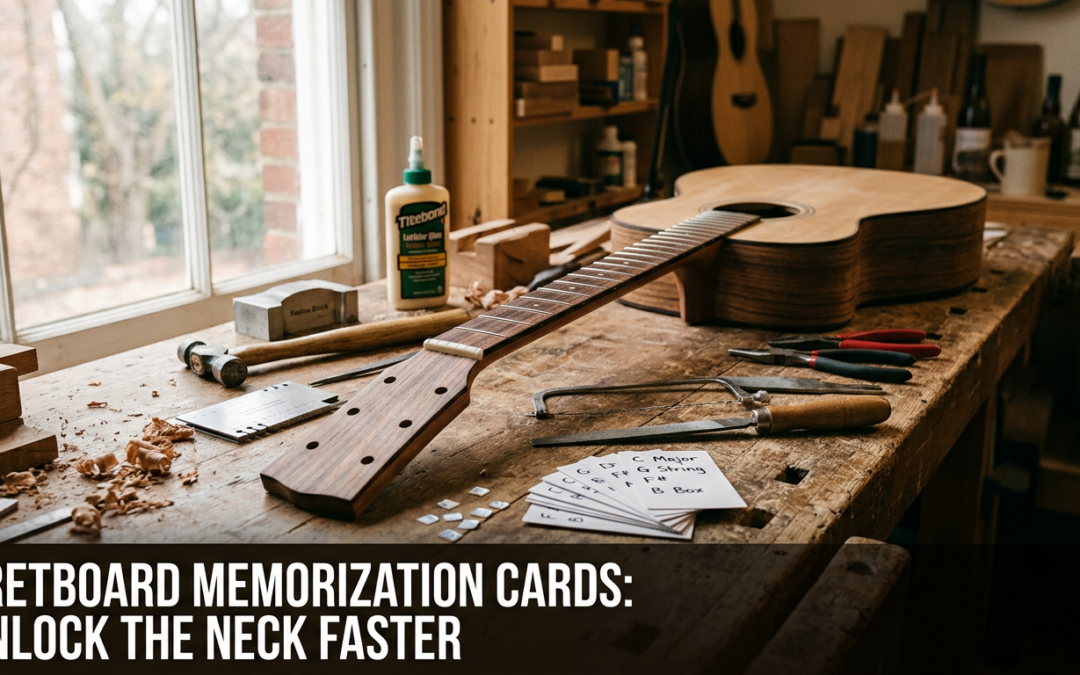

The right fretboard memorization cards offer a powerful, systematic way to finally conquer the guitar neck. You see the pros glide effortlessly from one end of the fretboard to the other, and you wonder, “How do they know where all the notes are?” It feels like a superpower.
But it’s not magic. It’s a skill. And like any skill, it can be learned with the right tools and a consistent method. For many frustrated guitarists, that tool is a simple deck of cards designed for one specific purpose: burning the fretboard into your brain.
You pick up your guitar, feeling inspired. You want to play a killer solo or write a new chord progression. But then it happens. You find yourself stuck in the same old box patterns, playing the same tired licks you’ve known for years. The rest of the fretboard feels like a mysterious, uncharted territory.
This is the “fretboard fog,” and it’s one of the biggest roadblocks for guitar players.
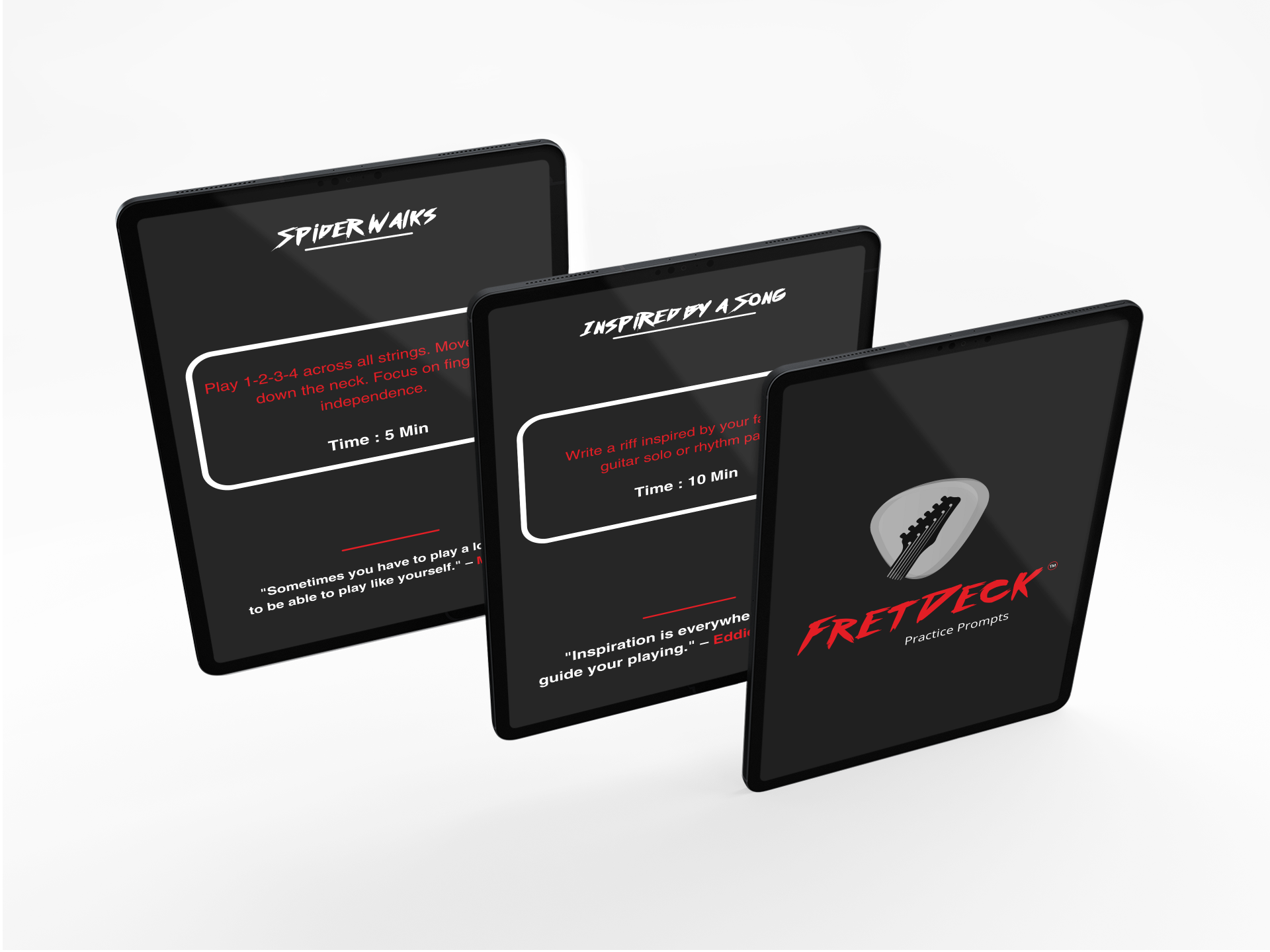
The Simple Guitar Practice System That Eliminates Guesswork
So You Can Stop Stalling… and Start Sounding Better Every Time You Pick Up the Guitar
👉 Get 52 Practice Prompts Now!
The Frustration of Being “Fretboard Blind”
You know the feeling. You’re trying to follow a lesson online, and the instructor calls out, “Now, just move to the C on the G string.” You freeze. Your fingers hesitate while your brain scrambles to locate that note. By the time you find it, the lesson has moved on.
This limitation affects every single aspect of your playing.
For example, you can’t improvise freely. Instead, you’re tethered to the pentatonic box you first learned. Moreover, learning new songs becomes a tedious game of “connect the dots” with tab sheets, rather than understanding the music itself. As a result, you feel less like a musician and more like someone just following instructions.

This wall is what separates players who just “play” guitar from those who truly speak the language of music on the instrument. The notes on the fretboard are the alphabet. Without knowing your alphabet, how can you expect to write sentences and tell stories? This is a common struggle, but thankfully, one with a clear solution. For more on overcoming early hurdles, check out these essential beginner guitar tips.

The Science of Spaced Repetition
So, why do flashcards work so well? The answer lies in a proven memory technique called Spaced Repetition System (SRS). This learning method is incredibly efficient.
Instead of cramming information all at once, SRS introduces you to new information and re-introduces it at increasing intervals. You see the information just as you’re about to forget it. Consequently, this process forces your brain to work slightly harder to recall the answer, strengthening the neural pathway each time.
Think of it like building a path in a forest. The first time you walk it, you barely make a trail. But each time you walk that same path, the trail becomes clearer, wider, and easier to travel. Fretboard memorization cards use this exact principle.
Each card presents a small piece of information (like “Find A on the 5th string”). When you get it right, you see that card less frequently. When you get it wrong, the system makes you review it more often. As a result, you spend your limited practice time focused only on the notes you don’t know yet, making your learning incredibly efficient.
Why Fretboard Memorization Cards Are Your Secret Weapon
While you could make your own flashcards, using a specially designed set of fretboard memorization cards offers unique advantages tailored specifically for guitarists. They are more than just notes on paper; they are a guided system.
First, they remove the guesswork. A good deck of cards provides a structured path. You don’t have to decide what to learn next. You just draw a card and follow the prompt. This eliminates decision fatigue and keeps you focused on the task at hand: learning the notes.
Second, they make learning active, not passive. Watching a video about the fretboard is passive. However, being prompted by a card to find a specific note and then physically locating it on your guitar is an active process. This physical and mental connection is crucial for deep memorization.
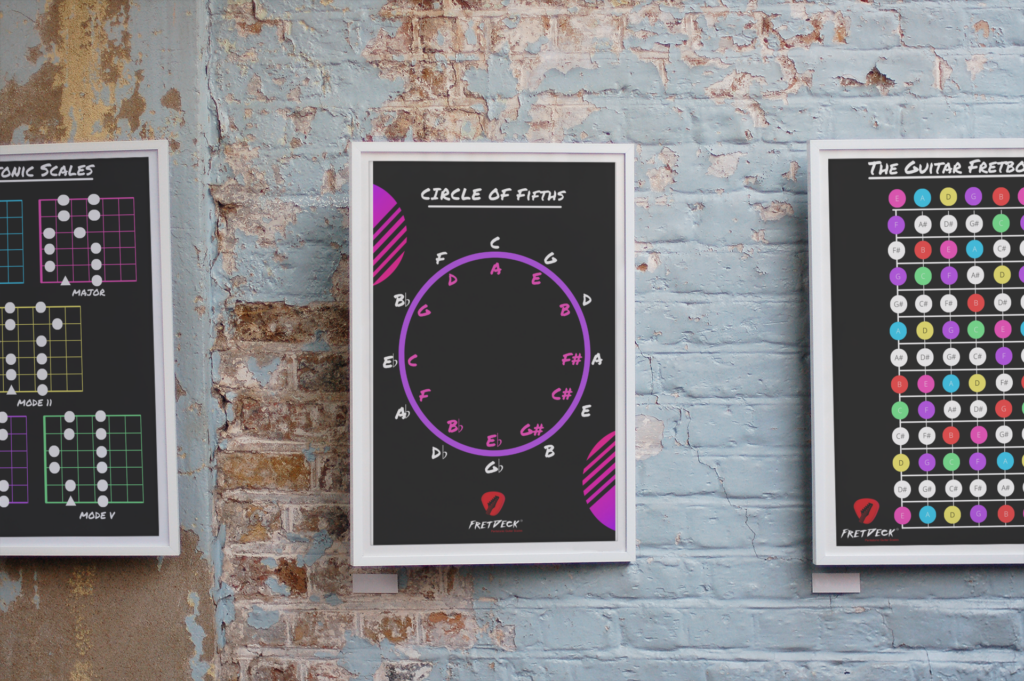
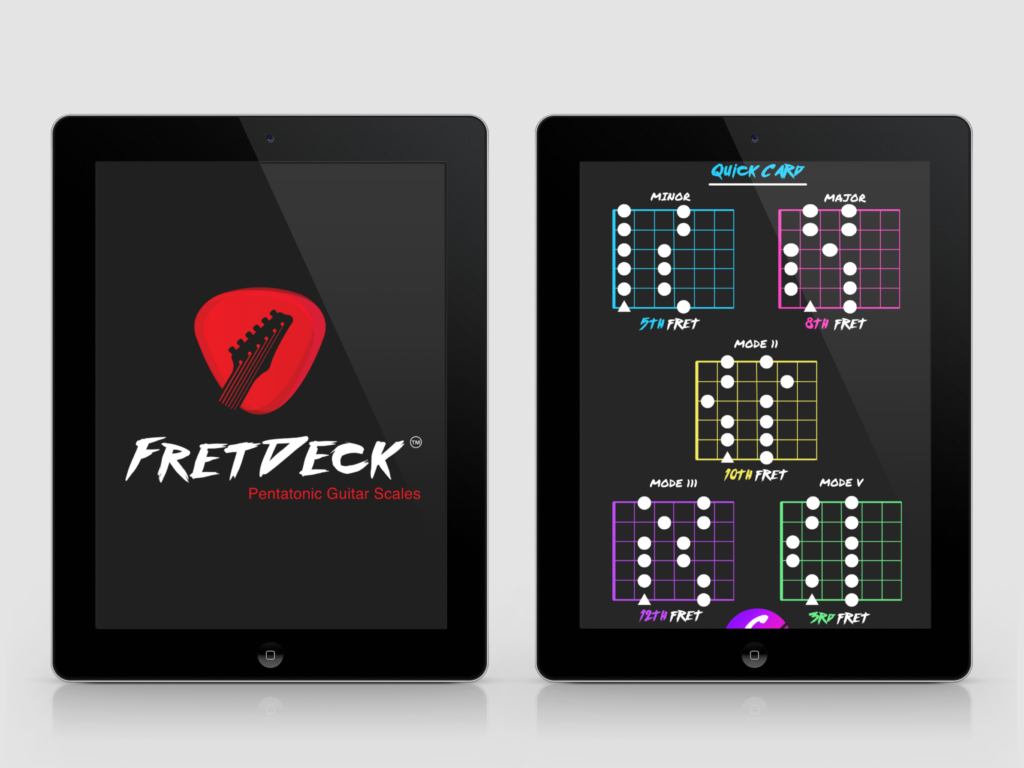
Furthermore, a great set of fretboard memorization cards gamifies the process. It turns a tedious chore into a fun challenge. You can time yourself, try to beat your previous score, or even compete with a friend. This element of play keeps you engaged and motivated to practice daily. Systems like FretDeck have gamified this exact process into a full practice system, showing just how powerful this approach can be.
From Notes to Music: What Knowing the Fretboard Unlocks
Memorizing the fretboard isn’t just an academic exercise. It is the key that unlocks true musical freedom on the guitar. Once the notes click into place, your entire relationship with the instrument changes.
Suddenly, you see the neck not as a collection of frets and strings, but as a map of musical possibilities.
For instance, you can finally understand and build scales anywhere on the neck. Instead of just memorizing scale “shapes,” you will understand the intervals and notes that construct them. This allows you to break out of the box and connect different scale positions seamlessly. This knowledge is fundamental if you want to learn guitar scales in a way that actually sticks.
Moreover, you will be able to construct chords on the fly. You’ll see the root, third, and fifth of any chord all over the neck, allowing you to create your own unique chord voicings. This is a game-changer for songwriting and accompaniment. As explained by many pros on sites like Guitar World, fretboard fluency is the foundation of advanced technique.
Ultimately, it all leads to better improvisation. When you can instantly visualize the notes in a key, your fingers can follow your musical ideas without hesitation. You stop “searching” for notes and start playing them.
The Simple Guitar Practice System That Eliminates Guesswork
So You Can Stop Stalling… and Start Sounding Better Every Time You Pick Up the Guitar
👉 Get 52 Practice Prompts Now!
5 Practical Tips for Using Fretboard Memorization Cards
Simply owning a deck of cards isn’t enough. You need to integrate them into your practice effectively. Here’s how to get the most out of your fretboard memorization cards.
1. Start Small: Don’t try to learn the entire fretboard in one day. Focus on one string at a time. For example, spend a few days just on the low E string until you can name every note instantly. Then move to the A string, and so on. This methodical approach prevents overwhelm.
2. Make it a Daily Habit: Consistency is more important than intensity. Spend just 5-10 minutes every single day with your cards. This short, daily review is far more effective than one long session per week. In fact, you can make it the first step in your best practice routine.
3. Say It and Play It: When you draw a card, don’t just find the note silently. Say the name of the note out loud as you play it. This engages multiple senses (sight, sound, touch) and anchors the information more firmly in your memory.
4. Connect to musical context: Once you learn a note’s location, don’t just stop there. For instance, if you find a G, try playing a G major chord rooted there. If you find a C, play the C major scale starting from that note. This connects the abstract note to real music.
5. Reverse the Game: After you get comfortable finding notes, flip the process. Point to a random fret on a random string on your guitar and challenge yourself to name the note as quickly as possible. This tests your recall in a different way and solidifies your knowledge. Many educational resources, such as those from Fender, emphasize this kind of active recall.
Using these simple tools and techniques, you will systematically eliminate the fretboard fog for good. The best fretboard memorization cards serve as your personal trainer in this journey.
Frequently Asked Questions (FAQ)
Here are some common questions guitarists have about an organized learning approach.
How long does it take to memorize the fretboard?
There is no magic number, as it depends entirely on the consistency of your practice. However, by using a spaced repetition method with flashcards for just 5-10 minutes daily, most players see a dramatic improvement within 30 days. Within a few months, they can often navigate the entire neck with confidence.
Are digital apps or physical cards better?
Both have their pros and cons. Digital apps are convenient and can automate the spaced repetition schedule. However, physical cards offer a tactile, screen-free experience that many players prefer. Using physical fretboard memorization cards with your guitar in hand creates a stronger physical connection and helps you avoid the distractions that come with a phone.
Can advanced players benefit from these cards?
Absolutely. Many advanced players still have blind spots on the fretboard, especially with ledger line notes or specific string-and-fret combinations. The cards can help shore up these weaknesses. Furthermore, they can be used for more advanced drills, such as identifying intervals, triads, or arpeggios starting on a random note.
The Simple Guitar Practice System That Eliminates Guesswork
So You Can Stop Stalling… and Start Sounding Better Every Time You Pick Up the Guitar
👉 Get 52 Practice Prompts Now!
The Simple Guitar Practice System That Eliminates Guesswork
So You Can Stop Stalling… and Start Sounding Better Every Time You Pick Up the Guitar
👉 Get 52 Practice Prompts Now!
Related posts: