

Finding the right notes can feel like searching for a needle in a haystack, which is why a guitar scales finder is one of the most powerful tools in a modern player’s arsenal. If you’ve ever felt trapped in one spot on the neck, playing the same licks over and over, this is your key to breaking free. Consequently, understanding how to use this tool will open up the entire fretboard.
You see the pros gliding effortlessly up and down the neck, and you wonder, “How do they know where to go?” You’ve probably even looked at scale diagrams in books or online. They stare back at you like cryptic crossword puzzles—a confusing jumble of dots and numbers that make no musical sense.
You try to memorize a pattern, but it feels robotic. As a result, your solos sound less like music and more like running a sterile exercise. The frustration mounts. You know the notes are there, but you just can’t connect them. This single roadblock is what keeps countless guitarists from ever reaching their true potential.
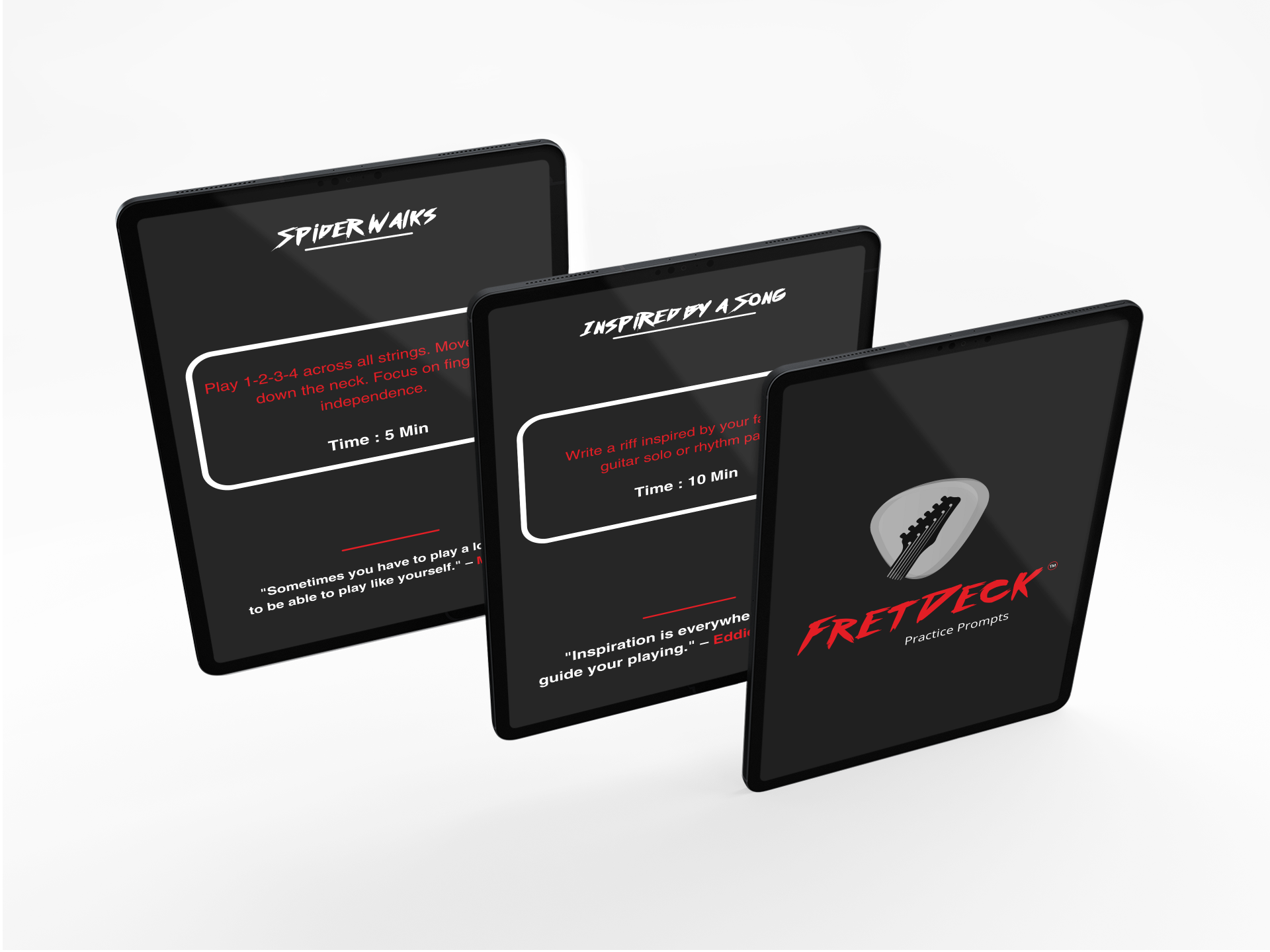
The Simple Guitar Practice System That Eliminates Guesswork
So You Can Stop Stalling… and Start Sounding Better Every Time You Pick Up the Guitar
👉 Get 52 Practice Prompts Now!
The Prison of the Pentatonic Box
Let’s be honest. You probably learned the minor pentatonic “box” pattern. It was exciting at first! For the first time, you could improvise a solo that sounded somewhat decent. However, you quickly discovered the walls of that box.
Every solo starts to sound the same. Your licks become predictable. Furthermore, when the song changes key, you’re either completely lost or fumbling to find that same familiar shape somewhere else on the neck. It feels less like creative freedom and more like a comfortable prison.
The truth is, the fretboard isn’t a series of disconnected boxes. In fact, it’s one seamless musical landscape. The pros aren’t just memorizing shapes; they see the pathways that connect everything. They understand the relationships between notes. Therefore, they can create fluid, melodic lines that tell a story. A guitar scales finder is your map to seeing this bigger picture.

What Is a Scale and Why Does It Matter?
Before we unlock the fretboard, let’s clarify what we’re looking for. A scale is simply a specific sequence of notes arranged by pitch. Think of it as the alphabet of music. For example, the words you’re reading right now are built from just 26 letters. Similarly, all the melodies and solos you love are built from the notes within a scale.

They provide the melodic framework for a song. When a band plays a song in the key of G Major, the guitarist, bassist, and singer are all pulling from the G Major scale. When you know that scale, you know which notes will sound good (“consonant”) and which will create tension (“dissonant”).
So, learning scales isn’t about boring homework. It’s about learning the language of music. Moreover, it’s the single fastest way to transform your playing from aimless noodling to intentional, powerful expression. Instead of guessing, you’ll be choosing your notes with purpose. This is why having a powerful tool to visualize these patterns is a game-changer. For a deeper dive into the essentials, check out our guide on how to learn guitar scales.
How to Use a Digital Guitar Scales Finder
The days of squinting at static diagrams in a dusty book are over. A modern digital guitar scales finder is an interactive, dynamic tool that brings the fretboard to life. Instead of one static pattern, you get a complete, interactive map of the neck. It’s a revolutionary step up from old methods.
Here’s how most of them work:
1. Choose Your Root Note: First, you select the key of the song or backing track you’re playing over. Let’s say it’s “A”. 2. Select the Scale Type: Next, you choose the scale you want to see. This could be Minor Pentatonic, Major, Blues, Dorian, Mixolydian, or dozens of others. 3. Instantly Visualize: The tool immediately highlights every single note of that scale across the entire fretboard. You can see how the so-called “boxes” are actually just small sections of one giant, connected pattern.
This visual feedback is invaluable. You instantly see that the note at the 5th fret on the low E string is the same “A” as the open A string. Suddenly, the fretboard starts to shrink. Connections appear where there was once only confusion. A high-quality guitar scales finder bridges the gap between theory and practical application right on the screen.
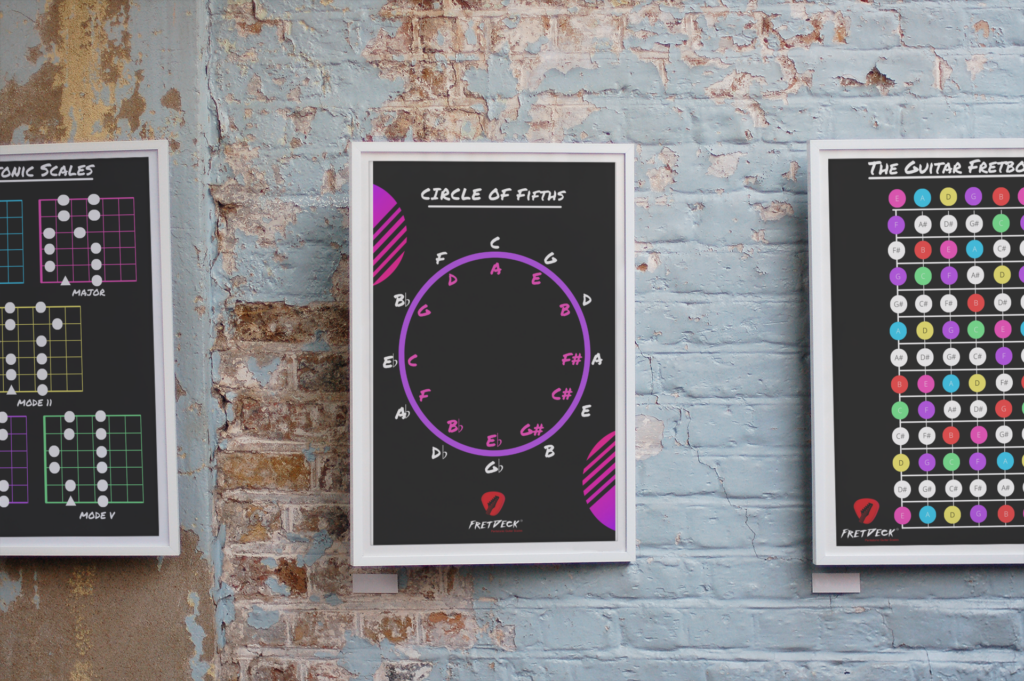
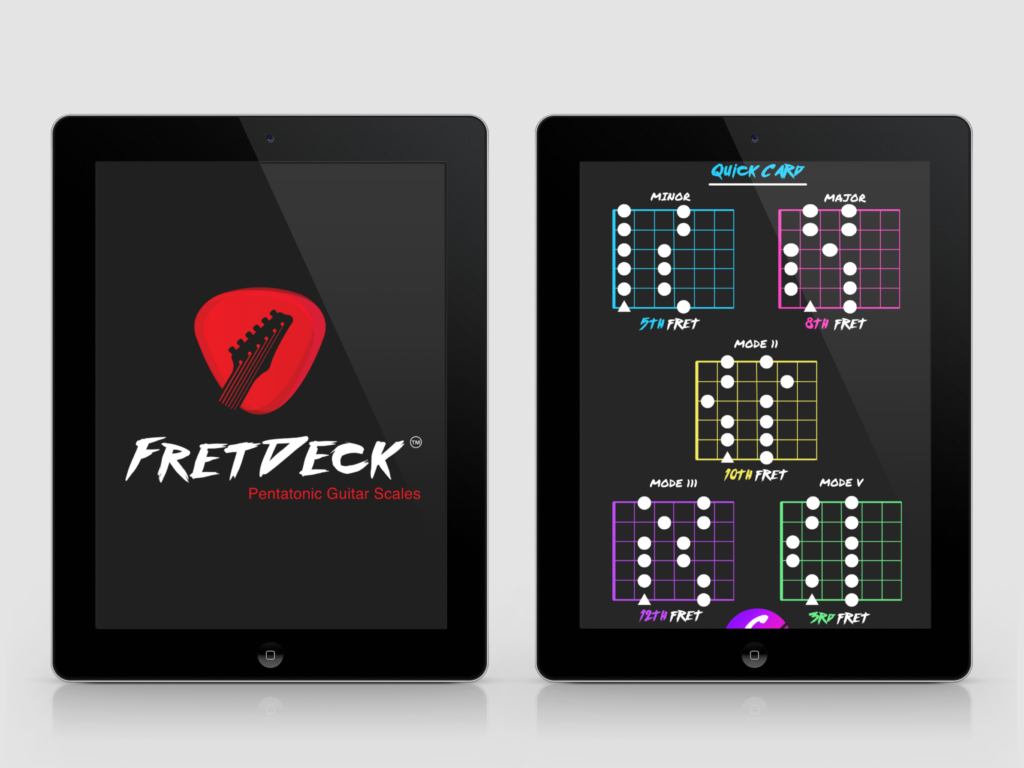
While digital tools are amazing, sometimes a physical aid can help cement the concepts. For instance, tools like the FretDeck practice card system can give you tangible prompts to apply what you’re learning from your scale finder, turning knowledge into muscle memory.
Beyond Shapes: Internalizing the Music
Here’s a secret: the goal isn’t to memorize every dot. The goal is to internalize the sound and feel of the scale. The guitar scales finder is your guide, not your crutch. Ultimately, you want to be able to hear a melody in your head and instantly know where to find those notes on the guitar.
Start by using the tool to learn one scale in one key. For example, use it to find all the notes for A Minor Pentatonic. Play them up and down. Play them on one string. Try to connect the different positions you see on the screen. The experts at Fender have some great tips on memorization techniques.
Then, and this is the most important step, pull up a backing track in A minor. Begin to improvise using only the notes you see highlighted by the scale finder. Don’t worry about playing fast or complicated licks. Just try to make melodies. As a result of this practice, you’ll start to associate the patterns on the screen with the sounds coming from your amp. You’re building a direct link between your eyes, your ears, and your fingers. For more ideas on how to structure this, our article on the best practice routine can provide a solid framework.
5 Practical Tips to Master Scales Today
Ready to put this into action? Here is a simple, step-by-step process to get the most out of any guitar scales finder.
1. Start with One Key and One Scale. Don’t overwhelm yourself. Pick one combination, like G Major, and live there for a week. Use the tool to see all the G Major notes across the neck and explore them thoroughly.
2. Connect the Positions. Instead of learning five separate “box” patterns, use the scale finder to see how they link together. Practice shifting from one position to the next, both horizontally and vertically along the neck.
3. Sing the Notes as You Play. This is a classic ear training technique. As you play each note of the scale, sing it. This forges a powerful connection in your brain between the physical action, the fretboard location, and the musical pitch.
4. Improvise Immediately. Don’t just play scales up and down. That’s a technical exercise, not music. The moment you learn a new scale, find a backing track in that key and start making music with it, no matter how simple.
5. Focus on the Root Notes. Use your scale finder to specifically locate all the root notes within the pattern. These are your “home base” notes. As you improvise, notice how landing on a root note feels resolved and complete. This is a foundational skill for all players, and you can find more like it in our beginner guitar tips.
The Simple Guitar Practice System That Eliminates Guesswork
So You Can Stop Stalling… and Start Sounding Better Every Time You Pick Up the Guitar
👉 Get 52 Practice Prompts Now!
Frequently Asked Questions (FAQ)
What’s the most important scale to learn first?
Without a doubt, the minor pentatonic scale is the best place to start. It contains only five notes per octave, making it easy to memorize, and it’s the foundation for blues, rock, and pop music. Most of the iconic guitar solos you know use this scale, as detailed in many lessons on Guitar World.
Do I need to know music theory to use a scale finder?
No, you don’t need a deep knowledge of theory to start. A scale finder is a fantastic entry point because it’s so visual. However, as you use it, you will naturally start to absorb music theory concepts, making your learning process more holistic and effective.
How often should I practice scales?
Consistency beats intensity. It is far more effective to practice scales for 10-15 minutes every day than to have one marathon two-hour session on the weekend. Daily practice builds muscle memory and keeps the information fresh in your mind.
The Simple Guitar Practice System That Eliminates Guesswork
So You Can Stop Stalling… and Start Sounding Better Every Time You Pick Up the Guitar
👉 Get 52 Practice Prompts Now!
The Simple Guitar Practice System That Eliminates Guesswork
So You Can Stop Stalling… and Start Sounding Better Every Time You Pick Up the Guitar
👉 Get 52 Practice Prompts Now!
Related posts: