
Have you ever felt like a robot playing the guitar? You use a guitar scales generator to find a pattern, you memorize the shape, and then you play it up and down. Over and over. While technically correct, it feels completely lifeless and far from the musical freedom you dream about.
You see pros effortlessly gliding across the entire neck, connecting ideas and creating melodies on the fly. You, however, feel trapped in the same two or three pentatonic boxes. This is a common and deeply frustrating roadblock. But what if the pros aren’t just “more talented”? What if they’re using a shortcut that you don’t even know exists?
The Real Reason You’re Stuck in the Pentatonic Box
Let’s be honest. The problem isn’t your a lack of effort. In fact, you’ve probably spent countless hours memorizing scale shapes from books and free online charts. You know the minor pentatonic in A, you know the major scale in C, and you might even know a few modes.
So why does it still feel so hard?
The issue is that you’ve been taught to see the fretboard as a collection of disconnected “boxes.” You learn one shape here, another shape there. However, you never learn how they C-O-N-N-E-C-T. This creates musical dead ends. As a result, the moment you try to move outside that comfortable box shape, you’re completely lost. It’s like knowing a few German phrases but not being able to hold a real conversation.
Furthermore, static charts don’t teach you the “why.” They show you what notes to play, but not why those notes work over a specific chord. This is the critical piece of the puzzle that separates noodling from true improvisation. Without this understanding, you’re just guessing. Many players find this so discouraging they abandon their goals, thinking they just “don’t have what it takes”—a classic pitfall mentioned in many beginner guitar tips.
What If You Could See the Fretboard Instead of Just Memorizing It?
Most guitarists spend years guessing where to put their fingers. They memorize shapes without understanding why — and the second they try to improvise or learn a new song, they’re lost again.
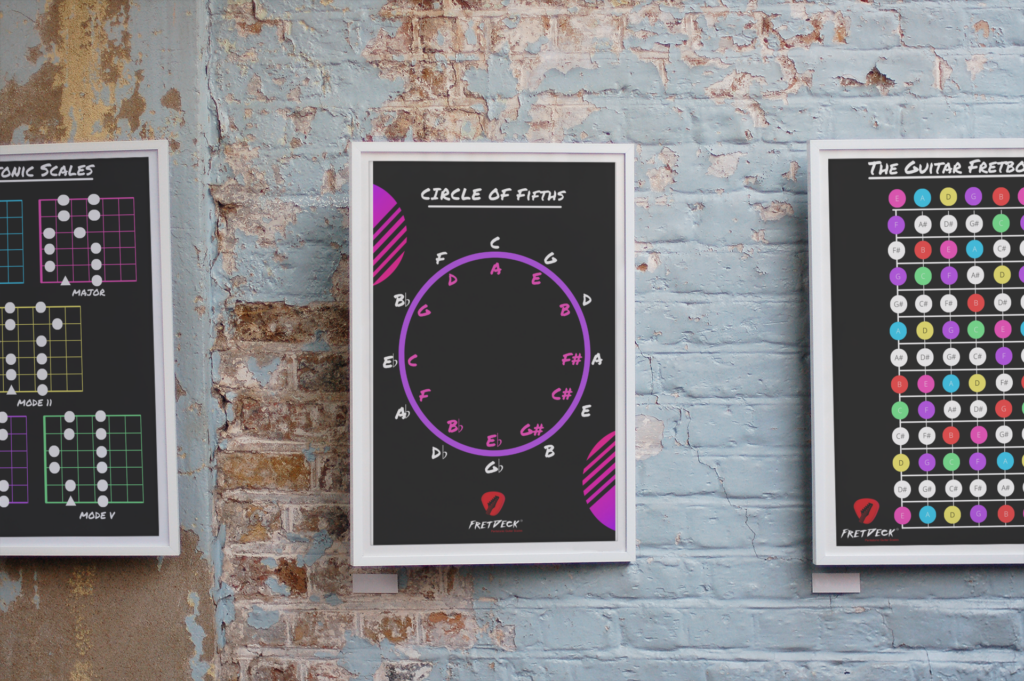
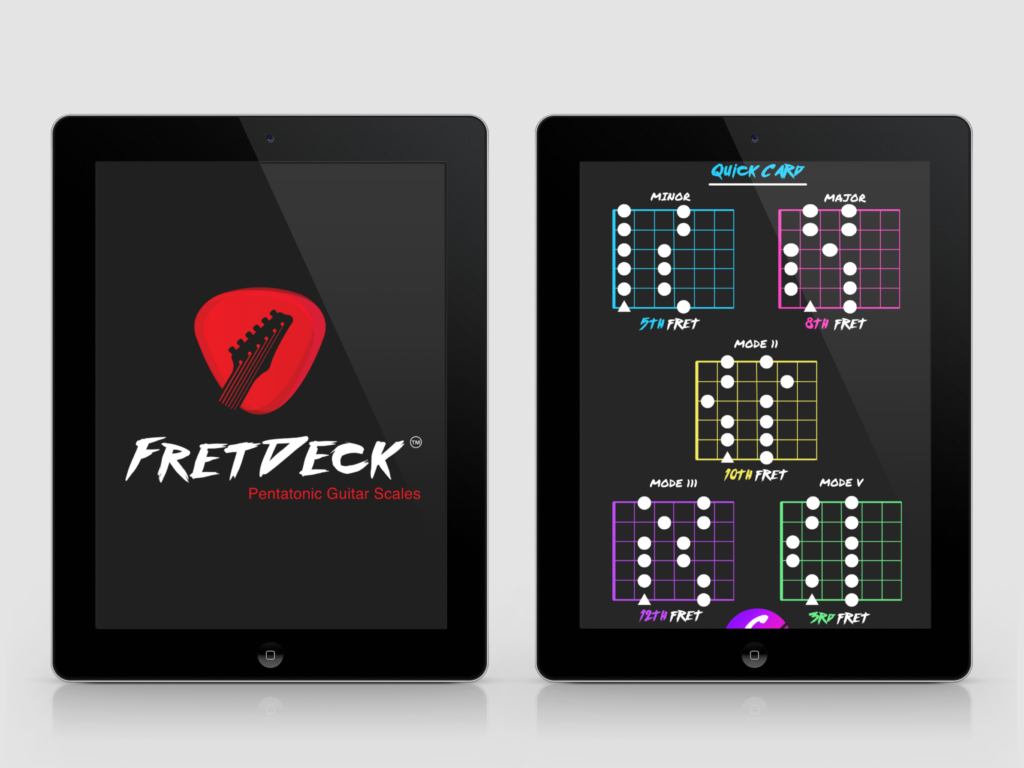
The FretDeck Practice Workstation changes that. It’s the interactive fretboard app that shows you exactly what to play, why it works, and how every note connects — so you finally understand the guitar instead of just copying tabs.

Whether you’re stuck in a rut, tired of noodling the same pentatonic box, or ready to unlock the entire neck — the FretDeck Practice Workstation gives you the visual roadmap to get there. All for just $14/month.
👉 Start Using the FretDeck Practice Workstation Now
Visualizing Music, Not Just Memorizing Shapes
The big mental shift happens when you stop memorizing isolated patterns and start visualizing the entire musical landscape of the fretboard. This is the shortcut. And a powerful, interactive guitar scales generator is the tool that makes it possible.
Imagine you want to play in G minor. Instead of just showing you one box pattern, a dynamic generator can instantly light up every single G minor note across all six strings, from the open strings to the 24th fret. Suddenly, you’re not seeing five separate boxes. You are seeing one single, interconnected super-scale.
This visual input rewires your brain. For example, you start seeing the pathway from a note on the low E string to its octave on the D string. You begin to recognize interval relationships by sight, not just by ear. Consequently, your fingers start to intuitively know where to go next, because your brain has the complete map. This is the difference between following a GPS turn-by-turn and having a bird’s-eye view of the entire city.
Why a Smart guitar scales generator Beats Static Charts
Static PDF charts and diagrams from 1990s websites are relics. They served a purpose, but they are fundamentally limited. A modern, interactive guitar scales generator offers a massive advantage because it’s dynamic and responsive to your specific needs.
Here’s why it’s a game-changer:
- Instant Transposition: Want to play that cool Lydian lick you learned in C# somewhere else? With a chart, you’d need to do mental gymnastics or find a new one. With a generator, you just click a button to change the key to E, A, or F#b. The entire fretboard updates instantly.
- Mode Exploration: Confused by modes like Dorian or Phrygian? A great generator will show you the parent major scale and then highlight the specific notes that make up the mode you’ve chosen. This makes it incredibly easy to see, for example, that Dorian is just a natural minor scale with a raised 6th. You can learn more about applying these concepts from resources like MusicRadar’s deep dives on modes.
- Custom Tunings: Experimenting with Drop D, Open G, or DADGAD? A static chart is useless here. A versatile generator allows you to input your custom tuning and then maps the scales onto your new fretboard layout.
Essentially, a static chart gives you one answer to one question. A dynamic generator is a powerful engine that can provide infinite answers to any question you have about scales and the fretboard. It’s the ultimate practice partner.
What If You Could See the Fretboard Instead of Just Memorizing It?
Most guitarists spend years guessing where to put their fingers. They memorize shapes without understanding why — and the second they try to improvise or learn a new song, they’re lost again.
The FretDeck Practice Workstation changes that. It’s the interactive fretboard app that shows you exactly what to play, why it works, and how every note connects — so you finally understand the guitar instead of just copying tabs.
Whether you’re stuck in a rut, tired of noodling the same pentatonic box, or ready to unlock the entire neck — the FretDeck Practice Workstation gives you the visual roadmap to get there. All for just $14/month.
👉 Start Using the FretDeck Practice Workstation Now
Connecting Scales to Chords in Real-Time
Here is the master key to unlocking improvisation: understanding which scales work over which chords. Most players learn scales and chords as two separate subjects. The real magic, however, happens when you merge them.
This is where a high-quality scale generator truly shines. Sophisticated tools can show you the notes of a chord (the arpeggio) and then overlay the notes of a compatible scale. For instance, you can see an Am7 chord and instantly see how the A minor blues scale fits perfectly over it, with the chord tones highlighted.
This immediate visual feedback is priceless. You immediately see the “safe” notes (the chord tones) and the “flavor” notes (the other scale tones). This knowledge empowers you to solo with confidence, weaving melodies that sound intentional and musical, not random. It transforms your understanding of music theory from an abstract concept into a practical, usable tool for your own playing. In short, it’s the bridge between knowing your chord progression guide and actually making music with it.
5 Drills to Master the Fretboard With a Scale Generator
Ready to put this into action? Don’t just stare at the patterns. Use these specific drills to integrate the information into your muscle memory and musical brain. A solid best practice routine is crucial.
1. The One-String Challenge. Pick a key and a scale (e.g., E Minor Pentatonic). Use the generator to display the scale across the entire neck. Now, try to play a solo using only the B string. This forces you to move horizontally up and down the neck instead of staying in one vertical box.
2. Connecting Two Positions. Choose a scale and have the generator show you all the positions. Focus on just two adjacent “box” shapes. Practice improvising back and forth between them, finding smooth pathways and “connector” notes that bridge the gap.
3. Mode-Switching Practice. Set up a simple backing track that vamps on one chord, like an Am7. Use your generator to switch between A Dorian, A Phrygian, and A Aeolian (natural minor). Pay close attention to how changing just one or two notes completely alters the mood and color of your melody.
4. Chord Tone Targeting. This is a pro-level exercise. Pull up a chord progression like C – G – Am – F. As the progression plays, use your generator to highlight the chord tones for each chord as it happens. Your goal is to land on a chord tone right as the chord changes. This makes your solos sound incredibly melodic and locked-in.
5. Finding New Scales. Once you are comfortable, use the guitar scales generator to explore something new. Try the Harmonic Minor scale for a neoclassical vibe, or the Lydian Dominant scale for a cool, jazzy fusion sound. Exploring new sounds is one of the best ways to stay inspired. An interactive visual tool like the FretDeck Practice Workstation is ideal for this, as it allows you to see these complex relationships in a simple, intuitive way. Great-sounding backing tracks can be found on sites like Fender Play.
Frequently Asked Questions (FAQ)
Can a guitar scales generator really replace a teacher?
No, and it’s not meant to. A great teacher provides personalized feedback, identifies your specific weaknesses, and guides your musical development. However, a guitar scales generator is an incredibly powerful supplementary tool. It acts as your 24/7 theory expert, allowing you to explore concepts visually and practice them immediately, reinforcing what your teacher shows you.
What’s the difference between a scale generator and a scale finder?
The terms are often used interchangeably, but there’s a subtle distinction. A “scale finder” typically helps you identify a scale based on a set of notes you input. A “scale generator” typically does the opposite: you tell it the root note and scale type you want, and it generates the visual pattern for you on the fretboard. For a practice tool, a generator is far more useful.
Are these tools useful for advanced players too?
Absolutely. While beginners use them to break out of the pentatonic box, advanced players use them for more complex tasks. This includes visualizing unique scales (like the Hungarian Minor or Neapolitan scales), exploring modal interchange, understanding advanced jazz harmony, or quickly mapping out scales for alternate tunings. The tool scales with your ability.
What If You Could See the Fretboard Instead of Just Memorizing It?
Most guitarists spend years guessing where to put their fingers. They memorize shapes without understanding why — and the second they try to improvise or learn a new song, they’re lost again.
The FretDeck Practice Workstation changes that. It’s the interactive fretboard app that shows you exactly what to play, why it works, and how every note connects — so you finally understand the guitar instead of just copying tabs.
Whether you’re stuck in a rut, tired of noodling the same pentatonic box, or ready to unlock the entire neck — the FretDeck Practice Workstation gives you the visual roadmap to get there. All for just $14/month.
👉 Start Using the FretDeck Practice Workstation Now

❌ Stop Guessing. Start Shredding.
If you’re still fumbling through scale patterns and box shapes… it’s costing you progress.
FretDeck™ is the no-fluff system that shows you exactly how to master the fretboard—fast. Early access.
⚡️ This isn’t for dabblers. It’s for players who want results.
👉 Discover FretDeck™ Here
Early access. Limited rewards. Don’t wait.
Related posts: