

Finding the right easy guitar chords for beginners songs can feel like the first, most impossible step on your guitar journey. You just want to play a song, but your fingers ache, the strings buzz, and every online tutorial seems to show a different “simple” chord that feels anything but. The truth is, you’ve likely been a victim of a pervasive myth that holds back countless new players.
This myth tells you to start with specific chords that, while fundamental, are physically demanding for untrained hands. As a result, you get frustrated and feel like you’re failing, when in reality, the method is failing you. We’re about to expose that myth and give you a new starting point. A better way that builds momentum and confidence from your very first practice session.
Why Most “Beginner” Chords Aren’t Actually Easy
You were probably told to learn C Major, G Major, and maybe D Major. It seems logical. These chords are everywhere in popular music. However, this is also where the frustration begins.
For example, the standard C Major chord requires a significant finger stretch that new players simply don’t have. Your ring finger has to reach over to the 3rd fret of the A string while your other fingers hold down notes on the first and second frets. Consequently, you get muted strings and a sore hand.
Similarly, the classic G Major chord often requires cramming three fingers into a tight space or using your pinky, a finger that has almost zero strength when you’re just starting. It feels awkward and clumsy. You spend more time fighting your own fingers than making music. This struggle makes you think the problem is you, when the real issue is the starting line. You’re being asked to run a marathon before you’ve even learned to walk.
This outdated approach is the single biggest reason people give up within the first 90 days. But what if there were a set of chords that felt natural from the start? What if you could play real, recognizable song progressions in your very first week?
What If You Could See the Fretboard Instead of Just Memorizing It?
Most guitarists spend years guessing where to put their fingers. They memorize shapes without understanding why — and the second they try to improvise or learn a new song, they’re lost again.
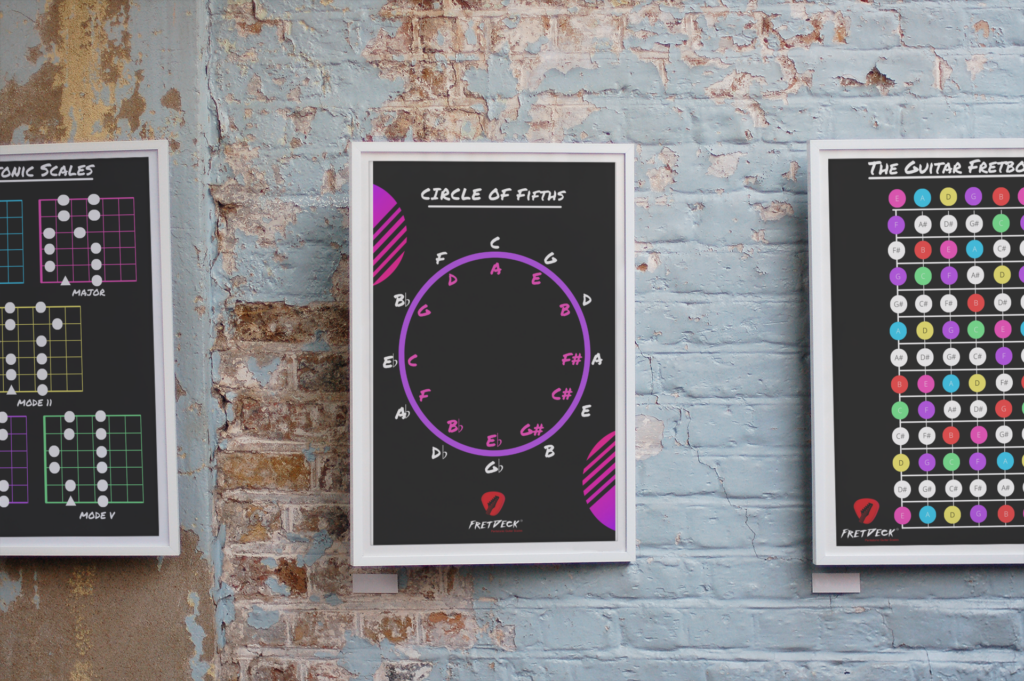
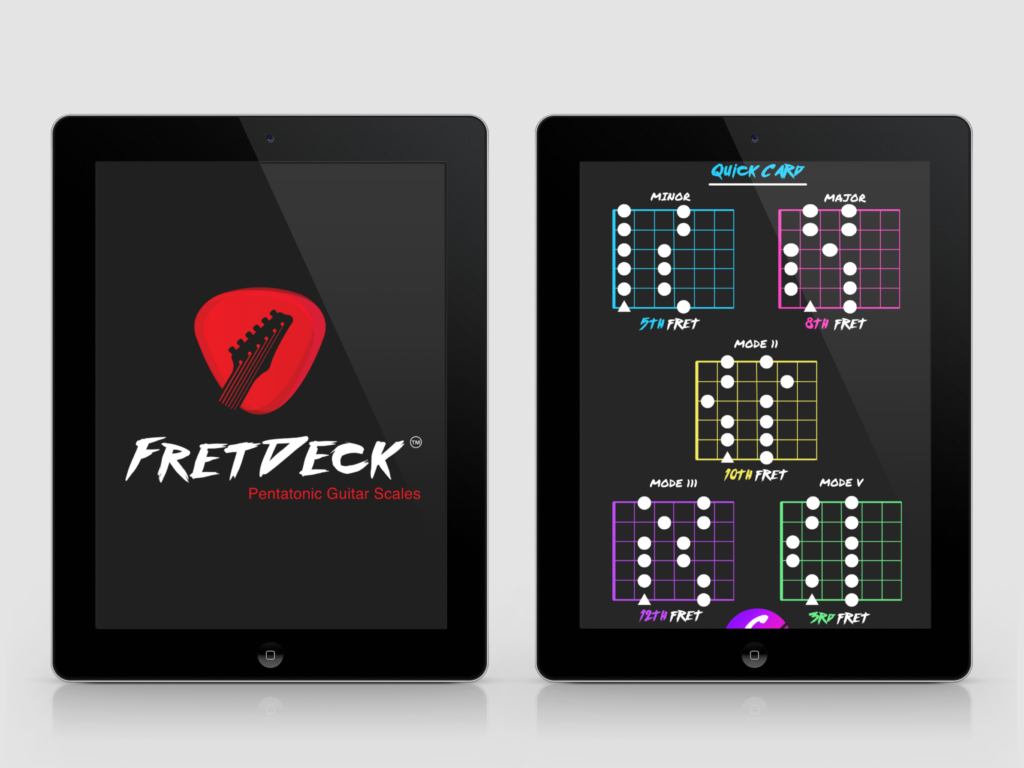
The FretDeck Practice Workstation changes that. It’s the interactive fretboard app that shows you exactly what to play, why it works, and how every note connects — so you finally understand the guitar instead of just copying tabs.

Whether you’re stuck in a rut, tired of noodling the same pentatonic box, or ready to unlock the entire neck — the FretDeck Practice Workstation gives you the visual roadmap to get there. All for just $14/month.
👉 Start Using the Fretdeck Practice Workstation Now
The ‘Stepping-Stone’ Chord Method
Instead of fighting with difficult, stretchy shapes, we’re going to use “stepping-stone” chords. These are simplified versions of common chords that sound great and are incredibly easy to switch between. In fact, they all share a common “anchor.”
Let’s focus on four magic chords: G, Cadd9, Em7, and Dsus4.
Here’s the secret: for all these chords, you will “anchor” your ring finger on the 3rd fret of the B string and your pinky finger on the 3rd fret of the high E string. These two fingers will never move.
- G Major (simplified): Place your middle finger on the 3rd fret of the low E string. Keep your anchor fingers in place. Strum all six strings. It sounds full and beautiful.
- Cadd9: Move your middle finger to the 3rd fret of the A string and your index finger to the 2nd fret of the D string. Keep the anchors. Strum the bottom five strings.
- Em7 (simplified): Simply place your index finger on the 2nd fret of the A string and your middle finger on the 2nd fret of the D string. Keep the anchors. Strum all six strings.
- Dsus4: Place your index finger on the 2nd fret of the G string. Keep the anchors. Strum the bottom four strings.
Can you see the breakthrough here? The most difficult part of learning chords isn’t forming the shape; it’s transitioning between them. With this method, you only have to move one or two fingers. This is how you build confidence and the foundational muscle memory needed to play real songs, fast. For an effective way to structure this practice, check out our guide to the best practice routine.
The Core easy guitar chords beginners Must Master First
Once you’ve built initial confidence with the stepping-stone chords, it’s time to learn the true foundational open chords. However, we’re going to approach them strategically. The key is to master the chords that use fewer fingers and require less stretching first.
These are the essential easy guitar chords for beginners songs should truly focus on:
1. E minor (Em): This is arguably the easiest chord on the guitar. You only need two fingers.
- Place your middle finger on the 2nd fret of the A string.
- Place your ring finger on the 2nd fret of the D string.
- Strum all six strings. It’s that simple, and it sounds fantastic.
2. A minor (Am): This shape is compact and feels natural under your fingers.
- Place your index finger on the 1st fret of the B string.
- Place your middle finger on the 2nd fret of the D string.
- Place your ring finger on the 2nd fret of the G string.
- Strum the bottom five strings (from the A string down).
Notice how similar the Am shape is to the E Major chord below? This is intentional.
3. E Major (E): It’s the exact same shape as E minor, but with one extra finger.
- Place your index finger on the 1st fret of the G string.
- Place your middle finger on the 2nd fret of the A string.
- Place your ring finger on the 2nd fret of the D string.
- Strum all six strings.
By learning these specifically, you train your fingers to form common shapes, building dexterity methodically. Soon, you’ll be ready to explore more complex musical ideas, like those found in our guide to learning guitar scales. Many new players find that mastering these core chords unlocks hundreds of easy guitar chords for beginners songs.
What If You Could See the Fretboard Instead of Just Memorizing It?
Most guitarists spend years guessing where to put their fingers. They memorize shapes without understanding why — and the second they try to improvise or learn a new song, they’re lost again.
The FretDeck Practice Workstation changes that. It’s the interactive fretboard app that shows you exactly what to play, why it works, and how every note connects — so you finally understand the guitar instead of just copying tabs.
Whether you’re stuck in a rut, tired of noodling the same pentatonic box, or ready to unlock the entire neck — the FretDeck Practice Workstation gives you the visual roadmap to get there. All for just $14/month.
👉 Start Using the Fretdeck Practice Workstation Now
Bringing Your Chords to Life with Strumming
Knowing easy guitar chords for beginners songs is useless if you can’t apply rhythm. Many beginners make the mistake of trying complex strumming patterns too early. Instead, let’s start with the most common and versatile pattern in all of music.
We’ll call it the “campfire” pattern: Down, Down-Up, , Up-Down-Up.
Break it down:
1. Down: Start with a simple downstroke on beat 1.
2. Down-Up: Play a downstroke on beat 2, immediately followed by an upstroke.
3. Up-Down-Up: On beats 3 and 4, you’ll fill in the rhythm with this motion.
Practice this pattern on a single, easy chord like E minor. Say it out loud as you play: “ONE, TWO-and, , FOUR-and”. The key is to keep your hand moving in a steady down-up motion, even when you aren’t hitting the strings. Your arm is the metronome.
Once you feel comfortable, try switching between two chords. For example, play the pattern once on E minor, then switch to A minor and play it again. This exercise is the bridge between knowing chords and playing songs. For more advanced patterns, Guitar World offers a great library of strumming techniques. A solid understanding of this can elevate any chord progression guide.
5 Drills to Make Your Chord Changes Smooth
Clean, confident chord changes separate beginners from intermediate players. Here are five drills to get you there faster.
1. The One-Minute Change Drill: Pick two chords (e.g., G and Cadd9). Set a timer for 60 seconds and see how many times you can cleanly switch between them. Each change is one point. Log your score and try to beat it every day.
2. The “Air Change” Drill: Practice forming the chord shapes in the air without your guitar. This builds muscle memory without the complication of pressing strings. Do it while watching TV or waiting in line.
3. The “Look Away” Drill: Force your fingers to find their place without looking at the fretboard. Your muscle memory will develop twice as fast. It will be slow and clumsy at first, but stick with it.
4. The “Slow Motion” Drill: Using a metronome at a very slow tempo (like 50 bpm), switch chords exactly on the beat. The goal is perfect, clean execution, not speed. Speed will come naturally as a result of precision. This is one of our top beginner guitar tips.
5. The “Rhythm Mute” Drill: Fret a chord, then lift your fingers just enough so the strings are muted but your fingers are still touching them. Strum your pattern on the muted strings, and on the last beat, press down to ring the chord out. This trains your fretting hand and strumming hand to work in perfect sync.
easy guitar chords for beginners songs can use is often frustrating, but these drills, combined with the stepping-stone method, provide a clear path forward. Interactive tools like the FretDeck practice workstation can also be invaluable for visualizing these chord shapes and changes on the fretboard.
Frequently Asked Questions (FAQ)
What are the absolute first 3 chords I should learn?
For the fastest results and least frustration, you should learn G (simplified), Cadd9, and Em7 using the “anchor finger” method described in this article. These three chords sound amazing together, are used in countless songs, and are incredibly simple to switch between, which builds critical momentum right away.
How do I stop my fingers from hurting so much?
Finger pain is normal, but you can manage it. First, keep your practice sessions short (15-20 minutes) but frequent. Second, ensure your guitar has light-gauge strings. Finally, focus on using the very tips of your fingers and pressing just hard enough to get a clear note. Your calluses will build up within a couple of weeks. As Fender’s new player guide explains, this is a rite of passage for every guitarist.
Why do my chords sound buzzy or muted?
This is almost always caused by one of three things. First, your fingers may not be arched enough, causing them to accidentally touch and mute adjacent strings. Curl your fingers like you’re holding a ball. Second, you might not be pressing down quite hard enough. Third, make sure you’re using your very fingertips, not the fleshy pad, to press the string down. The goal is clean, precise contact.
Mastering these easy guitar chords for beginners songs need is your ticket to finally playing the music you love. Ditch the old, frustrating methods and embrace this smarter, faster approach.
What If You Could See the Fretboard Instead of Just Memorizing It?
Most guitarists spend years guessing where to put their fingers. They memorize shapes without understanding why — and the second they try to improvise or learn a new song, they’re lost again.
The FretDeck Practice Workstation changes that. It’s the interactive fretboard app that shows you exactly what to play, why it works, and how every note connects — so you finally understand the guitar instead of just copying tabs.
Whether you’re stuck in a rut, tired of noodling the same pentatonic box, or ready to unlock the entire neck — the FretDeck Practice Workstation gives you the visual roadmap to get there. All for just $14/month.
👉 Start Using the Fretdeck Practice Workstation Now
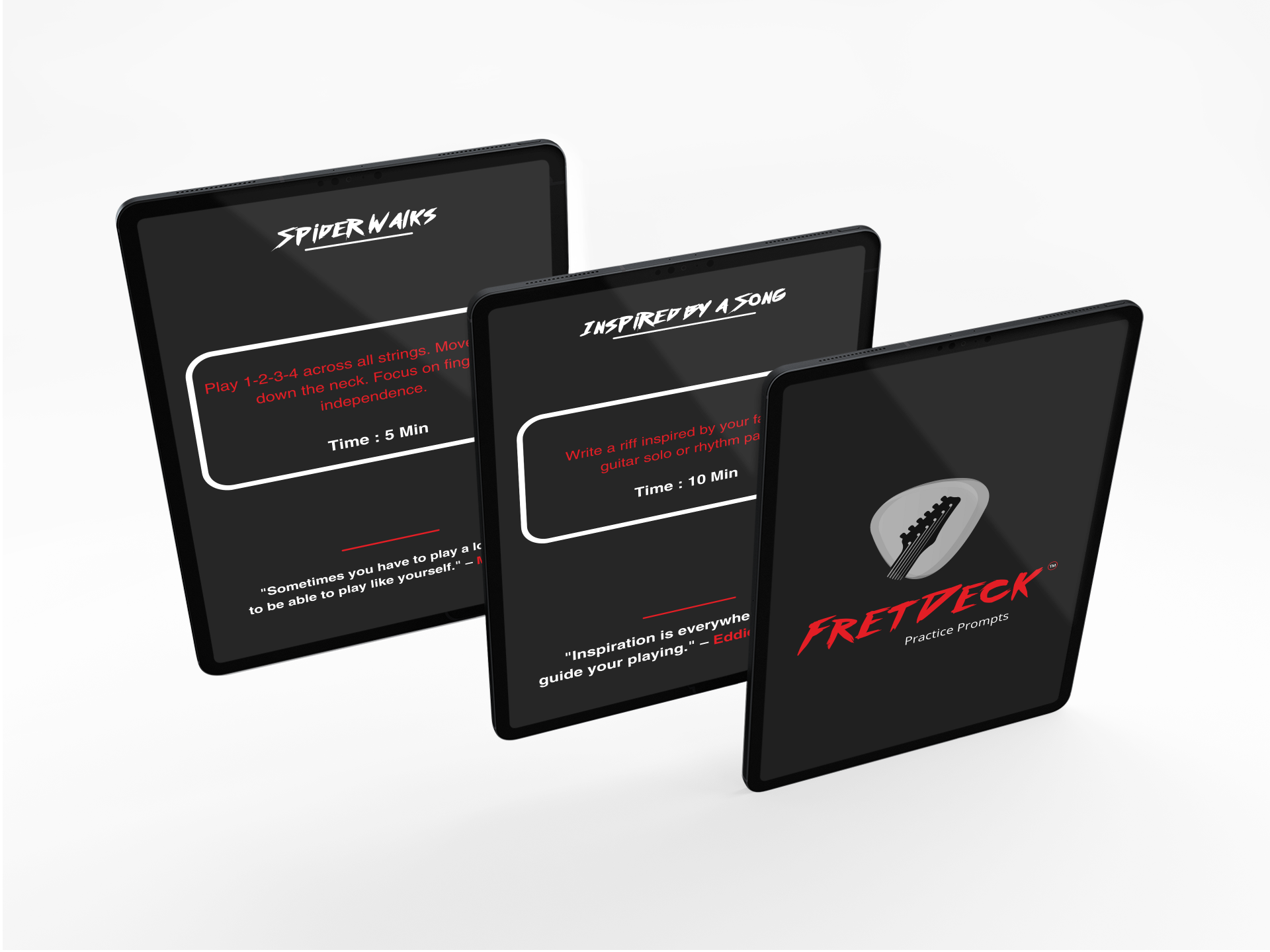
The Simple Guitar Practice System That Eliminates Guesswork
So You Can Stop Stalling… and Start Sounding Better Every Time You Pick Up the Guitar
👉 Get 52 Practice Prompts Now!
Related posts: