
If you’ve been searching for a comprehensive guitar scales list, you’ve landed in the right place. You know that scales are the secret language of music, the building blocks for every jaw-dropping solo and memorable riff you’ve ever heard. However, without a clear map, it feels like stumbling around in the dark.
You pick up your guitar, full of ambition. You want to wail like your heroes. But instead, you end up playing the same three licks you learned last year. It’s frustrating. Without a solid guitar scales list to guide you, progress feels impossible. This guide will change that.
Why Most Guitarists Get Stuck Running in Circles
Does this sound familiar? You’ve learned a “box” shape, probably the minor pentatonic. It was a breakthrough at first. For the first time, you could play along with a track and have it sound… well, okay.
But now, you’re trapped in that box. Every solo you try to create sounds the same. You hear other players gliding effortlessly all over the neck, creating emotional, dynamic phrases, and you wonder, “What do they know that I don’t?” The secret isn’t magic; it’s a deeper understanding of scales.
The problem is that most information is scattered. You find one scale here, another there, with no context for how they connect or when to use them. As a result, you feel overwhelmed and stuck. You’re not making music; you’re just running finger exercises with no purpose. It’s time to break out of that cage.
The Simple Guitar Practice System That Eliminates Guesswork
So You Can Stop Stalling… and Start Sounding Better Every Time You Pick Up the Guitar
👉 Get 52 Practice Prompts Now!
The Foundational Scales: Start Here
Before you can fly, you need to learn to walk. In the world of guitar, your first steps are two of the most powerful and widely used scales in all of modern music. Forget the hundreds of obscure scales for now; master these two first.

First, you have the Minor Pentatonic scale. This is the sound of rock, blues, and pop music. It has a soulful, slightly melancholic vibe that works over an incredible amount of music. For example, its simple five-note structure makes it easy to memorize and use immediately. You likely already know one shape of this scale. The key is learning how it connects all over the fretboard.
Next, you have its happier sibling: the Major Pentatonic scale. This scale is the sound of country, joyful pop, and classic rock anthems. It’s bright, open, and consonant. Interestingly, it contains the exact same notes as the minor pentatonic, just starting from a different root note. Learning the relationship between these two is a massive “aha” moment for guitarists. If you truly want to learn guitar scales, starting with these two pentatonics is non-negotiable. They form the bedrock of your melodic vocabulary.

Expanding Your Guitar Scales List: The Modes
Once you’re comfortable with the pentatonics, it’s time to add more colors to your sonic palette. This is where the modes of the major scale come in. Don’t let the fancy names (Dorian, Mixolydian, etc.) intimidate you. A mode is simply the major scale, but with a different starting note, which gives each one a unique mood and flavor.
This is where your guitar scales list truly begins to unlock the entire fretboard. For instance, the Dorian mode is just one note different from the minor scale, but that one note gives it a jazzy, sophisticated sound perfect for Santana-style solos. Furthermore, the Mixolydian mode is a major scale with a flattened 7th, making it the go-to choice for bluesy, dominant-chord-based rock and country.
Specifically, there are seven modes:
- Ionian: The standard major scale. (Happy, upbeat)
- Dorian: A minor scale with a major 6th. (Jazzy, cool)
- Phrygian: A minor scale with a flat 2nd. (Spanish, metal)
- Lydian: A major scale with a sharp 4th. (Dreamy, magical)
- Mixolydian: A major scale with a flat 7th. (Bluesy, rock)
- Aeolian: The natural minor scale. (Sad, melancholic)
- Locrian: A complex, dissonant sound rarely used in lead playing.
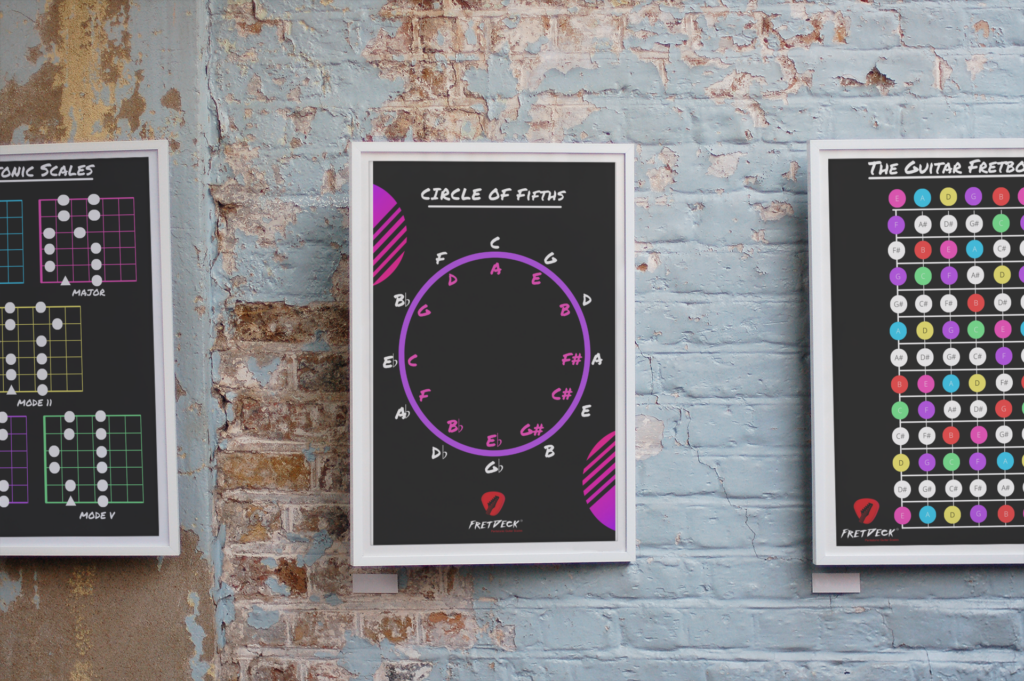
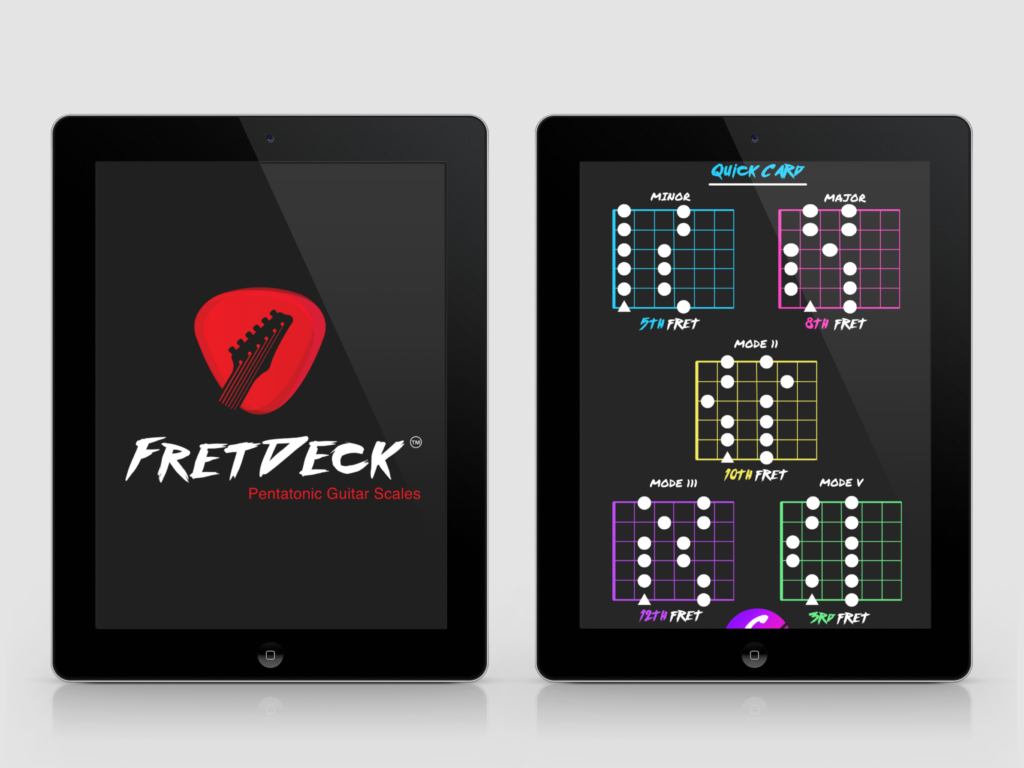
Studying these modes will transform your playing. You’ll move from just playing “right notes” to playing notes that evoke specific emotions. Visual tools like FretDeck can be incredibly helpful for seeing how these patterns lay out across the neck. To truly make these scales a part of your playing, you must commit to a best practice routine that focuses on one mode at a time. The experts at Guitar World have a fantastic deep-dive on modes that can supplement your journey.
The Simple Guitar Practice System That Eliminates Guesswork
So You Can Stop Stalling… and Start Sounding Better Every Time You Pick Up the Guitar
👉 Get 52 Practice Prompts Now!
Adding Exotic Flavors: Blues and Harmonic Minor
Ready to add some spice? Two more scales are essential for your toolkit, especially if you want to explore specific genres and create more tension in your solos. These scales introduce notes from outside the standard major and minor framework.
The first is the Blues scale. This one is simple. You just take the minor pentatonic scale and add one note: the “blue note,” which is a flattened 5th. This single note creates the unmistakable tension and release that defines the blues. It’s that gritty, crying sound you hear in the playing of B.B. King and Stevie Ray Vaughan. Moreover, its application extends far beyond blues, finding its way into rock, jazz, and fusion. Fender’s official blog offers great lessons on its history and application.
The second is the Harmonic Minor scale. This scale has a dramatic, almost classical sound thanks to its raised 7th degree. This large interval leap creates a sense of urgency and exoticism. You’ll hear it everywhere in neoclassical metal (think Yngwie Malmsteen), but also in Gypsy jazz and traditional folk music. Understanding how this scale works over minor chords will instantly make your playing sound more sophisticated. Eventually, you’ll see how this scale directly relates to building powerful musical phrases within a chord progression guide.
How to Actually Practice Your Scales
Having a great guitar scales list is one thing; knowing how to use it is another. Sitting and running scales up and down mindlessly won’t make you a better musician. You need a plan. Therefore, follow these steps to turn these patterns into real music.
1. Start Slow, Use a Metronome. The goal is not speed; it’s accuracy, tone, and timing. Set a metronome to a slow tempo (like 60 bpm) and play one note per click. Consequently, your hands will build clean, precise muscle memory. Every note should ring out clearly.
2. Focus on One Position at a Time. Don’t try to learn all seven Dorian mode shapes in one day. Instead, master one box shape. Learn it so well you can play it forwards, backward, and in different note sequences without thinking.
3. Connect the Patterns. Once you’re comfortable with individual positions, the next step is to connect them. Practice shifting from one box shape to the next, both horizontally up the neck and vertically across the strings. This is how you break free and navigate the entire fretboard.
4. Improvise Over Backing Tracks. This is the most crucial step. Find a backing track in a key you’re practicing (YouTube is full of them). Then, start improvising using the scale you’re working on. Try to create melodies, not just run exercises. Hum a line, then try to play it. This connects your ear to your fingers.
5. Target Chord Tones. As you’re improvising, pay attention to the underlying chords. The strongest, most melodic notes you can play are the notes that make up the chord you’re playing over (the root, 3rd, and 5th). Use the scale notes as pathways to land on these powerful chord tones.
Frequently Asked Questions (FAQ)
Let’s answer some common questions about building and using your guitar scales list.
What is the first scale a beginner should learn?
Without a doubt, the Minor Pentatonic scale is the best starting point. Its simple, five-note pattern is easy to memorize, and it sounds good over an enormous range of popular music, from blues and rock to pop. It provides the quickest path to start improvising and having fun.
How many guitar scales are there?
Technically, there are thousands if you count every possible permutation and cultural variation. However, this is overwhelming and impractical. Most professional guitarists rely on a core group of about 10-15 essential scales. Focus on mastering the ones in this guide before venturing into more obscure territory.
How do I use scales to write a solo?
Think of a scale as a palette of available notes. A great solo isn’t about playing all the notes, but about choosing the right notes. Start by identifying the key of the song. Then, use the corresponding scale as your guide. Try to create short, memorable phrases (licks) and repeat them with slight variations. The most important thing is to listen to the song and let the melody tell a story.
The Simple Guitar Practice System That Eliminates Guesswork
So You Can Stop Stalling… and Start Sounding Better Every Time You Pick Up the Guitar
👉 Get 52 Practice Prompts Now!
Related posts: