
Are you searching for a real fretboard mastery system that finally connects all the dots on your guitar? You’ve learned your cowboy chords and can jam a few pentatonic licks, but there’s a huge, intimidating gap between where you are and where you want to be. The rest of the neck feels like a mysterious, unexplored territory.
You see your guitar heroes gliding effortlessly up and down the fretboard. They aren’t just playing memorized licks. Instead, they’re speaking a language, and the fretboard is their vocabulary. The truth is, they aren’t magical. They just have a system.
This article gives you that system. It’s a method for decoding the fretboard, making sense of the chaos, and turning it into your creative playground once and for all.
Why You Feel Stuck on the Fretboard
Does this sound familiar? You pick up your guitar, full of inspiration. You want to improvise a soulful solo or come up with a cool new chord progression. But then… you find yourself stuck in that same old pentatonic “box” at the 5th fret.
You try to move up the neck, but every note feels like a random guess. You can’t find the “right” notes. Consequently, your solos sound disconnected and your chord choices feel limited. It’s incredibly frustrating.
This isn’t a lack of talent. It’s a lack of a clear mental map. Without a system, the fretboard is just 6 strings and 22 frets of pure confusion. You might know a few scale shapes but struggle to see how they connect. As a result, you never truly feel free on the instrument.
The Simple Guitar Practice System That Eliminates Guesswork
So You Can Stop Stalling… and Start Sounding Better Every Time You Pick Up the Guitar
👉 Get 52 Practice Prompts Now!

What Is a Fretboard Navigation System?
First, let’s redefine what a navigation system for the fretboard really is. It isn’t about memorizing thousands of scale patterns or every single note on the fretboard by rote. That’s inefficient and, frankly, not very musical.
A true system is a framework of interconnected concepts. It’s a way of seeing the underlying logic of the fretboard. Moreover, this framework allows you to find any note, build any chord, and play any scale, anywhere on the neck, without hesitation.
Think of it like learning to navigate a city. You could memorize a thousand different routes. Or, you could learn the layout of the main streets, understand the grid system, and know how to read a map. Which method gives you more freedom? The answer is obvious. The goal is to build your own mental map of the neck.

Deconstructing the Fretboard Mastery System
So, what does this powerful fretboard mastery system actually consist of? It’s built on three core pillars that work together. When you understand how they relate to each other, the entire neck opens up for you.
Specifically, these pillars are:
1. Note Recognition: Knowing the musical alphabet and where to find the notes. 2. Interval Awareness: Understanding the distance and sound between any two notes. 3. Shape Visualization: Using systems like CAGED or 3-Note-Per-String to map out scales and arpeggios.
For example, note recognition is your foundation. You must know the notes on the E and A strings without thinking. From there, you can use octave shapes to find any other note instantly. This simple skill alone is a complete game-changer. Then, you layer on intervals and shapes to create a complete picture. This approach is far more effective than just memorizing scale patterns in isolation.
The Simple Guitar Practice System That Eliminates Guesswork
So You Can Stop Stalling… and Start Sounding Better Every Time You Pick Up the Guitar
👉 Get 52 Practice Prompts Now!
Pillar 1: Mastering Note Recognition on the Neck
The first step is the most fundamental. You must learn the notes. However, you don’t need to do it all at once. Start with the two most important strings: the low E and the A string.
Why these two? Because most of the chords and scales you play have their root notes on these strings. For example, your E-shape and A-shape barre chords are built from these roots. If you know that the note on the 8th fret of the low E string is a C, you can instantly play a C major or C minor barre chord.
A great exercise is to say the name of each note as you play it. Go up the E string one fret at a time: F, F#, G, G#, and so on. Do this for five minutes every day. Soon, you’ll be able to pinpoint any note on the bottom two strings without even thinking.
Pillar 2: Understanding Intervals, the Building Blocks of Music
Intervals are simply the distance between two notes. Every sound in music—melodies, chords, and scales—is made of intervals. Understanding them is like learning the grammar of the musical language.
Instead of just seeing a G major chord shape, you’ll see a root note (G), a major third (B), and a perfect fifth (D). This knowledge is your key to creative freedom. Furthermore, it allows you to build chords on the fly, create interesting melodies, and understand why certain notes sound good together.
You can start practicing this by playing any note (your root) and then finding other notes in relation to it. For instance, find your root note on the D string. Where is the perfect fifth? It’s two frets higher on the G string. As a result of this practice, you’ll begin to see and hear these relationships all over the neck. It’s a crucial part of any fretboard mastery system.
Pillar 3: Using Shapes (CAGED and 3NPS) as Your GPS
Once you know your notes and intervals, shape systems like CAGED become incredibly powerful. The CAGED system shows you how five basic open chord shapes (C, A, G, E, and D) are connected all the way up the neck. As explained by a great Guitar World article, it’s a movable and interconnected map.
Each shape represents a “zone” on the fretboard for a particular key. Within each zone, you can find the chords, arpeggios, and scale patterns for that key. This is how you break out of the single pentatonic box. You learn to connect the five boxes to create one giant “super box” that covers the entire fretboard.
Alternatively, the 3-Note-Per-String (3NPS) system is another popular method. It uses consistent three-note patterns on each string to map out scales. Top players like Joe Satriani often use this system for its fluid and predictable feel for fast runs. In truth, many advanced players combine ideas from both systems. Experiment and find what clicks for you. This is how you internalize a truly personal fretboard mastery system.
Practical Steps to Build Your System Today
Reading about this is one thing; putting it into practice is another. Here are five actionable steps you can start with today.
1. Drill the E and A Strings: Spend 5-10 minutes at the start of every practice session naming the notes on the 6th and 5th strings. Go slowly and be accurate.
2. Learn Your Octaves: Find a note on the low E string. The same note (the octave) can be found two strings higher and two frets up. This shape works everywhere except when starting on the D and G strings. Use this trick to map out the entire neck.
3. Choose One CAGED Shape: Don’t try to learn the whole system at once. Pick one key, like G major, and master just one CAGED shape for it. For example, the “E” shape at the 3rd fret. Learn the chord, the arpeggio, and the major scale within that single box. Knowing one zone deeply is better than knowing five zones shallowly. You can find many guides on how to learn guitar scales to get started.
4. Sing Your Intervals: Play a root note. Then, play a second note and sing the interval between them (e.g., “major third”). This ear training connects what you see on the fretboard to what you hear in your head, a technique you can dive into with this excellent MusicRadar guide on intervals.
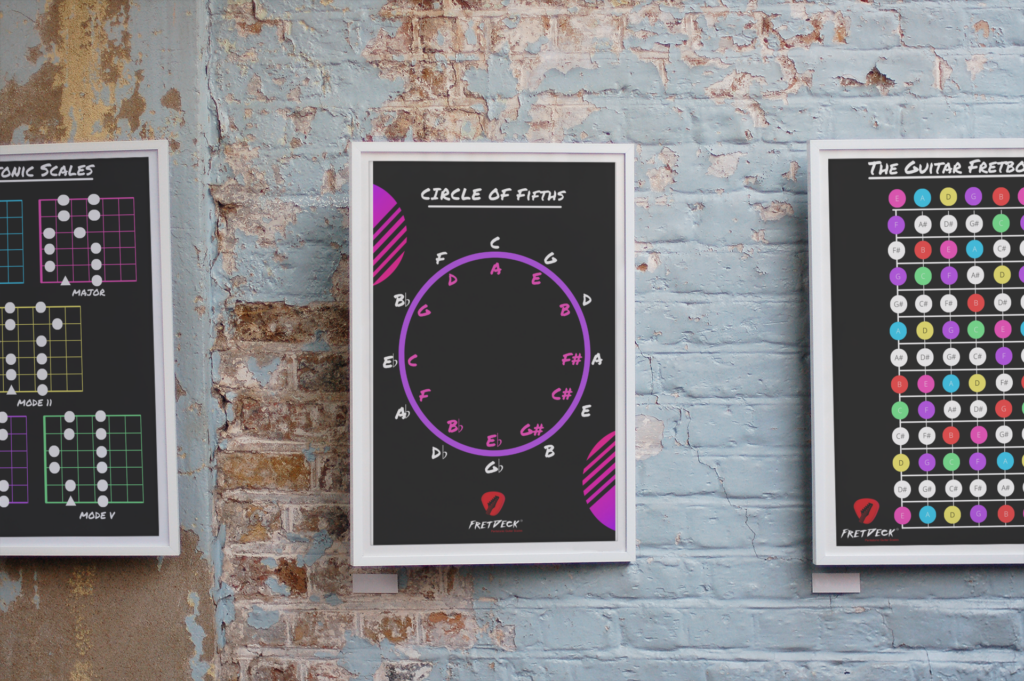
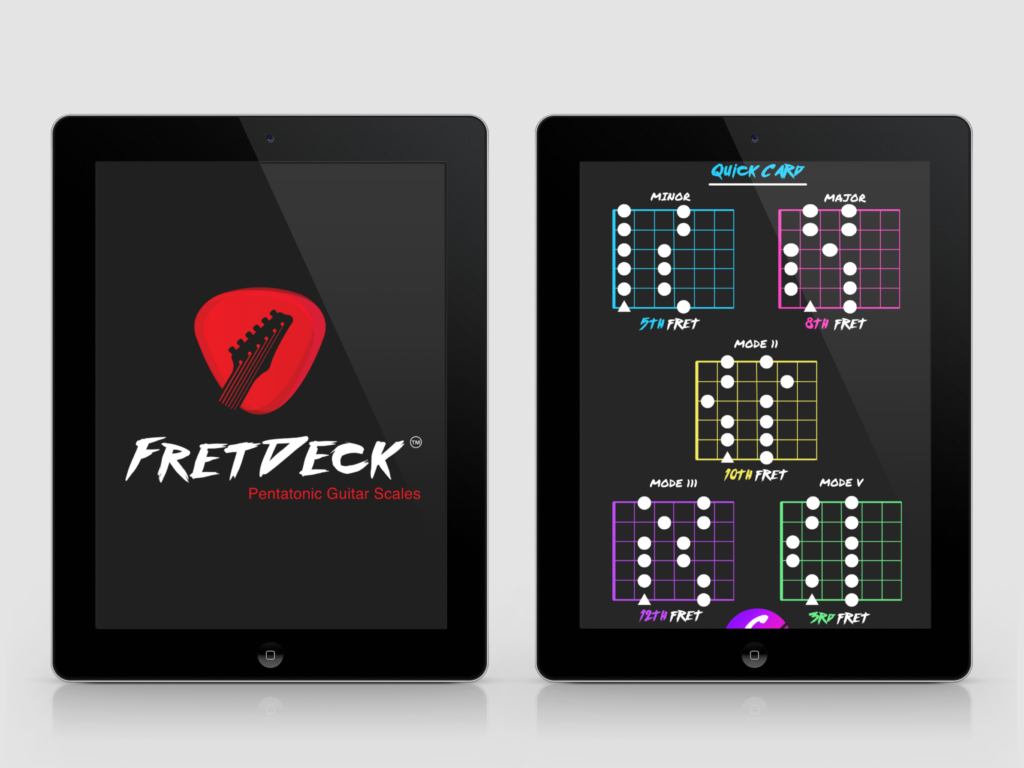
5. Use Practice Tools: Don’t be afraid to use modern tools to help you. Practice aids, like the card-based practice generator FretDeck, can give you targeted exercises that eliminate guesswork and keep your sessions focused on building your fretboard mastery system. Combine these targeted drills with a solid best practice routine for maximum results.
Frequently Asked Questions
### How long does it take to master the fretboard?
Mastery is a lifelong journey, but you can achieve functional fluency much faster than you think. With consistent, focused practice (15-20 minutes a day) on these principles, you will see a massive improvement within 3-6 months. The key is consistency, not cramming.
### Is the CAGED system the only way?
Absolutely not. It’s just one popular fretboard mastery system. Other methods like the 3-Note-Per-String system or learning scales vertically or horizontally are also valid. The best system is the one that makes sense to you and that you’ll actually practice. Many players end up creating a hybrid system that works for them.
### Do I need to learn to read music?
No. While reading standard notation is a valuable skill, it is not required for fretboard mastery. This system is about understanding the logic, shapes, and sounds of the fretboard itself. You can achieve complete fretboard freedom using chord diagrams, scale charts, and your ear, which are all part of a good chord progression guide.
The Simple Guitar Practice System That Eliminates Guesswork
So You Can Stop Stalling… and Start Sounding Better Every Time You Pick Up the Guitar
👉 Get 52 Practice Prompts Now!
Related posts: