

Stop memorizing meaningless patterns and start MAKING MUSIC with the first guitar app scales trainer that unlocks the entire fretboard.
If you’ve been searching for a better **guitar app scales** system, you’ve probably realized they all make the same, critical mistake. They teach you patterns, but they don’t teach you music. And that’s about to change.
My “Stuck In A Box” Epiphany…
For years, I was trapped.
I knew my pentatonic boxes. I could noodle over a blues track. But the second the music changed, I was lost. I’d watch other players glide effortlessly across the entire neck, weaving beautiful melodies, and I just… couldn’t.
My fingers were glued to those same 3 or 4 frets. It was humiliating.
I bought books. watched hours of YouTube. I downloaded every scale app I could find. They all showed me the same boring diagrams. More boxes. More patterns to memorize and then promptly forget. It felt like I was collecting puzzle pieces, but had no idea how to put them together.
The breaking point came at a jam session. The band leader called a tune in a key I wasn’t comfortable in, and I completely froze. I just stood there, fumbling, while everyone else soared.

Driving home that night, I had my epiphany. The problem wasn’t that I needed to learn *more* scales.
The problem was I didn’t understand the *fretboard*.
The great players don’t see “boxes.” They see a single, interconnected map of notes. They understand the relationships. And that’s when I realized the perfect **guitar app scales** trainer didn’t exist. I had to build it. A system that didn’t just show you patterns, but forced you to see the neck the way the pros do.
The Problem With guitar app scales Today
Does this sound familiar?
You learn a new scale, feel excited for a day, and then it’s completely gone from your memory by next week.
You feel “trapped” in one or two positions on the neck, unable to break free and use the entire fretboard with confidence.
The scales you learn feel like a sterile technical exercise, completely disconnected from the actual sound of music and improvisation.
You’re overwhelmed by an endless sea of patterns—major, minor, modes, pentatonics—with no clear path on how to connect them and use them to create actual solos.
The FretDeck Pro Guitar App Scales Solution
This is why I created FretDeck Pro.
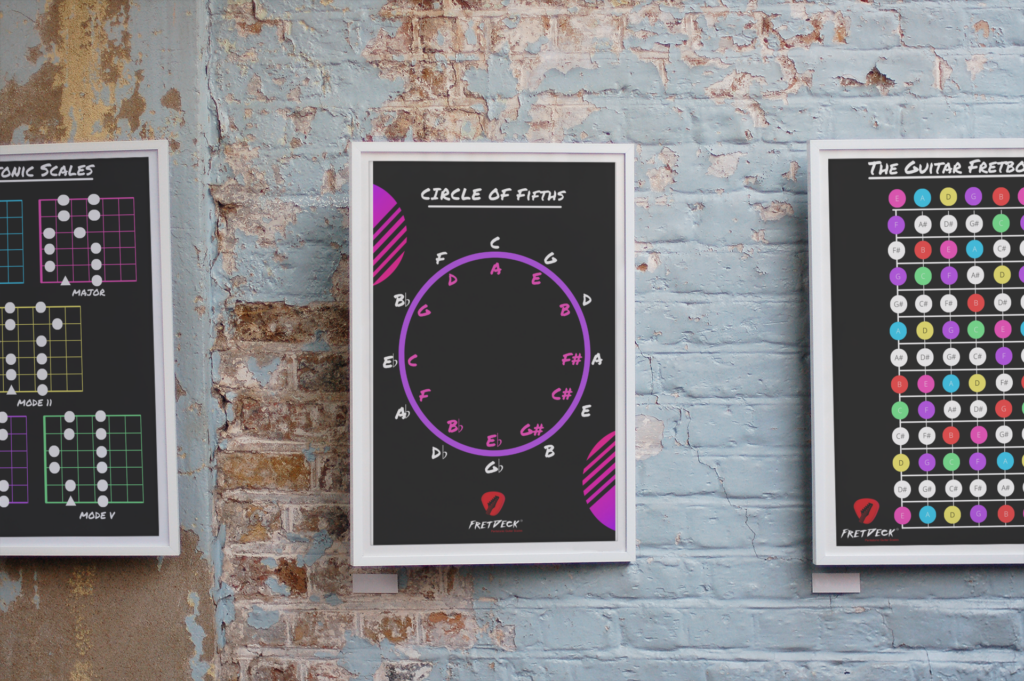
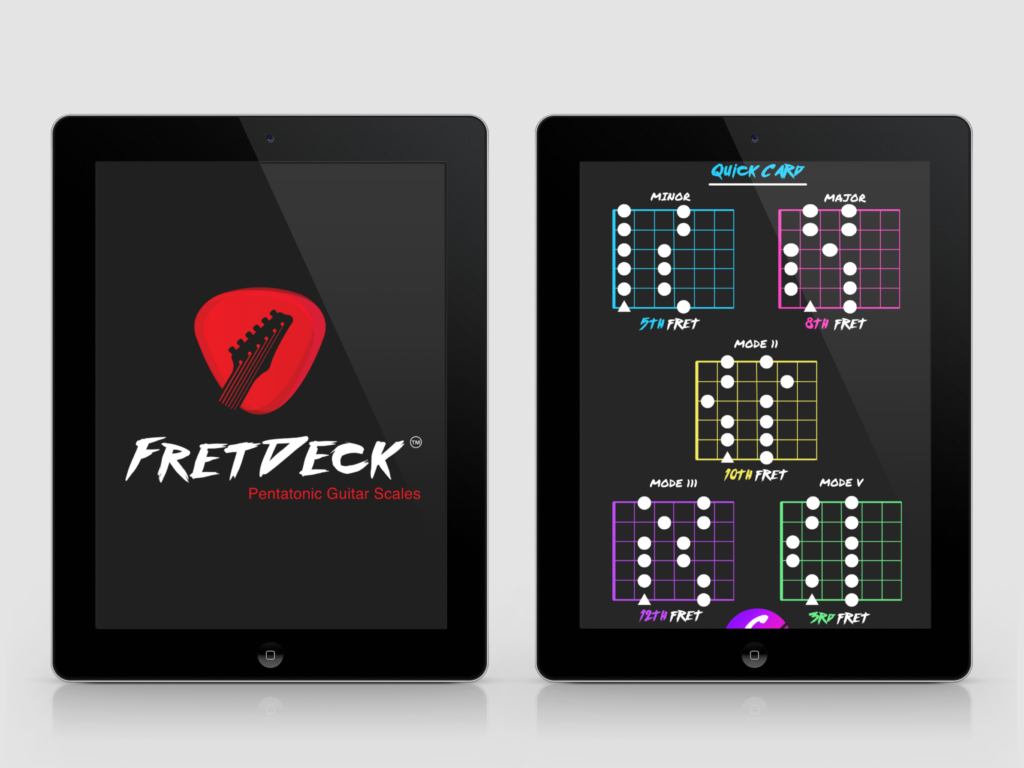
FretDeck Pro is not just another chart library. It is the world’s first truly interactive fretboard mastery system designed to burn the entire neck into your musical brain. It’s the **guitar app scales** solution you’ve been searching for. Instead of just showing you static diagrams, our app uses proven methods of active recall and gamified exercises to force you to *think*, not just memorize.
You’ll stop seeing restrictive “boxes” and start seeing one unified, interconnected musical landscape. This is the key that separates the amateurs from the pros. Our unique training method connects every scale shape, every arpeggio, and every chord tone so you can finally improvise with total freedom. This is the **guitar app scales** system that finally delivers on its promise.
Forget boring drills. In just 10-15 minutes a day, you can systematically unlock the fretboard and start playing the solos you’ve always heard in your head. For more tips on effective practice, check out the More guitar guides on Guitar Freaks Blog.
Here’s Exactly What You Get With guitar app scales
- The simple “Note Finder” game that permanently burns the location of every single note on the fretboard into your long-term memory in under a week.
- How to instantly “see” the right scale for any chord, anywhere on the neck, without ever thinking about “positions” again.
- The #1 reason most **guitar app scales** trainers fail (HINT: It’s because they treat your brain like a filing cabinet, not a muscle).
- The “Scale-to-Chord” connection method that lets you outline chord changes in your solos like a seasoned jazz pro, even if you only know basic blues.
- Unlock all 7 modes and finally understand how to use them to create different moods and colors in your playing.
- The “Two String” method that makes learning any new scale 5x faster and more intuitive.
- Why forgetting scale patterns is actually a GOOD thing… and how to leverage it to become a more creative player.
- The secret to breaking out of the pentatonic box that’s hiding in plain sight within the scale itself.
- My proprietary “Fretboard Connect” exercises that build a mental map of the neck, making improvisation second nature.
- The most effective way to use this **guitar app scales** system for just 10 minutes a day to achieve what others can’t in hours of practice.
Get The Ultimate Guitar App Scales Offer Today
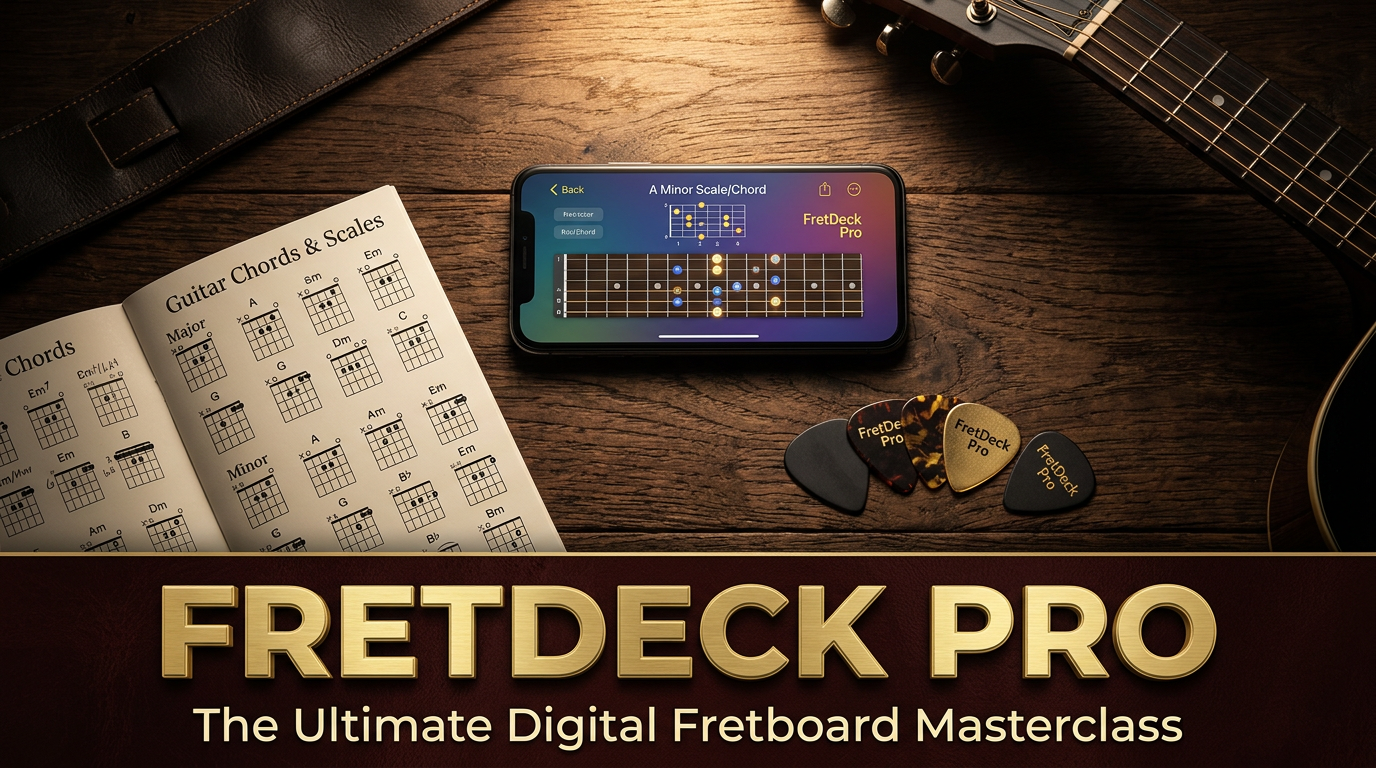
I want to make this an absolute no-brainer for you. When you grab FretDeck Pro today, you’re not just getting an app. You’re getting the complete fretboard mastery system. This is the most comprehensive **guitar app scales** offer designed for real results.
Here’s Everything You Get:
- **FretDeck Pro: The Interactive Fretboard Mastery System** (Value: $97)
- **BONUS #1: The Creative Soloing Roadmap** – My 5-part video course on turning scales into music. (Value: $47)
- **BONUS #2: The Chord Tone Targeting Cheatsheets** – Printable PDFs for seeing the “money notes” over any chord. (Value: $27)
- **BONUS #3: The Jam-Along Backing Track Library** – A huge collection of exclusive tracks to practice your new skills over. (Value: $37)
**Total Value: $208…**
But you won’t pay that today.
Get Instant, Lifetime Access To Everything For A Single, One-Time Payment Of Just **$37**.
You Have Questions? I Have Answers.
**But what if I don’t have hours to practice every day?**
FretDeck Pro was designed for busy people. The core exercises take just 10-15 minutes a day. That’s it. We focus on high-leverage, brain-based learning, not endless, mindless repetition.
**But what if I’m a complete beginner / a really advanced player?**
The system is designed to scale with you. If you’re a beginner, it will build your foundation from the ground up, starting with learning the notes. If you’re advanced, it will fill in the gaps in your knowledge, connect the dots, and help you master modes and chord tone targeting.
**But what if this is just another app I buy and never use?**
Unlike passive apps, FretDeck Pro is an *active, gamified system*. It’s designed to be engaging and give you a sense of progress every single day. The bite-sized lessons make it easy to build a consistent habit that actually sticks. We talk more about building habits in the More guitar guides on Guitar Freaks Blog.
**But what if it just doesn’t work for me?**
That’s the easiest question of all. It will. But if for ANY reason you’re not 100% blown away by the progress you make, you’re covered by my rock-solid guarantee.
My “Fretboard Freedom” Guarantee
**My 30-Day “Fretboard Freedom” 100% Money-Back Guarantee.**
Get FretDeck Pro today. Use the system for a full 30 days. If you don’t feel a massive shift in your understanding of the fretboard, if you can’t navigate the neck with more confidence, or if you’re not happy for any reason whatsoever, just send me an email and I will personally refund 100% of your money. No questions asked. The risk is entirely on me.
This Is A Limited-Time Introductory Offer
This special introductory price of $37 is part of our official launch.
We are gathering testimonials and feedback before we move to our standard monthly subscription model. This means the price you see today is the lowest it will ever be, and it will be going up very soon. This is your one chance to get lifetime access and all the bonuses for a single, tiny investment.
Claim Your FretDeck Pro Access Now
The choice is yours. You can keep doing what you’re doing—downloading the same old boring scale apps, watching confusing YouTube videos, and staying trapped in the same boxes forever. Or, you can make one small decision today that will fundamentally change the way you see the guitar.
It’s time you had a **guitar app scales** system that actually works WITH your brain to unlock creativity, not just fill it with data you’ll forget. Click the button below, claim your instant access to FretDeck Pro and all the bonuses for the one-time price of just $37, and finally become the guitarist you’ve always wanted to be. For other great resources, don’t forget to visit the More guitar guides on Guitar Freaks Blog.
[BUTTON: YES! Give Me Instant Access To FretDeck Pro Now!]
Related posts: