

Let’s be brutally honest for a second. You don’t need another person telling you that the best guitar practice routine involves, well, practicing. You’ve got the calloused fingertips and the well-worn guitar pick to prove you’ve been putting in the time. The real, gut-wrenching question is why, after all those hours, you still feel stuck in the same three pentatonic boxes.
You can almost feel it, can’t you? That thick, invisible wall between the player you are and the player you know you could be. The guitar sits in the corner, sometimes for days, looking more like an accusation than an invitation. You pick it up, noodle the same old riffs for 20 minutes, feel that familiar wave of frustration, and put it back down. The cycle repeats. It’s a slow-motion confidence killer.
The good news? The problem isn’t your talent. It’s not your guitar. And it’s not that you need to chain yourself to a chair for eight hours a day like some kind of musical monk.
The problem is your method. And we’re going to fix it. Right now.
Why Your ‘Practice’ Feels Like a Prison Sentence
Listen closely. If your practice sessions feel like you’re just punching a clock, you’re doing it wrong. You are wasting your most valuable asset: your time. Most guitarists fall into this trap. Specifically, they mistake “playing” for “practicing.”
“Playing” is noodling over a backing track with the one scale you know. It’s absent-mindedly running through a song you mastered six months ago. Furthermore, it feels comfortable, it feels safe, but it produces zero growth. It’s the equivalent of a bodybuilder going to the gym to lift the 5-pound dumbbells every single day and wondering why he’s not getting stronger.
As a result, you get stuck. You can play a handful of songs, but you can’t improvise a solo to save your life. You know a few chord shapes, but you don’t know how to write your own chord progression guide. You’re trapped in a tiny cage on a fretboard that has thousands of possibilities. This is the painful reality of a bad routine, or worse, no routine at all.
What If You Could See the Fretboard Instead of Just Memorizing It?
Most guitarists spend years guessing where to put their fingers. They memorize shapes without understanding why — and the second they try to improvise or learn a new song, they’re lost again.

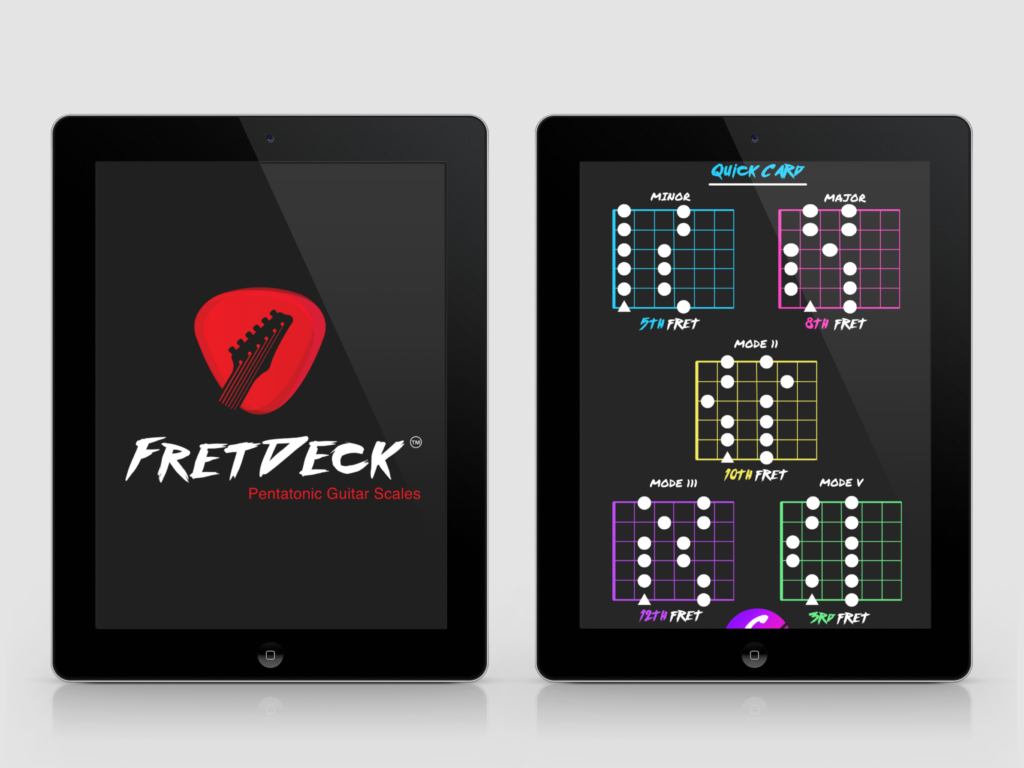
The FretDeck Practice Workstation changes that. It’s the interactive fretboard app that shows you exactly what to play, why it works, and how every note connects — so you finally understand the guitar instead of just copying tabs.
Whether you’re stuck in a rut, tired of noodling the same pentatonic box, or ready to unlock the entire neck — the FretDeck Practice Workstation gives you the visual roadmap to get there. All for just $14/month.
👉 Start Using the FretDeck Practice Workstation Now
The ‘Profit Block’ Method: Your 45-Minute Goldmine
Here’s the deal. A focused, 45-minute session is worth more than three hours of mindless noodling. The secret isn’t more time; it’s structured time. Forget everything else and burn this structure into your brain. I call it the “Profit Block” method.
You’re going to divide your practice into three simple 15-minute blocks. Set a timer. When it goes off, you move on. No excuses.
Block 1: The Mechanic (15 Minutes)
This is pure technique. No music, no songs. Just your fingers and the fretboard. You are a mechanic tuning an engine.
- First 5 mins: Chromatic exercises. Up and down the neck. Use a metronome. Start slow. Painfully slow. Feel every note.
- Next 10 mins: Scale work. Pick one scale for the week. For example, you could finally tackle the modes, not just run through them. Truly learn guitar scales by playing them in different positions and sequences. This builds muscle memory and speed.
Block 2: The Architect (15 Minutes)
This is where you build your musical vocabulary. You’re moving from physical skill to mental knowledge.
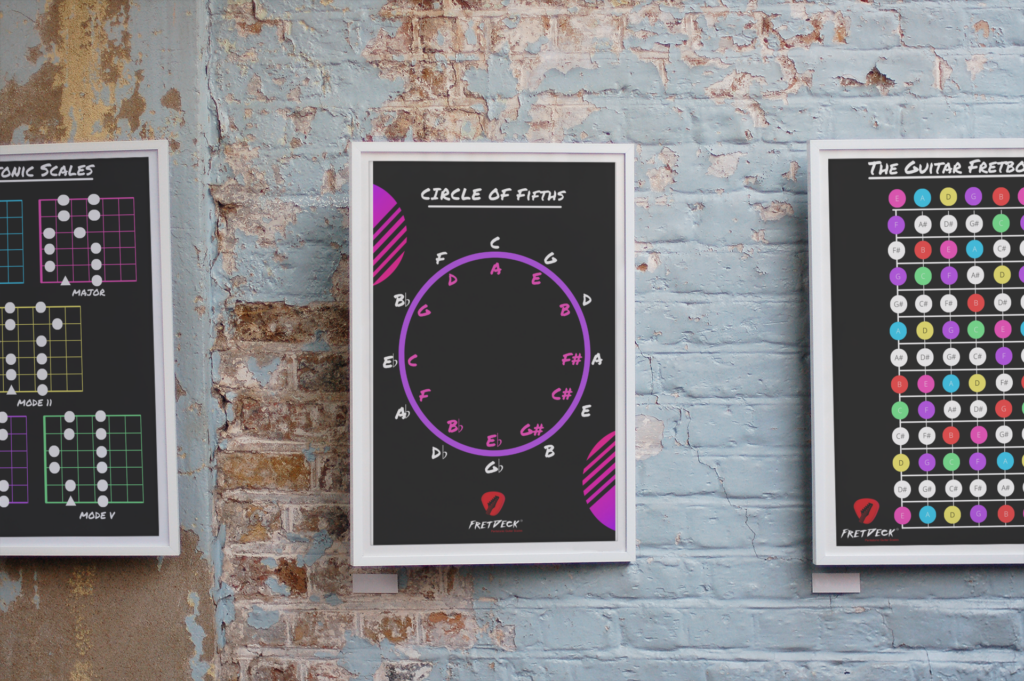
- First 7 mins: Theory in practice. Don’t just read about the circle of fifths. Use it! Find the chords in the key of G. Play them. Understand their relationship. A great primer can be found on credible sites like Guitar World.
- Next 8 mins: Ear training. Hum a simple melody. Now, find it on the guitar. It will be agonizing at first. But in 30 days, your ability to connect your brain to your fingers will have skyrocketed.
This structured approach is the core of an effective, best guitar practice routine.
The Secret to Making It Stick: Laser-Focused Goals
A goal like “get better at guitar” is useless. It’s a wish, not a target. You can’t measure it, and therefore, you can’t achieve it. A powerful practice routine is fueled by hyper-specific, measurable goals.
Instead of “get better,” try this:
- “I will play the A-minor pentatonic scale in all five positions at 90 bpm with no mistakes by Friday.”
- “I will learn the four chords to the verse of ‘Wonderwall’ and transition between them smoothly in one week.”
- “I will successfully transcribe the first 8 bars of a simple blues solo by ear within three practice sessions.”
See the difference? These are contracts you make with yourself. They create pressure. They create focus. Moreover, they give you a clear “win” condition. When you hit that goal, you get a shot of dopamine that makes you want to come back for more the next day. This is how you build unstoppable momentum. A good routine is simply a series of small, well-defined goals stacked on top of each other.
What If You Could See the Fretboard Instead of Just Memorizing It?
Most guitarists spend years guessing where to put their fingers. They memorize shapes without understanding why — and the second they try to improvise or learn a new song, they’re lost again.
The FretDeck Practice Workstation changes that. It’s the interactive fretboard app that shows you exactly what to play, why it works, and how every note connects — so you finally understand the guitar instead of just copying tabs.
Whether you’re stuck in a rut, tired of noodling the same pentatonic box, or ready to unlock the entire neck — the FretDeck Practice Workstation gives you the visual roadmap to get there. All for just $14/month.
👉 Start Using the FretDeck Practice Workstation Now
The Real Secret Ingredient of the Best Guitar Practice Routine: Feedback
Here it is. The one thing that separates the pros from the perpetual amateurs. It’s a ruthless, honest, and immediate feedback loop. You cannot get better if you don’t know what you’re doing wrong.
Your ears lie to you. Your brain fills in the gaps and smooths over the rough edges. You need an objective judge.
Here’s how you get one: 1. Record Yourself: Use your phone. Record one of your scale runs or a piece of a song. Now, listen back. Hear that string buzz? That sloppy timing? That note you bent flat? That’s your an immediate to-do list for your next session.
2. Use a Metronome: The metronome is the ultimate truth-teller. It has no pity. It will instantly reveal if your timing is solid or sloppy. Playing with a metronome is non-negotiable.
3. Visualize the Fretboard: So many players are flying blind, just memorizing shapes. You need to see the connections. This is where a tool like the FretDeck Practice Workstation becomes a game-changer. It doesn’t just show you a scale shape; it shows you how that shape connects to chords and arpeggios all over the neck. It’s a visual feedback loop that builds deep understanding.
Without feedback, you’re just guessing. With it, every single minute of practice becomes exponentially more valuable. This transforms any practice session into the best guitar practice routine for you.
Block 3: The Artist (15 Minutes)
This is your reward. This is the fun part.
- All 15 mins: Play! Improvise over a backing track using the scale you just worked on. Try to write a little melody using the theory you just reviewed. Play a song you love. The only rule is to have fun. This block is what will keep you coming back tomorrow. It ends the session on a high note, reminding you why you started this journey in the first place.
7 Direct-Action Tips to Nail This Routine
1. Schedule It. Put it on your calendar like a doctor’s appointment. “4:00 PM – Guitar Profit Block.” Defend that time.
2. Start With the Hardest Thing. Tackle your technique or theory block first when your mind is fresh. Save the fun stuff for the end.
3. One Percent Better. Don’t try to conquer the world in a day. Just aim to be 1% better than you were yesterday. That’s it.
4. Use a Timer. Seriously. The ticking clock creates urgency and focus like nothing else. It’s one of the best beginner guitar tips that even pros use.
5. Keep a Log. A simple notebook. “Date: Oct 26. Goal: E-minor scale at 70 bpm. Result: Made it! Next Goal: 75 bpm.” This log will become your bible of progress.
6. No Guitar? No Problem. Use five minutes to do ear training exercises on your phone or visualize scales in your head. The best guitar practice routine isn’t always about holding the instrument.
7. Respect the Instrument. Take a minute to wipe down your strings after you play. Check your tuning. This small ritual builds respect and discipline. Fender’s blog has great info on basic maintenance.
Frequently Asked Questions
How long should I practice guitar each day?
Listen, 30-45 minutes of hyper-focused, structured practice is radically more effective than 2 hours of distracted noodling. Consistency beats volume every time. Use the “Profit Block” method for 45 minutes, 5 days a week, and you’ll smoke the person “practicing” for 2 hours a day.
What should a beginner guitarist practice?
A beginner needs a simple, repeatable system. Spend 10 minutes on a single string chromatic exercise (for finger dexterity), 10 minutes practicing switching between two basic chords (like G and C), and 10 minutes trying to play a simple one-string melody. That’s a powerful, best guitar practice routine for anyone starting out.
How do I stay motivated to practice guitar?
Motivation is a myth. Discipline and results are real. You don’t get motivated to practice; you get motivated by the results of your practice. When you set a tiny goal (like clean chord changes at 60 bpm) and you achieve it, that success is the fuel. That’s why having a structured best guitar practice routine is so critical—it’s a machine for generating small, motivating wins.
What If You Could See the Fretboard Instead of Just Memorizing It?
Most guitarists spend years guessing where to put their fingers. They memorize shapes without understanding why — and the second they try to improvise or learn a new song, they’re lost again.
The FretDeck Practice Workstation changes that. It’s the interactive fretboard app that shows you exactly what to play, why it works, and how every note connects — so you finally understand the guitar instead of just copying tabs.
Whether you’re stuck in a rut, tired of noodling the same pentatonic box, or ready to unlock the entire neck — the FretDeck Practice Workstation gives you the visual roadmap to get there. All for just $14/month.
👉 Start Using the FretDeck Practice Workstation Now
Related posts: