
Before you touch your guitar for another session of guitar practice chords, stop. What you’re about to do—the same thing you did yesterday—might be the very thing holding you back. It’s a hard truth, but most players unknowingly sabotage their own progress with outdated and ineffective practice methods.
This isn’t about not practicing enough. In fact, it’s about practicing smarter, not harder. You can spend hours drilling chord shapes with sheer brute force, only to find your fingers still fumbling when you try to play a real song. There is a fundamental shift you must make, a small but critical change in your approach that separates beginners who quit from players who get smooth.
This article exposes that hidden mistake. Furthermore, it gives you a new framework for practicing chords that builds real, usable musical skill instead of just frustrating finger gymnastics. If your chord changes are slow, clumsy, and sound more like a car crash than music, this is for you.
Why Your Current Chord Practice Feels Like a Grind
Does this sound familiar? You look up a chord diagram. You contort your fingers into an awkward claw, pressing down until your fingertips ache. One or two strings buzz, another is completely muted, but you strum anyway. Then, you try to switch to another chord and everything falls apart.
You repeat this process. Over and over. You think, “If I just do this a thousand more times, it will eventually click.” This is the brute-force method, and it’s why so many guitars end up gathering dust in a corner.
The problem is twofold. First, you’re practicing the shapes in isolation, not the transitions between them. Music isn’t a static photograph of a G chord; it’s the fluid motion from a G to a C to a D. By only focusing on holding the shape, you’re training for the wrong event.
Second, you’re likely practicing without context. Randomly switching between Am and E doesn’t build the same kind of musical intuition as playing them in a progression that sounds like an actual song. As a result, your brain doesn’t form the necessary connections, and your practice feels pointless and unmusical. This is a common pitfall that stifles progress in your guitar practice chords journey.
What If You Could See the Fretboard Instead of Just Memorizing It?
Most guitarists spend years guessing where to put their fingers. They memorize shapes without understanding why — and the second they try to improvise or learn a new song, they’re lost again.

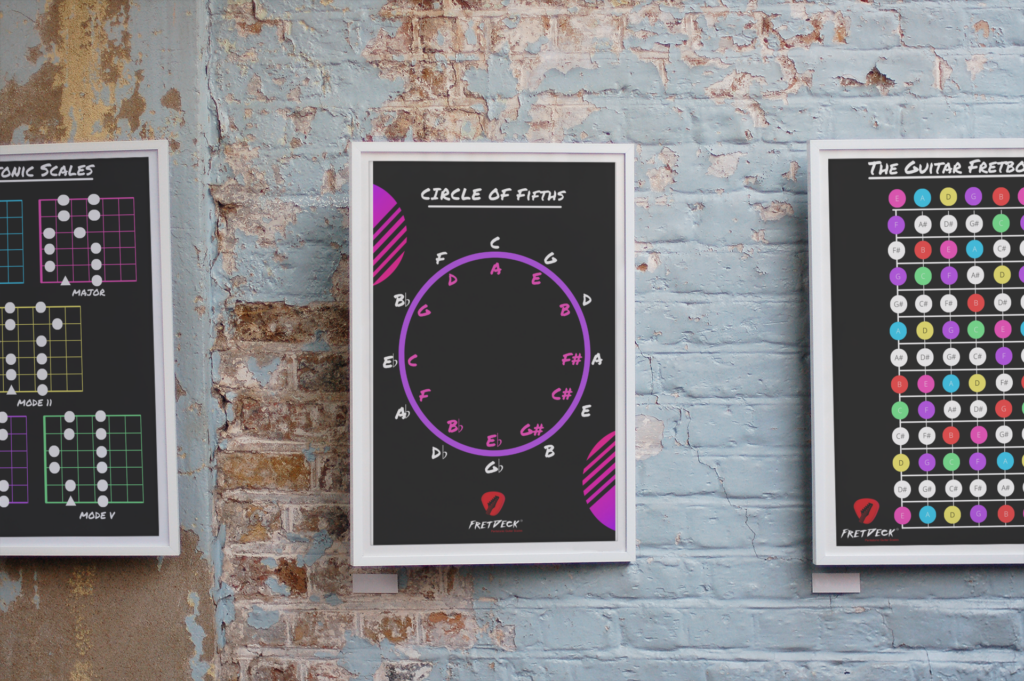
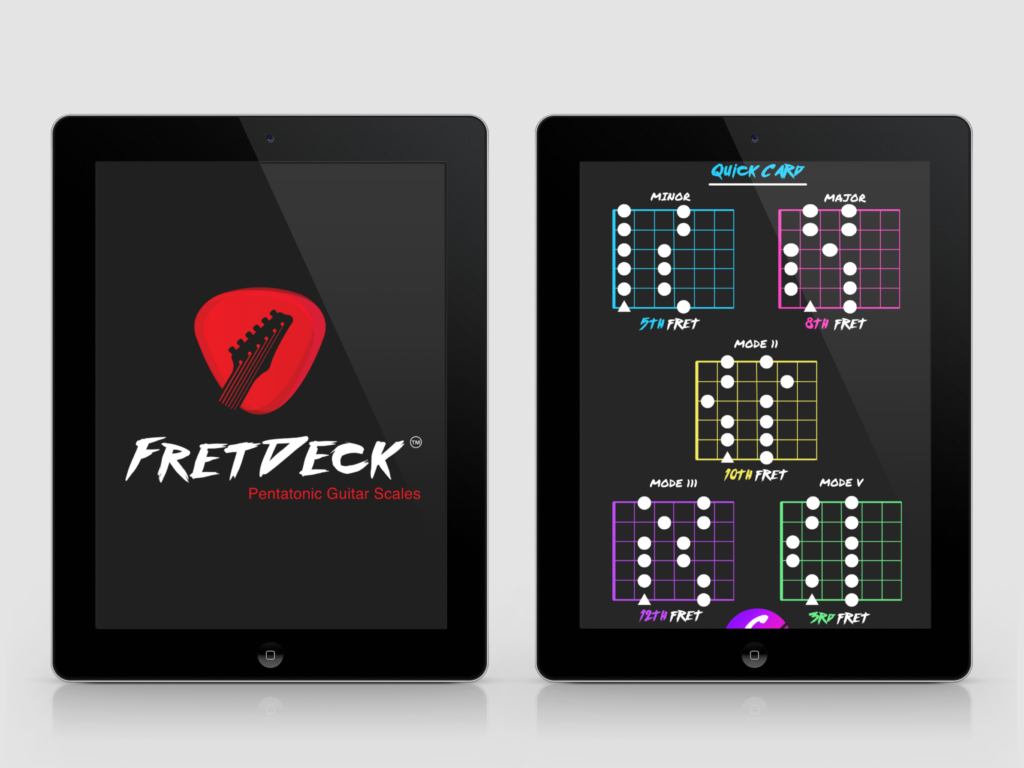
The FretDeck Practice Workstation changes that. It’s the interactive fretboard app that shows you exactly what to play, why it works, and how every note connects — so you finally understand the guitar instead of just copying tabs.
Whether you’re stuck in a rut, tired of noodling the same pentatonic box, or ready to unlock the entire neck — the FretDeck Practice Workstation gives you the visual roadmap to get there. All for just $14/month.
👉 Start Using the FretDeck Practice Workstation Now
The “One Chord” Focus Method
Here is the secret: Stop trying to learn five chords at once. The first step to breaking the cycle of frustration is to shrink the goal. Instead of feeling overwhelmed by the journey to learning dozens of chords, make your entire mission for one practice session to perfect one single chord.
Let’s say it’s the G major chord. Don’t even think about C or D yet. Your only job is to master the G.
Place your fingers on the frets slowly. Don’t strum. Simply check each string one by one. Does the low E string ring out clearly? How about the A string (which should be muted by your middle finger)? The D? The G? B? High E?
Identify the problem string. Is your ring finger accidentally touching the B string, muting it? Adjust your knuckle. Lift your finger arch slightly. Make tiny, microscopic adjustments until all six strings sound perfect when picked individually. Now, lift your hand off completely, shake it out, and do it again.
Repeat this process—placing, checking, adjusting, and releasing—for just five minutes. You are not building speed yet. You are building clean, repeatable, perfect muscle memory. This deliberate, focused practice on a single chord is more valuable than an hour of sloppy, frustrating chord switching. Experts at Guitar World often emphasize this deep, focused practice over mindless repetition.
A Better Framework for guitar practice chords
Once you have a few chords that you can form cleanly (using the One Chord Focus Method), it’s time to put them into a musical context. Practicing chords randomly is like learning words without ever forming a sentence. The real magic happens when you practice chord progressions.
This is where your brain starts to see the patterns. For example, practicing the G – C – D progression is one of the most valuable things you can do. These three chords are the foundation of countless songs. You’re no longer just doing a finger exercise; you are making music.
Start incredibly slowly. Form the G chord and strum it four times. Now, prepare for the change to C. This is the crucial moment. Instead of frantically rushing your fingers to the next shape, move them slowly and deliberately. Watch how they travel. Which finger moves first? Which one can stay put as an “anchor”?
Specifically, when moving from G to C, you might notice your ring finger has to lift and move, but your first finger can get into position relatively easily. Analyzing these micro-movements is the key. For more on how progressions work, check out our chord progression guide. A good practice structure transforms your approach to guitar practice chords.
What If You Could See the Fretboard Instead of Just Memorizing It?
Most guitarists spend years guessing where to put their fingers. They memorize shapes without understanding why — and the second they try to improvise or learn a new song, they’re lost again.
The FretDeck Practice Workstation changes that. It’s the interactive fretboard app that shows you exactly what to play, why it works, and how every note connects — so you finally understand the guitar instead of just copying tabs.
Whether you’re stuck in a rut, tired of noodling the same pentatonic box, or ready to unlock the entire neck — the FretDeck Practice Workstation gives you the visual roadmap to get there. All for just $14/month.
👉 Start Using the FretDeck Practice Workstation Now
Making Transitions The Real Goal
This is the ultimate mindset shift. You must stop thinking your goal is to hold a chord. Your new goal is to master the transition between two chords. The chord shape itself is just the starting and ending point; the journey in between is where the skill is built.
Let’s take the classic C to Am change. Many beginners lift their entire hand off the fretboard, panic, and then try to find the Am shape. A smarter player sees that the first and second fingers barely have to move. The first finger stays on the B string, and the middle finger just moves up one string. Only the ring finger makes a big move.
By realizing this, you can practice just that tiny movement. Go from C to Am and back again, but do it without strumming. Just watch your fingers. This “ghost changing” technique trains your hands to be efficient. You’re teaching them the shortest, most economical path between two shapes. This simple reframe is more powerful than any other beginner guitar tips you’ll ever receive.
5 Drills to Revolutionize Your Chord Practice
Ready to put this into action? Forget mindless strumming. Use these focused drills to build real skill.
1. The One-Minute Change Drill: Pick two chords (e.g., G and C). Set a timer for one minute. See how many times you can switch cleanly between them. Strum each chord just once to check it. Log your number. Tomorrow, try to beat it by one. This gamifies your practice.
2. The “No-Strum” Ghost Change: As described above, pick two chords and switch between them as slowly as possible without strumming. Your entire focus is on the economy of motion. Watch each finger and find the smartest path.
3. The Backwards Progression Drill: Learn a simple three-chord progression, like G-C-D. Practice it forwards until it’s comfortable. Then, practice it backwards: D-C-G. This breaks you out of autopilot and forces your brain and fingers to solidify the connections from a different angle.
4. Use a Metronome Immediately: The number one enemy of clean chord changes is uneven timing. Set a metronome to a very slow speed (like 60 BPM). Strum one chord per beat, then change chords on the “one” of the next measure. This forces you to make the change in a specific amount of time, a skill essential for playing with others. Building a solid best practice routine is non-negotiable.
5. Visualize The Connections: Don’t just see chord shapes as random clusters of dots. Use a tool like the FretDeck Practice Workstation to see how the notes within a G major chord relate to the notes in a C major chord. Understanding the underlying theory turns memorization into true comprehension and makes your guitar practice chords sessions exponentially more effective.
Frequently Asked Questions
### How long should I practice chords each day?
Consistency trumps duration. A focused 15-minute session every day is far more effective than a rambling two-hour session once a week. Your brain and muscles build connections during rest. Short, daily practice respects that process and prevents burnout and injury.
### What are the first chords a beginner should learn?
Start with open chords that are commonly used together. A great starting set is G, C, D, Em, and Am. With just these five chords, you can play thousands of popular songs. Fender has a great list of essential chords for new players.
### Why do my fingers hurt so much? Is it normal?
Yes, some initial soreness and tenderness on your fingertips is completely normal. You are developing calluses. However, sharp pain in your joints or wrist is not. That’s a sign of poor technique or too much tension. Take a break, check your wrist posture (keep it straight!), and press down on the strings only as hard as you need to get a clear note.
What If You Could See the Fretboard Instead of Just Memorizing It?
Most guitarists spend years guessing where to put their fingers. They memorize shapes without understanding why — and the second they try to improvise or learn a new song, they’re lost again.
The FretDeck Practice Workstation changes that. It’s the interactive fretboard app that shows you exactly what to play, why it works, and how every note connects — so you finally understand the guitar practice chords instead of just copying tabs.
Whether you’re stuck in a rut, tired of noodling the same pentatonic box, or ready to unlock the entire neck — the FretDeck Practice Workstation gives you the visual roadmap to get there. All for just $14/month.
👉 Start Using the FretDeck Practice Workstation Now
Related posts: