
Finding the right guitar practice routine tools is the secret ingredient that separates players who stagnate from those who skyrocket. You pick up your guitar, full of ambition, but then what? If you’re like most players, you fall back on the same old licks and songs, wondering why you aren’t getting any better.
This isn’t a problem of talent or time. It’s a problem of strategy. Without a system, your practice sessions become aimless noodling. Fortunately, the solution is simple. By integrating a few key tools into your daily habits, you can transform your playing almost overnight.

The Simple Guitar Practice System That Eliminates Guesswork
So You Can Stop Stalling… and Start Sounding Better Every Time You Pick Up the Guitar
👉 Get 52 Practice Prompts Now!
Why Your Guitar Practice Feels Like a Dead End
Does this sound familiar? You carve out 30 minutes to practice. You play that one pentatonic scale you know, run through the opening riff of “Stairway to Heaven” for the thousandth time, and then… you hit a wall. You feel bored, uninspired, and frustrated.
Therefore, you put the guitar down, feeling like you’ve wasted your time. You see other players progressing, learning new songs, and improvising flawless solos, and you wonder what they know that you don’t. It’s a discouraging cycle that kills motivation and makes you question if you’ll ever reach your goals.
The truth is, you’re not alone. In fact, this is the most common reason players quit. They mistake this lack of a system for a lack of talent. They believe they’ve hit their natural limit, but the real culprit is a practice routine without focus, structure, or any way to measure progress. For more help breaking out of this early phase, check out our beginner guitar tips.
The Simple Shift: From ‘Playing’ to a System
Imagine a carpenter trying to build a house with just a hammer. It’s impossible, right? They need a tape measure, a level, a saw, and a blueprint. Your guitar practice is no different. Simply “playing” is the equivalent of randomly swinging a hammer. A structured practice system, however, is like having a full toolkit and a set of plans.
This is the fundamental shift you need to make. Stop just “playing” and start practicing with intent. An intentional system uses tools to give you direction and feedback. Moreover, it helps you identify weaknesses, set clear objectives, and see tangible results from every single session.
This a system that the pros use. They don’t just pick up their guitars and hope for the best. As a result, every minute of their practice time is dedicated to a specific goal, supported by tools that keep them honest and push them forward. You can do the same.
The Best Guitar Practice Routine Tools You Need
So, what does this magical toolkit look like? It’s probably simpler than you think. You don’t need a room full of expensive gear. Instead, you need a few powerful items that force you to be deliberate. These are the essential guitar practice routine tools that will provide the structure for your growth.
The Simple Guitar Practice System That Eliminates Guesswork
So You Can Stop Stalling… and Start Sounding Better Every Time You Pick Up the Guitar
👉 Get 52 Practice Prompts Now!
Analog Essentials: The Classics That Still Work
Before we dive into apps and software, let’s honor the classics. For instance, these analog tools have been the bedrock of productive practice for decades because they work.
- A Metronome: This is non-negotiable. If you don’t practice with a metronome, your sense of time will suffer. A steady beat is the foundation of all music. Practicing scales, chords, and songs to a click builds a rock-solid internal clock. It’s the musical equivalent of eating your vegetables.
- A Practice Journal: Your memory is not a reliable tool for tracking progress. Use a simple notebook to plan your sessions and log your results. For example: “Monday: A minor pentatonic, position 1 @ 80bpm. Tuesday: A minor pentatonic, position 1 @ 85bpm.” Seeing that small jump in speed is a massive motivator.
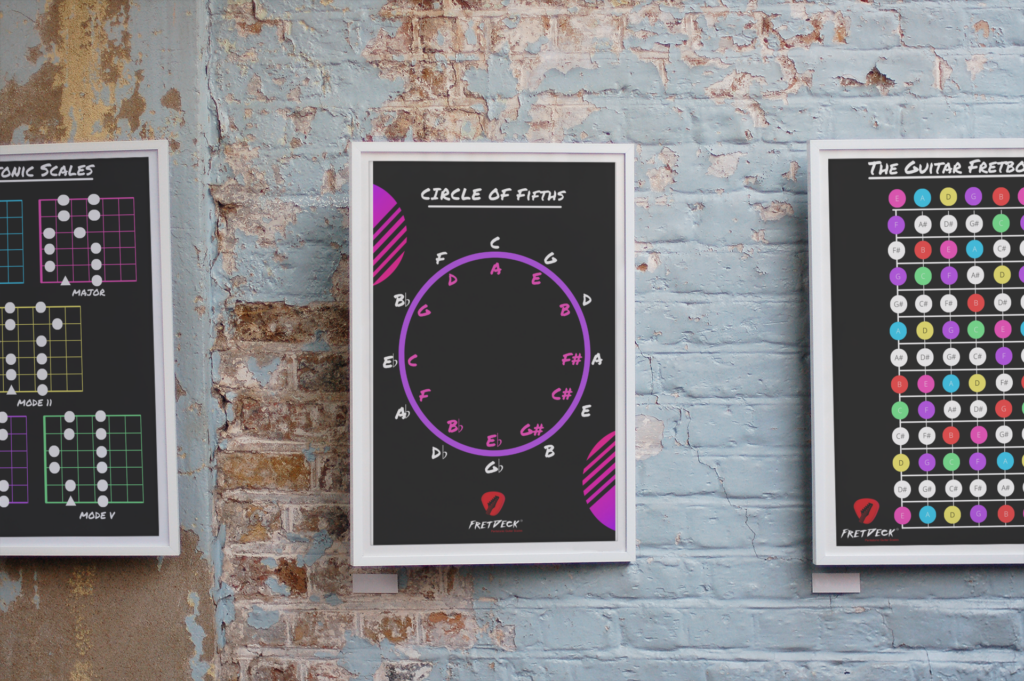
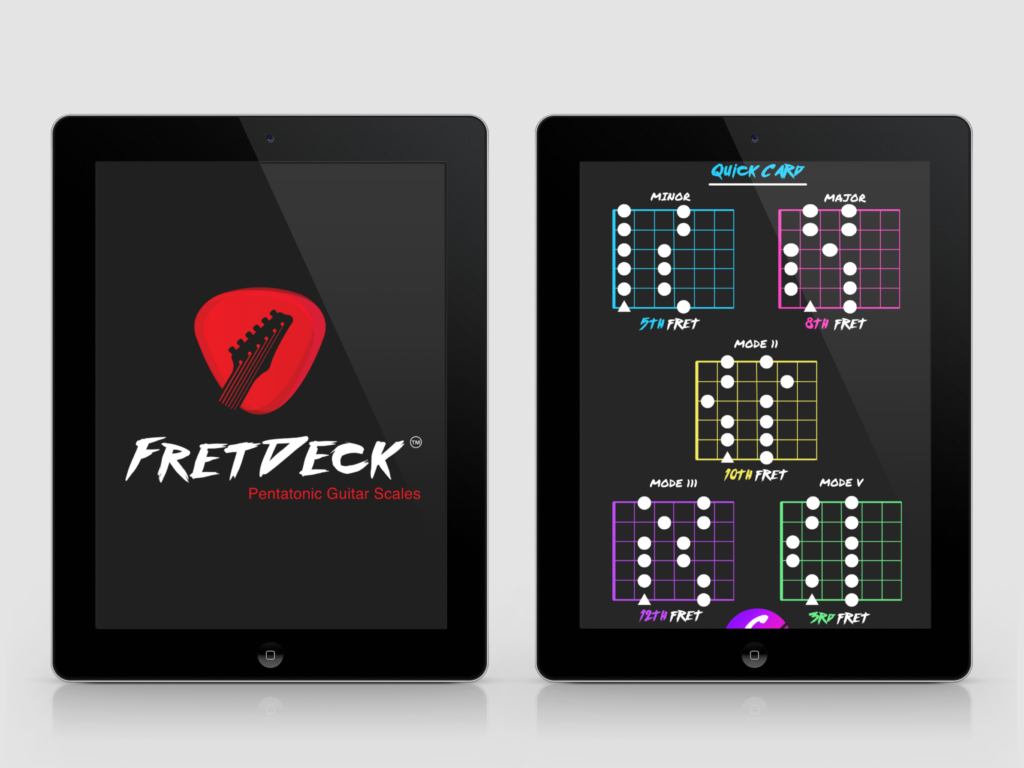
- Physical Practice Aids: Sometimes you need to get away from the screen. A fantastic tool for this is FretDeck, a deck of cards with practice prompts that guide you through scales, chords, and fretboard theory. It gamifies your routine, preventing you from falling into the same old patterns.
Digital Powerhouses: Apps and Software
Technology puts an incredible array of powerful tools right at your fingertips. Used correctly, they can accelerate your learning curve dramatically. Many of these digital resources are considered must-have guitar practice routine tools for modern players.
- A DAW (Digital Audio Workstation): You need to record yourself. Hearing yourself play is completely different from how you sound in your head. Free DAWs like GarageBand (Mac) or Audacity (PC) are perfect for this. Record a short passage, listen back, and identify where you need to improve. It’s a game-changer.
- Slowing-Down Software: Trying to learn a fast solo by ear can be impossible. Use YouTube’s playback speed setting (the gear icon) to slow down videos to 0.75x or 0.5x speed. For more advanced control, apps like The Amazing Slow Downer are invaluable for dissecting difficult passages without altering the pitch.
- Backing Tracks: Practicing scales in a vacuum is boring. Furthermore, it’s not very musical. Pull up a backing track on YouTube in the key you’re practicing. This makes learning scales and modes infinitely more fun and applicable to real music. You’ll start thinking in phrases and melodies, not just patterns. As Guitar World explains, it’s a bridge between theory and performance.
- Tuner and Metronome Apps: Convenience is key. Apps like Fender Tune not only provide an accurate tuner but also include a basic metronome and drum loops. Having these tools on your phone means you have zero excuses not to use them. You can find more information about the tools Fender offers on their site.
The Unsung Heroes: Mindset and Tracking
Finally, the most powerful tools aren’t physical objects or apps. They are systems and mindsets that govern how you approach your practice.
- A Timer: Specifically, use the Pomodoro Technique. Set a timer for 25 minutes of focused, uninterrupted practice on a single topic. When the timer goes off, take a 5-minute break. This method keeps you highly focused and prevents burnout. Four of these “Pomodoros” make up a solid practice session.
- A Goal-Setting Framework: Don’t just say, “I want to get better at guitar.” That’s not a goal; it’s a wish. Use SMART goals: Specific, Measurable, Achievable, Relevant, and Time-bound. For instance: “I will learn all five positions of the G major scale and be able to play them cleanly at 100bpm by the end of this month.” This is a clear target to aim for.
7 Ways to Build Your Perfect Practice Stack
Knowing the guitar practice routine tools is one thing; integrating them is another. Here’s a simple, actionable plan to build your system today.
1. Define Your #1 Goal: First, pick one specific thing you want to improve this week. Is it learning a new song? Or perhaps mastering a tricky chord progression guide? Write it down in your journal. 2. Choose Your Core Four: Next, select your essential tools. You need one for timing (metronome), one for feedback (DAW/phone recorder), one for learning (slow-downer), and one for structure (journal/timer). 3. Set Your Timer: Now, commit to just 20 minutes. Don’t intimidate yourself with a two-hour goal. Consistency is far more important than intensity, especially when starting a new habit. 4. Warm-Up with the Metronome (5 mins): Launch your metronome app. Set it to a slow tempo (like 60bpm) and play a simple chromatic exercise up and down the neck. This syncs your hands and gets you focused. 5. Targeted Practice (10 mins): Then, open your slow-downer or backing track. Work exclusively on the goal you set in step one. If you’re learning a scale, use this time to drill it. Our guide to learning guitar scales can help you a lot here. 6. Record Yourself (2 mins): In the final moments, open your DAW or phone’s voice memo app. Record yourself playing the thing you just practiced. Don’t judge it, just capture it. 7. Review Before You Begin Tomorrow (3 mins): Before your next session, listen back to yesterday’s recording. This is the most crucial step. You will immediately hear what you need to work on. Then, you can make a note in your journal and start your new session with a clear, targeted purpose.
FAQ: Your Guitar Practice Routine Tools Questions Answered
### What are the absolute must-have tools for a beginner?
For a complete beginner, the list is very short. First, a tuner (an app like Fender Tune is perfect). Playing an out-of-tune guitar is the fastest way to discourage yourself. Second, a metronome. Even if you start by just clapping along to it, you need to build your internal clock from day one. These two are the most vital guitar practice routine tools to start with.
### Are expensive apps and software necessary for improvement?
Absolutely not. You can build a world-class practice routine for free. For example, YouTube provides endless backing tracks and lessons. Your phone has a voice recorder for feedback. Free metronome apps are everywhere, and free DAWs like Audacity are extremely powerful. The best tool isn’t the most expensive; it’s the one you consistently use.
### How do I stay motivated to use these tools every day?
Motivation follows action, not the other way around. Therefore, the key is to make your practice routine an unbreakable habit. Start incredibly small—just 10 minutes a day. Use a journal to track your progress. When you look back and see that you’ve increased your speed from 60bpm to 90bpm over two weeks, that visible progress becomes your primary source of motivation.
The Simple Guitar Practice System That Eliminates Guesswork
So You Can Stop Stalling… and Start Sounding Better Every Time You Pick Up the Guitar
👉 Get 52 Practice Prompts Now!
The Simple Guitar Practice System That Eliminates Guesswork
So You Can Stop Stalling… and Start Sounding Better Every Time You Pick Up the Guitar
👉 Get 52 Practice Prompts Now!