If you’re ready to dive deep into the heart of authentic blues playing, understanding blues guitar charts is your first essential step. These charts are the roadmap that turns confusing theory into soulful music. They are the secret language that experienced players use to navigate jams and write timeless songs.
Have you ever been in a jam session, completely lost? Someone calls out a “quick-change blues in A,” and your mind goes blank. You end up just noodling on a few safe notes, hoping nobody notices you don’t really know what’s going on. It’s a frustrating feeling, a wall that separates you from the music you love.
This guide will give you the keys to unlock that door. You will learn how to read, understand, and use blues guitar charts to not just follow along, but to lead.
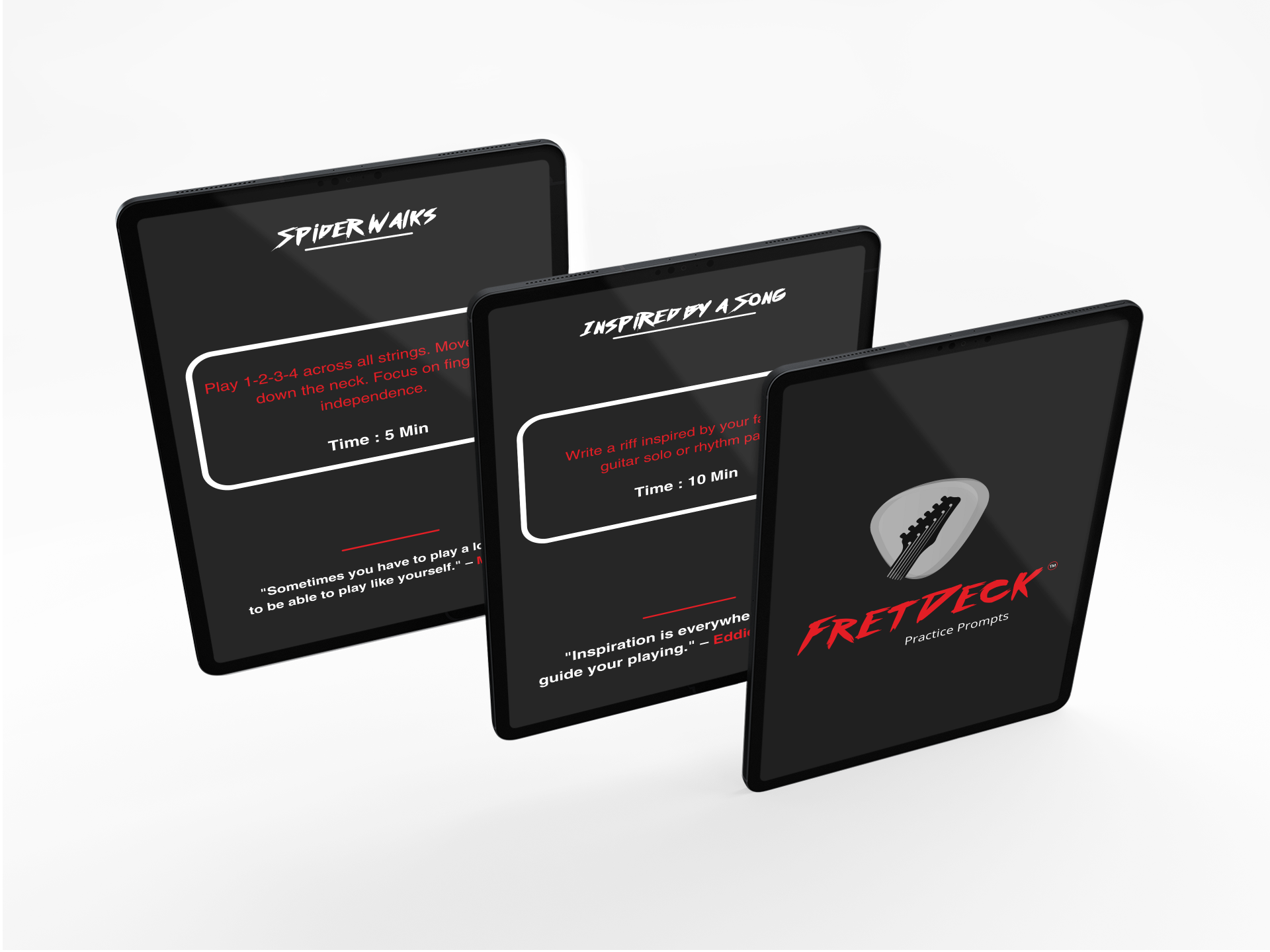
The Simple Guitar Practice System That Eliminates Guesswork
So You Can Stop Stalling… and Start Sounding Better Every Time You Pick Up the Guitar
👉 Get 52 Practice Prompts Now!

The Frustration of “Faking It”
Let’s be honest. For many aspiring blues guitarists, the journey feels like trying to assemble a puzzle without the picture on the box. You’ve learned a few licks from YouTube. You might even know the minor pentatonic scale in one position.
However, when it’s time to actually play the blues, something feels disconnected. You hear the greats like B.B. King or Stevie Ray Vaughan, and their playing sounds so logical, so intentional. Every note seems to have a purpose, perfectly outlining the chords and telling a story.
Your playing, on the other hand, can feel random. You throw licks at the chord changes, hoping they stick. As a result, you feel like an imposter, just faking it until you make it. The problem isn’t your passion or your effort; it’s the lack of a clear framework. Without a map, you’re just wandering in the dark.
What Exactly ARE Blues Guitar Charts?
So, what is the map that will guide you out of the darkness? It comes in the form of charts. But “chart” is a broad term. For our purposes, it breaks down into three main categories.
First, you have Chord Charts. This is the most common and fundamental type. A blues chord chart lays out the chord progression, usually over 12 bars (or measures). It tells you which chord to play and for how long. For example, it will show you the classic I-IV-V sequence that forms the backbone of countless blues tunes.
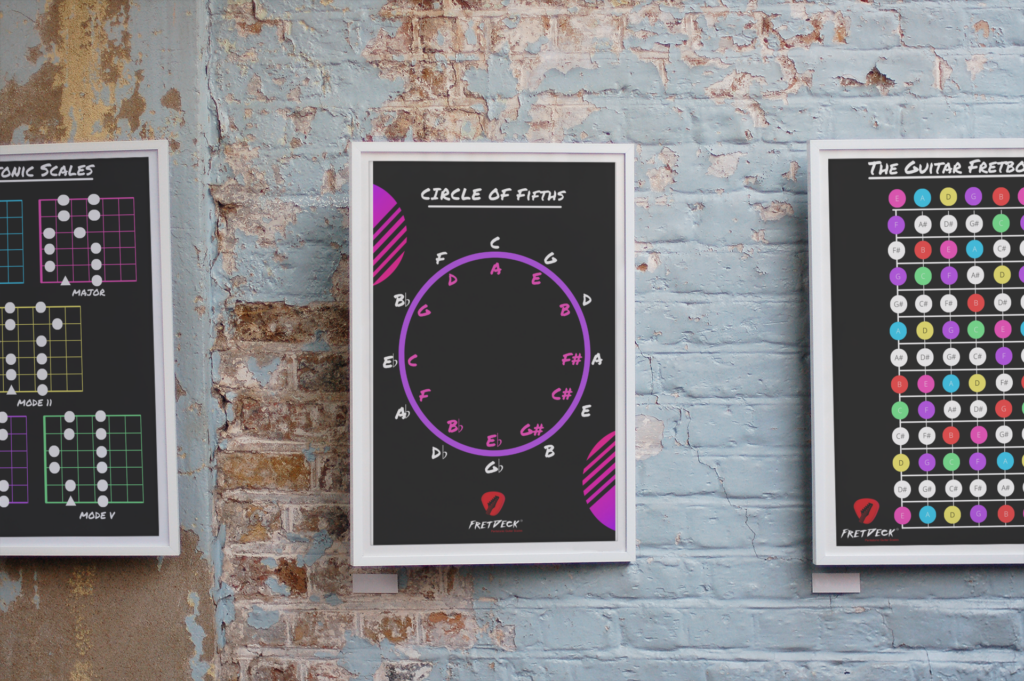
Second, there are Scale Diagrams. These are visual representations of the guitar fretboard. They show you which notes belong to a specific scale, like the essential minor pentatonic or the blues scale. Instead of memorizing abstract note names, you see patterns and shapes that you can move all over the neck. It’s the key to unlocking fluid, melodic solos.
Finally, we have Tablature (or TABs). TABs are specific charts that show you exactly which string and fret to play. While a chord chart tells you what chord to play (e.g., “A7”), a TAB might show you a specific way to play that chord or a cool lick to play over it. They are fantastic for learning the exact phrasing of your favorite players.
Together, these three types of charts provide a complete system for understanding and playing the blues from the ground up.
The 12-Bar Blues: The Foundation of Everything
If you learn only one thing from a chart, make it the 12-bar blues progression. It is the single most important structure in the entire genre. Mastering it means you can confidently jam with almost any blues band on the planet.
A typical 12-bar blues follows a I-IV-V formula. These Roman numerals represent chords built on the first, fourth, and fifth notes of a major scale. For instance, in the key of A, the I chord is A, the IV chord is D, and the V chord is E.
A standard 12-bar blues chart in the key of A looks like this:
| I | I | I | I | |—|—|—|—| | IV | IV | I | I | | V | IV | I | V |
Translated to chords in the key of A (often using dominant 7th chords for a bluesier feel), it becomes:
| A7 | A7 | A7 | A7 | |—|—|—|—| | D7 | D7 | A7 | A7 | | E7 | D7 | A7 | E7 |
Each box represents one measure of music. You simply play the indicated chord for that measure before moving to the next. That’s it! Furthermore, this structure is the canvas upon which all blues melodies and solos are painted.
To truly internalize this, you must learn to see this pattern, not just memorize a single key. For a deeper dive into how these progressions work, check out our complete chord progression guide. And for more variations, the experts at Fender have an excellent breakdown of the 12-bar form.
Why Blues Guitar Charts Are Your Secret Weapon
Relying on your ear alone when you’re starting out is a slow and painful process. Using well-structured blues guitar charts accelerates your learning curve exponentially. They don’t just show you what to play; they teach you why you’re playing it.
First, charts demystify the fretboard. A scale chart, for example, transforms a confusing jumble of 144 frets into a few manageable, movable patterns. Suddenly, you’re not guessing which notes will sound good; you have a visual guide to the “right” notes for any given key. This builds immense confidence.
Second, they provide structure for creativity. This might sound like a contradiction, but constraints often breed the best art. The 12-bar format gives you a reliable foundation. It allows you to stop worrying about getting lost and start focusing on rhythm, feel, and phrasing. As a result, your playing becomes more musical and intentional.
Moreover, using charts helps you communicate with other musicians. You can walk into a jam and confidently say, “Let’s play a shuffle in G.” Everyone who understands this basic chart language is instantly on the same page. This is how real musicians connect and create music on the fly. These blues guitar charts are your ticket into that world.
Beyond Chords: Charting Blues Scales and Licks
While chord charts form the harmonic foundation, scale and lick charts are where your personal expression comes to life. The most important scale in all of blues is the minor pentatonic.
A scale chart for the A minor pentatonic scale in the 5th position might look simple, but it’s a gateway to endless melodic ideas. When you overlay that scale chart on top of your 12-bar chord chart, magic happens. You begin to see how the notes of the scale relate to the underlying chords. You learn to target specific notes to create tension and release, the very essence of blues storytelling.
For example, when the progression moves to the IV chord (D7), you can emphasize notes from your scale that are also in the D7 chord. This makes your solos sound sophisticated and connected. To learn these patterns effectively, our guide to learning guitar scales is an invaluable resource.
Furthermore, you can find blues guitar charts in the form of TABs for specific licks. Want to learn a killer turnaround phrase from B.B. King? A TAB chart will show you note-for-note how he did it. You can collect these licks and then, using your knowledge of scale and chord charts, learn how to place them in your own solos. For an incredible library of licks to learn, Guitar World offers a treasure trove of lessons.
The Simple Guitar Practice System That Eliminates Guesswork
So You Can Stop Stalling… and Start Sounding Better Every Time You Pick Up the Guitar
👉 Get 52 Practice Prompts Now!
5 Actionable Tips to Master Blues Guitar Charts Today
1. Start with One Key and One Progression. Don’t try to learn everything at once. Pick the key of A or E and focus solely on the standard 12-bar blues progression. Play through the chords until you don’t have to think about them.
2. Learn the Numbers (I-IV-V). The real breakthrough happens when you stop thinking in terms of specific chords like “A7, D7, E7” and start thinking in terms of function: “I, IV, V.” This allows you to transpose the progression to any key instantly.
3. Connect Scales Directly to Chords. As you play a chord, look at your scale chart and identify which notes of the scale are inside that chord. For example, play an A7 chord and then play the notes of the A minor pentatonic scale one by one, listening for which ones sound most “at home.”
4. Establish a Consistent Practice Framework. Dedicate a small portion of every practice session to chart work. This could be 10 minutes of running a 12-bar progression or tracing a scale pattern. A structured approach is key, and having a best practice routine will prevent you from getting sidetracked.
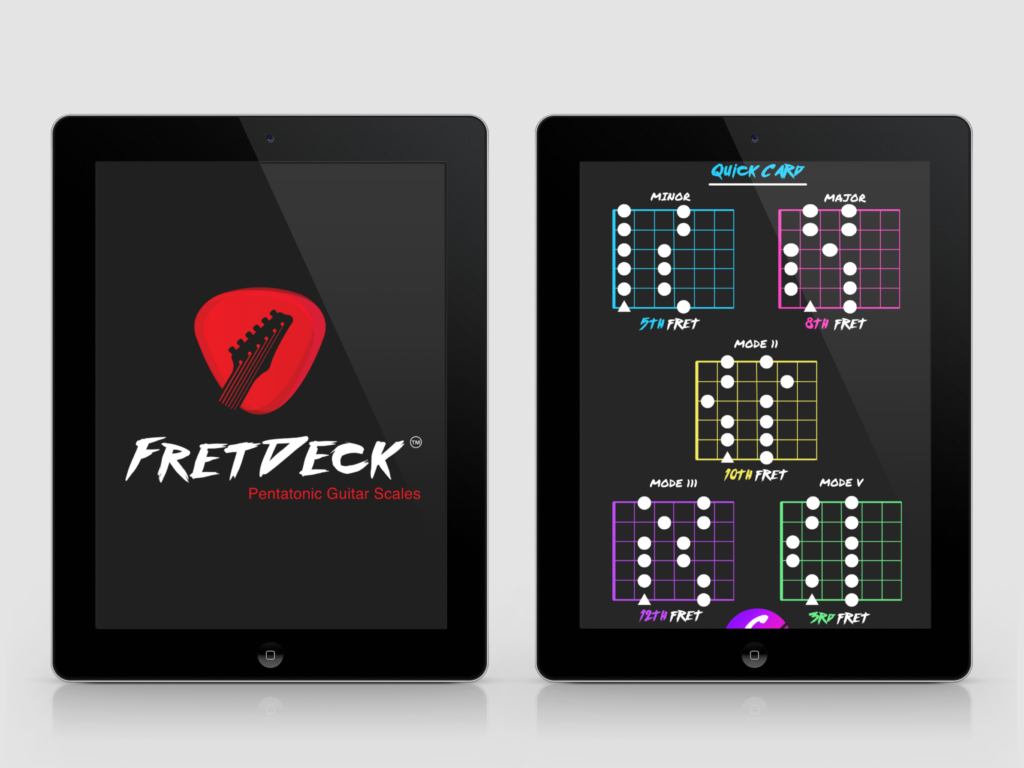
5. Use Visual Aids On Your Fretboard. Sometimes, a chart on paper or a screen feels disconnected from the instrument in your hands. This is where tools that put the information directly on your guitar can be a game-changer. For example, the visual learning system from FretDeck places scale and chord patterns right on your fretboard, bridging the gap between theory and practice.
Frequently Asked Questions (FAQ)
### What’s the difference between a chord chart and TAB?
A chord chart is a high-level map. It tells you what chord to play (e.g., A7) and for how long (one measure). In contrast, TAB is a low-level, specific instruction, telling you exactly which strings and frets to press to play a note or a specific voicing of that A7 chord.
### Can I find blues guitar charts for specific songs?
Absolutely. Many websites and books offer detailed blues guitar charts for famous songs. These are often in TAB format, showing the intro, the verse progression, the solo, and the outro. They are an excellent way to reverse-engineer how your favorite songs were constructed.
### Is it cheating to use charts?
Not at all! This is a common myth among beginners. Every professional musician, from session players to jazz legends, uses charts. They are a professional tool for communication, learning, and composition. Thinking of them as “cheating” is like thinking an author is cheating by using an outline.
The Simple Guitar Practice System That Eliminates Guesswork
So You Can Stop Stalling… and Start Sounding Better Every Time You Pick Up the Guitar
👉 Get 52 Practice Prompts Now!
The Simple Guitar Practice System That Eliminates Guesswork
So You Can Stop Stalling… and Start Sounding Better Every Time You Pick Up the Guitar
👉 Get 52 Practice Prompts Now!