
Are you ready to finally make sense of those confusing diagrams and play actual songs? The key is mastering electric guitar chord charts. These charts are the visual roadmaps that connect the notes in your head to the sounds from your amp. They show you exactly where to put your fingers to form the chords that make up virtually every song you love.
However, many beginner guitarists find themselves staring at a page of dots and lines with no idea what to do. You might feel overwhelmed or even frustrated. The good news is that reading these charts is a skill. Moreover, it’s a skill you can learn quickly with the right guidance.
This guide will break it all down for you. As a result, you will go from confused to confident, ready to tackle any song.
The Frustration of Generic Chord Diagrams
You’ve been there before. You get excited to learn a new song. You search online and download a chord sheet. But then, you hit a wall. The diagrams seem overly complicated or just plain wrong.
Specifically, you try to play the C chord or the G chord exactly as shown, but it sounds muddy and terrible through your distorted electric guitar. You wonder what you’re doing wrong. Is it your amp? Is it your guitar? The truth is, it’s often the chart itself.
Many charts you find online are designed for acoustic guitars, which need the full, ringing sound of all six strings. Electric guitars, however, often sound better with different chord voicings. You might need to mute certain strings or play smaller, punchier versions of the chords. Without charts designed for electric players, you’re left guessing, which stalls your progress completely. For a solid foundation, check out some essential beginner guitar tips that can help you avoid these common pitfalls.
The Simple Guitar Practice System That Eliminates Guesswork
So You Can Stop Stalling… and Start Sounding Better Every Time You Pick Up the Guitar
👉 Get 52 Practice Prompts Now!
How to Read Electric Guitar Chord Charts Like a Pro
Before you can shred, you need to learn the language. Fortunately, reading chord charts is simple once you understand the components. Think of a chord chart as a snapshot of your guitar’s fretboard standing upright.
Here is what each symbol means:
- Vertical Lines: These represent the six strings of your guitar. The line on the far left is the thickest string (low E), and the line on the far right is the thinnest string (high E).
- Horizontal Lines: These represent the metal frets on your guitar neck. The top line is usually the nut, or it might be labeled with a number (e.g., “3fr”) if the chord starts further up the neck.
- Dots: These show you where to place your fingertips. A number inside the dot often suggests which finger to use (1=index, 2=middle, 3=ring, 4=pinky).
- ‘O’ Symbol: An ‘O’ above a string means you should play that string “open,” without fretting any note.
- ‘X’ Symbol: An ‘X’ above a string means you must mute that string. This is crucial for electric guitar, as it prevents unwanted noise and muddiness.
Memorizing these symbols is the first step. Therefore, spend a few minutes just looking at various electric guitar chord charts to get familiar with how they communicate finger placement and string muting. It’s a visual language that will soon become second nature.
Essential Open Chords for Every Player
Now let’s put that knowledge into action. The foundation of most popular music is built upon a handful of open chords. These chords are called “open” because they use at least one open string (‘O’). These are your bread and butter.
Start by mastering these five shapes, often called the CAGED system:
1. C Major: A versatile chord that appears everywhere from pop to classic rock. 2. A Major: Bright and punchy, a staple in countless rock and blues tunes. 3. G Major: A full-sounding chord. On electric, you might only play the middle four strings for a tighter sound. 4. E Major: The foundation for rock music. Its shape is also the basis for many barre chords. 5. D Major: another bright chord. It uses only the top four strings, making it naturally clean on an electric.
Focus on one chord at a time. For example, form the C major chord and strum it slowly. Make sure every fretted note rings out clearly and that any muted strings are silent. As a result, you will build muscle memory and a clean technique from day one. You can find more information on how guitars work on sites like Fender.com, a fantastic resource for players.
The Simple Guitar Practice System That Eliminates Guesswork
So You Can Stop Stalling… and Start Sounding Better Every Time You Pick Up the Guitar
👉 Get 52 Practice Prompts Now!
Mastering Power Chords with Electric Guitar Chord Charts
This is where playing electric guitar truly gets fun. Power chords are simple, two or three-note chords that form the backbone of rock, punk, and metal. Because they contain no major or minor third, they sound powerful and clear, especially with distortion. Learning to read them on electric guitar chord charts is a game-changer.
A power chord chart is incredibly easy to read. Usually, it only has two or three dots. The most common shape involves placing your index finger on a string and your ring finger two frets higher on the next string down. Your pinky can double the note your ring finger is playing for a thicker sound.
For example, an E5 power chord (E in the 5th position) is played by placing your index finger on the 7th fret of the A string and your ring finger on the 9th fret of the D string. The chart will show an ‘X’ over the low E, A, D, and G strings you aren’t playing. This focused approach is why power chords sound so tight and aggressive. Once you can play them, you can start building a rock-solid chord progression guide.
Beyond the Basics: Barre Chords and Movable Shapes
What happens when a song calls for a B Minor or an F# Major? You won’t find those in the basic open position. This is where barre chords come in. A barre chord uses your index finger to press down multiple strings at once, like a movable capo.
The concept is simple. If you know the E major and A major open chord shapes, you already know almost every major barre chord. By “barring” your index finger across a fret and forming an E-shape or A-shape with your other fingers, you can move that chord all over the neck. Furthermore, this same logic applies to minor chords.
Reading electric guitar chord charts for barre chords is straightforward. You will see a thick line or an arc across the strings, indicating the barre. For many players, building the finger strength for barre chords is the biggest initial hurdle. However, with consistent practice, your hands will adapt. These movable shapes are the key to unlocking the entire fretboard and moving beyond just basic chords to learn guitar scales and lead playing.
6 Practical Tips for Using Chord Charts Effectively
1. Start with One Shape. Don’t try to learn 20 chords in one day. Pick one, like G major, and work on it until you can form it cleanly without thinking.
2. Focus on Clean Transitions. The real skill is changing between chords smoothly. Practice switching between two chords, like G and C, back and forth. Start slowly and gradually increase your speed.
3. Use a Metronome. Playing in time is non-negotiable. A metronome will help you develop a strong internal rhythm and make your chord changes tight and professional.
4. Learn Songs, Not Just Chords. The best way to stay motivated is by applying what you learn. Find a simple song that uses chords you know. Great artists are covered on sites like Guitar World.
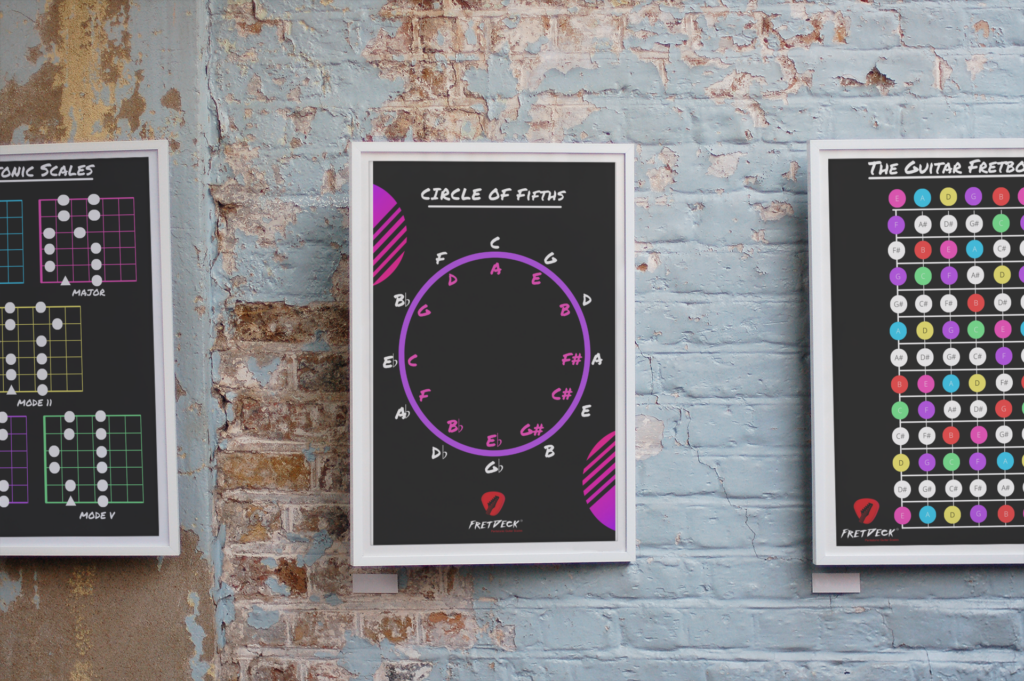
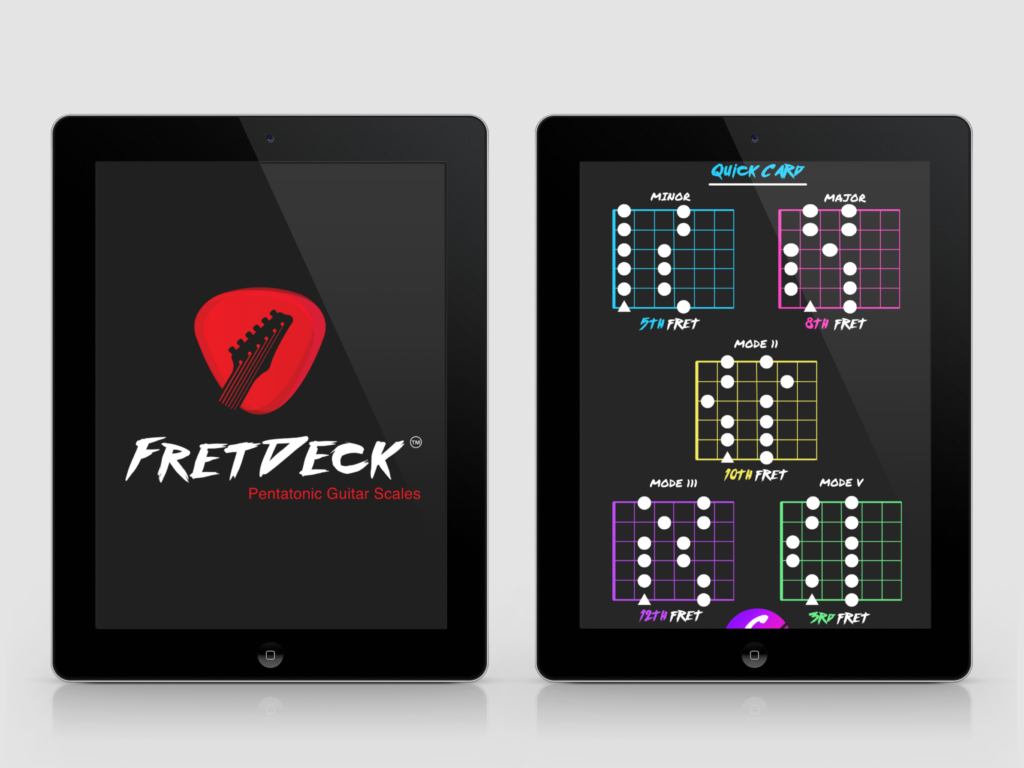
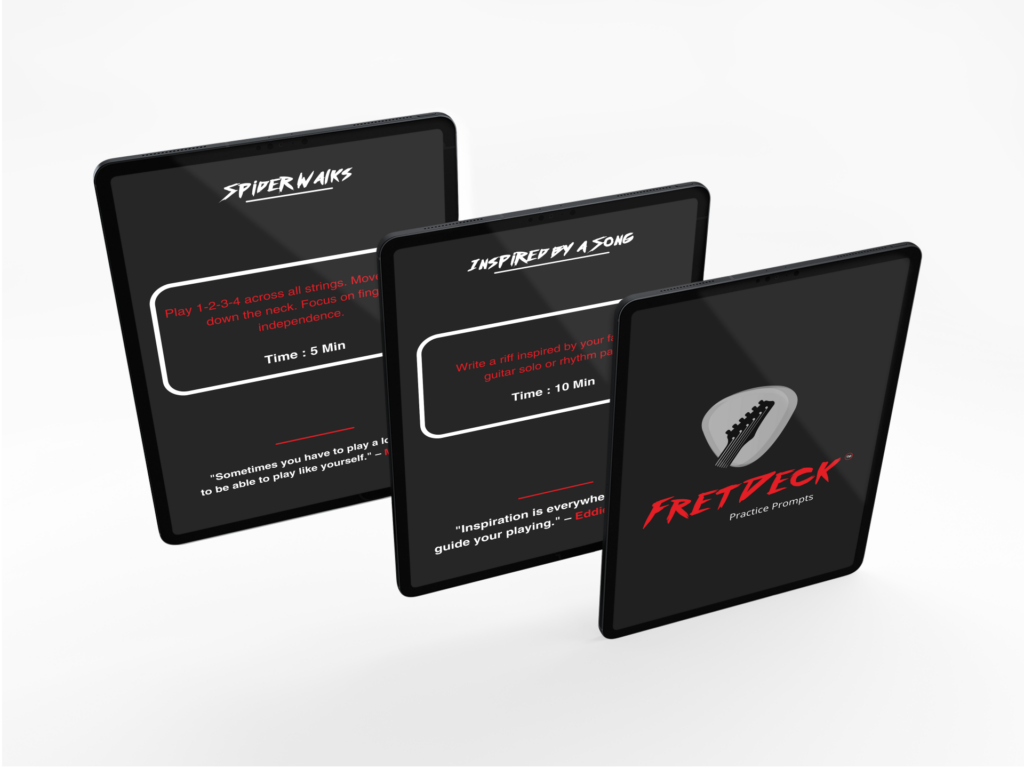
5. Cross-Reference with Audio. Your ears are your best tool. Listen to a recording of the chord to ensure you’re playing it correctly. You can also use a visual aid like FretDeck to see the shapes in a different format, which can help solidify your understanding.
6. Create Your Own Charts. Once you understand a chord, try drawing the chart from memory. This active recall method is a powerful way to cement the information in your brain.
Frequently Asked Questions
### Are electric guitar chord charts different from acoustic ones?
Technically, the notes of a C major chord are the same on any guitar. However, the application is different. Acoustic charts often assume you’ll strum all six strings. Effective electric guitar chord charts will often show muted strings or smaller, three-note “triads” that sound better with gain and effects. Power chords, for instance, are almost exclusively an electric guitar technique.
### What are the most important chords to learn first?
You should start with the fundamental open chords: C, A, G, E, and D. These five chords are the building blocks for thousands of songs. In parallel, you should learn the basic two-note power chord shape, as it’s movable and will instantly allow you to play countless rock riffs.
### How do I stop my chords from sounding muddy?
Muddiness on an electric guitar usually comes from three things. First, you might be accidentally hitting strings that should be muted. Practice using your fretting hand or picking hand to silence adjacent strings. Second, you might be using too much gain on your amp. Try rolling back the distortion. Finally, consider playing smaller chord voicings (triads) instead of full six-string chords.
The Simple Guitar Practice System That Eliminates Guesswork
So You Can Stop Stalling… and Start Sounding Better Every Time You Pick Up the Guitar
👉 Get 52 Practice Prompts Now!