Have you ever stared at the fretboard, feeling like you’re missing the secret password? A comprehensive guitar chords and scales chart is that password. It’s the single most powerful tool for translating the noise in your head into real music on your guitar. For many players, it’s the bridge between knowing a few shapes and truly understanding the instrument.
You’ve probably learned a few cowboy chords. Maybe you even memorized a pentatonic scale shape. However, you feel stuck. You play the same licks over the same chords because you don’t see how it all connects.
As a result, your playing feels rigid and uninspired. You want to improvise with confidence, write your own songs, and jam with others, but the fretboard seems like a mysterious, unconquerable map. This frustration can kill your motivation and make you feel like you’ll never break through to the next level.
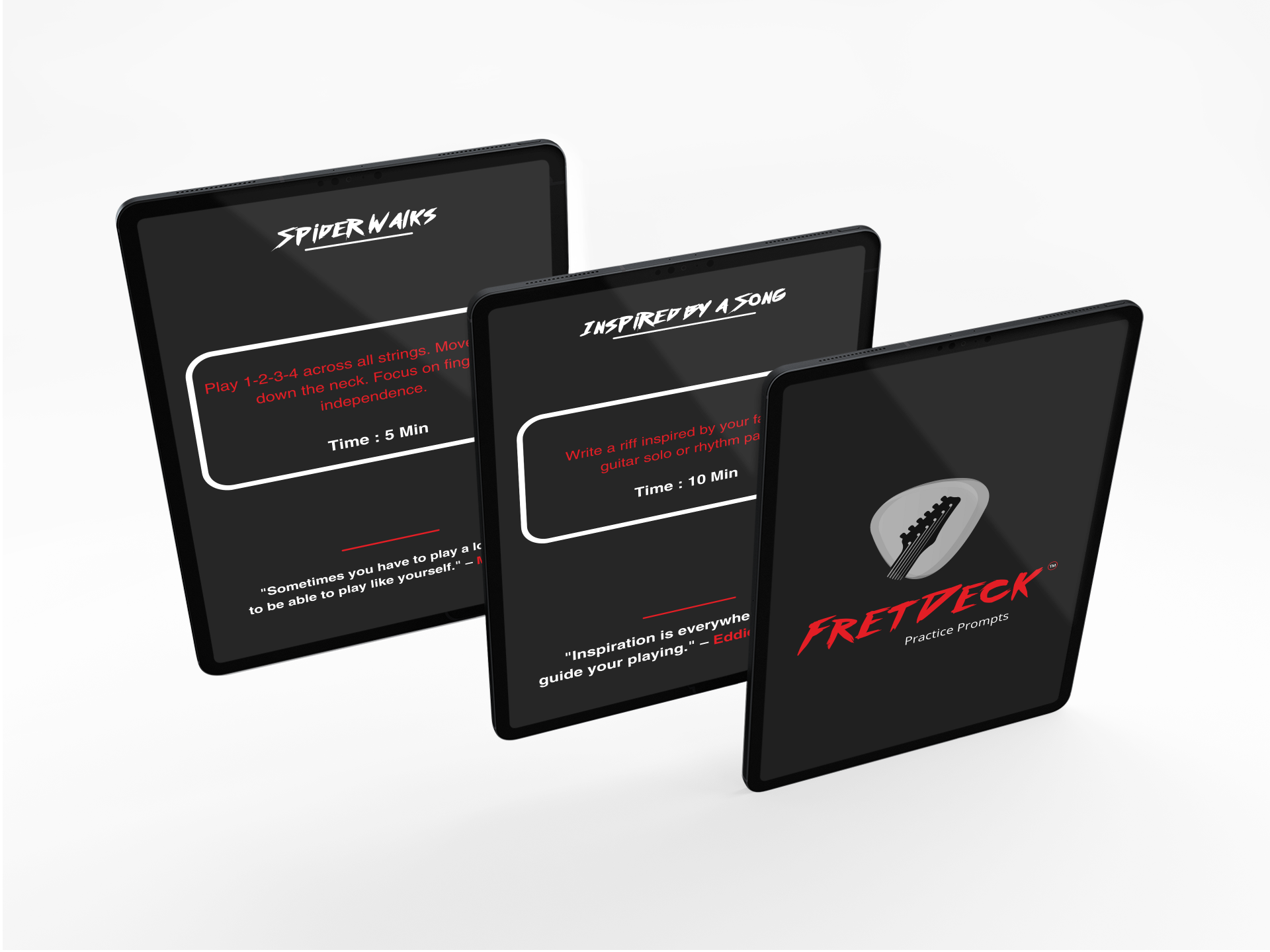
The Simple Guitar Practice System That Eliminates Guesswork
So You Can Stop Stalling… and Start Sounding Better Every Time You Pick Up the Guitar
👉 Get 52 Practice Prompts Now!
Why the Fretboard Feels Like a Disconnected Puzzle
You practice hard. You watch countless videos and learn new songs note-for-note. Yet, when it comes time to create something original, your mind goes blank. Why does this happen?
It’s because you’ve been collecting puzzle pieces without ever seeing the picture on the box. Chords and scales feel like two completely separate subjects. For example, you learn the A minor pentatonic scale for soloing. You also learn the chords Am, G, C, and F for a song. But no one ever showed you precisely why that specific scale works so well over those specific chords.
Consequently, you lack the core framework that connects everything. Without this foundation, improvisation feels like guesswork. You might hit a cool-sounding note, but you don’t know why it worked or how to find it again. This is where a good guitar chords and scales chart changes the entire game. It’s time to see the whole picture.

Decoding the Language of Chords
First, let’s look at the “chords” part of the equation. A chord chart isn’t just a collection of finger diagrams. More than that, it’s a guide to the emotional language of music. It shows you the building blocks of every song you love.
A proper chart organizes chords into families. You’ll see major chords, which often sound happy and bright. You’ll also see minor chords, which typically sound sad or moody. Furthermore, you’ll find dominant 7th chords, which create tension and a desire to resolve.
Instead of just memorizing one G major shape, a chart shows you how G major, G minor, and G7 are related. They all share the same root note (G). However, a couple of key notes change to alter their emotional impact. Understanding this allows you to manipulate the feel of a song intentionally. For a deep dive into how these chords work together, our chord progression guide is the perfect next step.
Connecting the Dots with Scales
Now for the magic moment. A scale is simply an organized sequence of notes in a specific key. The “scales” part of a guitar chords and scales chart is the melodic road map that weaves through the chords.
Here is the secret: Chords are built directly from scales. For example, a C Major chord is built using the 1st, 3rd, and 5th notes of the C Major scale. Suddenly, they aren’t two different topics anymore. They are two sides of the same coin.
When you see a song is in the key of G Major, you can look at your chart. You will immediately know that the G Major scale provides all the “correct” notes for your melody or solo. Moreover, you’ll see which chords (like G, C, and D) are part of that key. This knowledge is freedom. As a result, you are no longer guessing; you are making informed musical choices. For a comprehensive look at the most useful patterns, you should absolutely learn guitar scales in a structured way.
Your Guitar Chords and Scales Chart in Action
This is where theory meets reality. A guitar chords and scales chart is not just for study; it’s a practical tool for your daily practice. It transforms abstract concepts into tangible actions on your fretboard.
Imagine you’re learning a blues song in A. You see the chords are A7, D7, and E7. First, you pull out your chart. You look up the A minor pentatonic scale or, even better, the A blues scale. The chart shows you the five different positions of this scale all over the neck. For a fantastic lesson on this very concept, check out this article from Guitar World.
Now, you are no longer confined to one small box on the fretboard. You can seamlessly move between scale positions. Furthermore, when the chord changes to D7, you can use your chart to see which notes in your scale are part of the D7 chord. Specifically targeting these “chord tones” is what makes your solos sound professional and melodic. It’s the difference between rambling and telling a story.
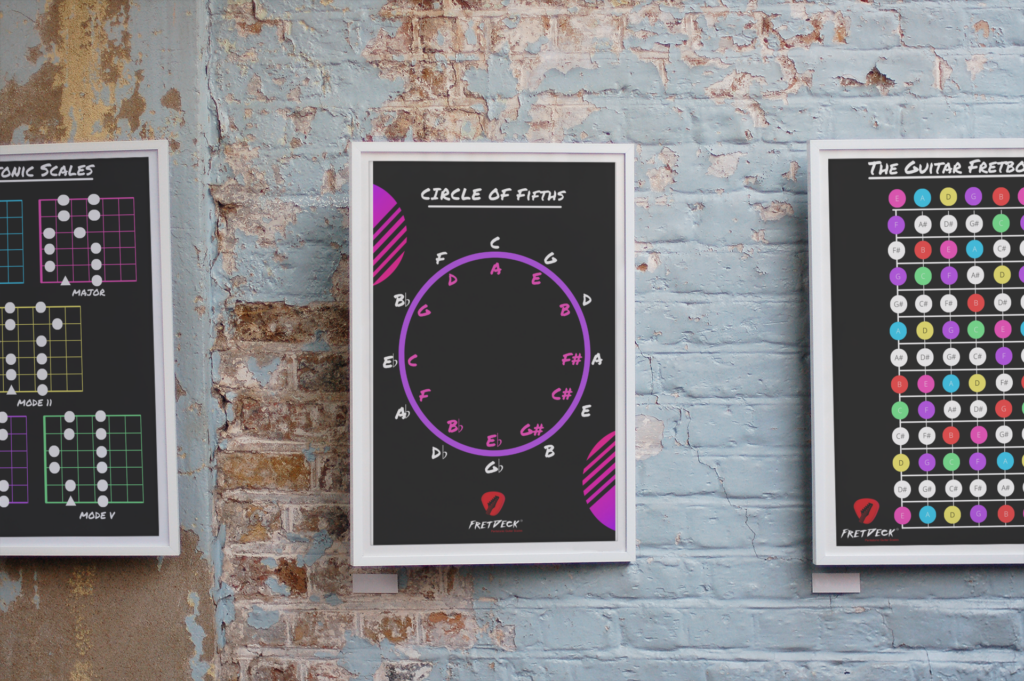
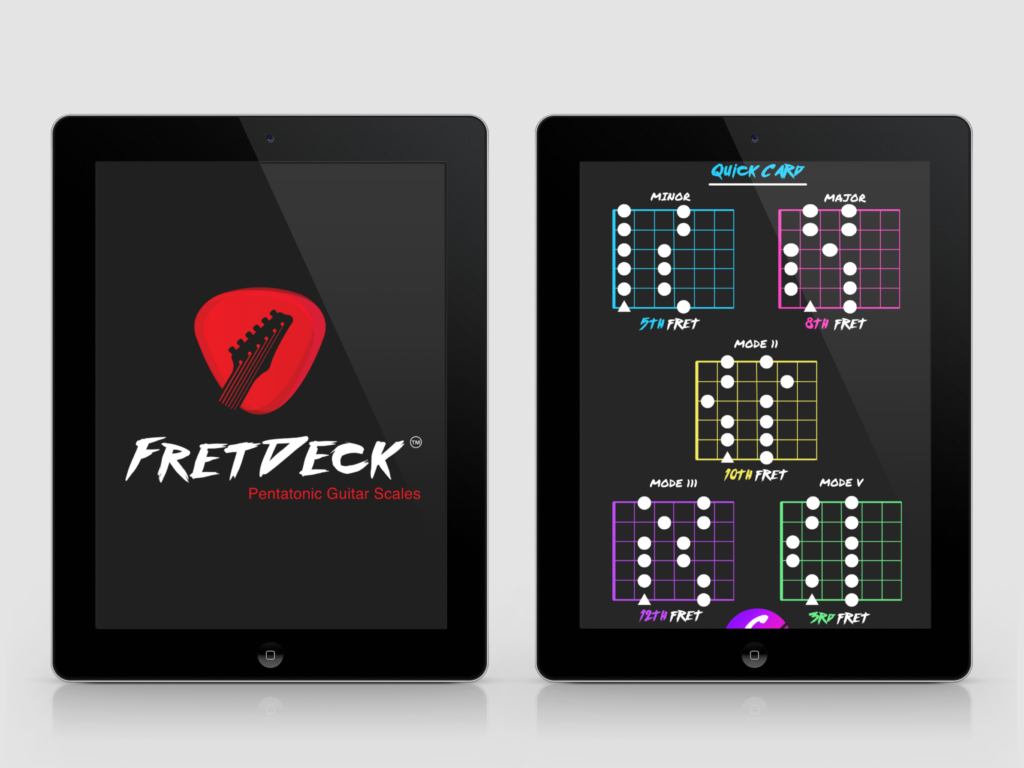
This deep integration of harmony and melody is the key to unlocking your creative potential. A helpful tip for visualizing these relationships on your actual guitar is using a physical tool. For example, a system like FretDeck puts this information directly on your fretboard, eliminating the need to look away from your instrument.
The Simple Guitar Practice System That Eliminates Guesswork
So You Can Stop Stalling… and Start Sounding Better Every Time You Pick Up the Guitar
👉 Get 52 Practice Prompts Now!
5 Practical Ways to Use Your Chart Today
Ready to put this into practice? Here are five simple exercises you can do with any good guitar chords and scales chart to start making connections immediately.
1. Map Out a Key. Choose a key, like E major. Use your chart to identify the main scale (E Major) and the primary chords in that key (E, A, B7). Spend your practice session just playing those chords and then improvising melodies using only notes from the E Major scale.
2. Explore a New Scale. Pick one scale you don’t know well, such as the Dorian mode. A great chart will show you its unique formula and sound. The legendary company Fender has a great breakdown of modes. Find the chords that work with it (for A Dorian, you’d use Am7 and D7) and experiment with its distinct flavor.
3. Practice Chord Tone Soloing. Put on a simple backing track, perhaps one that vamps on a C major chord. Look at your chart to see the notes that make up a C major chord (C, E, G). While you solo using the C major scale, make a point to land on and emphasize the notes C, E, and G. You will instantly sound more musical.
4. Transpose a Simple Song. Take a song you know in the key of G (using G, C, D). Use your chart to transpose it to the key of A. You’ll quickly see the pattern: the chords become A, D, and E. This exercise is a massive step towards playing any song in any key.
5. Connect Pentatonic Shapes. Look at the five shapes of the minor pentatonic scale on your chart. Instead of practicing them as separate boxes, practice transitioning between them. Start in shape 1, slide up to a note in shape 2, then move to shape 3. This will finally connect your entire fretboard. For more ideas like this, check out our guide to the best practice routine.
Frequently Asked Questions
How do chords and scales actually relate?
Think of the scale as the alphabet for a specific key. The chords in that key are words built using only letters from that alphabet. Specifically, most basic chords are formed by taking the 1st, 3rd, and 5th notes of the scale. A good guitar chords and scales chart makes this relationship visually obvious.
What is the most important scale to learn first?
For most rock, blues, pop, and country guitarists, the minor pentatonic scale is the most important starting point. It’s musically versatile, sounds great over many chord progressions, and is relatively easy to learn across the fretboard. Once you have that down, the major scale is your next priority as it’s the foundation of most music theory.
Should I memorize the chart or just understand it?
Both, but understanding comes first. Initially, use the chart as a constant reference. Don’t pressure yourself to memorize everything. Focus on understanding why a certain scale works over a certain chord. Through consistent use and practical application, memorization will happen naturally over time.
The Simple Guitar Practice System That Eliminates Guesswork
So You Can Stop Stalling… and Start Sounding Better Every Time You Pick Up the Guitar
👉 Get 52 Practice Prompts Now!
The Simple Guitar Practice System That Eliminates Guesswork
So You Can Stop Stalling… and Start Sounding Better Every Time You Pick Up the Guitar
👉 Get 52 Practice Prompts Now!