You’re searching for a guitar chords basic pdf because you want to start playing real music. We’ve created the perfect resource to help you stop feeling confused and finally make progress on your guitar journey.
This isn’t just another chord chart; it’s the first step toward unlocking the songs you love. You’ve felt the frustration of not knowing where to begin. Therefore, we’ve designed this guide to give you a clear, actionable path forward.
The Frustration of “Just Learning Chords”
Let’s be honest. You’ve probably already downloaded a chord chart or two. You excitedly opened the file, looked at the jungle of dots and lines, and felt a wave of confusion wash over you.
Your fingers won’t contort into those strange shapes. When you finally manage to hold one down, it just sounds like a muffled, buzzing mess. Moreover, you have no idea which chords to learn first or how to switch between them without a long, awkward pause. It feels less like making music and more like finger gymnastics.
As a result, that initial excitement fades. The guitar gathers dust in the corner, and the dream of playing your favorite songs feels further away than ever. You start to wonder if you even have what it takes. This is the moment where many aspiring guitarists quit, believing they simply aren’t “musical.” The truth is, they just don’t have a system. A simple chart of chords isn’t a system; it’s just raw, confusing data.
The Simple Guitar Practice System That Eliminates Guesswork
So You Can Stop Stalling… and Start Sounding Better Every Time You Pick Up the Guitar
👉 Get 52 Practice Prompts Now!
Mastering the “Cowboy Chords” First
The secret to getting started isn’t learning dozens of obscure chords. Instead, you need to focus on the essential building blocks of popular music. These are often called “cowboy chords” because they form the backbone of countless folk, pop, rock, and country songs.
Specifically, we’re talking about G, C, D, A, E, Em, and Am. With just these seven shapes, you can play literally thousands of songs. Think about that. You don’t need to be a chord encyclopedia; you just need to master a handful of fundamentals. These chords are the key.
Your first goal is to get each chord ringing out clearly. This means every note in the chord sounds clean, with no buzzing or muted strings. Take your time with each one. For example, press one finger down at a time and pluck the string to ensure it’s clean before adding the next finger. This deliberate practice builds a solid foundation.
How to Use Your Guitar Chords Basic PDF Effectively
A PDF is a static tool, but your practice should be dynamic and focused. Don’t try to learn every shape on the guitar chords basic pdf in one sitting. That’s a recipe for burnout and failure. Instead, turn it into a focused training plan.
First, pick just one chord to master. Let’s say you choose the G chord. Spend your entire practice session on just that shape. Use a technique you can find explained on sites like Guitar World to ensure your form is correct. Place your fingers down, strum the chord, and listen. If it buzzes, identify the problem finger and adjust it. Then lift your hand off completely, shake it out, and form the chord again. Repeat this for five to ten minutes.
Next, it’s time to build speed and muscle memory. Choose a second chord, like C. Now, practice switching between G and C. Set a metronome to a very slow tempo (like 60 BPM) and switch between the chords every four beats. This is called the “One-Minute Change” exercise. Your goal isn’t speed; it’s accuracy and landing the change perfectly in time. For a structured way to do this, check out our guide to building the best practice routine. Using a system like this makes your guitar chords basic pdf a powerful weapon for progress.
The Simple Guitar Practice System That Eliminates Guesswork
So You Can Stop Stalling… and Start Sounding Better Every Time You Pick Up the Guitar
👉 Get 52 Practice Prompts Now!
From Chords to Music: Your First Progressions
You don’t play guitar to make chord shapes; you play guitar to make music. The moment you connect two or three chords together in a pleasing way, everything changes. This is where chord progressions come in. A progression is simply a sequence of chords that forms the harmonic foundation of a song.
The good news is that most popular music uses the same few progressions over and over. One of the most common is the G – C – D progression. Using the switching technique from the previous step, practice moving between these three chords. Strum each chord four times, then move to the next.
For example:
- G – G – G – G
- C – C – C – C
- D – D – D – D
- G – G – G – G
Congratulations, you’re now playing the chord progression for songs like “Sweet Home Alabama” (with a slight variation) and hundreds of others. You are officially making music! As you get more comfortable, you can explore other common sequences. Delving into a chord progression guide will open up a new world of songwriting possibilities.
7 Actionable Tips to Learn Chords Faster
Having a guitar chords basic pdf is a great start, but how you practice with it makes all the difference. Here are seven tips to accelerate your learning.
1. Press Just Behind the Fret. Do not press directly on the metal fret wire or too far back. The sweet spot is right behind the fret, requiring the least amount of pressure for a clean note.
2. Use Your Fingertips. Avoid letting the fleshy part of your finger touch adjacent strings, as this will mute them. Keep your fingernails short and use the very tips of your fingers, arching them like a spider.
3. Start Unbelievably Slow. Speed is the enemy of clean technique when you’re starting out. Use a metronome and set it to a “painfully slow” tempo. Only increase the speed once you can make a change perfectly 10 times in a row.
4. Visualize the Next Chord. While you are playing one chord, your brain should already be thinking about the shape of the next one. This mental preparation makes your physical movements faster and more efficient. Many resources like those on Fender Play emphasize this mental aspect of playing.
5. Practice in Short, Focused Bursts. Don’t practice for two hours once a week. Instead, practice for 15-20 minutes every single day. Consistent, focused practice builds muscle memory far more effectively.
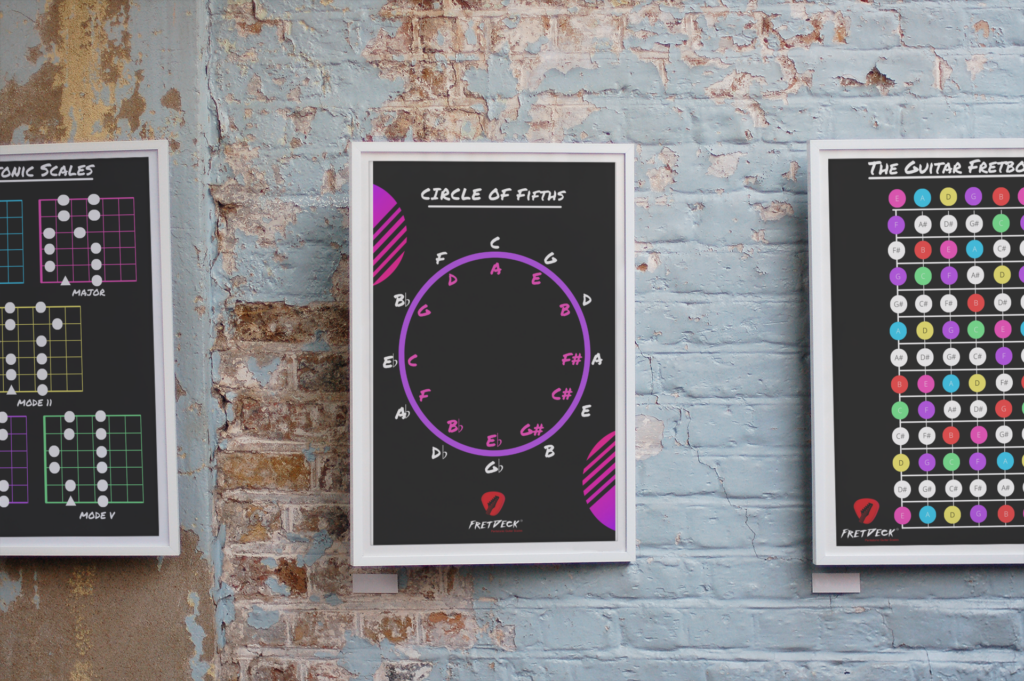
6. Use a Practice Aid. Sometimes a visual cue is all you need. Tools like FretDeck provide physical cards that show you chords and scales right on your guitar, eliminating the need to look back and forth at a screen or paper.
7. Check Each String. After forming a chord, don’t just strum it. Pluck each string individually. This is the fastest way to diagnose exactly which string is buzzing or muted and which finger is the culprit. We have more of these in our collection of beginner guitar tips.
By applying these tips, you’ll find that the shapes in your guitar chords basic pdf become second nature much more quickly.
Frequently Asked Questions
What are the 5 most basic guitar chords?
The five most essential chords for a beginner are typically G Major, C Major, D Major, A Minor (Am), and E Minor (Em). These five chords are found in a massive number of popular songs across many genres and form a fantastic foundation for any new guitarist. They are relatively easy to play and transition between.
How long does it take to learn basic guitar chords?
It varies, but with consistent daily practice (15-20 minutes), most people can form the basic open chords cleanly within 1-2 weeks. Mastering the smooth, fast transitions between them can take a few months of dedicated practice. The key is consistency, not cramming.
Should I download another guitar chords basic pdf if I’m stuck?
Probably not. Hoarding more information is rarely the solution. The problem usually isn’t the quality of your guitar chords basic pdf, but the lack of a structured practice method. Instead of looking for another chart, focus on implementing a system, like the “One-Minute Change” exercise, to master the chords you already have.
The Simple Guitar Practice System That Eliminates Guesswork
So You Can Stop Stalling… and Start Sounding Better Every Time You Pick Up the Guitar