
The journey of guitar learning fretboard navigation often feels like trying to read a map without a legend. You pick up your guitar, full of ambition, ready to play the music you hear in your head… but the fretboard stares back at you, a confusing grid of wood and wire.
You know a few chord shapes. You might even have a scale pattern or two under your fingers. However, you feel trapped in those little boxes. Moving outside of them is terrifying, and as a result, your playing sounds repetitive and stuck.
This is the wall every single guitarist hits. It’s the frustrating plateau where progress grinds to a halt. You see other players gliding effortlessly across the neck, and you wonder what secret they know that you don’t.
The Simple Guitar Practice System That Eliminates Guesswork
So You Can Stop Stalling… and Start Sounding Better Every Time You Pick Up the Guitar
👉 Get 52 Practice Prompts Now!
The Fretboard Black Hole: Why You’re Stuck
Does this sound familiar? You learn a new song, but you only know how to play it in one position. You try to improvise a solo, but you end up just running up and down a single scale pattern you memorized, hoping for the best.
Furthermore, you feel completely lost when someone says, “Let’s play this in the key of E-flat.” You have no reference point, no anchor to grab onto. As a result, you just nod along, feeling like an imposter.
This isn’t a problem with your talent or your dedication. It’s a problem with your method. Specifically, you’re trying to build a house without a foundation. That foundation is total fretboard knowledge, and without it, everything you build will eventually crumble. The process of guitar learning fretboard can feel overwhelming, but it’s the only way to break free.
The Foundation: Unlocking Your Fretboard GPS
Before you can fly, you need a map. For guitarists, that map is built from a few core concepts that connect everything. Many players struggle with this part of the guitar learning fretboard process because they try to memorize all 132+ notes at once. That’s like trying to memorize a dictionary in one sitting.
Instead, we need a system. The most powerful system for visualizing the neck is the CAGED system. In short, it’s a framework that shows how the five open chord shapes (C, A, G, E, and D) connect to each other all the way up the neck.
For example, the E-shape barre chord you play on the 3rd fret is a G chord. The shape of an open G chord played higher up the neck functions as another chord. Understanding how these five shapes link together is a revelation. It turns the fretboard from a series of random notes into a logical, interconnected grid. For a deeper dive on this, Fender.com has an excellent article that breaks it down visually.

The Simple System for Guitar Learning Fretboard Mastery
Memorizing the entire CAGED system at once can still be a lot. Therefore, I want to give you a simpler, more direct method to get started today. This approach focuses on finding anchors and using simple shapes to navigate between them.
First, you must stop thinking of it as memorizing 132 notes. Instead, you’re going to learn just a handful of notes and then use simple logic to find all the others.
Step 1: Memorize the Natural Notes on TWO Strings Forget the whole fretboard for a moment. Your only mission is to permanently burn the notes on the 6th (low E) and 5th (A) strings into your brain. Why these two? Because they contain the root notes for the vast majority of barre chords you’ll ever play.
Start with the Low E string: E (open), F (1st fret), G (3rd), A (5th), B (7th), C (8th), D (10th), and back to E (12th). Say them out loud as you play them. Do this for five minutes every single day. Then, do the same for the A string. This is the most crucial first step in any effective guitar learning fretboard strategy.
Step 2: Use Octave Shapes to Find Notes Everywhere This is the “hack” that unlocks everything. An octave is the same note, just higher or lower in pitch. On guitar, octaves have very predictable shapes. From any note on the low E or A strings, you can find its octave by going two strings higher and two frets up.
For example, find the G on your low E string (3rd fret). Now, go two strings higher (to the D string) and two frets up (to the 5th fret). That’s another G! You just used one known note to instantly find another. This simple shape works everywhere on the bottom four strings. As a result, by knowing just the E and A strings, you can now find any note on the D and G strings.
Step 3: Connect the Dots with Patterns Once you can locate any root note, you can start building everything else. Scales and chords aren’t random collections of notes; they are patterns built from a root. This is where you connect your fretboard knowledge to actual music theory.
For instance, you can stop memorizing dozens of scale patterns as meaningless shapes. Instead, you’ll start to see them for what they are: a series of intervals related to a root note you can now find anywhere. This is where our guide to learning guitar scales becomes incredibly powerful.
Making It Stick: Practical Application
Knowledge is useless without application. Therefore, you must use this information constantly until it becomes second nature. Don’t just sit and drill notes in isolation.
Integrate it into your playing. The next time you practice a chord progression, don’t just mindlessly play the shapes. Say the name of each root note out loud as you change chords. This forges a powerful mental and physical connection.
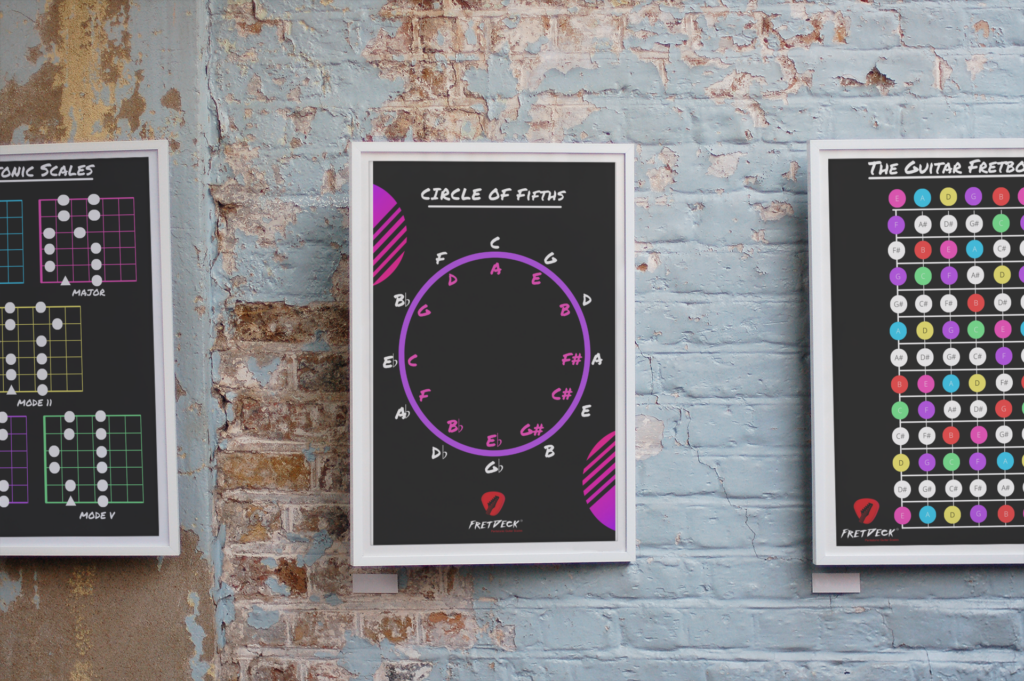
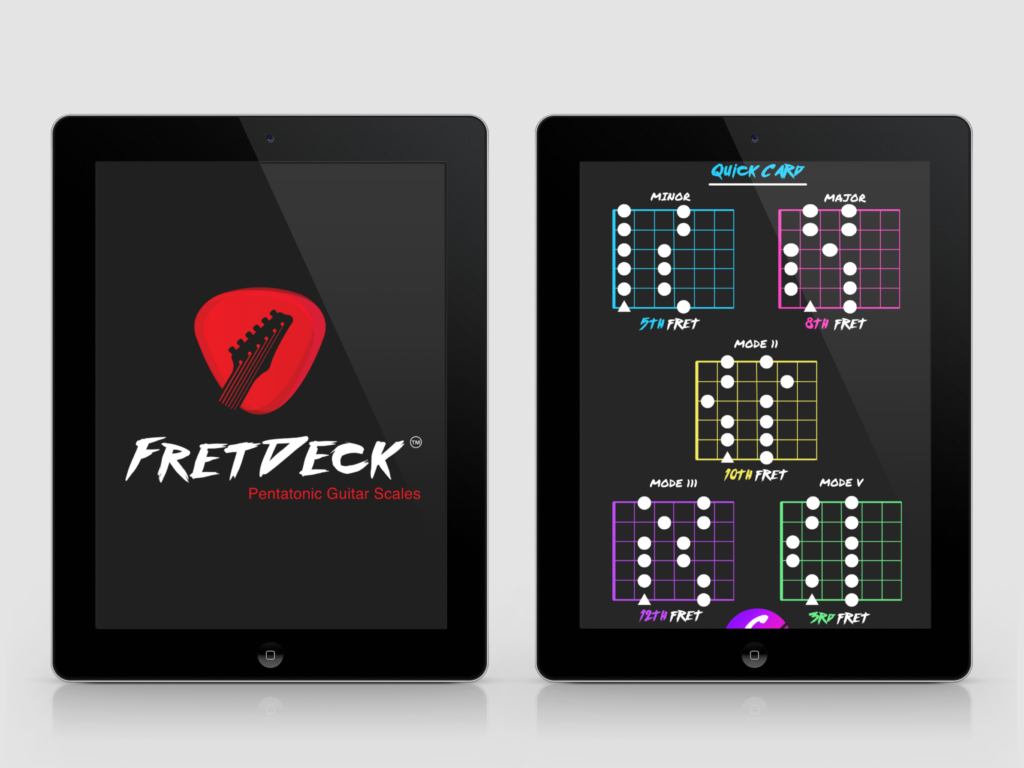
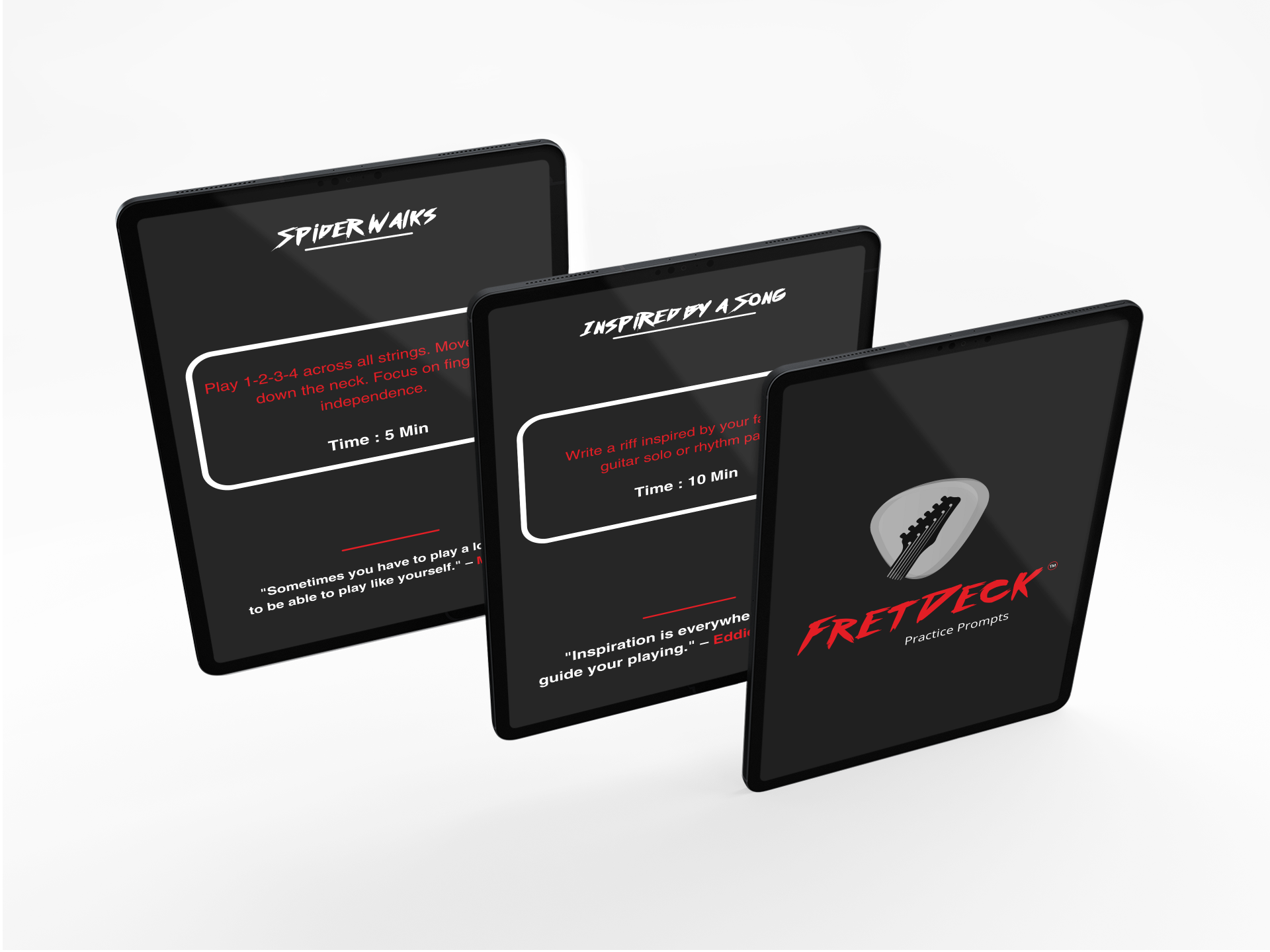
Furthermore, try improvising over a backing track, but limit yourself to only one or two strings. This forces you to think horizontally and melodically, rather than falling back on comfortable “box” patterns. For tangible practice ideas, you can use a tool like the FretDeck card system to give you visual prompts and exercises that break you out of your rut. Ultimately, a successful approach to guitar learning fretboard is about consistent, focused practice, which all great beginner guitar tips emphasize.
The Simple Guitar Practice System That Eliminates Guesswork
So You Can Stop Stalling… and Start Sounding Better Every Time You Pick Up the Guitar
👉 Get 52 Practice Prompts Now!
5 Daily Drills for Fretboard Dominance
Incorporate these five-minute exercises into your daily practice. Consistency is more important than intensity.
1. The One-String Drill. Pick a random string. Start from the open string or first fret and play each note up to the 12th fret, saying its name out loud. Do this once up and once down.
2. Octave Hunting. Pick a note, for example, ‘C’. Your mission is to find and play every single ‘C’ on the entire fretboard in under 60 seconds. This is a fantastic way to connect the different positions.
3. Horizontal Scale Playing. Instead of playing a C Major scale in a vertical box, try playing it all on one string (the G string, for example). This is an amazing ear-training exercise that teaches you the sound and feel of intervals. Many pros swear by this, as noted in publications like Guitar World.
4. Random Note Fire. Close your eyes and point to a random spot on the fretboard. Open your eyes and name the note as quickly as you can. Turn it into a game. Time yourself.
5. Say It As You Play It. When practicing anything—songs, scales, chords—make a conscious effort to name the root notes as you play them. This is a core component of building a best practice routine that actually works.
Diligent practice in guitar learning fretboard fundamentals separates the amateurs from the players who seem to know it all.
Frequently Asked Questions
How long does it take to learn the fretboard?
It varies, but with 10-15 minutes of focused daily practice using the methods above, you can have a strong command of the entire fretboard in 2-3 months. The goal isn’t instant memorization but gradual, permanent knowledge.
What’s the fastest way to memorize the fretboard?
The fastest way is not to memorize, but to understand. Focus on learning the natural notes on the E and A strings first, then use octave shapes to find those notes elsewhere. This system is exponentially faster than trying to brute-force memorize every single fret.
Do I need to learn every single note on the guitar?
Yes and no. You need the ability to identify any note on the fretboard quickly. However, you accomplish this not by memorizing 132 individual points, but by memorizing a few key anchors and the system that connects them. The sharps and flats will fall into place automatically as they are just one fret away from the natural notes you’ve mastered.
The Simple Guitar Practice System That Eliminates Guesswork
So You Can Stop Stalling… and Start Sounding Better Every Time You Pick Up the Guitar
👉 Get 52 Practice Prompts Now!
The Simple Guitar Practice System That Eliminates Guesswork
So You Can Stop Stalling… and Start Sounding Better Every Time You Pick Up the Guitar
👉 Get 52 Practice Prompts Now!