The right guitar learning kit beginner setup is the single most important first step on your journey to playing music. You’ve pictured it a thousand times: sitting on the couch, effortlessly strumming your favorite songs as friends and family sing along. It’s a powerful dream.
However, a huge gap exists between that dream and the reality of holding a guitar for the first time. The sheer volume of information is overwhelming. What guitar do you buy? What accessories are essential? Which online course is actually worth your time?
This confusion often leads to analysis paralysis. As a result, that brand-new guitar sits in the corner, collecting dust. But it doesn’t have to be that way. We’re going to demystify the process and show you how to build a kit that guarantees you’ll actually learn to play.
The Simple Guitar Practice System That Eliminates Guesswork
So You Can Stop Stalling… and Start Sounding Better Every Time You Pick Up the Guitar
👉 Get 52 Practice Prompts Now!
The All-in-One Box Myth: Why Most Kits Fail
You’ve seen them online or in big-box stores. It’s a shiny, shrink-wrapped box with a cool graphic, promising “Everything You Need to Start Playing Guitar!” It seems like the perfect, simple solution to your problem.
Unfortunately, these pre-packaged deals are almost always a trap. They are designed to be sold, not to create successful musicians. The guitar itself is often made from the cheapest materials possible. Consequently, it’s difficult to play, refuses to stay in tune, and sounds thin and lifeless. This isn’t a real instrument; it’s a guitar-shaped-object.
Furthermore, the included accessories are typically throw-ins of the lowest quality. The tuner is inaccurate, the strap is flimsy, and the included “lesson book” is a pamphlet with three chords and a nursery rhyme. This is not a real guitar learning kit beginner solution; it’s a box of discouraging junk that sets you up for failure before you even start.
Component #1: Choosing the Right First Guitar
The heart of your setup is, of course, the guitar itself. Forget the flashy colors and brand names for a moment. Your first guitar has only one job: it must be easy and enjoyable to play. If it hurts your fingers or constantly sounds bad, you will quit.
For most beginners, the primary choice is between an acoustic and an electric guitar. There is no wrong answer here; it depends on the music you love. Do you want to play campfire songs and folk music? An acoustic is probably your best bet. Do you dream of rock riffs and blues solos? Go for an electric.
If you choose acoustic, consider looking into our complete acoustic guitar guide for more detail on body sizes. A smaller “concert” or “auditorium” size is often more comfortable for beginners than a large “dreadnought.” Remember, comfort is key.

For electrics, iconic shapes like a Squier Stratocaster or Epiphone Les Paul are popular for a reason. They are versatile and have been trusted by generations of players. No matter what you choose, the most important step is getting a “professional setup” from a local guitar tech. This small investment makes the guitar significantly easier to play. For more on this, Fender has an excellent guide on what a setup entails.
Component #2: The Essential “Unsung Hero” Accessories
A great guitar is just the beginning. The right accessories are not luxuries; they are critical tools that make the learning process smoother and more effective. Buying these items separately ensures you get quality gear that will actually help you.
Here is your essential shopping list:
- A Quality Digital Tuner: This is non-negotiable. A clip-on headstock tuner (from brands like Snark or D’Addario) is the best choice. Your ear isn’t trained yet, so you must have a reliable way to get in tune. A guitar that’s out of tune is a primary source of frustration.
- A Variety of Picks (Plectrums): Don’t just get one. Buy a variety pack with different thicknesses. A thin pick is great for strumming chords, while a heavier pick gives you more control for playing single notes.
- A Capo: This simple clamp allows you to change the key of a song without learning new, complicated chord shapes. It’s a beginner’s best friend and opens up a massive library of songs you can play immediately.
- A Guitar Strap: Even if you plan to play sitting down, a strap helps you maintain proper posture and position the guitar correctly every time. Consistency is crucial for building muscle memory.
- A Guitar Stand or Wall Hanger: “Out of sight, out of mind” is the enemy of practice. Keeping your guitar on a stand makes it visible and easily accessible. Therefore, you are far more likely to pick it up and play.
- Extra Strings: You will break a string. It’s a rite of passage. Having an extra set on hand means you won’t have to stop your progress and run to the music store.
What Makes a Great Guitar Learning Kit Beginner Setup?
Here’s the secret that the all-in-one boxes completely ignore. The most critical component of your kit isn’t a piece of gear at all. It’s your learning plan. A pile of quality gear with no clear path for using it is just as useless as a box of cheap junk.
This is where you must shift your focus from “stuff” to “system.” Randomly watching YouTube videos leads to information overload and a disjointed skillset. You might learn a cool riff, but you won’t understand the “why” behind it. As a result, you get stuck.
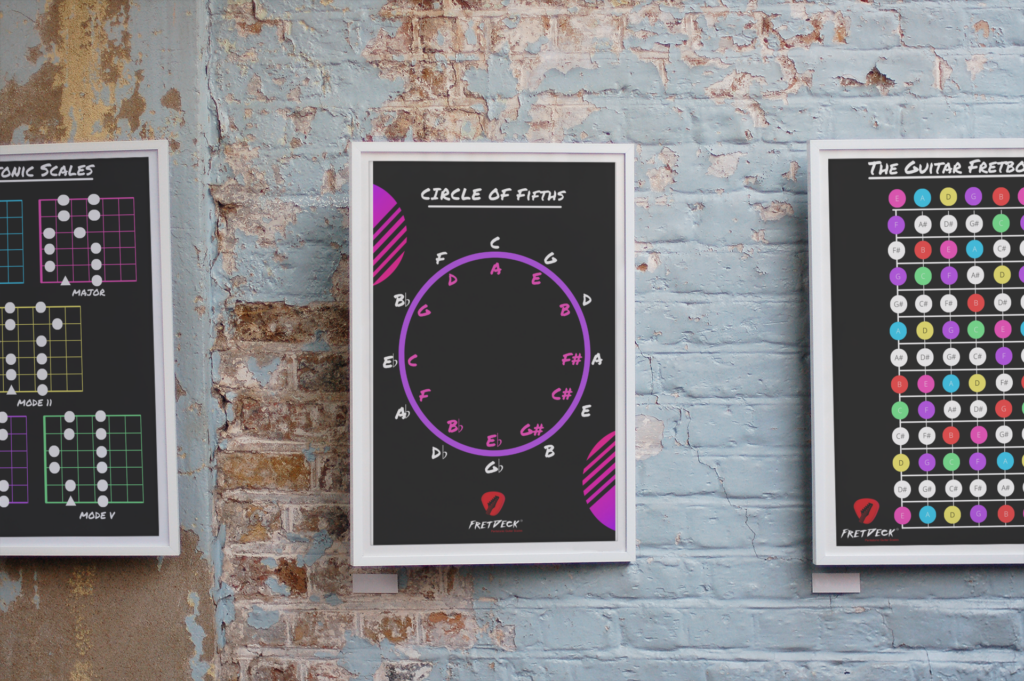
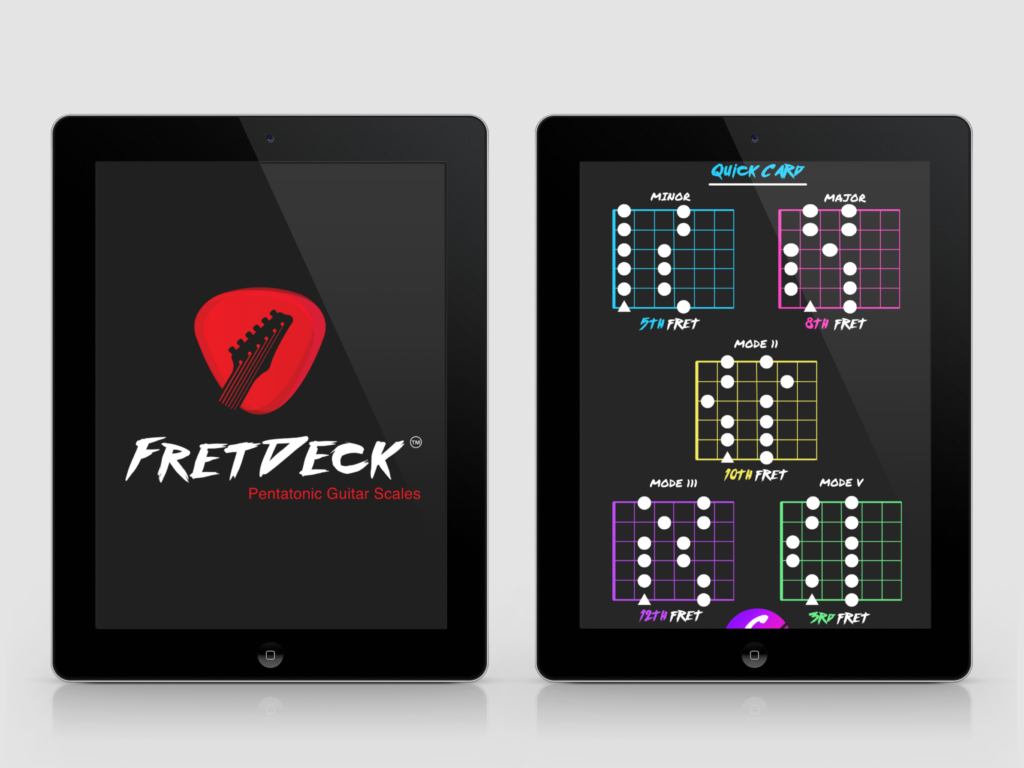
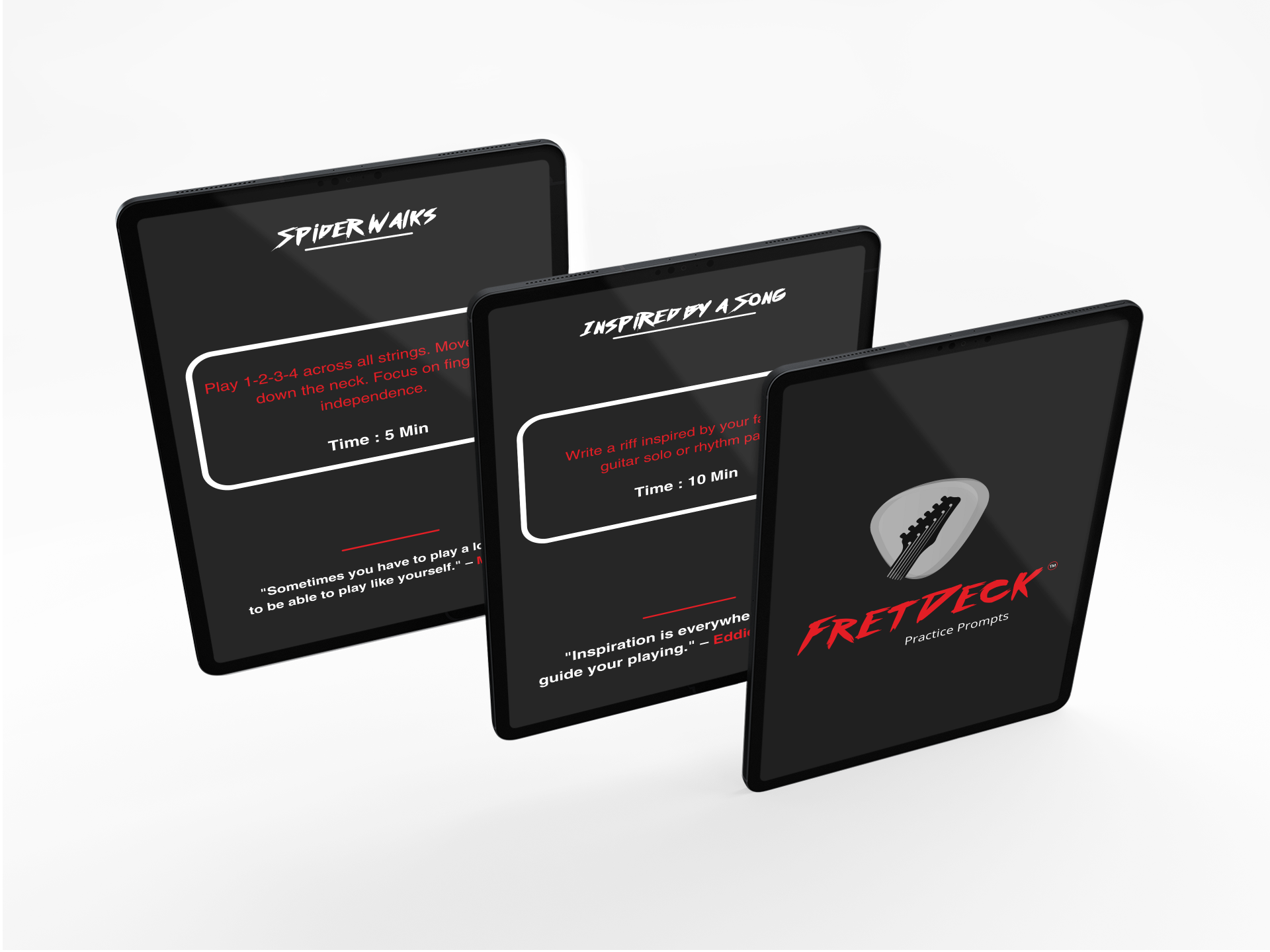
An effective guitar learning kit beginner structure must include a guided learning resource. This could be a great local teacher, a well-structured online course, or even a clever practice tool. For example, a system like FretDeck uses a deck of cards to give you specific, actionable practice prompts, eliminating guesswork. It builds a real system for improvement. The goal is to move beyond just collecting gear and start building a real habit. You can find more ideas for creating this habit in our guide to the best practice routine.
The Simple Guitar Practice System That Eliminates Guesswork
So You Can Stop Stalling… and Start Sounding Better Every Time You Pick Up the Guitar
👉 Get 52 Practice Prompts Now!
7 Steps to Build Your OWN Perfect Learning Kit
Instead of buying a pre-made box, become the architect of your own success. Follow these steps to build a personalized kit that truly works.
1. Define Your “Why”: Before you spend a dollar, get specific. What artist or band makes you want to play? Write it down. This mission will guide every other decision.
2. Set a Smart Budget: The cheapest option is never the best. Plan to spend between $250-$500 for a quality entry-level guitar and all the essential accessories listed above. This is an investment in a lifelong skill.
3. Choose Your Guitar Wisely: If possible, go to a music store. Hold a few different guitars. Even if you don’t know how to play, you can feel which one is more comfortable in your hands. Ask the staff for recommendations in your budget.
4. Assemble Your Accessories: Use the checklist from the section above. Buy each item separately. Prioritize a quality tuner and a comfortable strap.
5. Select Your Learning System: This is the most important step. Commit to one primary resource. Whether it’s a teacher, a course, or a tool, choose one path and stick with it for at least 90 days. For solid foundational knowledge, check out these essential beginner guitar tips.
6. Schedule Your Practice: The magic happens when you show up consistently. Put 15-20 minutes of practice time on your calendar every day. Treat it like any other important appointment. This commitment is the engine of your guitar learning kit beginner journey.
7. Play Music Immediately: Don’t get trapped in a cycle of endless exercises. Learn the G, C, and D chords. With those three chords, you can play hundreds of songs. Getting a quick win builds incredible momentum. Many resources on Guitar World show simple three-chord songs to get you started.
Frequently Asked Questions (FAQ)
Is it better to buy a kit or buy items separately?
It is almost always better to buy your items separately. Pre-packaged kits force you to compromise on quality, especially the guitar itself and the tuner. By hand-picking your gear, you ensure every component is a tool for your success, not a source of frustration. A pre-built guitar learning kit beginner box is a product designed to be sold, while a custom-built kit is a system designed for you to succeed.
What’s the most important accessory for a beginner?
Without a doubt, a reliable digital tuner. A guitar that is even slightly out of tune sounds terrible and makes it impossible to know if you’re playing chords correctly. It trains your ear from day one and ensures that your hard work actually sounds like music.
How much should I spend on my first guitar setup?
A good starting point for a quality setup is between $250 and $500. This range allows you to get a reputable beginner instrument from a brand like Squier, Epiphone, Yamaha, or Orangewood, plus all the essential, quality accessories. Investing a little more upfront saves you from the frustration and replacement costs associated with a cheaper, lower-quality package.
The Simple Guitar Practice System That Eliminates Guesswork
So You Can Stop Stalling… and Start Sounding Better Every Time You Pick Up the Guitar
👉 Get 52 Practice Prompts Now!
The Simple Guitar Practice System That Eliminates Guesswork
So You Can Stop Stalling… and Start Sounding Better Every Time You Pick Up the Guitar
👉 Get 52 Practice Prompts Now!