Let’s be honest: are you tired of the same old practice routine? If so, guitar playing cards might be the game-changing tool you’ve been searching for to inject fun and focus back into your playing.
You pick up your guitar, full of motivation. But then what? You noodle on the same three songs. You run that one pentatonic scale up and down the neck. Before you know it, 20 minutes have passed, and you don’t feel like you’ve actually improved.
The guitar goes back in its stand, collecting dust. Sound familiar? This isn’t your fault. It’s a system failure.
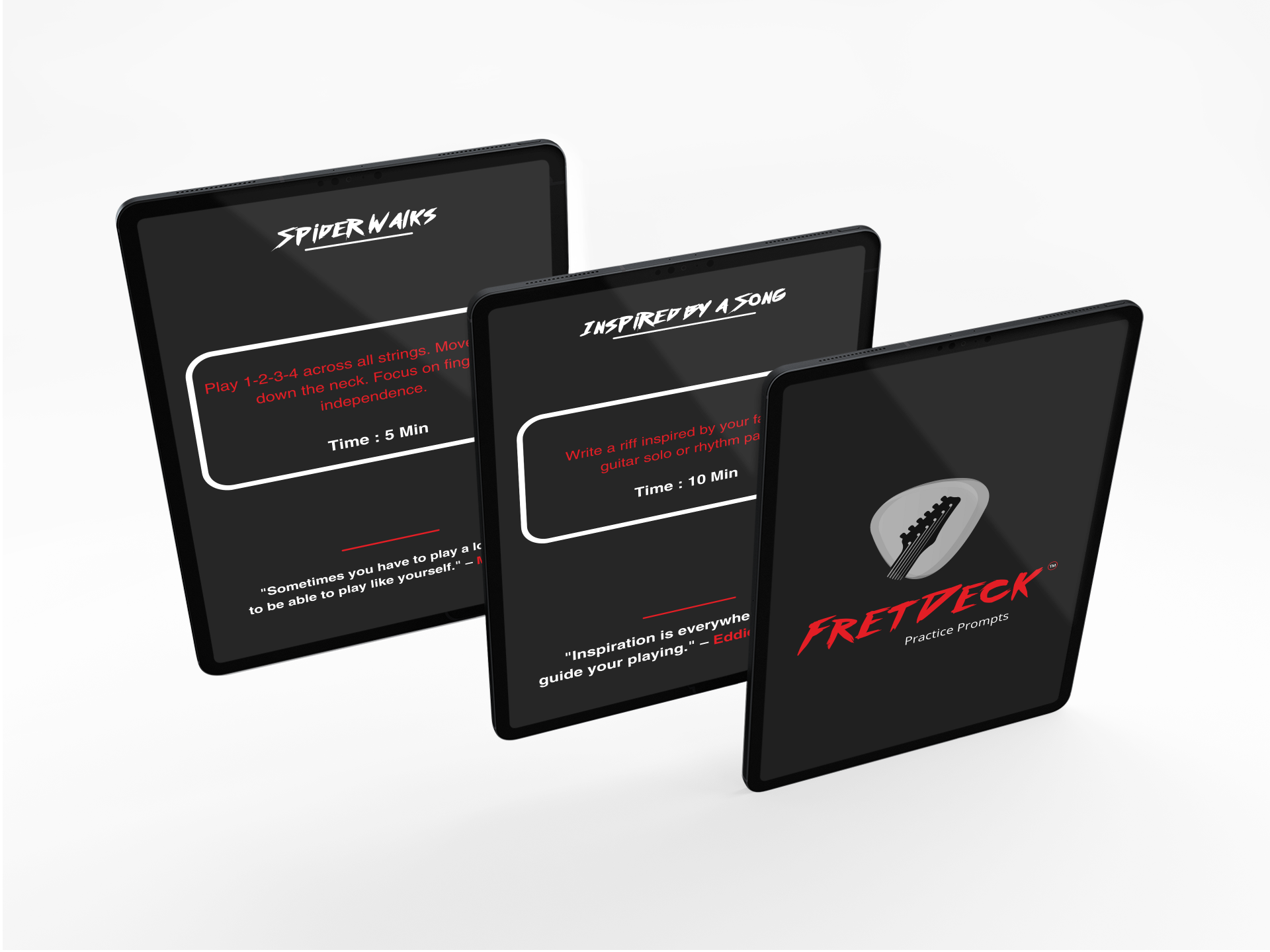
The Simple Guitar Practice System That Eliminates Guesswork
So You Can Stop Stalling… and Start Sounding Better Every Time You Pick Up the Guitar
👉 Get 52 Practice Prompts Now!
The Rut: Why Your Guitar Is Collecting Dust
Every guitarist hits this wall. It’s that dreaded plateau where progress seems to grind to a halt. You know you should be practicing, but the thought of it feels more like a chore than a passion.
This feeling creates a vicious cycle. First, you feel guilty for not practicing. Then, you avoid the guitar because it reminds you of that guilt. As a result, your skills stagnate, which only makes you feel less motivated to pick it up again.
Moreover, without a clear path, your practice sessions lack direction. Are you supposed to be learning theory? New chords? Nailing that solo? The sheer number of options leads to “analysis paralysis,” and you end up doing nothing at all. This is a common struggle, but there is a simple, powerful solution.
The Answer Isn’t More “Discipline”
You’ve probably told yourself, “I just need more discipline,” or “I need to force myself to practice.” However, relying on willpower alone is a losing battle. Eventually, it runs out.
The real key to consistent practice isn’t force; it’s fun. It’s about having a system that removes guesswork and introduces an element of surprise. You need something that tells you exactly what to do next, turning a daunting task into an exciting game.
This is where a fresh approach comes in. Instead of a rigid schedule you’ll eventually abandon, what if your practice routine was as simple as drawing a card?
How Do Guitar Playing Cards Revolutionize Your Practice?
So, what exactly are guitar playing cards? Imagine a standard deck of cards, but instead of kings and queens, each card holds a specific guitar-related challenge. One card might show a G7 chord. Another might challenge you to play the A minor blues scale. A third could task you with a string-skipping finger exercise.
The process is brilliantly simple. You just shuffle the deck and draw a card. That’s your mission for the next 5-10 minutes. No hemming and hawing. No wondering what to do next. The card gives you a clear, actionable instruction.
Furthermore, this method introduces randomization. You’re constantly being pulled out of your comfort zone, forced to work on things you might otherwise neglect. As a result, you develop into a more well-rounded player. These specially designed guitar playing cards remove the mental load of planning your practice, freeing up your energy to simply play.
Beyond Chords: What Can You Learn?
You might think these decks are just for learning chords, but they go so much deeper. A high-quality deck becomes a complete curriculum in a box. It’s a powerful way to organize your learning journey.
For instance, you’ll find cards dedicated to:
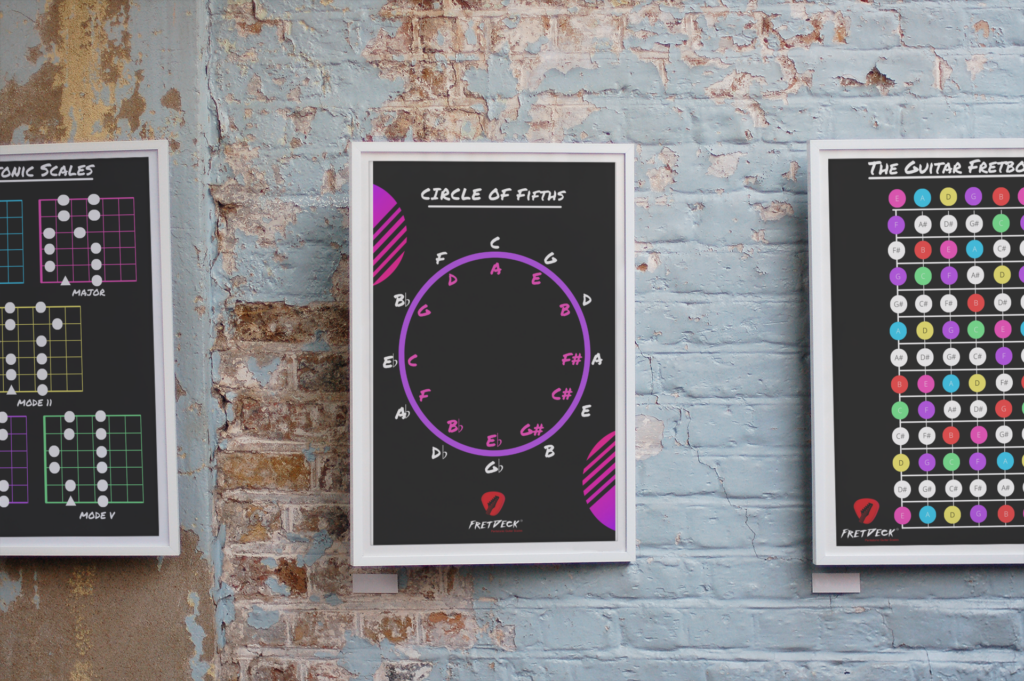
- Music Theory: Learn intervals, key signatures, and the circle of fifths in bite-sized, manageable chunks.
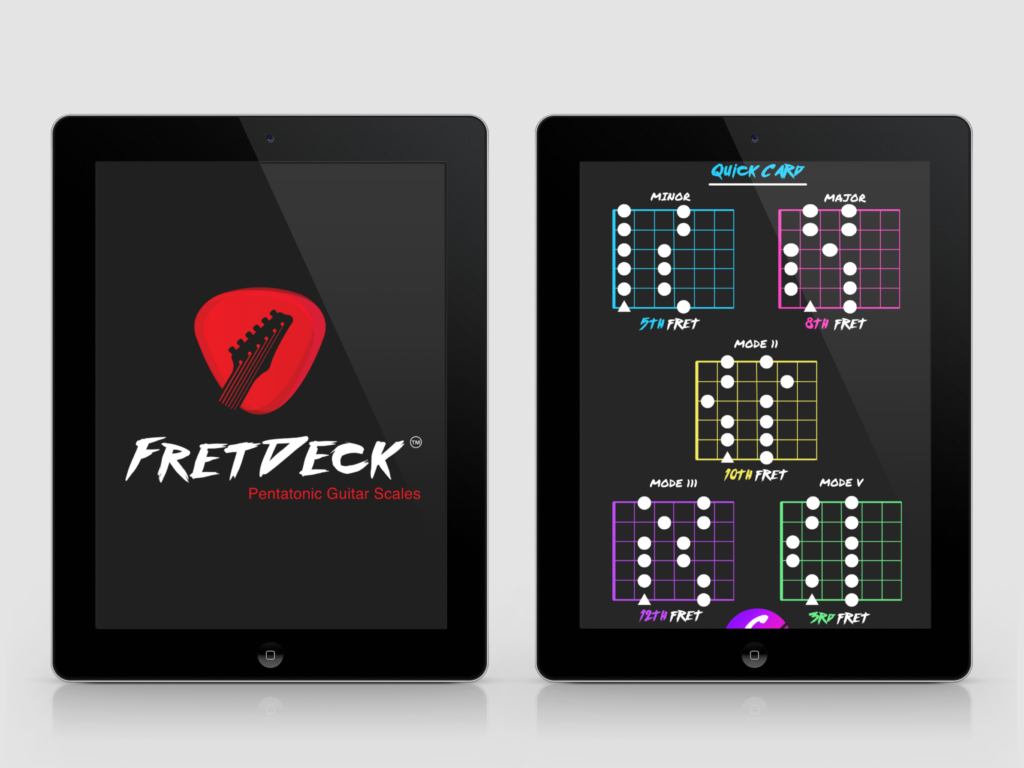
- Scales & Modes: Instead of getting lost in endless diagrams, you can master one scale at a time. Drawing a “Dorian Mode” card gives you a focused task, making it easier to finally learn guitar scales and understand their unique sounds.
- Chord Progressions: Cards can combine to create instant songwriting prompts. Draw three or four chord cards and challenge yourself to write a melody over them, a perfect way to master the concepts in our chord progression guide.
- Techniques: Master hammer-ons, pull-offs, bending, vibrato, and more. Each technique gets its own card, ensuring you build a versatile skill set.
Comprehensive systems like FretDeck have perfected this concept, creating structured decks that can guide a player from day one to advanced improvisation. The possibilities are truly endless. For a deeper dive into applying scales, Guitar World offers fantastic lessons that complement this style of learning.
Gamify Your Growth
One of the biggest psychological hurdles in learning is the long feedback loop. You practice for weeks and only notice small improvements. This can be discouraging.
This is where the power of gamification comes in. By turning your practice into a game, you create a system of small, achievable wins. Every time you successfully complete a card’s challenge, your brain gets a little hit of dopamine. It feels good.
Therefore, you start to associate practice with accomplishment and satisfaction, not boredom and frustration. You can set up fun challenges for yourself. For example, can you master five cards in a 30-minute session? Can you play through 10 chord cards without a mistake?
This gaming mindset keeps you engaged and motivated. Before you know it, an hour has passed, and you’ve had a blast while making tangible progress. Your practice sessions become something you look forward to. Consequently, your consistency skyrockets, and real improvement follows.
The Simple Guitar Practice System That Eliminates Guesswork
So You Can Stop Stalling… and Start Sounding Better Every Time You Pick Up the Guitar
👉 Get 52 Practice Prompts Now!
5 Actionable Ways to Use Your Deck Today
Ready to get started? Here are a few practical ways you can use a deck of guitar playing cards to transform your practice sessions immediately.
1. The “Random Draw” Warm-Up: Shuffle the deck and draw 3-5 cards. Spend 2-3 minutes on each one. This is a perfect way to warm up your fingers and your brain with a variety of exercises you might not normally choose.
2. The “Songwriting Spark”: Are you stuck in a creative rut? Draw 3-4 chord cards at random. Your challenge is to arrange them into a compelling progression and try to write a simple melody or riff over them. You’ll be amazed at the ideas that emerge.
3. The “Technique Ladder”: Choose a single technique you want to improve, like string bending. Find all the cards related to that technique. Start with the easiest one and work your way up, “leveling up” as you master each card.
4. The “Fretboard Explorer”: Draw a note card (e.g., “C#”) and a scale card (e.g., “Major Pentatonic”). Your mission is to find and play that scale all over the fretboard. This is an incredible way to break out of single-position playing and truly learn the neck. Using a quality practice amp, like one from this Fender buying guide, makes this exploration even more rewarding.
5. The “Chain Challenge”: Draw a card. Once you feel comfortable with it, draw another and play them back-to-back. Keep adding cards to the chain, creating a long, complex musical phrase. This is a fantastic exercise for building muscle memory and improving your focus. These methods prove that guitar playing cards are more than just a novelty; they are a serious practice tool.
Frequently Asked Questions
You might still have some questions. Let’s tackle the most common ones.
Are guitar playing cards good for absolute beginners?
Absolutely. In fact, they can be one of the best tools for someone just starting. They provide a clear, structured path that prevents overwhelm. Instead of wondering what to practice, a beginner can simply draw a card and get a specific, manageable task. This builds a solid foundation and confidence. For more essential advice, check out our beginner guitar tips.
Can they help with music theory?
Yes, immensely. Music theory can feel abstract and intimidating. A deck of cards breaks it down into small, digestible concepts. You can learn about an interval one day and a mode the next. By tackling one piece at a time in a random, engaging way, the concepts stick much better than they do from a dry textbook.
What’s the difference between physical cards and an app?
While apps are convenient, physical guitar playing cards offer a unique, tactile advantage. The act of shuffling and drawing a physical card creates a focused, screen-free ritual. It helps you disconnect from digital distractions and immerse yourself fully in the instrument, leading to more productive and enjoyable practice sessions.
The Simple Guitar Practice System That Eliminates Guesswork
So You Can Stop Stalling… and Start Sounding Better Every Time You Pick Up the Guitar
👉 Get 52 Practice Prompts Now!
The Simple Guitar Practice System That Eliminates Guesswork
So You Can Stop Stalling… and Start Sounding Better Every Time You Pick Up the Guitar
👉 Get 52 Practice Prompts Now!