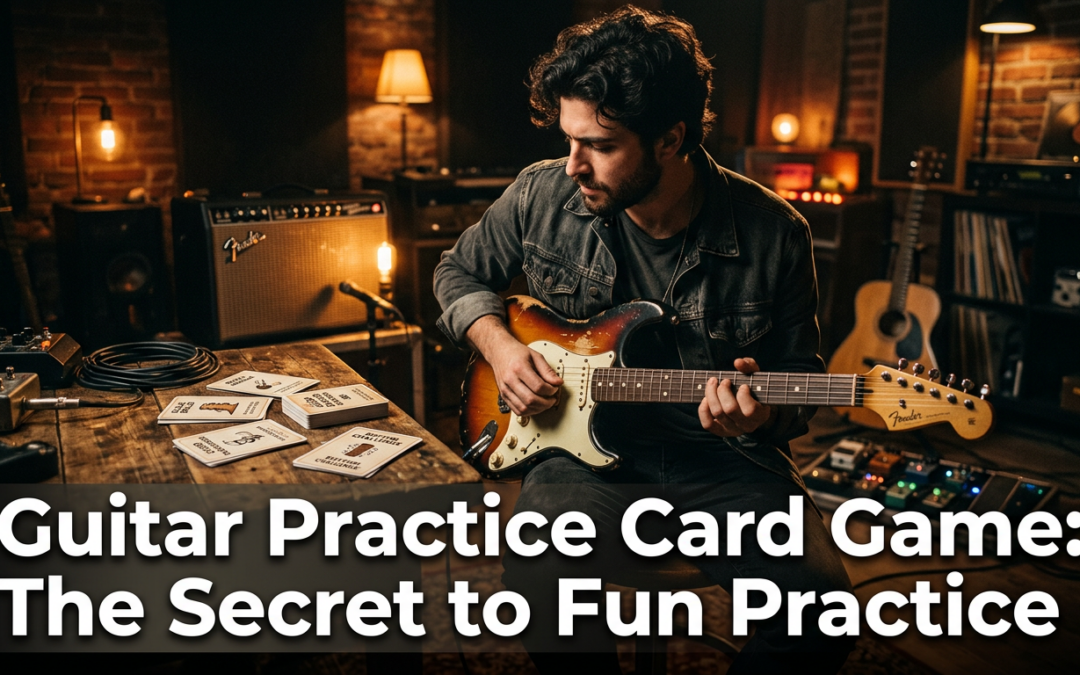
Have you ever felt lost about what to do next with your instrument? A guitar practice card game is the perfect system to eliminate that confusion for good. It provides the structure you need to make real progress, without the soul-crushing boredom of a rigid, repetitive routine.
You pick up your guitar, filled with ambition. You want to get better. But then, the same old question hits you like a brick wall: “What should I practice today?” Before you know it, you’re just noodling the same pentatonic licks you learned three years ago.
The excitement fades. Frustration creeps in. Eventually, you put the guitar back in its stand, feeling like you’ve wasted another precious practice session. This cycle is the number one reason guitar players quit. But it doesn’t have to be your story.
The Simple Guitar Practice System That Eliminates Guesswork
So You Can Stop Stalling… and Start Sounding Better Every Time You Pick Up the Guitar
👉 Get 52 Practice Prompts Now!
The Practice Plateau is Real (And It’s Not Your Fault)
Let’s be honest. The feeling of being stuck is brutal. You know you need a structured plan, but creating one feels like a monumental task. This is called decision fatigue.
Specifically, you face this challenge every time you practice. Should you work on scales? Or maybe focus on new chords? What about that tricky song you’ve been trying to nail? As a result, you often end up doing nothing, or worse, just repeating what you already know.
This isn’t a lack of talent or discipline. It’s a system failure. The traditional advice to “just practice more” is useless without a clear path forward. Moreover, without variety, your brain gets bored, your fingers fall into lazy habits, and your progress grinds to a halt. You hit the dreaded plateau, and it can feel impossible to break through.
How a Guitar Practice Card Game Creates Breakthroughs
So, what’s the solution? You need to inject novelty and structure into your routine simultaneously. This is precisely where a guitar practice card game becomes your secret weapon. For example, by turning practice into a game, you trick your brain into staying engaged and focused.
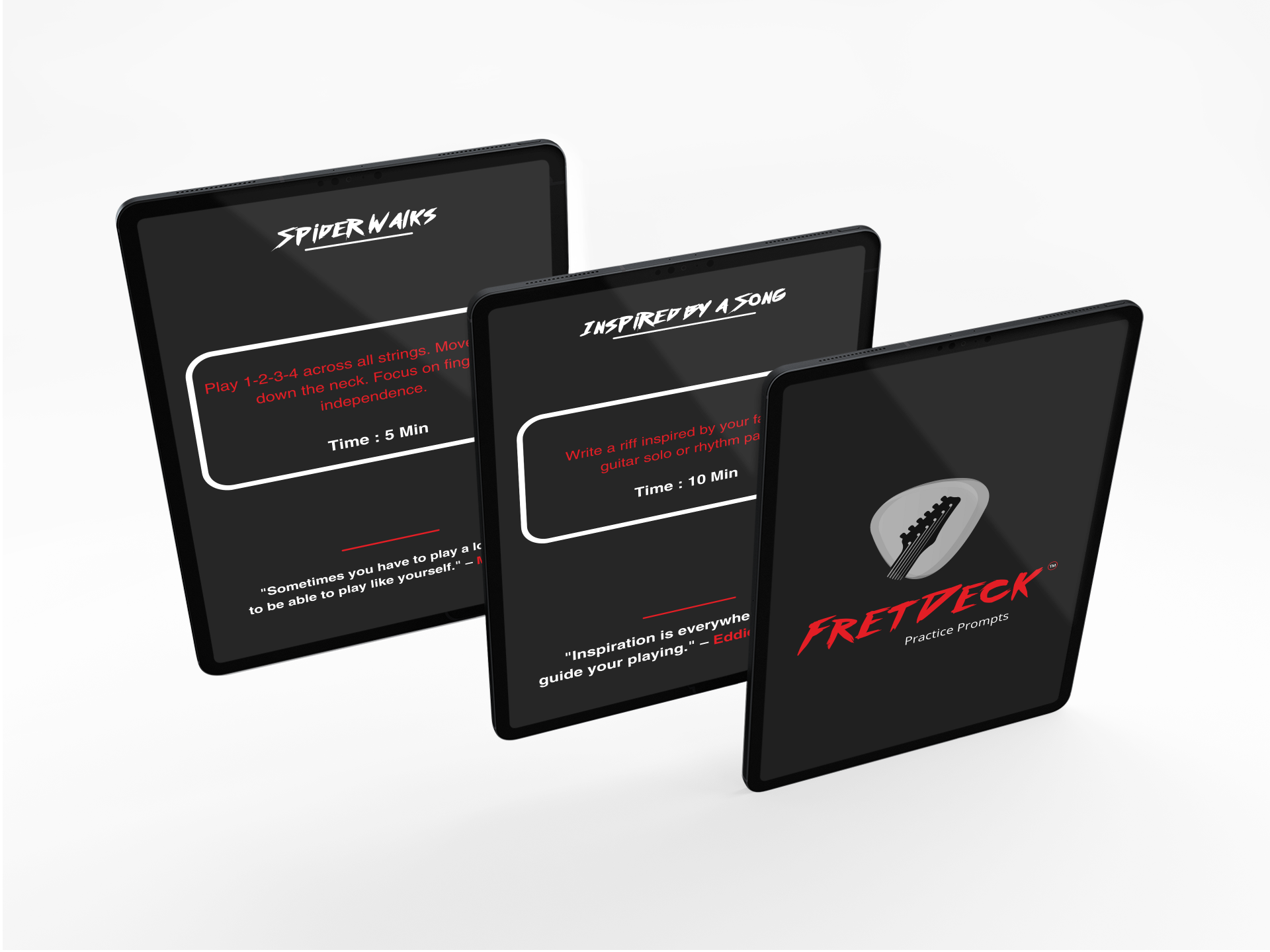
Imagine this: instead of staring blankly at your fretboard, you simply draw a card. The card gives you a specific, actionable task. “Practice the A minor pentatonic scale in all 5 positions for 10 minutes.” Suddenly, there is no guesswork. There is only action.
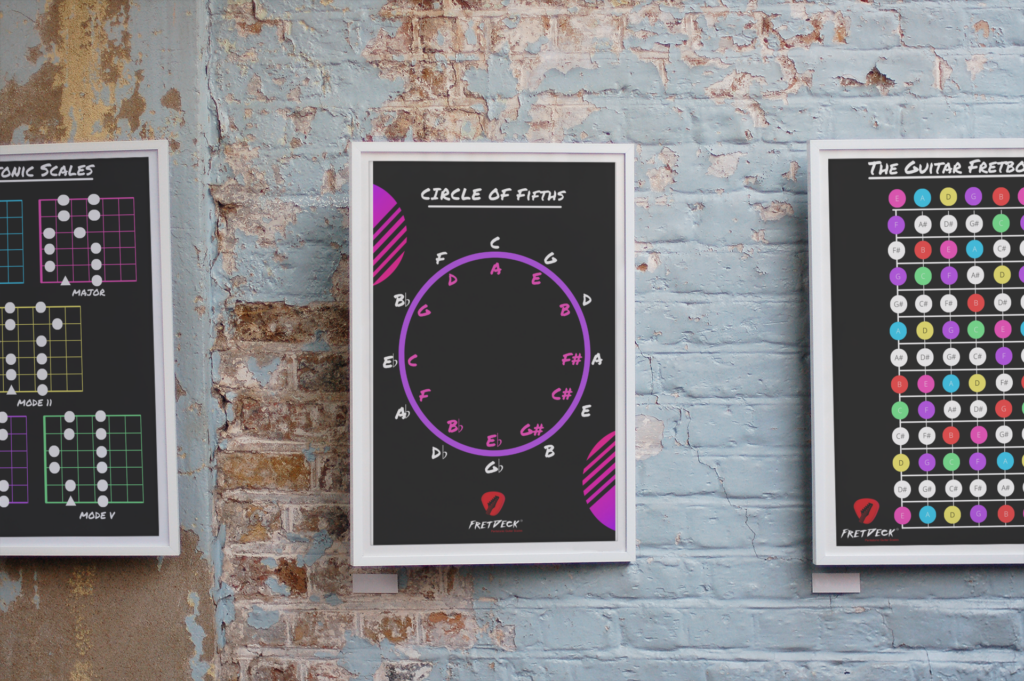
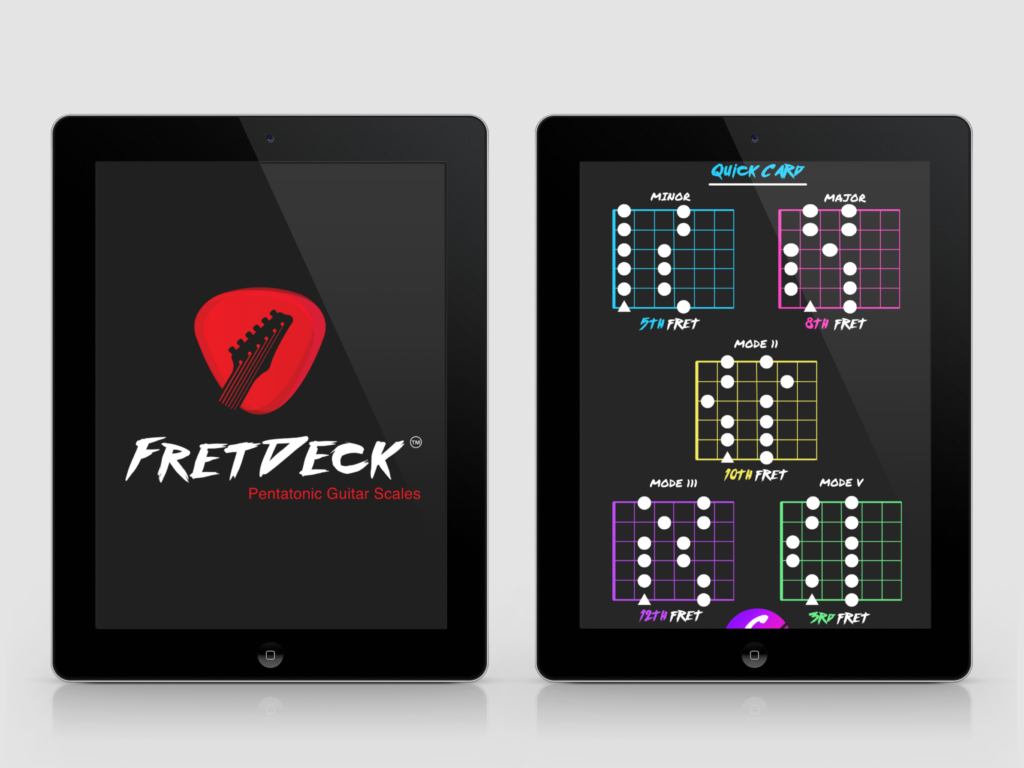
Furthermore, this method forces you out of your comfort zone. You can’t just play your favorite licks. The cards will inevitably deal you exercises you’ve been avoiding, like mastering barre chords or practicing new arpeggios. As a result, you start working on your weaknesses, which is the fastest way to become a more well-rounded player. A well-designed system, like the popular FretDeck, curates these exercises to ensure you cover all essential areas of your playing over time.
A great guitar practice card game introduces controlled randomness. Therefore, no two practice sessions are ever exactly the same. This variety keeps your mind sharp and your motivation high. You’ll find yourself looking forward to discovering what the “game” has in store for you each day.
From Boring Drills to an Addictive Game
Gamification is a powerful psychological tool. It’s the reason fitness apps give you badges and language apps have leaderboards. It works by tapping into our natural desire for challenge, reward, and progress. Many guitar learning platforms, like Fender Play, use these principles to keep you going.
A guitar practice card game brings this same power to your analog world. Each card you draw is a mini-mission. Completing it gives you a small hit of dopamine—a sense of accomplishment. String a few of these missions together, and you have a complete, rewarding, and incredibly effective practice session.
Moreover, it removes the emotional baggage tied to practice. You are no longer judging yourself for not knowing what to do. You are simply playing the game. This shift in mindset is transformative. It allows you to focus purely on the task at hand, leading to a state of flow where real learning happens.
Building Your Own vs. Using a Pre-Made Deck
You have two main paths to get started with this method. You can either create your own deck or invest in a professionally designed one. Both have their merits.
For an avid DIY-er, creating your own deck can be a fun project. Simply grab a stack of index cards and start writing down exercises. For example, you could create categories for:
- Technique: Bending, hammer-ons, pull-offs, sliding.
- Scales: Major, minor, pentatonic, modal. (For a deep dive, check out our guide on how to learn guitar scales).
- Chords: Open chords, barre chords, sevenths. (Our chord progression guide is a great resource for this).
- Theory: Note identification on the fretboard, interval training.
- Ear Training: Transcribing a simple melody by ear.
However, the downside of the DIY approach is that you might unknowingly create a deck that reflects your own biases. You might neglect areas you don’t enjoy, which is the very problem we’re trying to solve.
Conversely, a pre-made guitar practice card game is curated by experts. These decks are designed to provide a balanced and comprehensive practice system right out of the box. They ensure you cover all your bases—from technique and theory to creativity and rhythm—without you having to think about it. The investment often pays for itself quickly in saved time and accelerated progress. Many experts at Guitar World advocate for structured, gamified practice to overcome plateaus.
5 Steps to Maximize Your Card Game Practice
Once you have your deck, you need a simple framework to get the most out of it. Follow these five steps to transform your playing.
1. Set a Timer for Each Card. Don’t just noodle. Commit to focusing on the task from a single card for a set duration. Start with 5-10 minutes per card. This focused effort is far more effective than an hour of distracted playing.
2. Shuffle Thoroughly Before Each Session. The magic is in the randomness. A good shuffle ensures you’re not just drawing the same cards from the top of the deck. This forces you to be adaptable and ready for anything.
3. Draw 3-5 Cards for a Full Routine. Create a complete practice session by drawing a handful of cards. For example, you might draw a warmup card, a scale card, a chord card, and a creative songwriting prompt. This creates a well-rounded routine in seconds, mimicking the structure of the best practice routine.
4. Keep a Simple Practice Journal. After each session, jot down which cards you drew and one thing you learned or improved upon. This simple act of reflection solidifies your learning and allows you to track your progress over time, which is a massive motivator.
5. Don’t Skip the Cards You Hate. This is the most important rule. When you draw a card that makes you groan—like “practice F barre chord changes”—that’s the one you need most. Embrace the challenge. This discipline is what separates the dabblers from the dedicated players.
The Simple Guitar Practice System That Eliminates Guesswork
So You Can Stop Stalling… and Start Sounding Better Every Time You Pick Up the Guitar
👉 Get 52 Practice Prompts Now!
Frequently Asked Questions (FAQ)
What if I’m a complete beginner?
A guitar practice card game is actually perfect for beginners. It provides a clear, step-by-step path, preventing you from getting overwhelmed. Instead of wondering what to learn first, you just draw a card. It takes the guesswork out of those crucial early stages.
How is this different from a practice app?
While apps are great, they keep you tethered to a screen. This can lead to distractions like notifications and the temptation to browse social media. A physical card game allows you to unplug and focus solely on your instrument, creating a more mindful and immersive practice environment.
Can I use a guitar practice card game for any style of music?
Absolutely. The core concepts of music—scales, chords, rhythm, and technique—are universal. The exercises in a good card deck build the foundational skills you need to play anything, whether it’s blues, rock, jazz, or metal. You can then apply these skills to the specific songs and styles you love.
The Simple Guitar Practice System That Eliminates Guesswork
So You Can Stop Stalling… and Start Sounding Better Every Time You Pick Up the Guitar
👉 Get 52 Practice Prompts Now!
The Simple Guitar Practice System That Eliminates Guesswork
So You Can Stop Stalling… and Start Sounding Better Every Time You Pick Up the Guitar
👉 Get 52 Practice Prompts Now!