
You pick up your guitar, full of ambition. Today is the day you finally make progress. But then, the familiar question hits you: “What should I actually practice?” If you’re tired of aimless noodling, guitar practice routine cards are the secret weapon you’ve been missing. They provide a clear, structured path for every single practice session.
Imagine knowing exactly what to do the moment you sit down. No more wasting your first ten minutes trying to remember that one cool lick you heard. Instead, you have a system that guarantees you work on every aspect of your playing. This method ensures you become a well-rounded musician, not just a one-trick pony.
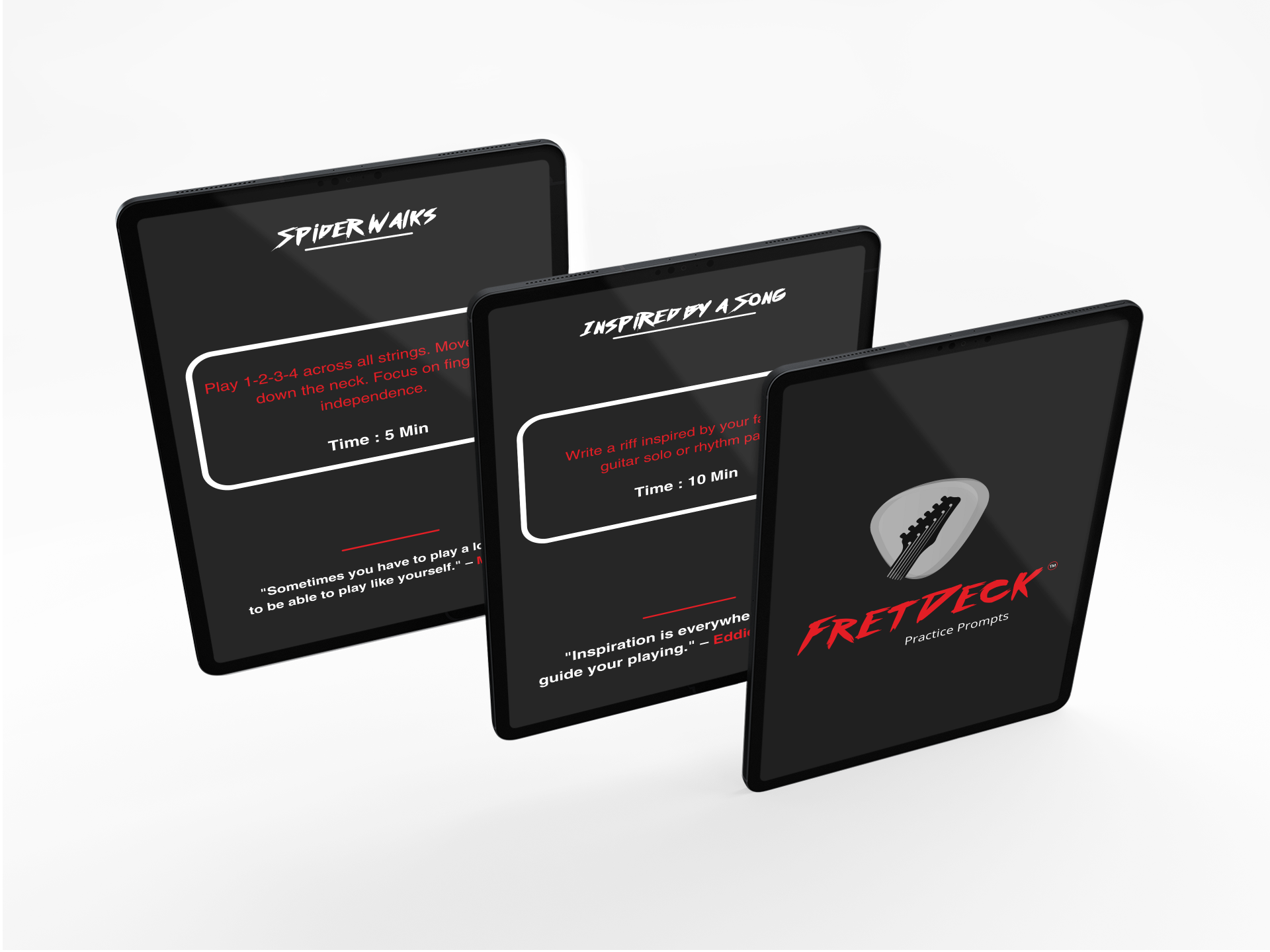
The Simple Guitar Practice System That Eliminates Guesswork
So You Can Stop Stalling… and Start Sounding Better Every Time You Pick Up the Guitar
👉 Get 52 Practice Prompts Now!
The Practice Plateau: Why You’re Not Getting Better
Does this sound familiar? You practice for an hour, but it feels like you just played the same three songs and one pentatonic scale over and over. You’re stuck in a rut. Consequently, your motivation plummets, and picking up the guitar starts to feel more like a chore than a joy.
This is the dreaded practice plateau. It happens when your routine lacks structure and variety. Without a plan, we naturally gravitate toward what’s easy and comfortable. However, growth only happens when you push just beyond your current abilities. Aimless practice is the number one reason aspiring guitarists quit. For example, many players fall into the same traps detailed in these beginner guitar tips, where lack of direction is a recurring theme.
Furthermore, this lack of structure leads to massive gaps in your playing. You might have fast fingers but have no idea how chords fit together. Or perhaps you know dozens of chords but your rhythm is sloppy. As a result, you feel like an imposter, not a real musician. You need a system to ensure you’re building a complete musical foundation.
The Simple Fix: Structured Randomness
So, what’s the solution? The answer lies in a powerful concept: structured randomness. You need a framework that guides your practice, but with enough variety to keep your brain engaged and your fingers challenged. This is precisely what guitar practice routine cards are designed to do.
Think of it like a personal trainer for your fretboard. Instead of a rigid, boring schedule that you’ll abandon in a week, you get a dynamic workout every single time. A static routine, even the best practice routine written down once, can quickly become stale. Your brain adapts and stops learning efficiently.
In fact, the science of motor learning supports this. A method called “interleaved practice,” where you mix up different skills in one session, is proven to be more effective for long-term retention than practicing one thing for an hour straight. An article from Guitar World discusses how varied practice keeps the brain actively problem-solving, which is the key to skill acquisition. Therefore, by drawing a new card, you force your brain to switch gears, strengthening neural pathways faster.

How Guitar Practice Routine Cards Revolutionize Your Sessions
Let’s break down exactly why this simple tool is so transformative. When you use guitar practice routine cards, you’re not just getting a list of exercises. You are fundamentally changing your relationship with the instrument and the learning process itself.
First and foremost, they eliminate decision fatigue. Your willpower is a finite resource. By spending it all deciding what to practice, you have less energy left for the actual act of practicing. A deck of cards makes the decision for you. You simply draw a card and get to work. Specifically, this simple action removes the single biggest barrier to starting.
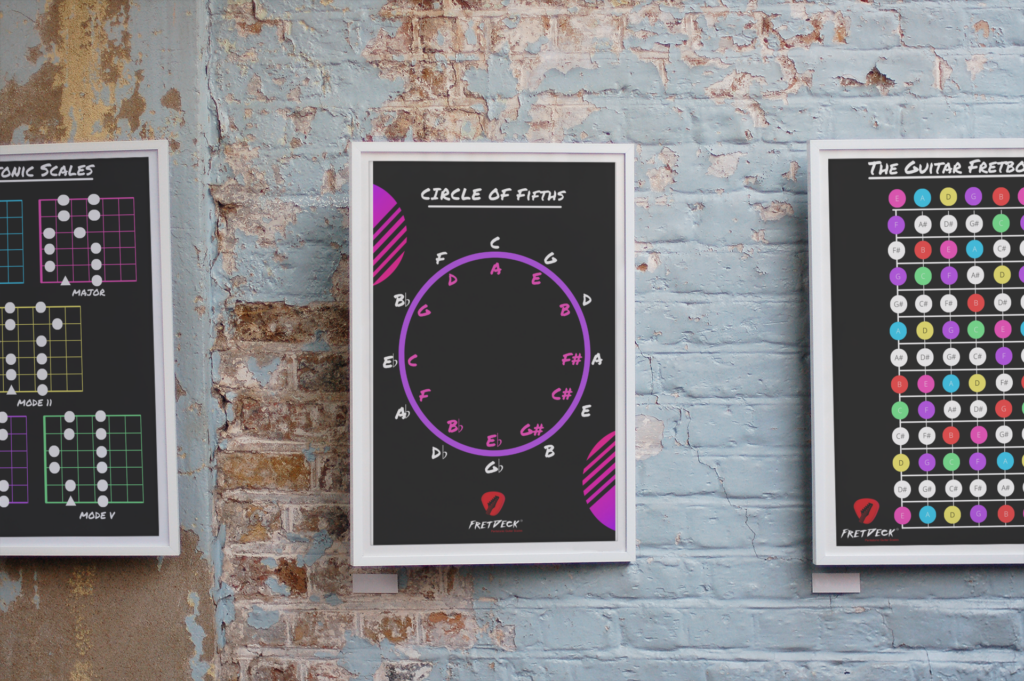
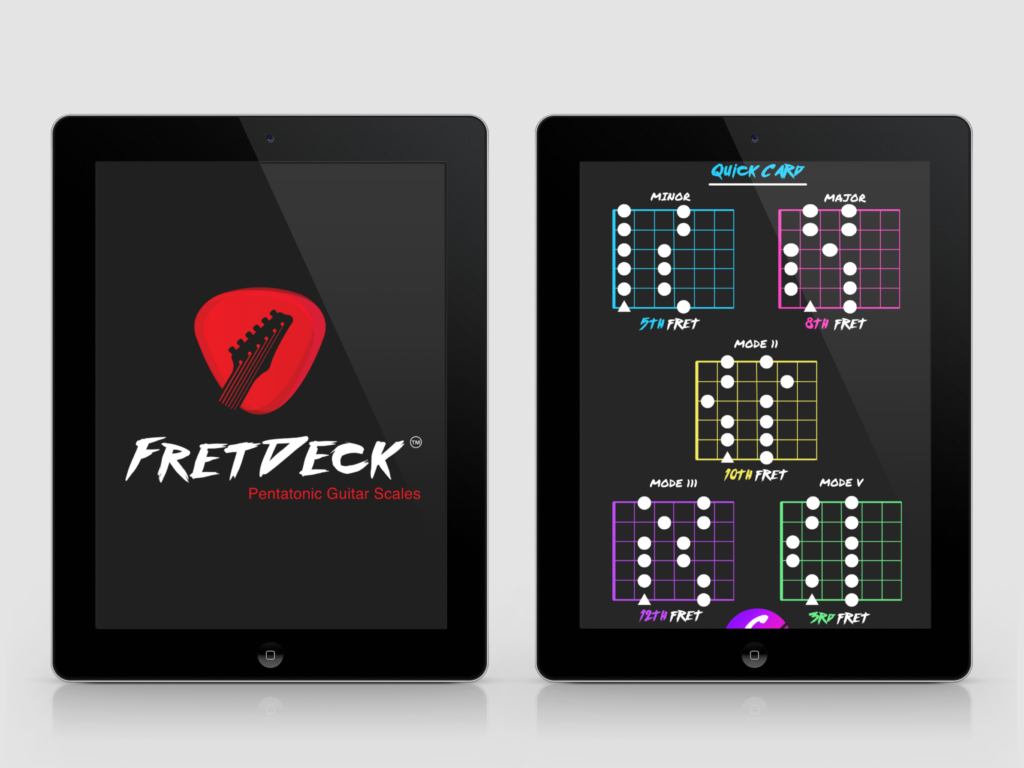
Moreover, a well-designed set of practice cards ensures a balanced workout. Many players, for instance, focus heavily on lead guitar licks while completely neglecting rhythm, ear training, or music theory. A good system, such as the one offered by FretDeck, organizes prompts into categories. For example, you might have cards for:
- Technique: Spider walks, alternate picking, legato.
- Chords: Learning new voicings, practicing smooth transitions.
- Scales & Arpeggios: Memorizing patterns, using them creatively.
- Ear Training: Identifying intervals, transcribing simple melodies.
- Rhythm: Strumming patterns, working with a metronome.
As a result, you can ensure you hit every major food group of musicianship in a week, just by trying to draw from each category. This holistic approach is what separates amateurs from players who truly understand their instrument.
The Simple Guitar Practice System That Eliminates Guesswork
So You Can Stop Stalling… and Start Sounding Better Every Time You Pick Up the Guitar
👉 Get 52 Practice Prompts Now!
Beyond the Basics: Building a Complete Workout
Using the cards isn’t just about single, isolated exercises. The real power comes when you learn to combine them into a comprehensive and fulfilling practice session. You become the architect of your own progress.
For example, you could structure your session by drawing one card from three different categories. 1. Warm-up (Technique Card): Start with 10 minutes of a chromatic finger exercise. 2. The Main Course (Theory Card): Spend 20 minutes learning to learn guitar scales in a new position. 3. Application (Creative Card): Use that new scale to improvise over a backing track for 15 minutes.
Suddenly, you’ve built a 45-minute session that is focused, balanced, and directly applies new knowledge. You’re not just learning a scale; you’re learning how to use it. This is how you connect the dots and develop true musical fluency. As many pro players interviewed on sites like Fender.com will tell you, the key is the application of concepts, not just the rote memorization of them.
Furthermore, you can adapt this system to fit any schedule. Only have 15 minutes? Just draw one card and go deep on that single concept. Have a full hour? Draw three or four cards and build a complete musical workout. The system is flexible and grows with you.
5 Practical Ways to Maximize Your Practice Cards
To truly unlock the potential of your guitar practice routine cards, you need to integrate them into your habits. Here are five simple, actionable ways to do just that.
1. Use a Timer. Assign a time limit to each card you draw, like 10 or 15 minutes. When the timer goes off, you move on, no matter what. This forces you to stay focused and prevents you from getting stuck on one thing for too long. 2. Shuffle the Deck. The magic is in the randomness. Resist the urge to pick your favorite exercises. Always shuffle the deck before you draw. This ensures you’re constantly challenging yourself with things you might otherwise avoid. 3. Create “Theme Days.” You can also add a layer of structure. For instance, Monday could be “Technique & Speed Day,” where you only draw from the technique category. Wednesday could be “Chord & Rhythm Day.” This gives you both focus and variety. 4. Stack Your Cards. For a longer session, draw 3-5 cards at the beginning and lay them out in order. This creates a full “setlist” for your practice session. It gives you a clear roadmap from start to finish. 5. Keep a Practice Journal. After a session, write down which card you worked on and one thing you learned or improved. This act of reflection solidifies your learning and allows you to track your progress over time, which is a massive motivator.
Frequently Asked Questions
What if I’m a total beginner?
That’s the perfect time to start! Good guitar practice routine cards are designed for all levels. As a beginner, they give you the foundational structure that is absolutely critical for building good habits from day one. You’ll avoid the “noodling” phase and start making real progress immediately.
Can I just use a digital app instead?
You can, but there’s a unique power in a physical, tangible tool. An app comes with notifications, distractions, and the temptation to browse social media. A simple deck of cards is a focused, offline tool that removes you from the digital world and connects you directly with your instrument.
How do I make my own practice cards?
Making your own is a great option! Simply get some index cards and write down one specific exercise on each one. Create categories like “Chords,” “Scales,” “Technique,” and “Ear Training.” The act of creating the cards itself will help you identify the areas you need to work on.
Ultimately, the goal is to stop guessing and start playing with purpose. Whether you buy a pre-made deck or create your own, using guitar practice routine cards is one of the most effective changes you can make to your musical journey. It’s time to build a system that works for you.
The Simple Guitar Practice System That Eliminates Guesswork
So You Can Stop Stalling… and Start Sounding Better Every Time You Pick Up the Guitar
👉 Get 52 Practice Prompts Now!
The Simple Guitar Practice System That Eliminates Guesswork
So You Can Stop Stalling… and Start Sounding Better Every Time You Pick Up the Guitar
👉 Get 52 Practice Prompts Now!