Mastering your guitar practice scales is the secret key that unlocks the entire fretboard. It’s the one skill that separates the amateur noodler from the guitarist who can craft soulful, memorable solos on command. However, you probably already know this. The real question is, how do you make scale practice actually work for you?
You’ve likely spent hours running up and down patterns. You may have memorized a few pentatonic boxes. But when it comes time to improvise, your fingers feel trapped, repeating the same old licks. It all sounds robotic and uninspired.
This is a common frustration. In fact, most guitarists give up on scales because they feel like a chore with no real musical payoff. They treat them like finger exercises instead of the creative language they truly are.
Why You’re Stuck Running Scales Mindlessly
Does this sound familiar? You carve out 30 minutes to practice. You pull up a scale diagram. Then, you proceed to play it up and down, over and over. You might even use a metronome, gradually increasing the speed.
Sometimes you feel productive. You feel like you’re “practicing.” But when you try to apply that scale over a backing track, something is missing. The notes don’t connect. Therefore, your soloing sounds like a technical exercise, not music.
The problem isn’t the scales themselves. The problem is practicing them without context or musical intent. You’ve learned the alphabet, but you haven’t learned how to form words or tell a story. As a result, you remain stuck, wondering why your solos don’t sound like your heroes. This is a crucial distinction to make in your approach to guitar practice scales.
The Simple Guitar Practice System That Eliminates Guesswork
So You Can Stop Stalling… and Start Sounding Better Every Time You Pick Up the Guitar
👉 Get 52 Practice Prompts Now!
From Shapes to Sounds: Making Scales Musical
The first major shift you need to make is to stop thinking of scales as just “shapes.” A scale is a collection of notes that sound good together over a specific chord or series of chords. Consequently, the real magic happens when you connect them.
For example, the A Minor Pentatonic scale contains the notes A, C, D, E, and G. These notes sound fantastic over an Am chord (A-C-E) because they share key notes and add consonant color. They also work beautifully over a C Major chord (C-E-G) for the same reason.
Therefore, your practice should immediately connect scales to harmony. Don’t just play a scale in isolation. Instead, try this:
1. Record a simple Am chord and let it ring out.
2. Play the notes of the A Minor Pentatonic scale one by one over that chord.
3. Listen carefully to how each note interacts with the underlying harmony.
Suddenly, you’re not just playing a pattern. You’re making musical choices. You’re hearing which notes feel like “home” (the root), which ones create tension, and which ones resolve that tension. Furthermore, this deepens your understanding far more than mindless repetition ever could. For more on this, check out our chord progression guide to see how scales and chords are two sides of the same coin.
The Essential Guitar Practice Scales Every Player Needs
While there are hundreds of scales, you only need a handful to play most popular styles of music. Focusing on the fundamentals is the fastest way to progress. Specifically, these three scales will give you the foundation for rock, blues, pop, and country. Mastering these essential guitar practice scales is your top priority.
1. The Minor Pentatonic Scale
This is the king of rock and blues soloing. It’s a simple, five-note scale that is incredibly forgiving and sounds good over almost anything. Moreover, its simple box patterns are often the first thing new improvisers learn. If you want to sound like B.B. King, Jimmy Page, or Slash, this scale is your bread and butter. You can dive deeper into the patterns with this excellent overview from Guitar World.
2. The Major Scale
The Major Scale is the foundation of Western music theory. It’s the “do-re-mi” scale you learned as a child. While it’s often associated with happy or upbeat music, it is the parent scale from which countless other scales and chords are derived. Understanding its structure unlocks your understanding of music itself. Subsequently, learning it will make you a more well-rounded musician.
3. The Blues Scale
This is essentially the Minor Pentatonic scale with one added “blue note.” That single note creates a distinctive, bluesy tension that defines the genre. It’s the sound of grit, soul, and emotion. After you are comfortable with the Minor Pentatonic, adding this one note is a simple step with a massive musical payoff. For a complete breakdown of all the essential patterns, our guide to learning guitar scales is a fantastic starting point.
The Simple Guitar Practice System That Eliminates Guesswork
So You Can Stop Stalling… and Start Sounding Better Every Time You Pick Up the Guitar
👉 Get 52 Practice Prompts Now!
7 Tips to Make Your Scale Practice More Effective
Now that you know which scales to learn and why context matters, let’s supercharge your routine. These seven tips will transform your abstract guitar practice scales into a powerful, creative workout. As a result, you will see tangible improvements in your playing.
1. Always Use a Metronome or Backing Track. Practicing with a steady beat is non-negotiable. It develops your internal clock and ensures your ideas are rhythmically solid. A backing track takes this a step further by providing a musical context.
2. Break Out of the Box. Don’t just play scales up and down. Instead, practice them in different intervals, like thirds (playing the 1st note, then the 3rd, then the 2nd, then the 4th, etc.). This forces you to see the fretboard as interconnected notes, not rigid boxes.
3. Focus on Phrasing. Music is a language. Phrasing is your vocabulary and punctuation. Try playing a short melodic idea, pausing, and then playing a “response” idea. Use techniques like string bends, slides, and vibrato to make your notes sing. In fact, this is often more important than note choice.
4. Sing What You Play. This technique, known as audiation, connects your ears, your voice, and your fingers. Try singing a simple melodic line first, then figure out how to play it on the guitar using the scale. This builds a powerful ear-to-fretboard connection.
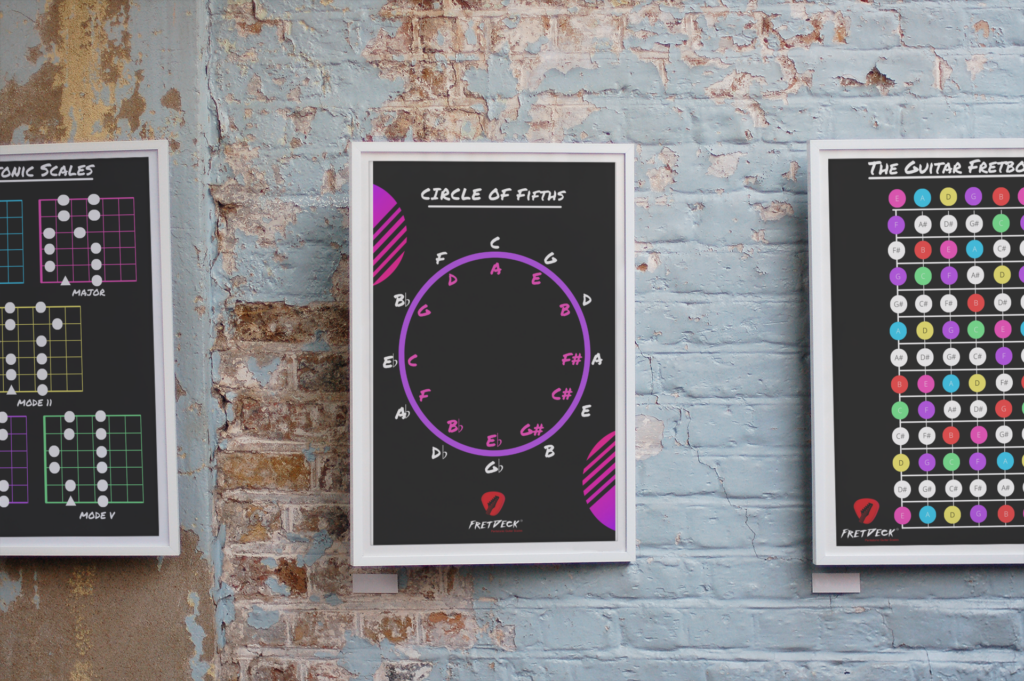
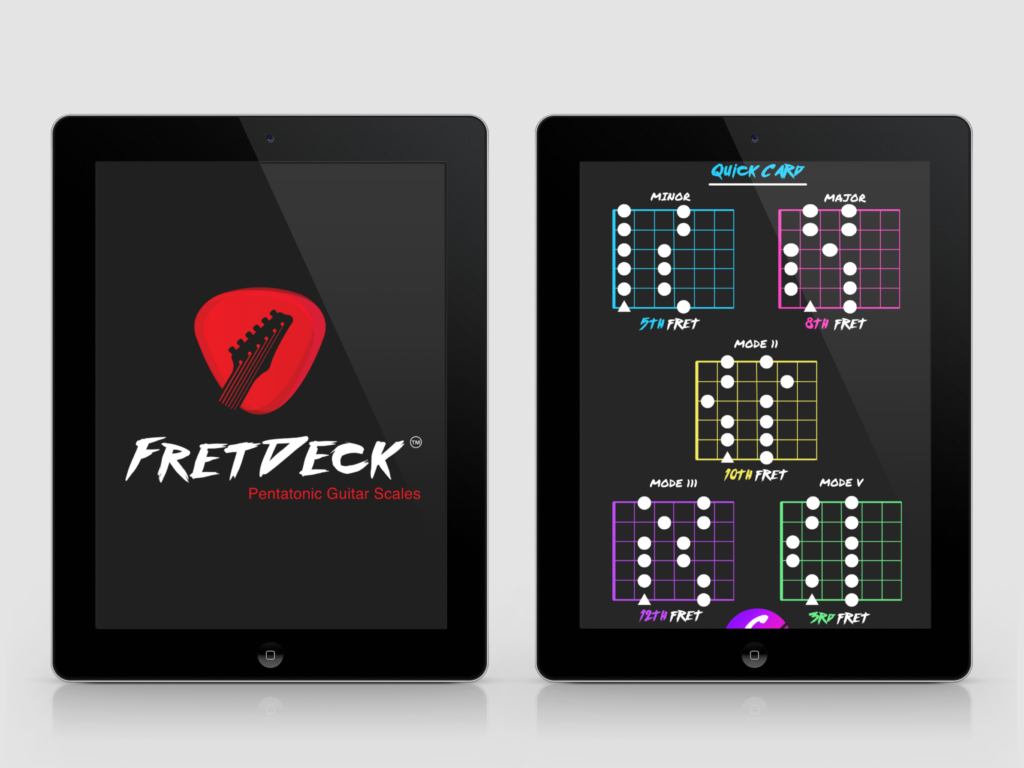
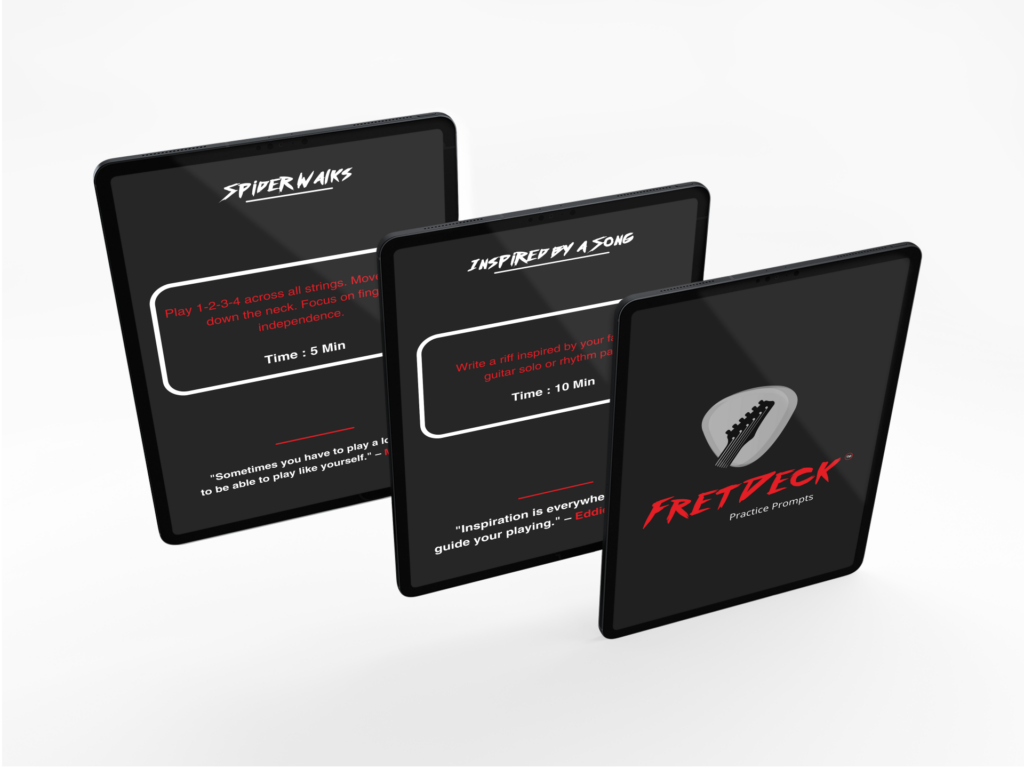
5. Visualize the Fretboard. The ability to “see” the scale patterns all over the neck is a professional-level skill. You can use visualization aids like FretDeck to lay scale patterns over your guitar, making it easier to connect different positions without looking at a chart.
6. Limit Your Note Choices. Try improvising a solo using only three notes from a scale. This forces you to be more creative with rhythm and phrasing to make things interesting. It’s a powerful exercise that moves your focus away from simply hitting the “right” notes.
7. Apply Immediately. After practicing a scale, immediately find a song that uses it and try to play along or create a small solo. The immediate application solidifies the learning in a real-world context. This is why having a solid plan is so important; for more ideas, explore our tips on building the best practice routine.
Following these guidelines will make your guitar practice scales session infinitely more valuable. You’ll build technique, theory, and musicality all at once. For more practical advice on technique and practice, Fender’s blog has some excellent articles for players of all levels.
Frequently Asked Questions About Guitar Scales
### How long should I practice scales each day?
For most guitarists, 15-20 minutes of focused scale practice is far more effective than an hour of mindless repetition. The key is quality over quantity. During that time, focus on one specific goal, such as connecting two scale positions or working on phrasing with a backing track.
### What’s the most important scale for a beginner to learn first?
Without a doubt, the Minor Pentatonic scale is the best starting point. Its patterns are relatively easy to memorize, and it’s incredibly versatile for rock, blues, and pop music. It provides the quickest path to improvising and having fun, which is crucial for staying motivated. Our beginner guitar tips guide emphasizes this heavily.
### How do I stop my guitar practice scales from sounding robotic?
The best way is to focus on phrasing and rhythm. Use backing tracks and listen to how your favorite guitarists construct their solos. They don’t just run up and down scales. They bend notes, slide between them, leave space, and vary their rhythmic ideas. Record yourself and listen back; you’ll quickly hear where you can add more human-like expression.
The Simple Guitar Practice System That Eliminates Guesswork
So You Can Stop Stalling… and Start Sounding Better Every Time You Pick Up the Guitar
👉 Get 52 Practice Prompts Now!