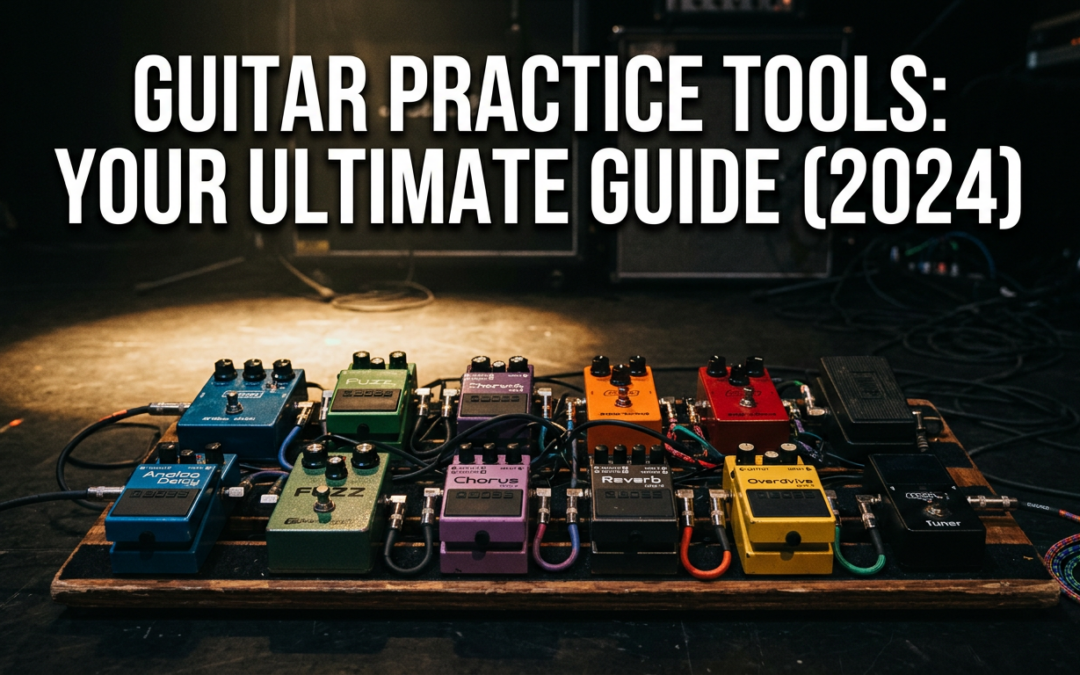
The right guitar practice tools can be the difference between frustrating plateaus and rapid progress. In fact, without them, you are likely just “noodling” instead of truly practicing. You pick up your guitar, full of ambition. However, after twenty minutes of playing the same old riffs, you feel like you haven’t moved forward at all.
You put the guitar down feeling more defeated than inspired. Sound familiar? This cycle is incredibly common. Moreover, it’s the number one reason aspiring guitarists quit. The good news is that it’s not your fault, and the solution is simpler than you think. You don’t need more talent; you need better tools.
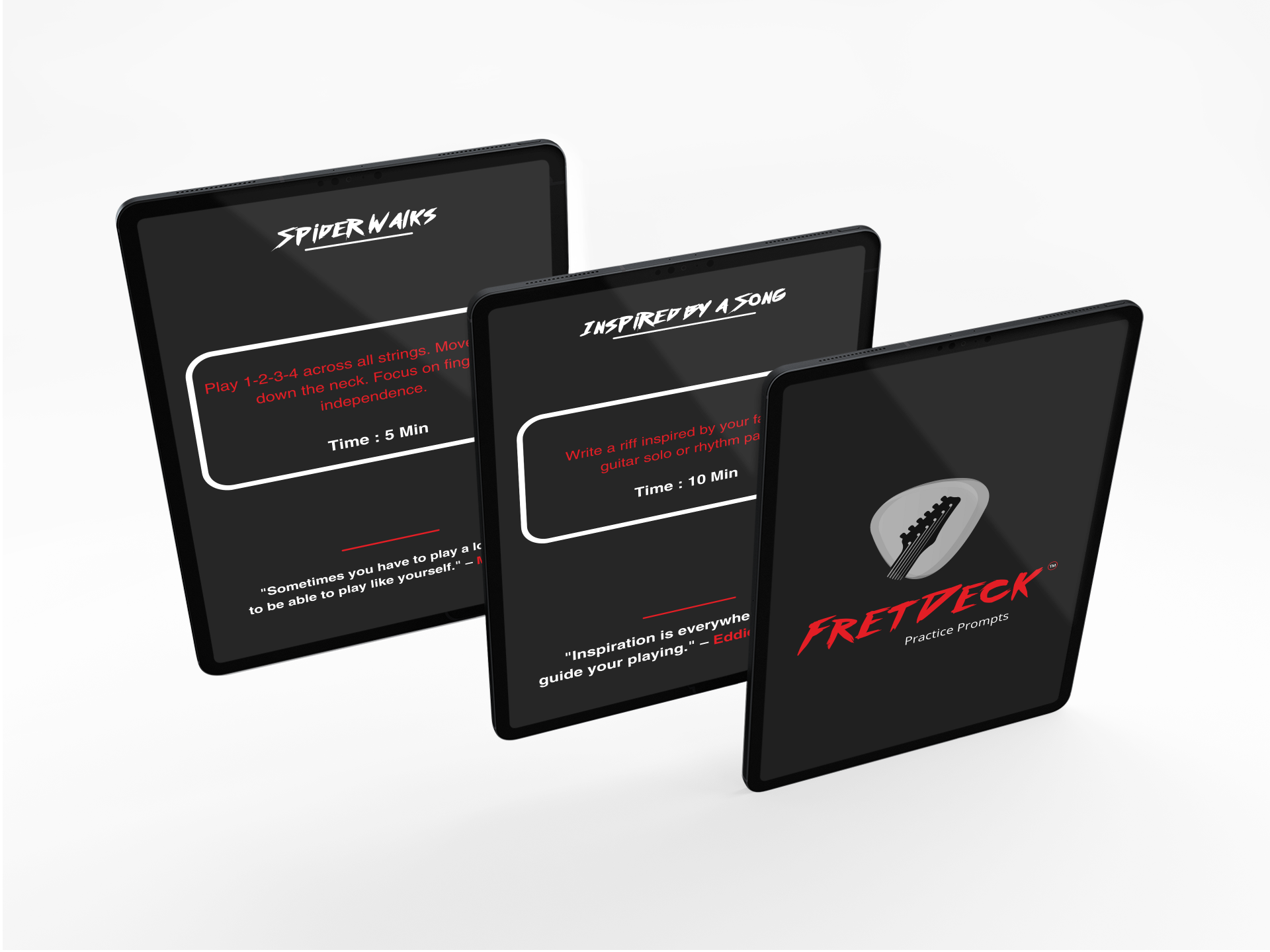
The Simple Guitar Practice System That Eliminates Guesswork
So You Can Stop Stalling… and Start Sounding Better Every Time You Pick Up the Guitar
👉 Get 52 Practice Prompts Now!
The Real Reason Your Practice Isn’t Working
Let’s be honest. You have the desire. You bought the guitar. You’ve even watched hours of YouTube tutorials. So why do you still feel stuck in the same place you were months ago?
The problem is a lack of structure and feedback. For example, when you just play whatever comes to mind, you’re only reinforcing existing habits, both good and bad. You aren’t systematically targeting your weaknesses or pushing your boundaries. As a result, your progress stalls completely.
Furthermore, you have no way to measure your improvement. Did you play that scale 5 beats per minute faster today? Was your timing more accurate than yesterday? Without the right guitar practice tools, the answer is a shrug. You are flying blind, hoping to somehow get better through sheer repetition. But hope is not a strategy.
The Foundation: Essential Physical Tools
Before we even touch an app or a piece of software, let’s talk about the physical gear that should be within arm’s reach for every single practice session. These aren’t flashy gadgets; they are the absolute bedrock of effective practice.
The Unskippable Duo: Tuner & Metronome
First and foremost, you need a reliable tuner. Playing an out-of-tune guitar is one of the fastest ways to train your ear incorrectly. A simple clip-on headstock tuner is inexpensive and incredibly accurate. Make it a non-negotiable ritual to tune up every single time you play.
Equally important is the metronome. You might think it’s boring or robotic, but the metronome is your best friend for developing a rock-solid sense of rhythm. Nothing screams “amateur” louder than sloppy timing. Therefore, you must start using one. Start slow, focus on locking into the beat, and gradually increase the speed. This simple tool single-handedly fixes more timing issues than anything else.
The Creative Multipliers: Capo & Looper
Next up is the capo. A capo allows you to change the key of a song without changing the chord shapes you use. This is fantastic for matching a song to your vocal range or just experimenting with new sonic textures. It’s a simple tool that opens up immense creative possibilities. For more ideas on using tools like this, check out our guide on the best practice routine.
Finally, consider a looper pedal. This might feel like an advanced tool, but it’s one of the most powerful guitar practice tools for any skill level. A looper allows you to record a short piece of music, like a chord progression, and then plays it back in a loop. You can then practice soloing over it, work on your timing, or harmonize with yourself. It’s like having a personal backing band on demand.
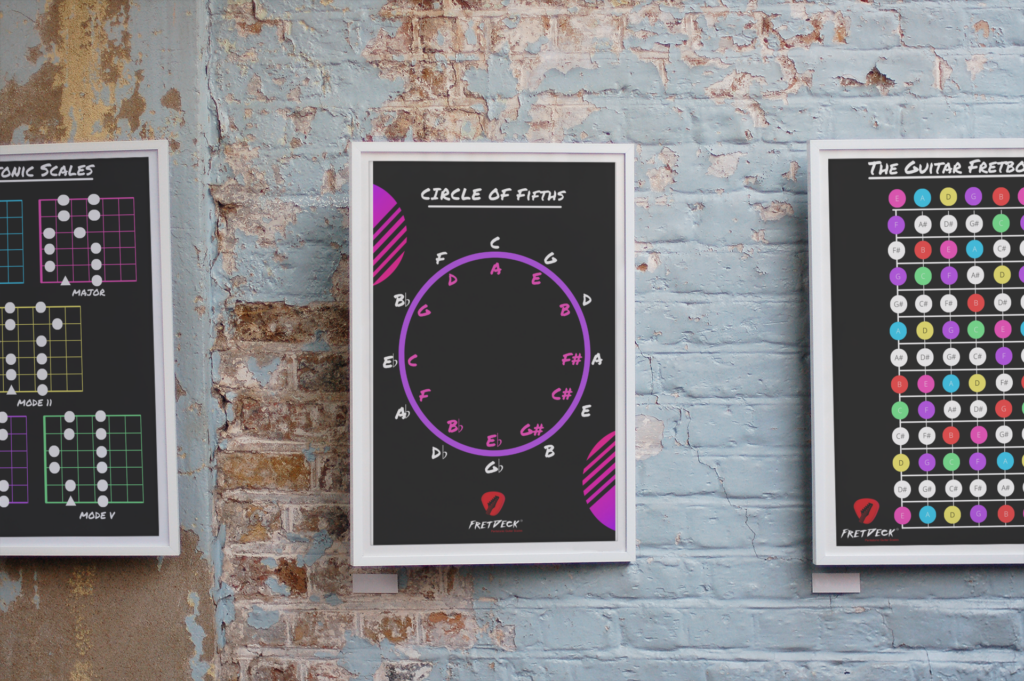
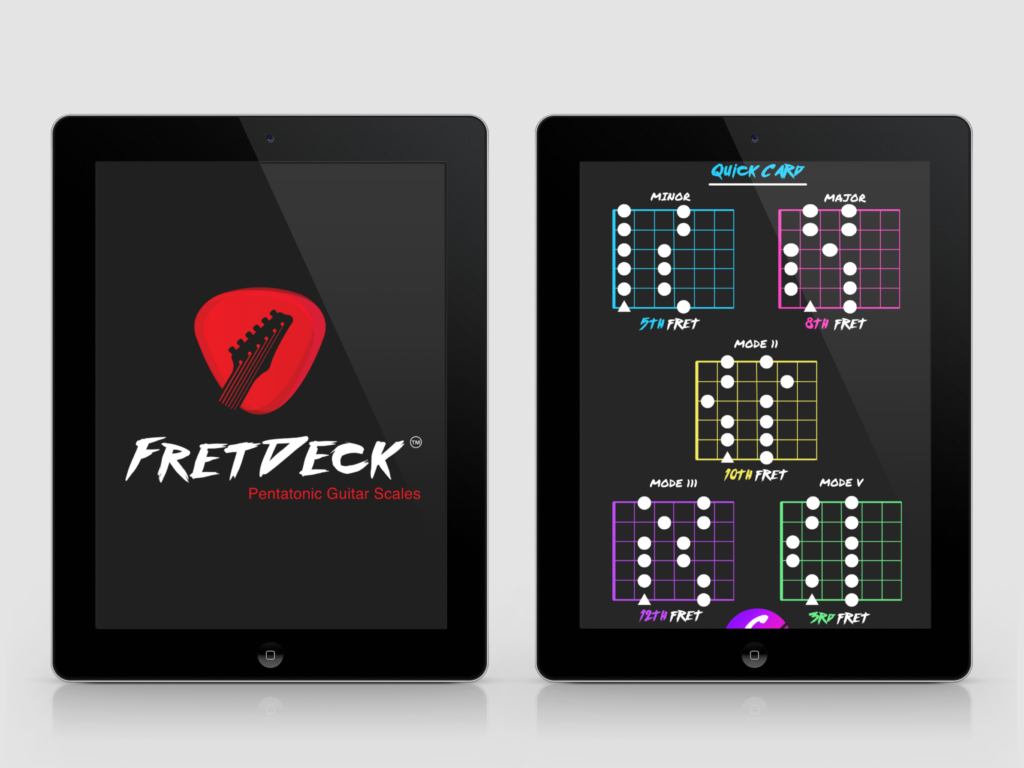
To keep your physical tools organized and your practice sessions focused, you might also explore systems like FretDeck, which uses physical cards to structure your practice and eliminate guesswork.

Essential Software & App-Based Guitar Practice Tools
In today’s digital world, your smartphone can be one of the most powerful resources in your arsenal. There is a universe of apps and software designed to accelerate your learning. These digital guitar practice tools provide instant feedback and endless content to work with.
Your All-In-One App
Many apps now combine a tuner, metronome, and even a basic chord library into one package. An excellent example is Fender Tune, which is a top-tier app offered by one of the industry’s most trusted names. You can find more information directly on the Fender.com website. Having these essentials in one place on your phone means you have no excuse to skip the fundamentals.
Backing Tracks and Tablature
YouTube is an endless source of free backing tracks in every key, style, and tempo imaginable. Simply searching for “A minor blues backing track” will give you hundreds of options to practice your scales and improvisation. This is far more engaging than just playing with a metronome.
For learning songs, apps like Ultimate Guitar or Songsterr provide massive libraries of tabs and interactive sheet music. Specifically, these tools allow you to slow down the song, loop difficult sections, and see the notes being played in real-time. This active approach is vastly superior to passively watching a tutorial. For a deeper dive, publications like Guitar World often review the latest and greatest learning apps.
Recording Yourself (The Ultimate Truth-Teller)
Finally, the most potent software tool is already on your phone: the voice memo app. Record yourself playing a scale, a chord progression, or a piece of a song for 30 seconds. Now, listen back critically. This is the ultimate feedback loop. You will instantly hear the timing issues, the buzzing notes, and the hesitation that you simply don’t notice while you’re playing. It can be a humbling experience, but it is the fastest path to identifying and fixing your specific weaknesses.
The Simple Guitar Practice System That Eliminates Guesswork
So You Can Stop Stalling… and Start Sounding Better Every Time You Pick Up the Guitar
👉 Get 52 Practice Prompts Now!
7 Ways to Maximize Your Practice Tools Today
Knowing what tools to use is only half the battle. You have to integrate them into your routine effectively. Here’s a practical, step-by-step guide to doing just that.
1. Start Every Session with a Tune-up. No exceptions. Make a clip-on tuner a permanent fixture on your guitar’s headstock. This takes 30 seconds and ensures you’re training your ear correctly from the first note.
2. Dedicate 5 Minutes to the Metronome. Before you play anything else, pick a single scale. For help, see our guide to learn guitar scales. Set the metronome to a slow, comfortable tempo (like 60 BPM) and play the scale up and down, focusing on perfect, clean notes right on the beat.
3. Record One Thing Every Day. It doesn’t have to be long. Record the scale you just practiced or a chord change you’re struggling with. Listen back and identify one specific thing to improve tomorrow.
4. Use a Backing Track for Fun. After your focused, technical work, pull up a backing track on YouTube. Spend at least 10 minutes just improvising and having fun. This connects the technical work with musical creativity.
5. Loop a Difficult Passage. Struggling with a fast lick or a tricky chord change? Use a looper pedal or an app to loop the two bars leading into it. Repeat it until it becomes second nature.
6. Use a Practice Journal. Write down what you practiced, the tempo you used, and what you discovered from your recording. This creates a roadmap of your progress and holds you accountable.
7. Organize Your Goals. Don’t just practice randomly. Decide what you want to achieve. For more ideas on how to set smart goals, review some of our beginner guitar tips that focus on building a solid foundation.
By implementing these simple habits, you transform your “noodling” time into focused, measurable, and ultimately successful practice.
Frequently Asked Questions (FAQ)
What are the most essential guitar practice tools for a beginner?
For a true beginner, the three non-negotiables are a digital tuner, a metronome, and a way to record yourself (your phone’s voice recorder is perfect). These three tools address the most critical foundational skills: playing in tune, playing in time, and getting honest feedback on your playing.
Are expensive guitar practice tools better?
Not necessarily. While a high-end looper pedal or premium software offers more features, they don’t replace the fundamentals. A free metronome app is just as effective at building rhythm as a $200 standalone unit. Therefore, focus on mastering the basic guitar practice tools first before investing in more expensive gear.
How do I stay consistent with using these tools?
The key is to make it easy. Keep your tuner clipped to your guitar. Put your metronome app on your phone’s home screen. Lay your tools out before you even pick up the instrument. By reducing friction, you make it more likely that you’ll use them every single time you sit down to play.
The Simple Guitar Practice System That Eliminates Guesswork
So You Can Stop Stalling… and Start Sounding Better Every Time You Pick Up the Guitar
👉 Get 52 Practice Prompts Now!
The Simple Guitar Practice System That Eliminates Guesswork
So You Can Stop Stalling… and Start Sounding Better Every Time You Pick Up the Guitar
👉 Get 52 Practice Prompts Now!