Are you endlessly searching for a complete guitar scale charts pdf? You’ve landed in the right place. Many guitarists spend hours scouring the internet for clear, usable scale diagrams, only to end up with a confusing mess of incomplete charts.
This article is your final destination. Here, you will find the essential scales you need to break out of that rut and start connecting the dots all over the neck. We will unlock the patterns that great guitarists use every single day.
Forget the disjointed and confusing diagrams. It’s time to get a real roadmap for your fretboard.
The Frustrating Search for Usable Scale Charts
You know the feeling. You decide today is the day you finally learn scales. So, you type “guitar scales” into your search engine and are immediately flooded with information. Some charts show one position, others show five, and none of them explain how they connect.
It feels overwhelming. You download a few, print them out, and tape them to your wall. But after a few days of staring at them, you’re no closer to understanding how to use them. You can play a scale up and down, but you can’t create music with it. As a result, your solos sound more like exercises than expressive melodies.
This frustration leads to a dead end. Many players simply give up, concluding that music theory is too complicated. They stick to the one or two comfortable “box” shapes they know, and their playing stagnates. You are not just looking for dots on a page; you are looking for a key to unlock the entire fretboard.
The Simple Guitar Practice System That Eliminates Guesswork
So You Can Stop Stalling… and Start Sounding Better Every Time You Pick Up the Guitar
👉 Get 52 Practice Prompts Now!
Why a Great PDF Chart Is Your Fretboard Roadmap
A well-designed scale chart does more than just show you where to put your fingers. It’s a visual map of the fretboard’s musical landscape. When you start seeing scales not as rigid boxes but as interconnected pathways, everything changes.
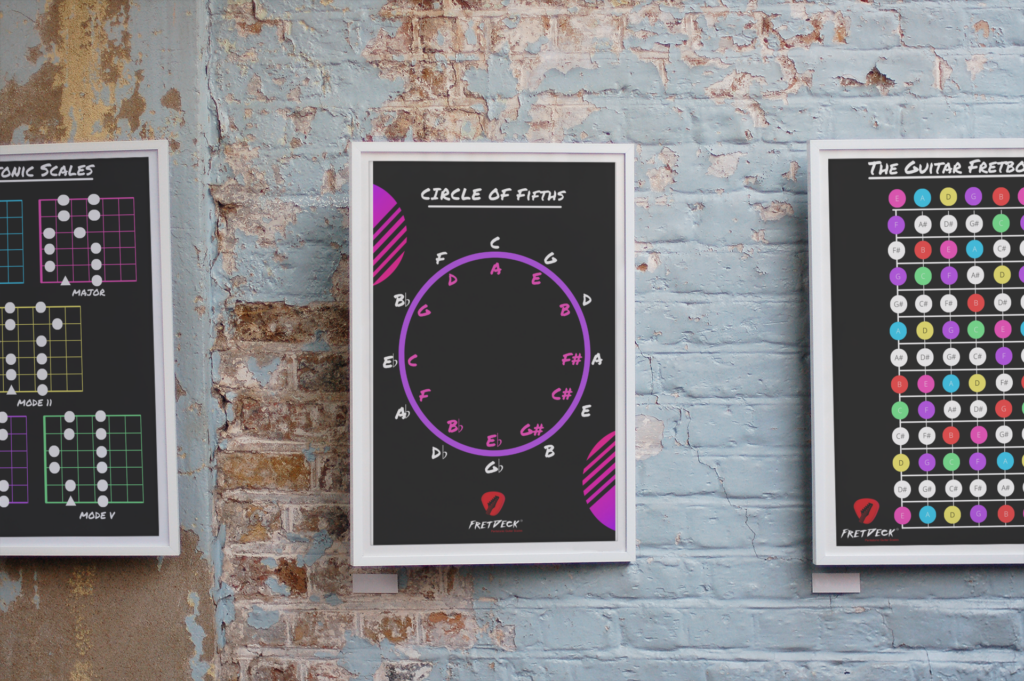
For example, a great chart highlights the root notes within each pattern. This simple detail is the secret to moving scales to any key you want. Suddenly, the C Major scale you learned can become a G Major or an F# Major scale just by shifting the starting point. This is the power of pattern recognition.
Furthermore, these charts help you break free from vertical, “up-and-down” playing. You begin to see the horizontal connections that allow you to glide smoothly from the low frets to the high ones. Consequently, your solos will sound more fluid and professional, just like the pros you admire.

Your Complete Library of Guitar Scale Charts PDF
This is the collection you’ve been searching for. A guitar scale charts pdf should be comprehensive but not overwhelming. Therefore, we’ve focused on the most critical scales that will give you the biggest return on your practice time. Master these, and you can play almost any style of popular music.
The Pentatonic Scales (Major & Minor)
If you only learn two scales, make them these. The Minor Pentatonic scale is the lifeblood of blues, rock, and metal. Made of only five notes, it’s almost impossible to hit a “wrong” sounding note when soloing over a rock or blues progression. Specifically, it’s the sound of legends like Jimmy Page, Slash, and B.B. King.
The Major Pentatonic, its happy-sounding sibling, is perfect for country, pop, and uplifting rock anthems. It has the same five shapes as the minor pentatonic but simply starts in a different place. Mastering both will give your playing immense versatility.
The Major Scale
This is the foundation of all Western music theory. Every chord and every other scale can be related back to the Major Scale. While it contains seven notes (making it slightly harder to use than Pentatonic scales), learning it unlocks a deeper understanding of music. For a great deep dive into its importance, check out this guide from Fender.com. Moreover, it’s essential for anyone who wants to write songs or understand how chord progressions are built.
The Blues Scale
What’s the secret sauce for that gritty, bluesy sound? It’s the Blues Scale. This scale is simply a Minor Pentatonic with one extra note added—the “blue note.” This one chromatic passing tone adds a world of tension and flavor to your licks. When you want to sound authentically bluesy, this scale is your go-to tool.
The Modes
Once you’re comfortable with the scales above, the modes are your next frontier. In simple terms, modes are just the Major Scale started from different notes, creating seven unique sonic flavors. For example, the Dorian mode is a minor-sounding scale popular in rock and jazz, while the Mixolydian mode is a major-sounding scale that’s perfect for blues-rock and country. Learning modes can feel advanced, but it’s a logical next step once you have a good handle on how to learn guitar scales.
The Simple Guitar Practice System That Eliminates Guesswork
So You Can Stop Stalling… and Start Sounding Better Every Time You Pick Up the Guitar
👉 Get 52 Practice Prompts Now!
How to Practice with Your New PDF Charts
Downloading a guitar scale charts pdf is the first step. The real magic happens when you integrate them into your daily practice. Here’s a simple, effective method to turn these diagrams into music.
1. Start Slow and Be Precise. The biggest mistake is trying to play fast too soon. Set a metronome to a very slow tempo (like 60 bpm) and play one note per click. Focus on making every single note ring out clearly without any fret buzz. Speed will come naturally as a result of clean technique.
2. Master One Position at a Time. Don’t try to learn all five pentatonic shapes in one day. Instead, pick one “box” shape and live in it for a week. Learn it forwards, backward, and inside out until it becomes second nature. A great best practice routine always includes focused, methodical work.
3. Connect the Positions. Once you are comfortable with two adjacent shapes, practice moving between them. Play up one shape and down the next. This horizontal movement is the key to navigating the neck and breaking out of “box” playing.
4. Practice with Backing Tracks. This is the most important tip. Scales are meaningless without a musical context. Find a backing track on YouTube in a key you know (like A minor) and try to create simple melodies using your Minor Pentatonic scale. This trains your ear to connect the patterns on the page to the sounds you want to make.
5. Create Melodies, Don’t Just Run Scales. Don’t just play the notes in order. Try skipping strings, repeating notes, and using techniques like slides, bends, and vibrato. Think of the scale as your palette of available colors, not a paint-by-numbers picture.
6. Find the Root Notes. In every scale shape you learn, identify the root note. This is your anchor. Knowing where the root is allows you to move the entire pattern to a new key. For even more advanced applications, you can read articles like those on Guitar World that discuss targeting chord tones.
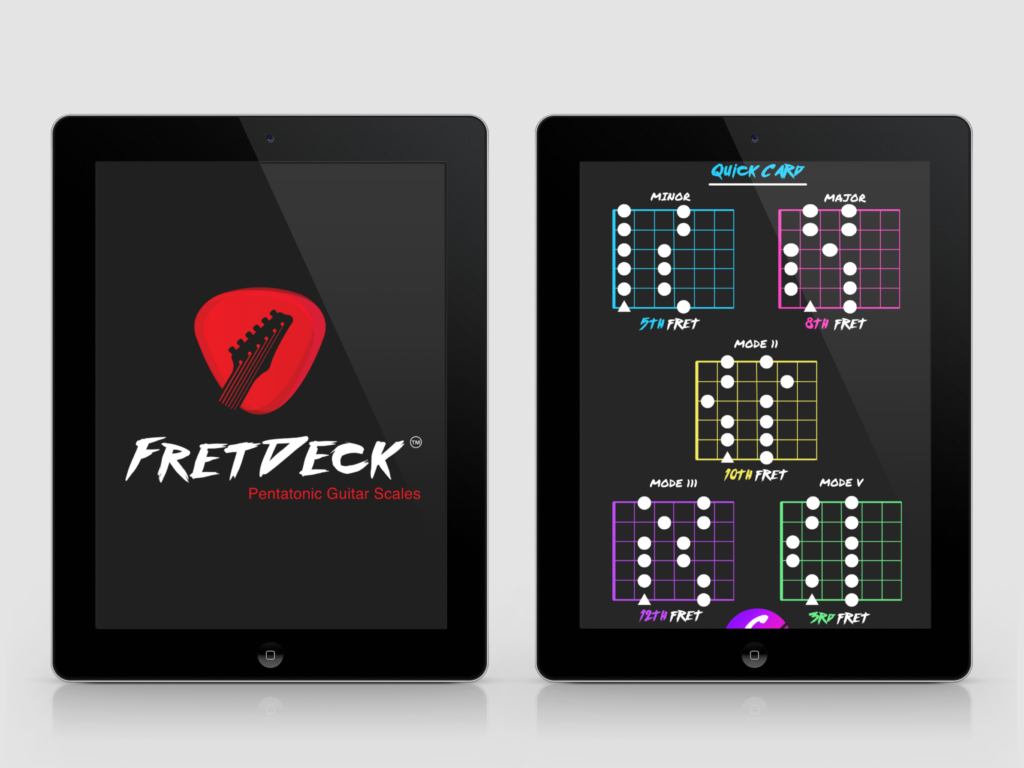
For a more structured, hands-on approach, tools like FretDeck can put these patterns directly on your fretboard, which is a great way to reinforce what you see on your guitar scale charts pdf.
Frequently Asked Questions (FAQ)
Here are some common questions guitarists have when they start working with scale charts.
### What is the most important scale to learn first?
Without a doubt, the Minor Pentatonic scale is the most important scale for any aspiring rock, blues, or pop guitarist. Its simple five-note structure is incredibly forgiving and is the foundation for countless iconic guitar solos. It provides the fastest path from learning a pattern to making music, which is a huge confidence booster for beginners. If you need more foundational help, a good guide with beginner guitar tips will always point you here first.
### How do I use these scale charts to write a solo?
Think of the scale as a collection of “safe” notes. Start by playing a backing track. Listen to the chords. Then, use the notes from the corresponding scale to create short melodic ideas, or “phrases.” Don’t play constantly; leave space between your phrases. A great solo has a conversational quality. Use the guitar scale charts pdf to find the notes, but use your ear to decide which ones to play and when.
### Should I memorize all these scales at once?
Absolutely not. This is a journey, not a race. Trying to learn everything at once is a recipe for burnout. Focus on one scale—like the Minor Pentatonic—and master its five positions across the neck. Only when you can comfortably use it to improvise over a backing track should you move on to the next scale, such as the Major Scale or the Blues Scale. Slow, steady progress is the key to long-term success.
The Simple Guitar Practice System That Eliminates Guesswork
So You Can Stop Stalling… and Start Sounding Better Every Time You Pick Up the Guitar
👉 Get 52 Practice Prompts Now!