Are you searching for a guitar scale course that will finally make sense of the fretboard? You’ve likely spent hours watching free videos, only to end up more confused than when you started.
You know scales are the key. They are the language of music and the foundation for every great solo you’ve ever heard. But right now, they just feel like a bunch of random dots and patterns.
This post will change that. We’re going to break down exactly what you need to look for, so you can stop wasting time and start making real music.
The “Scale Trap” That Keeps You Sounding a Student
Does this sound familiar? You learn a minor pentatonic “box” shape. You play it up and down, over and over again. For a moment, you feel like you’ve unlocked a secret.
But then you try to play over a song. Suddenly, you’re trapped. You can’t seem to leave that one little area of the neck. Your solos sound robotic and uninspired, just a sequence of notes played in order.
You see the pros gliding effortlessly all over the fretboard. They connect ideas and tell a story with their solos. Meanwhile, you’re stuck in a four-fret prison. This is the Scale Trap, and it’s the number one reason guitarists give up on soloing.
The problem isn’t you. It’s the method. Most approaches just show you the patterns without teaching you the why or the how. They give you a map with no destination. As a result, you never learn to connect the shapes or, more importantly, turn them into actual music.
The Simple Guitar Practice System That Eliminates Guesswork
So You Can Stop Stalling… and Start Sounding Better Every Time You Pick Up the Guitar
👉 Get 52 Practice Prompts Now!
What Makes a Great Guitar Scale Course?
So, how do you find a method that works? A truly effective guitar scale course does more than just throw diagrams at you. It focuses on three critical components: context, connection, and creativity.
First, let’s talk about context. A great course won’t just tell you to learn the A minor pentatonic scale. It will teach you why and when to use it. For example, it will show you how the notes of that scale relate to the chords in a progression, like A minor, D minor, and E minor. This is the difference between blindly throwing darts and hitting a bullseye every time.
Furthermore, it’s about understanding the “sound” of each scale. The major scale sounds happy and bright. The minor scale sounds sad or serious. The blues scale has that classic, gritty tension. Without this context, you’re just playing notes; with it, you’re conveying emotion.
Finally, a quality program must show you how to apply what you’ve learned. It should provide backing tracks and clear examples of how to create musical phrases, not just run scales up and down. This practical application is what transforms theoretical knowledge into tangible skill. A well-structured approach is fundamental to truly learning guitar scales and making them a part of your musical DNA.
Beyond the Box: Connecting the Fretboard
The biggest breakthrough moment for any guitarist is realizing the fretboard isn’t a series of disconnected boxes. It’s one large, interconnected grid. A superior guitar scale course will be laser-focused on helping you see these connections.
Think of the five pentatonic scale patterns. Many players learn them as five separate, isolated shapes. This is a huge mistake. The real magic happens when you learn how to seamlessly move between them.
For instance, you might start a phrase in pattern one around the 5th fret. Then, you can slide up to pattern two around the 8th fret to continue your idea in a higher register. This is what gives your solos movement and makes them sound professional.
Moreover, visualization is key. A good course will use exercises that train your brain to see the entire scale across the whole neck, not just one small piece of it. It teaches you to see pathways and connections between the shapes. As a result, you’re no longer confined to one spot and can navigate the fretboard with total freedom, just like your heroes. Fender’s own blog often features lessons that touch on this very concept of fretboard freedom.
The Simple Guitar Practice System That Eliminates Guesswork
So You Can Stop Stalling… and Start Sounding Better Every Time You Pick Up the Guitar
👉 Get 52 Practice Prompts Now!
Turning Scales into Music: The Art of Phrasing
Here’s the ultimate truth: knowing a thousand scales means nothing if you can’t use them to create compelling melodies. Phrasing is what separates a sterile scale run from a breathtaking solo. It’s not just what notes you play, but how you play them.
A valuable guitar scale course will dedicate significant time to this. It will teach you techniques like string bends, vibrato, slides, and hammer-ons. These are the tools that give your notes personality and emotion. Imagine B.B. King’s playing without his signature vibrato—it just wouldn’t be the same.
Rhythm is another crucial element. You must learn to play notes on, off, and around the beat. Playing everything as a stream of steady eighth notes is boring. Instead, try holding a note longer, leaving space, or playing a quick flurry of notes. These rhythmic variations create interest and pull the listener in. The experts at Guitar World constantly emphasize the importance of phrasing in their soloing lessons.
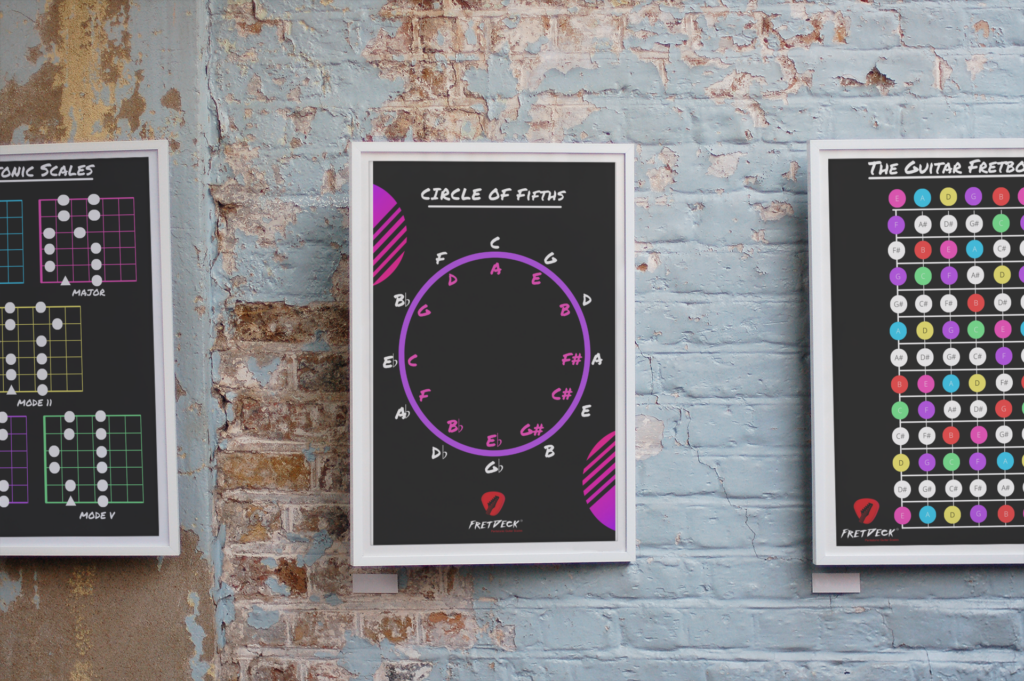
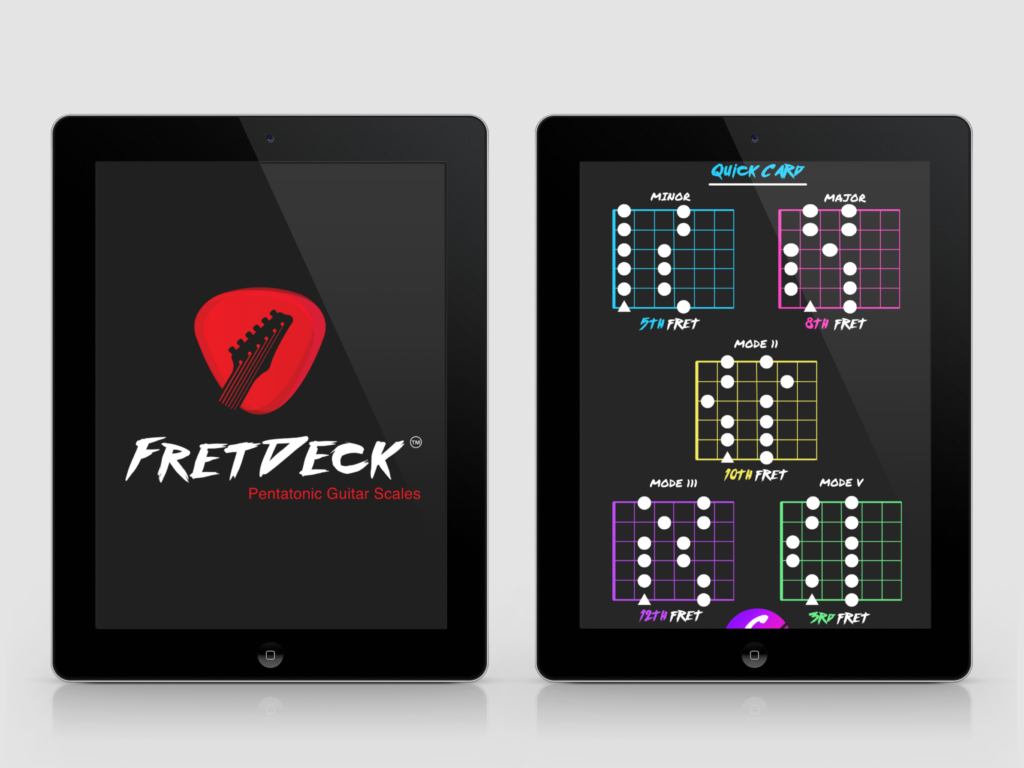
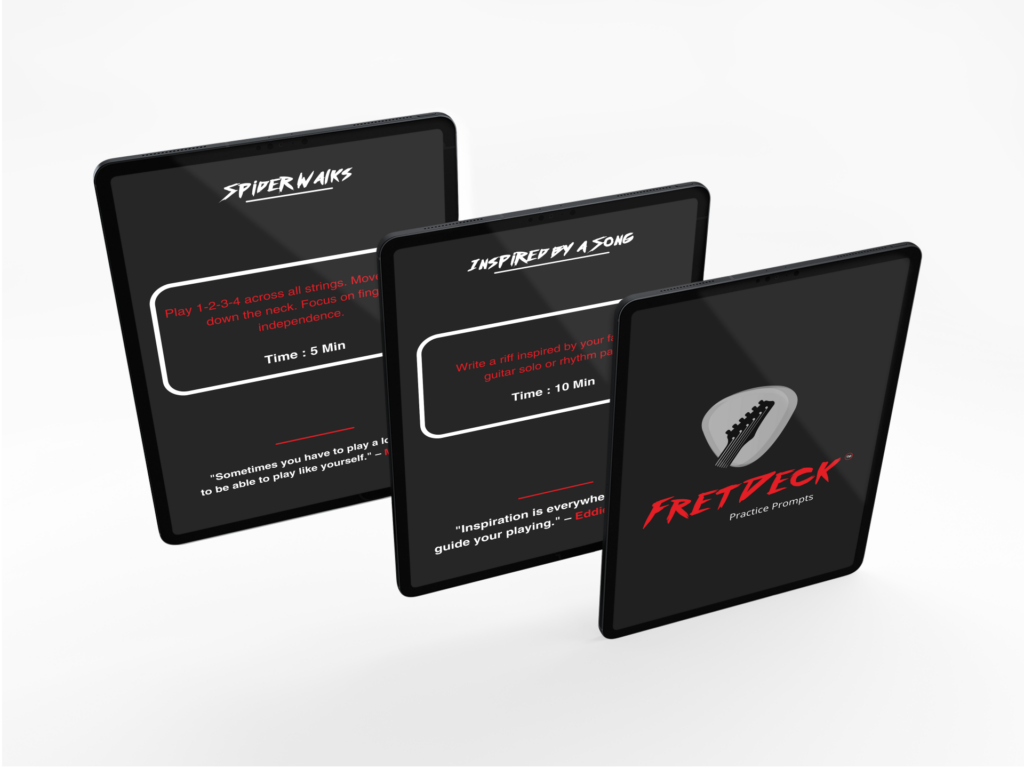
This is where a structured practice tool can be a game-changer. For example, a system like FretDeck provides daily prompts that specifically challenge you to work on phrasing, dynamics, and other musical elements, pushing you beyond simply memorizing patterns. It builds the crucial habits that turn a good player into a great one.
Your 5-Step Plan to Master Scales
Ready to get started? Here is a simple, actionable plan you can implement today. This structured approach mirrors what you’d find in a high-quality guitar scale course.
1. Start With One Scale: Don’t try to learn everything at once. Pick one scale—the minor pentatonic is a perfect starting point—and commit to mastering it.
2. Learn It in All Positions: Methodically learn each of the five patterns for that one scale. Practice transitioning between adjacent patterns until it feels smooth.
3. Use Backing Tracks: This is non-negotiable. From day one, practice your scales over a relevant backing track. This immediately provides musical context and trains your ear.
4. Target Chord Tones: As the chords in the backing track change, try to land on a note from that chord. This simple trick will make your solos sound instantly more melodic and intentional.
5. Record and Listen: Record yourself improvising for two minutes. Listen back with a critical ear. What did you like? What sounded repetitive? This feedback loop is the fastest path to improvement. Specifically, structuring this into your practice is vital for progress, which is why a best practice routine is so essential.
Frequently Asked Questions
### How long does it take to learn guitar scales?
This depends entirely on your practice consistency. If you dedicate a focused 15-20 minutes per day, you can become comfortable with the 5 pentatonic positions in a few weeks. However, true mastery—the ability to use them creatively and musically without thinking—is a lifelong journey. The key is consistent, focused practice, not cramming for hours.
### What’s the most important scale to learn first?
For most modern styles like rock, pop, and blues, the minor pentatonic scale is the most important and versatile starting point. It’s relatively easy to learn and sounds good over an incredible amount of music. Once you have that down, the major scale is the next logical step, as it’s the foundation of most Western music theory.
### Do I need to know music theory for a guitar scale course?
You don’t need a degree in music theory, but a good guitar scale course will teach you the practical theory you do need. This includes understanding what a key is, how scales relate to chords, and the function of intervals. This isn’t dry, academic stuff; it’s the functional knowledge that empowers you to make your own musical choices. These are concepts often covered in our beginner guitar tips section.
The Simple Guitar Practice System That Eliminates Guesswork
So You Can Stop Stalling… and Start Sounding Better Every Time You Pick Up the Guitar
👉 Get 52 Practice Prompts Now!