
If you’ve ever searched for a guitar scale modes chart, you already know the feeling. You feel like you’re on the verge of a massive breakthrough, but the information you find is either too simple or way too complex. It’s frustrating.
You see the fretboard as a puzzle. You know all the cool sounds you hear from your favorite players are hiding in there somewhere. Furthermore, you suspect that modes are the key to unlocking it all. You just need a clear map to guide you.
This article is that map. We are going to demystify modes once and for all. As a result, you’ll not only understand what they are but also how to use them to create incredible music.
Why Do Modes Feel So Confusing?
Let’s be honest. The moment someone starts throwing around words like “Phrygian” and “Locrian,” most guitarists’ eyes glaze over. It sounds more like an ancient history lesson than a music lesson. You’ve probably felt that wave of confusion yourself.
This is the core problem. Music theory, especially when it comes to modes, is often taught by academics, for academics. They use language that is technically correct but practically useless for someone who just wants to make their guitar sound awesome. For example, you might read that Dorian is the second mode of the major scale, but what does that mean for your fingers on the fretboard?
As a result, you might have tried to memorize patterns without understanding their sound or function. You play the shapes up and down, but when you try to use them over a backing track, something feels off. It doesn’t sound like music; it just sounds like an exercise. This leads to burnout and the belief that modes are “too advanced” for you. They are not. You just need a better approach.
The Simple Guitar Practice System That Eliminates Guesswork
So You Can Stop Stalling… and Start Sounding Better Every Time You Pick Up the Guitar
👉 Get 52 Practice Prompts Now!
What Are Guitar Modes, Really?
Imagine you have a box of seven unique crayons. You can call this box the “Major Scale.” Now, imagine you draw a picture starting with the red crayon. The picture will have a bright, happy feel.
What if you used the exact same seven crayons but started your drawing with the blue crayon instead? The overall mood of the picture would change, becoming more somber or thoughtful. You used the same tools, but your starting point—your point of emphasis—created a totally different emotional context.
That is exactly how modes work. The seven modes are simply seven different moods or “flavors” you can create from the exact same set of notes in a major scale. Each mode is just the major scale, but starting and ending on a different note within that scale.
For example, the C Major scale has the notes C, D, E, F, G, A, B.
- If you play these notes from C to C, you get C Ionian (the regular major scale).
However, if you play the exact same notes* but from D to D, you get D Dorian.
- If you play from E to E, you get E Phrygian.
…and so on for all seven notes. Therefore, you don’t need to learn seven brand-new scales. You just need to learn to see one scale from seven different perspectives. This is a crucial mental shift that simplifies the entire concept. If you want to dive deeper into the foundational patterns, our guide on how to learn guitar scales is an excellent starting point.
Your Complete Guitar Scale Modes Chart Explained
This is where a visual aid becomes your most powerful tool. Instead of thinking in abstract terms, a good guitar scale modes chart lays everything out on the fretboard for you. It’s the map that connects the theory to the physical act of playing.
Let’s break down the seven modes, their “flavor,” and where you’ve heard them before. We’ll use the key of C Major as our parent scale for all examples.
1. Ionian (The Major Scale)
- Formula: 1-2-3-4-5-6-7
- Flavor: Bright, happy, heroic. It’s the standard “do-re-mi” sound we all know.
- Use it over: Major chords and progressions (e.g., C Major, F Major, G Major). Think “Don’t Stop Believin'” by Journey.
2. Dorian
- Formula: 1-2-b3-4-5-6-b7
- Flavor: Funky, soulful, slightly melancholic but still hopeful. That “raised 6th” degree is its secret sauce.
- Use it over: Minor or minor 7th chords. Think of the groovy vibe in “Oye Como Va” by Santana or the main riff in “Stairway to Heaven.” You can find more info on this type of application in Guitar World’s lessons.
3. Phrygian
- Formula: 1-b2-b3-4-5-b6-b7
- Flavor: Dark, Spanish, and tense. The flat 2nd (“b2”) gives it an unmistakable flamenco sound.
- Use it over: Minor chords when you want a heavy, dramatic tension. Think metal riffs from bands like Metallica. Specifically, the song “Wherever I May Roam” relies heavily on this sound.
4. Lydian
- Formula: 1-2-3-#4-5-6-7
- Flavor: Dreamy, magical, ethereal, and bright. The “sharp 4th” (#4) makes it sound like it’s floating.
- Use it over: Major chords, especially when you want a modern or celestial vibe. Joe Satriani is a master of this mode, for example in his song “Flying in a Blue Dream.”
5. Mixolydian
- Formula: 1-2-3-4-5-6-b7
- Flavor: Bluesy, classic rock, dominant. It’s a major scale with a flat 7th (“b7”), giving it that classic rock and roll sound.
- Use it over: Dominant 7th chords. It’s the foundation of countless blues and rock songs, like the main riff in “Sweet Home Alabama.” It’s essential for any rock player.
6. Aeolian (The Natural Minor Scale)
- Formula: 1-2-b3-4-5-b6-b7
- Flavor: Sad, melancholic, serious. This is the standard minor scale sound.
- Use it over: Minor chords for a classic sad or romantic feel. Think of the vocal melody in “Losing My Religion” by R.E.M.
7. Locrian
- Formula: 1-b2-b3-4-b5-b6-b7
- Flavor: Dissonant, unstable, unresolved. The flat 5th (“b5”) makes it very tense.
- Use it over: Diminished chords. It’s the least common mode in popular music but is used in jazz and metal for creating extreme tension before a resolution.
By studying a guitar scale modes chart, you can start to see these seven patterns not as separate entities, but as interconnected shapes all over the neck.
The Simple Guitar Practice System That Eliminates Guesswork
So You Can Stop Stalling… and Start Sounding Better Every Time You Pick Up the Guitar
👉 Get 52 Practice Prompts Now!
Connecting Modes to Chords and Progressions
Here’s the secret that most teachers miss: modes are meaningless without chords. A mode’s unique flavor only comes alive when you play it against the right backing chord or progression. Playing D Dorian notes over a C Major chord will just sound like you’re playing the C Major scale.
However, if you play those same D Dorian notes over a D minor chord, the magic happens. Your ear suddenly hears D as the “home base,” and the unique color of the Dorian mode shines through. Each mode is intrinsically linked to a specific chord type built from the parent major scale.
Here’s a simple guide:
- Major Chords (I and IV): Use Ionian and Lydian.
- Minor Chords (ii, iii, vi): Use Dorian, Phrygian, and Aeolian.
- Dominant Chord (V): Use Mixolydian.
- Diminished Chord (vii°): Use Locrian.
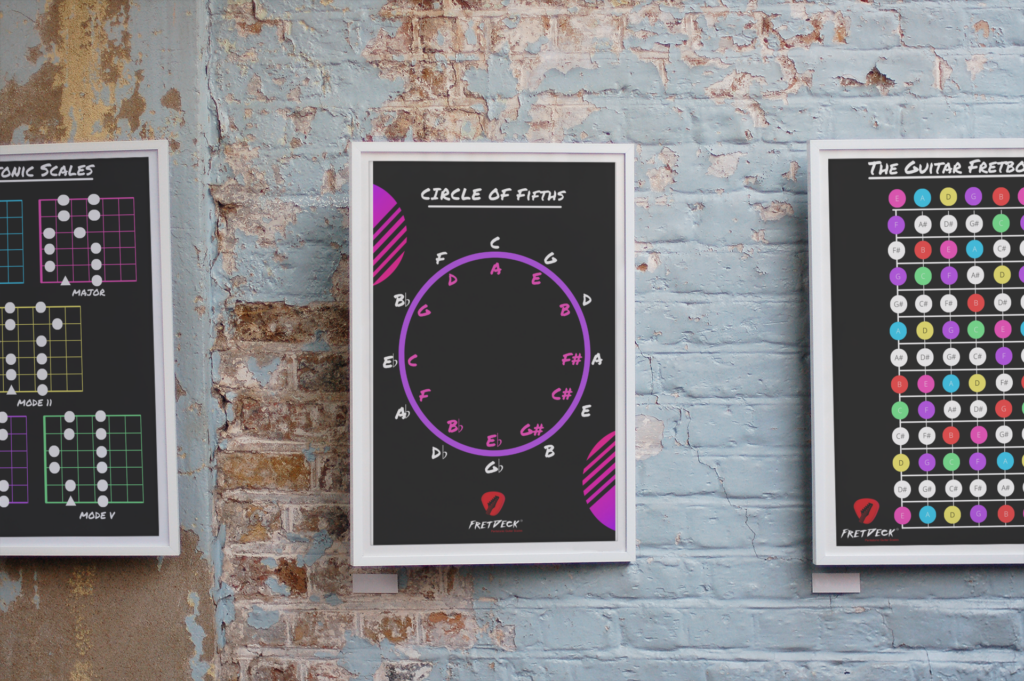
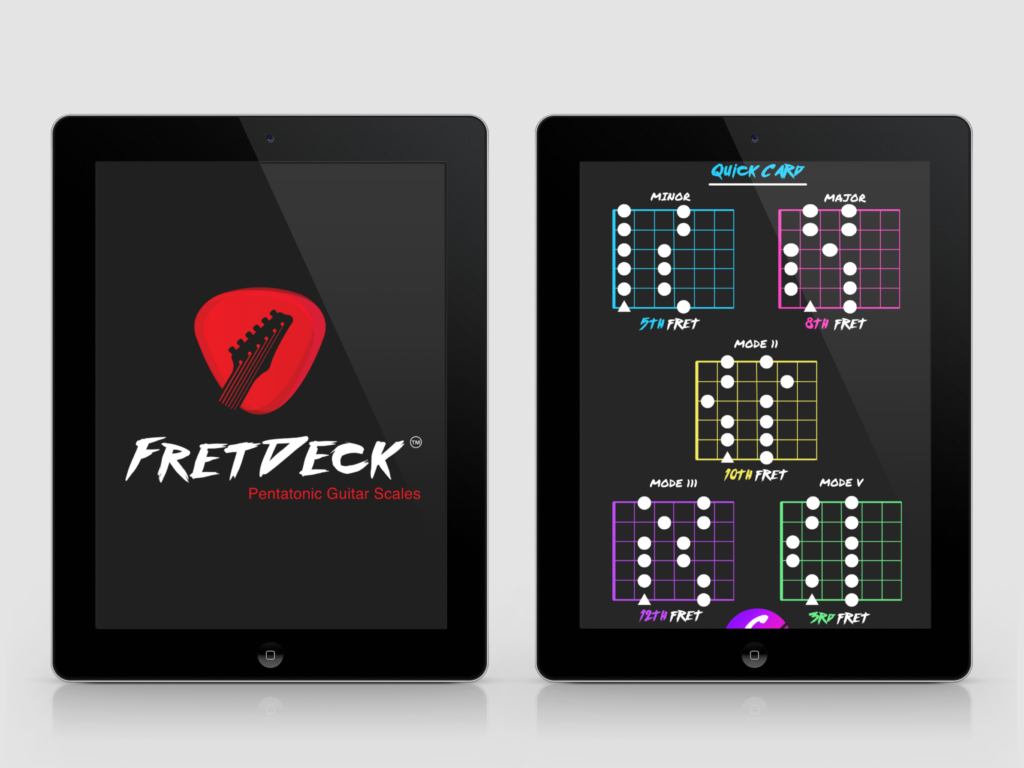
Understanding this connection is the key to unlocking improvisation. When you see a Dm7 chord in a song, you now know you have options. You could play D Dorian for a soulful feel or D Aeolian for a more standard minor sound. This is where your musical voice begins to develop. To really master this, you need a solid understanding of how chords work together, and our chord progression guide is the perfect resource for that. For physical practice, tools like the FretDeck card system can also provide visual cues to help you connect these scale patterns to chords on the fly.
5 Practical Tips for Mastering Modes
Theory is great, but your fingers need to do the work. Here’s a step-by-step plan to integrate modes into your playing.
1. Start with the Familiar. You already know Ionian (major scale) and Aeolian (natural minor). Focus on the relationship between C Ionian and A Aeolian. They use the exact same notes. Play them back-to-back over their respective chords (C Major and A minor) to hear the shift in mood.
2. Focus on the “Characteristic Note.” Each mode has one note that defines its sound (e.g., the #4 in Lydian, the b2 in Phrygian). When practicing, isolate that note and emphasize it. Bend into it, hold it, and listen to the color it creates against the backing chord.
3. Use Backing Tracks. This is non-negotiable. Modes only make sense in a harmonic context. Find “modal” backing tracks on YouTube (e.g., “D Dorian backing track”). This trains your ear to hear the mode’s specific flavor.
4. Practice in One Position. Don’t try to learn all seven modes across the entire neck at once. Pick one C major scale shape you know well. Then, methodically play each mode within that one box pattern by changing your starting (root) note. This builds a much deeper understanding than just memorizing disconnected shapes. It’s a key part of any best practice routine.
5. Refer Back to Your Chart. Keep a guitar scale modes chart handy during practice. When you feel lost, use it as your reference point. It’s not a crutch; it’s a map that will eventually become ingrained in your memory. Many professional players still think this way, as detailed in interviews on sites like Fender.com.
Frequently Asked Questions (FAQ)
Why should I learn guitar modes?
You should learn modes to unlock a whole new vocabulary for your solos and melodies. Instead of just playing major for “happy” and minor for “sad,” modes give you seven distinct emotional colors to paint with. For example, you can make a minor chord progression sound funky (Dorian) or intensely dark (Phrygian). It’s the single biggest step from being an intermediate player to an advanced one.
What’s the easiest mode to start with after major and minor?
Mixolydian is by far the easiest and most useful mode to learn first. It’s just a major scale with a flatted 7th, which gives it a bluesy, rock-and-roll sound. Since countless rock, blues, and country songs are built on dominant 7th chords, you’ll be able to apply Mixolydian immediately and hear a tangible result.
Is a guitar scale modes chart better than learning by rote?
A guitar scale modes chart is a tool to facilitate learning, not replace it. Rote memorization of patterns without context often fails because you don’t understand the sound or application. The chart provides the “why” behind the patterns. Therefore, the best method is to use the chart to understand the theory and then use rote practice and ear training (with backing tracks) to internalize the shapes and sounds into your muscle memory.
The Simple Guitar Practice System That Eliminates Guesswork
So You Can Stop Stalling… and Start Sounding Better Every Time You Pick Up the Guitar