Are you searching for a guitar scale pdf that will finally make sense of the fretboard? You’ve landed in the right place, because that page of dots and lines is the secret map you’ve been missing. It holds the key to unlocking solos, writing melodies, and moving beyond just strumming chords.
You know the feeling. You pick up your guitar, full of inspiration. But then you just… noodle. You play the same tired licks you already know. Trying to create a cool solo feels like walking through a minefield, where every other step is a “wrong” note.
It’s frustrating, isn’t it? You see your heroes effortlessly gliding across the neck, and it seems like magic. You feel stuck, trapped in a box, wondering if you’ll ever break free and play with that same confidence.
The Simple Guitar Practice System That Eliminates Guesswork
So You Can Stop Stalling… and Start Sounding Better Every Time You Pick Up the Guitar
👉 Get 52 Practice Prompts Now!
The Fretboard Maze: Why You Feel Stuck
Let’s be honest. The guitar neck can look incredibly intimidating. It’s a grid of 120+ notes, and without a guide, it’s just a confusing maze. This is the core reason so many guitarists hit a plateau and never move past it.
For instance, you might learn a few chords and feel great progress. But when it comes to playing lead guitar, you hit a brick wall. You don’t understand how chords and single notes connect. As a result, your attempts at improvisation sound random and disjointed.
Furthermore, this lack of knowledge creates a cycle of doubt. You start to believe you “don’t have an ear for music” or that you just aren’t talented enough. The truth is, it has nothing to do with talent. It has everything to do with having the right map.
The “Aha!” Moment: Demystifying Guitar Scales
So, what exactly are scales? Think of them as the alphabet of music. Just as letters form words and sentences, notes from a scale form melodies and solos. They are pre-selected sets of notes that are guaranteed to sound good together.
Specifically, a scale provides a framework. It tells you exactly which notes you can play over a certain chord progression to create a cohesive and musical sound. Instead of guessing from 12 possible notes in Western music, a scale narrows it down to 5 or 7 powerful choices.
This is the “aha!” moment for every guitarist. Suddenly, you realize that your heroes aren’t just guessing. They have simply mastered these frameworks. Consequently, they can play with speed, precision, and emotion because they aren’t thinking about individual notes; they’re thinking in the language of scales.

Your Ultimate Free Guitar Scale PDF Download
This is where a high-quality guitar scale pdf becomes your most valuable tool. A good chart isn’t just a collection of random patterns. It’s a comprehensive map to navigate the entire fretboard with confidence. It lays out the essential patterns you need to know.
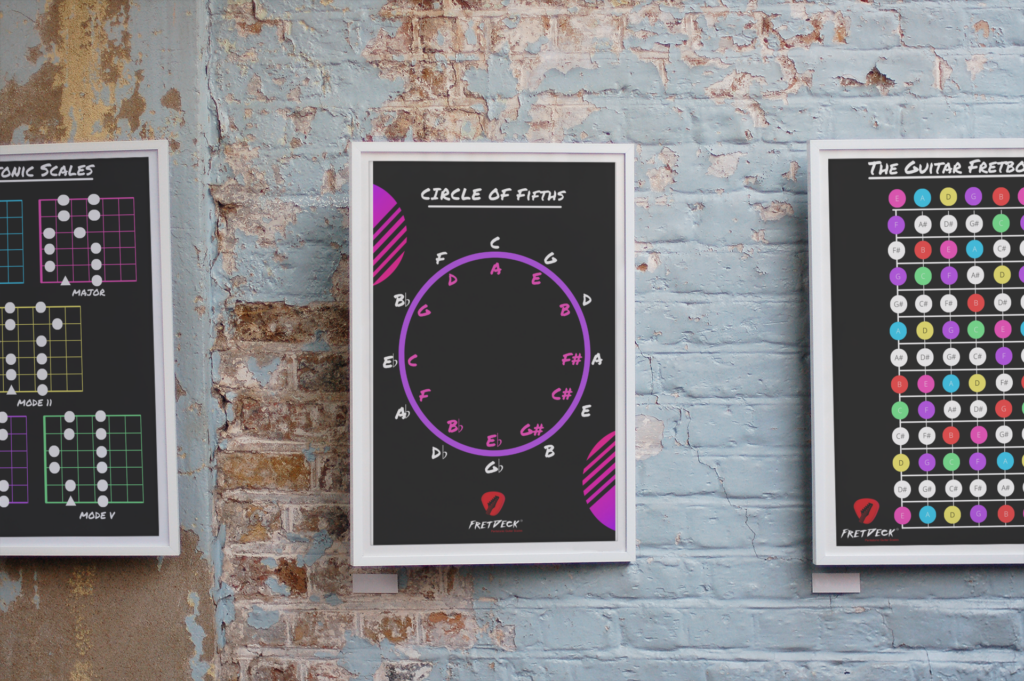
A great chart should clearly display the most important scales. For example, it must include the Minor Pentatonic, the Major Pentatonic, the Major Scale, and the Natural Minor Scale. Each scale should be shown in multiple positions across the neck, with the root notes clearly marked. This allows you to see how the patterns connect.
As you start to absorb the information in your guitar scale pdf, the fretboard will transform. What was once a confusing mess of frets and strings will become a logical grid of interconnected shapes and patterns. This is the first step toward true fretboard freedom, a concept you can explore further in articles from authorities like Guitar World.
The Simple Guitar Practice System That Eliminates Guesswork
So You Can Stop Stalling… and Start Sounding Better Every Time You Pick Up the Guitar
👉 Get 52 Practice Prompts Now!
How to ACTUALLY Use Your Scale Chart (Not Just Stare at It)
You’ve found a chart. Now what? The biggest mistake guitarists make is trying to memorize all the shapes at once. This leads to overwhelm and burnout. Instead, you need a systematic approach.
First, focus on ONE scale. The Minor Pentatonic is the perfect place to start, as it’s the foundation for countless blues, rock, and pop solos. Then, focus on just ONE position or shape of that scale. Play it forwards and backward until it feels comfortable under your fingers.
Next, you must start making music with it. Don’t just run up and down the pattern like a robot. Find a simple backing track on YouTube in the correct key. Now, try to create simple melodic phrases using the notes from that one scale shape. This crucial step moves you from mechanical practice to musical expression. Developing a solid method is key, which is why we created our guide on the best practice routine.
From Shapes to Music: Connecting Scales to Chords
Here is the secret that separates the amateurs from the pros. Scales are not meant to be played in a vacuum. They are directly related to chords. Understanding this connection is what will elevate your playing to a professional level.
For example, the A Minor Pentatonic scale sounds amazing over an A minor chord. Similarly, it works beautifully over a C Major chord. Why? Because the notes in the scale are harmonious with the notes in the chords.
Moreover, the Major Scale is the “mother” of most common chords. Understanding how chords are built from the Major Scale is a game-changer. It allows you to instantly know which scale to use over any given progression. Finally, you can begin to see the bigger picture of how music is constructed. If you want a deeper dive, our chord progression guide is the perfect next step.
7 Actionable Tips to Master Scales Today
Ready to turn that PDF into pure skill? Here are seven practical steps you can take right now to internalize these patterns and make them your own.
1. Start with the Minor Pentatonic. Seriously. Before you get lost in modes and scales, master this five-note powerhouse. It’s the most useful and versatile scale in modern music.
2. Learn One Position Until It’s Automatic. Pick the first Minor Pentatonic shape. Play it slowly, paying attention to each note. A great way to begin is by exploring our definitive guide to learn guitar scales.
3. Always Find the Root Notes. In every scale shape, identify the root notes. The root note is the “home base” that grounds your melodies. Knowing where it is in every pattern is non-negotiable.
4. Use a Metronome. Start slow. In fact, impossibly slow. This builds clean technique and muscle memory. Remember: slow is smooth, and smooth is fast.
5. Practice with Backing Tracks. This is the most important tip. It transforms boring practice into a fun jam session. It trains your ear to hear how the scale sounds in a musical context.
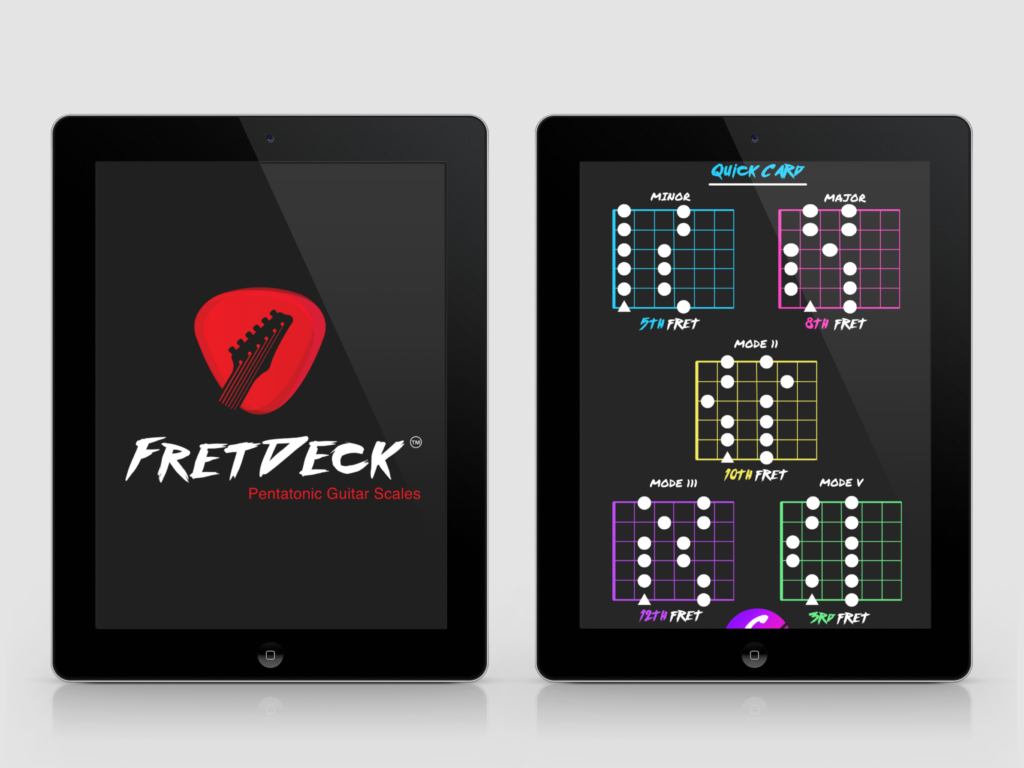
6. Visualize the Patterns. Look for tools that help you see the scales directly on your guitar. For example, innovative systems like FretDeck place scale diagrams right on your fretboard, eliminating guesswork while you play. This makes any guitar scale pdf instantly interactive.
7. Create Melodies, Not Exercises. Don’t just run up and down the scale. Try playing only three notes from the scale. Can you make a melody? How about skipping strings? This is how you develop your unique voice on the instrument.
Frequently Asked Questions
You’ve got questions, and we’ve got answers. Here are some of the most common things guitarists ask when they start diving into scales.
### What’s the most important scale to learn first?
Without a doubt, the Minor Pentatonic scale. It’s used in virtually every genre of popular music, from Eric Clapton’s blues to Slash’s rock anthems. It’s simple, sounds incredible, and is the perfect foundation for all your lead guitar playing.
### How do I memorize all these scale shapes?
The key is to not try and memorize them all at once. Learn one shape, then learn the shape that connects to it up the neck. Practice transitioning between just those two shapes. Over time, you’ll see how they all lock together like puzzle pieces across the fretboard. A good guitar scale pdf will show these connections.
### Can I write songs with just one scale?
Absolutely! Some of the greatest songs in history have been written using just the notes from the Minor Pentatonic or Major scale. The secret is in the phrasing, rhythm, and emotion—not the complexity of the scale. Legendary brands like Fender have great articles on this very topic, confirming that simplicity is often key to great songwriting.
In conclusion, you are now armed with a plan. You know that a simple chart is your map out of the “intermediate rut.” That guitar scale pdf is the starting point, but the journey involves deliberate practice, musical application, and a focus on connection, not just memorization.
Now, stop staring at the map and start driving. Go make some music.
The Simple Guitar Practice System That Eliminates Guesswork
So You Can Stop Stalling… and Start Sounding Better Every Time You Pick Up the Guitar
👉 Get 52 Practice Prompts Now!