Have you ever stared at your guitar’s fretboard, feeling like it’s an unsolvable puzzle? You might know a few licks, but a comprehensive guitar scales chart is the map you need to navigate it like a pro. Those dots and numbers are not just random shapes; they are the secret language of music, waiting for you to learn them.
You feel the frustration, right? You’re stuck in that one “box” pattern, playing the same tired licks over and over. You hear your favorite guitarists gliding effortlessly up and down the neck, and you wonder, “How do they do that? How do they know which notes to play?”
The truth is, it’s not magic. It’s a system. They see the fretboard not as a collection of individual frets, but as an interconnected grid of patterns. And you can too. It all starts with understanding how to read and apply the patterns found on a scale chart.
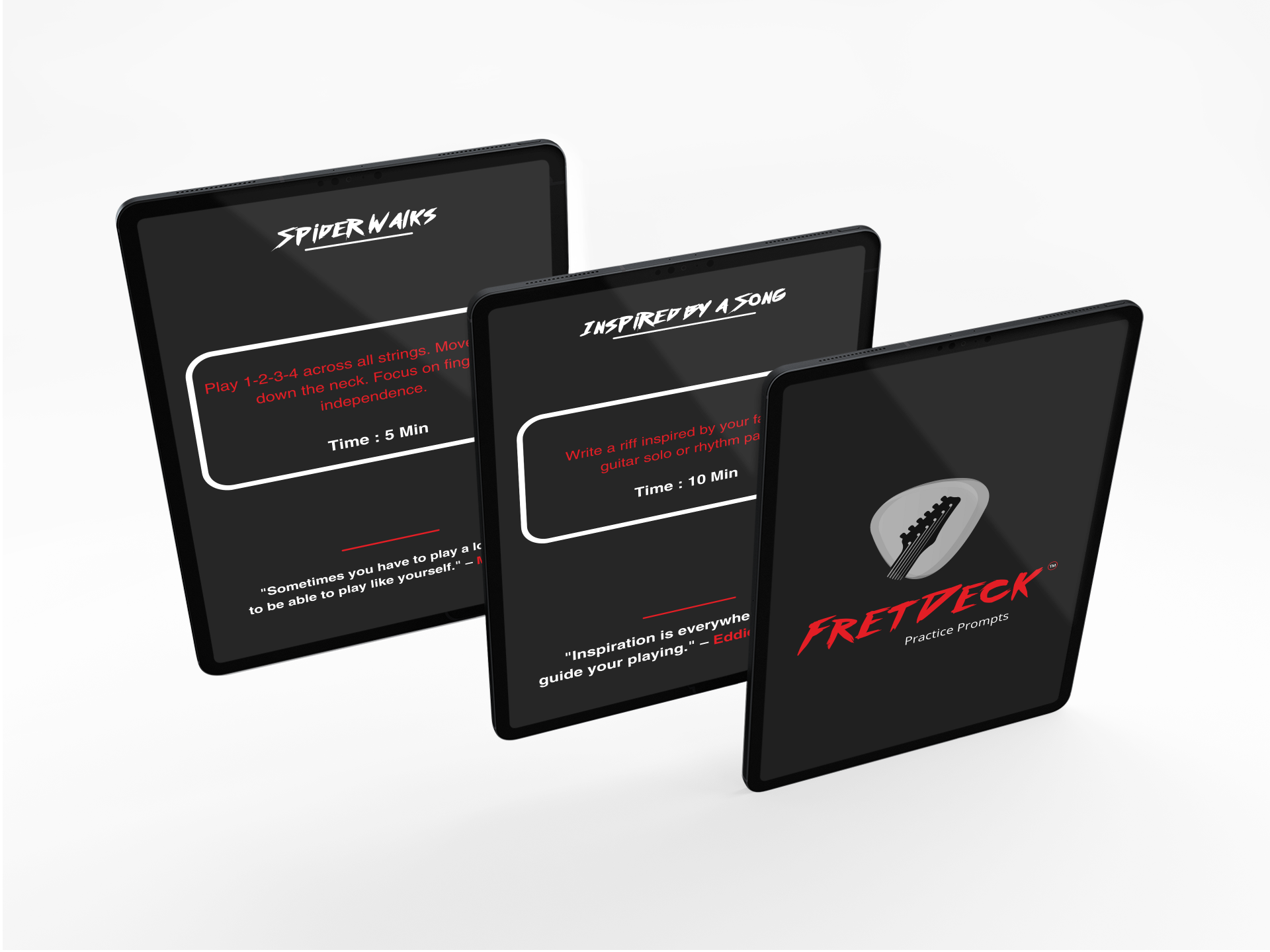
The Simple Guitar Practice System That Eliminates Guesswork
So You Can Stop Stalling… and Start Sounding Better Every Time You Pick Up the Guitar
👉 Get 52 Practice Prompts Now!
The Prison of the Pentatonic Box
Let’s be honest. You probably learned the minor pentatonic scale. It’s the first scale most of us learn, and for good reason—it sounds great almost immediately.
But this first step often becomes a cage. You get comfortable in that single position, that familiar box shape. Consequently, your solos sound predictable. You’re playing notes, but you’re not making music. You feel trapped, unable to break free and explore the rest of the fretboard.
This is a common hurdle for many guitar players. However, thinking of scales as isolated boxes is the biggest mistake you can make. The goal isn’t just to memorize a shape; it’s to understand how those shapes connect across the entire neck. This is where a proper guitar scales chart becomes your most powerful tool.

Understanding a Guitar Scales Chart
So, what exactly is a scale chart? Simply put, it’s a visual representation of a musical scale on the guitar fretboard. The chart shows you which frets to play on which strings to produce the notes of a specific scale.
Typically, you will see a grid that represents the strings and frets. Dots are placed on the frets to indicate the notes of the scale. Often, one of these dots is highlighted or marked differently to signify the “root note.” The root note is the tonal center and foundation of the scale; for example, in the A Minor Pentatonic scale, the ‘A’ notes are the roots.
The real power of a scale chart isn’t just showing you one pattern. It’s about revealing the bigger picture. A comprehensive chart will show you multiple patterns for the same scale up and down the neck. As a result, you start to see how they all lock together like puzzle pieces. For more details on the fundamentals, check out our guide to learning guitar scales.
Your First Essential Scale Charts
To get started, you don’t need to learn hundreds of scales. In fact, you can create incredible music by mastering just a few core scales. Below are the most important patterns you should commit to memory.
For these charts, the numbers represent the frets, a circle `(R)` represents the root note, and a `●` represents the other notes in the scale.
1. The Minor Pentatonic Scale
This is the king of blues, rock, and pop music. It has five notes per octave and is incredibly versatile. If you learn one scale, make it this one. For an in-depth look, Guitar World has a great lesson on pentatonic applications.
A Minor Pentatonic (5th Fret Position):
“` e|–●–|—–|–⑧–| B|–●–|—–|–⑧–| G|–●–|—–|-(7)-| D|–●–|—–|-(7)-| A|–●–|—–|-(7)-| E|-(R)-|—–|–⑧–| 5th fret
<h3>2. The Major Pentatonic Scale</h3>
<p>This scale is the happier-sounding sibling of the minor pentatonic. It’s perfect for country, pop, and classic rock solos. It uses a slightly different pattern of intervals to create a bright, uplifting sound.</p>
<p><strong>G Major Pentatonic (3rd Fret Position):</strong></p>
<p>```
e|-(R)-|-----|--⑤--|
B|-(R)-|-----|--⑤--|
G|--●--|-----|--④--|
D|--●--|-----|--⑤--|
A|--●--|-----|--⑤--|
E|-(R)-|-----|--⑤--|
   3rd fret
3. The Major Scale (Ionian Mode)
This is the foundation of Western music theory—the classic “Do-Re-Mi” scale. It contains seven notes and is used to build chords and melodies in an endless number of songs. Mastering this scale is a huge step toward understanding music theory.
C Major Scale (7th/8th Fret Position):
“` e|-(R)-|—–|–⑩–|–●–| B|–●–|—–|–⑩–|–●–| G|–●–|–⑨–|—–|–●–| D|–●–|–⑨–|-(10)-|—–| A|–●–|—–|-(10)-|–⑫–| E|-(R)-|—–|–⑩–|–●–| 8th fret
<h3>4. The Natural Minor Scale (Aeolian Mode)</h3>
<p>This is the full, seven-note version of the minor scale. It provides more melodic options than the pentatonic, creating a more sophisticated, sad, or dramatic sound. You'll hear it everywhere in rock, metal, and pop ballads. Furthermore, understanding modes is a key part of advancing, and <a href="https://www.fender.com/articles/how-to/aeolian-mode-unleash-the-darkness">Fender offers a clear breakdown of the Aeolian mode</a>.</p>
<p><strong>A Natural Minor Scale (5th Fret Position):</strong></p>
<p>```
e|-(R)-|--⑥--|-----|--⑧--|
B|--●--|--⑥--|-----|--⑧--|
G|--●--|-----|-(7)-|-----|
D|--●--|-----|-(7)-|-----|
A|--●--|-----|-(7)-|--⑧--|
E|-(R)-|--⑥--|-----|--⑧--|
   5th fret
How to Go Beyond the Guitar Scales Chart
Memorizing shapes from a guitar scales chart is just the first step. The real magic happens when you learn to break free from the patterns and connect them all over the fretboard. This is how you stop sounding like a beginner and start sounding like a musician.
The secret is to stop thinking vertically (one box at a time) and start thinking horizontally (up and down the neck). Look at your chart again. You’ll notice that the notes on the top end of one pattern are the same notes on the bottom end of the next pattern up the neck. They overlap!
Therefore, your goal should be to practice transitioning smoothly between these shapes. For example, play an A minor pentatonic scale in the 5th position box, but when you get to the G string, slide up to the 7th position pattern without stopping. As a result, you begin to map out the entire fretboard in the key you are playing in. This allows you to create long, flowing melodic lines instead of short, contained licks. This is also crucial when improvising over different chord changes. To learn more about this relationship, read our guide to chord progressions.
The Simple Guitar Practice System That Eliminates Guesswork
So You Can Stop Stalling… and Start Sounding Better Every Time You Pick Up the Guitar
👉 Get 52 Practice Prompts Now!
5 Practical Steps to Master Guitar Scales
Knowing the patterns is one thing; using them musically is another. Here are five actionable tips to turn that guitar scales chart into actual music.
1. Start Slow with a Metronome. Set your metronome to a slow tempo (like 60 bpm). Play a scale pattern up and down, a single note per click. This builds muscle memory and timing. Focus on clean, clear notes. Speed is the byproduct of accuracy. 2. Learn the Notes, Not Just the Shape. Don’t just mindlessly follow the dots. Say the name of each note as you play it. Moreover, identify the root note in every position. This transforms the exercise from a technical drill into a musical one.
3. Practice in Musical Phrases. Never just run scales up and down. Instead, try creating short, 3-4 note melodies within the scale. Try to make them sound like a vocal line. Record yourself and listen back. Does it sound like music?
4. Improvise Over Backing Tracks. This is the most important step. Find a backing track on YouTube in a specific key (e.g., “A minor backing track”). Now, use your scale patterns to improvise a solo. This is where you apply everything you’ve learned. The goal is to connect your ears to your fingers.
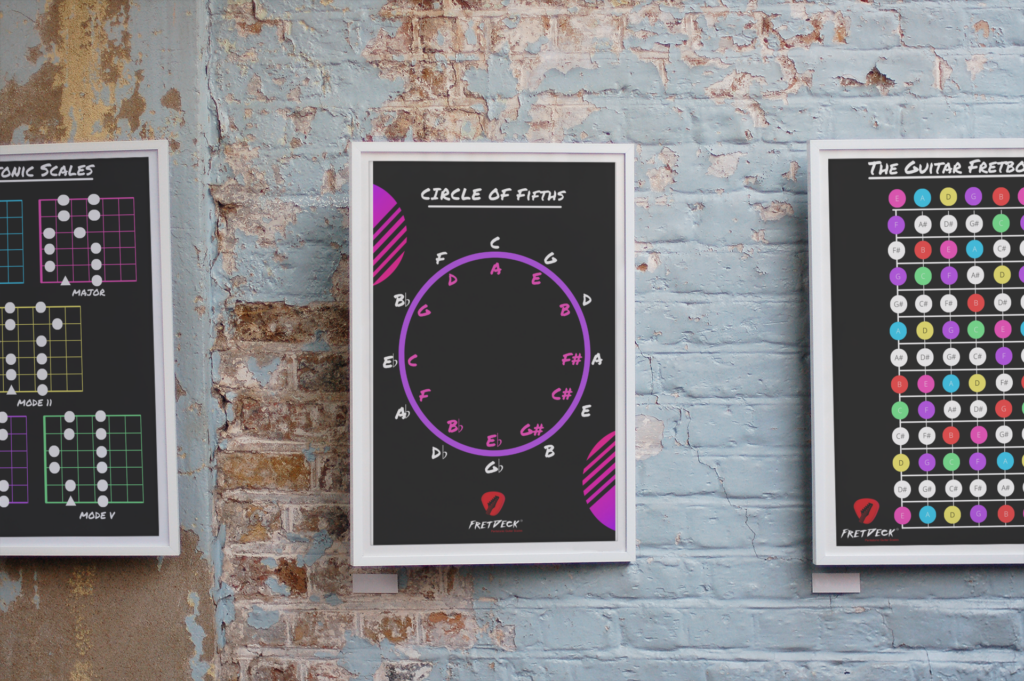
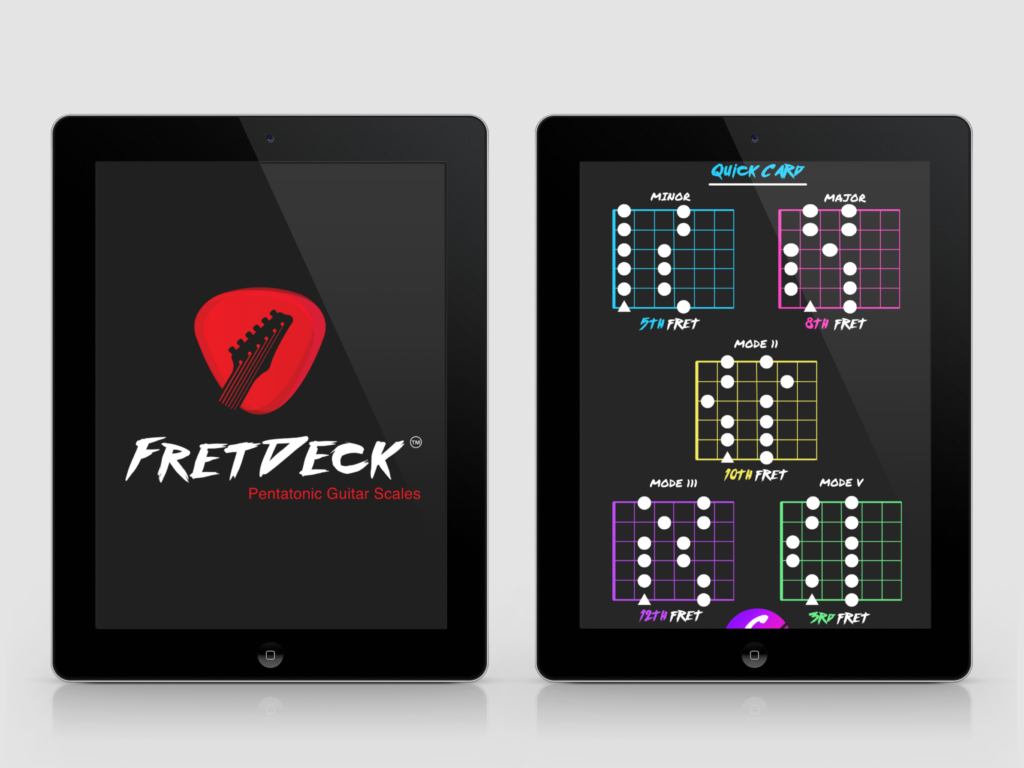
5. Use Creative Practice Tools. Sometimes a chart isn’t enough. Tools like FretDeck, which are physical cards showing scales and chords, can sit right on your music stand, prompting you to try new things and break out of your comfort zone. For a structured approach, follow our guide to the best practice routine.
Following these steps will ensure you’re not just memorizing a guitar scales chart; you’re internalizing the music behind it.
Frequently Asked Questions (FAQ)
What is the easiest guitar scale to learn first?
Without a doubt, the minor pentatonic scale is the easiest and most immediately rewarding scale for beginners. Specifically, its simple 5-note pattern is easy to memorize, and it sounds good over rock, blues, and pop music, making it incredibly fun to practice.
How many guitar scales are there?
There are dozens of common scales (major, minor, pentatonic, blues, harmonic minor, modes) and theoretically infinite variations. However, you should not get overwhelmed by this. You can play 99% of popular music by mastering the major scale, the natural minor scale, and the major and minor pentatonic scales.
Do I need to learn scales to play songs?
No, you can learn to play many songs just by learning the chords and using tabs. However, if you ever want to write your own solos, improvise with other musicians, or understand why certain notes work over certain chords, learning scales is absolutely essential. It’s the difference between copying someone else and creating your own music.
The Simple Guitar Practice System That Eliminates Guesswork
So You Can Stop Stalling… and Start Sounding Better Every Time You Pick Up the Guitar
👉 Get 52 Practice Prompts Now!
The Simple Guitar Practice System That Eliminates Guesswork
So You Can Stop Stalling… and Start Sounding Better Every Time You Pick Up the Guitar
👉 Get 52 Practice Prompts Now!