Have you been searching for the secret to unlocking your guitar playing with major and minor pentatonic scales pdf? You see your guitar heroes gliding across the fretboard, effortlessly weaving between soulful, bluesy licks and bright, uplifting melodies, and you wonder, “How do they do that?”
The truth is, it’s not some unobtainable magic. It’s a system. Specifically, it’s a deep understanding of how the major and minor pentatonic scales relate to each other. For many guitarists, this connection is the missing link that keeps them stuck in a rut, playing the same old box shape over and over again.
You feel that frustration, don’t you? You’ve probably learned the A minor pentatonic “box,” and while it was fun for a while, now every solo starts to sound the same. It’s like you’re trying to paint a masterpiece, but you only have one color.
The Agonizing Sound of Being “Stuck”
You sit down to jam with a backing track. The track is upbeat and happy, but your go-to minor pentatonic licks sound dark, sad, and just… wrong. You try to force them to fit, but it’s a constant battle. As a result, your confidence plummets.
Or perhaps you’re trying to write a solo. You want it to tell a story, with emotional peaks and valleys. However, you feel trapped within those same five notes in that one familiar position. You know there’s more to the fretboard, but it feels like a mysterious, unconquerable territory.
This is the plateau where so many passionate guitar players give up. They believe they simply don’t have the “talent” to break through. But it has nothing to do with talent and everything to do with having the right map.
The Simple Guitar Practice System That Eliminates Guesswork
So You Can Stop Stalling… and Start Sounding Better Every Time You Pick Up the Guitar
👉 Get 52 Practice Prompts Now!
What are Pentatonic Scales, Really?
Let’s quickly demystify the pentatonic scale. The name says it all: “penta” means five, and “tonic” means tone. Therefore, it’s a simple five-note scale. This simplicity is its greatest strength.
By having fewer notes than a full seven-note major or minor scale, it’s much harder to hit a “wrong” note. For example, this makes it an incredible starting point for improvisation. Most of the rock, blues, and pop solos you love are built firmly on a pentatonic foundation.
The most common starting point for guitarists is the minor pentatonic scale. Its formula is Root, flat 3rd, 4th, 5th, and flat 7th. This combination of notes gives it that classic bluesy, somber, or serious sound that works so well in rock and blues music. If you’ve learned any soloing at all, you’ve likely played this scale. For more foundational knowledge, you can always explore some beginner guitar tips to solidify your base.
The major pentatonic scale, on the other hand, has a different mood. Its formula is Root, 2nd, 3rd, 5th, and 6th. You’ll immediately notice it sounds bright, happy, and melodic. It’s the sound of country, classic Southern rock, and cheerful pop melodies. It provides the “happy” color for your musical painting.
The “Aha!” Moment: Connecting Major and Minor
Here comes the secret that will change everything for you. Are you ready?
The A minor pentatonic scale and the C major pentatonic scale use the exact same notes.
Read that again. The same five notes, just starting from a different place.
- A Minor Pentatonic: A, C, D, E, G
- C Major Pentatonic: C, D, E, G, A
This is called a “relative” relationship. C major is the relative major of A minor. This concept is your skeleton key to the entire fretboard. Every minor scale has a relative major, and every major scale has a relative minor.
Think about the most common pentatonic shape you know—the one starting on the 5th fret for A minor. That same shape is also the C major pentatonic scale. The only thing that changes is your “home base” or root note. When you emphasize the ‘A’ notes, it sounds minor. However, when you emphasize the ‘C’ notes within that same pattern, it instantly sounds major.
Suddenly, you don’t have to learn ten new scales. You just have to learn to see the five pentatonic shapes you already know through a new lens. As a result, you can double your vocabulary overnight. The legendary team at Fender has great resources that break these shapes down visually.
The Simple Guitar Practice System That Eliminates Guesswork
So You Can Stop Stalling… and Start Sounding Better Every Time You Pick Up the Guitar
👉 Get 52 Practice Prompts Now!
Unlocking Your Fretboard with Major Minor Pentatonic Scales
Now that you understand the connection, how do you apply it? How do you use major and minor pentatonic scales pdf to create dynamic, emotional solos? It starts with listening.
First, identify the “tonal center” of the song or backing track. Does the chord progression sound happy and upbeat, or dark and bluesy? If the song is in C major, for instance, you can confidently use the C major pentatonic scale across the whole neck to create beautiful, melodic lines.
But what if you want to add some bluesy grit? That’s where the magic happens. You can “borrow” notes from the C minor pentatonic scale. In fact, blending the two is the signature sound of countless legends like B.B. King, Eric Clapton, and Stevie Ray Vaughan. They masterfully switch between major and minor pentatonic phrasing to follow the emotional contour of the music.
This is the true power of mastering major and minor pentatonic scales pdf. You are no longer trapped in one box or one sound. Instead, you become a musical storyteller, able to choose the perfect notes to convey the exact emotion you feel. You can build tension with minor phrases and then resolve it beautifully with a major line.
Beyond the Shapes: Creating the Hybrid Sound
The really fun part begins when you intentionally combine the scales. This is often called the “hybrid” scale approach and it’s the heart of modern blues and rock soloing.
Let’s stick with the key of A. You have your A minor pentatonic (A, C, D, E, G) and you have your A major pentatonic (A, B, C#, E, F#). By mixing them, you get a much larger palette of notes to choose from. A very common technique is to play the A minor pentatonic but add the major third (C#) from the major scale.
This single note, the “sweet note,” adds a whole new dimension. It allows you to play over major chords with a bluesy feel. For example, try playing a standard minor pentatonic lick and then bend the C note up a half-step to a C#. You will instantly recognize that iconic sound. Guitar World often features lessons that dive deep into this exact kind of phrasing.
Ultimately, this is about breaking free from rigid patterns and starting to think about notes and moods. The scales are your guides, not your cages.
5 Practical Steps to Mastery
Ready to put this into practice? Here is a simple, step-by-step routine. Getting better requires a system, and a great resource for this is our guide on the best practice routine for any skill level.
1. Start with One Key. Choose a key like A minor / C major and focus solely on that. Find a backing track in A minor and practice soloing with A minor pentatonic. Then, find a C major backing track and use the exact same shapes you just played, but try to resolve your phrases on C notes. Feel the difference.
2. Learn All Five Shapes. To truly own the fretboard, you need to learn all five pentatonic shapes. More importantly, for each shape, you must identify both the minor root and the relative major root.
3. Use Your Ears. When playing over a song, listen carefully to the chords. When the song hits a major chord, try landing on a note from the major pentatonic scale. When it goes to a minor chord, lean on your minor pentatonic notes. You can find more detail in our chord progression guide.
4. Record Yourself. This is non-negotiable. Record yourself playing over a backing track for two minutes. Listen back critically. You’ll be amazed at what you hear—both the good and the bad—and it will accelerate your progress faster than anything else.
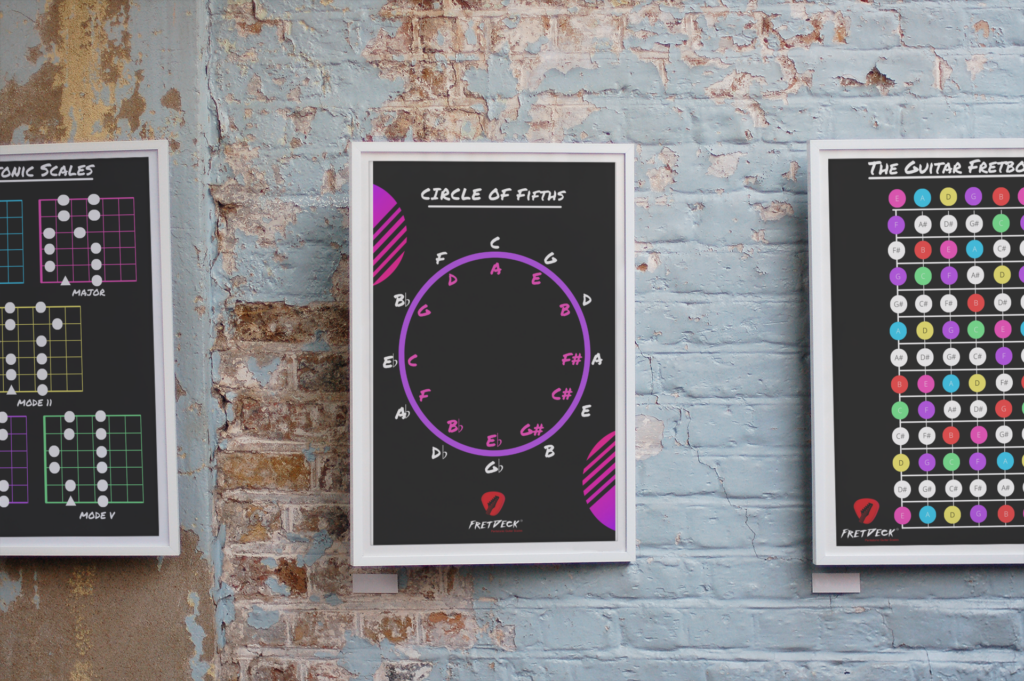
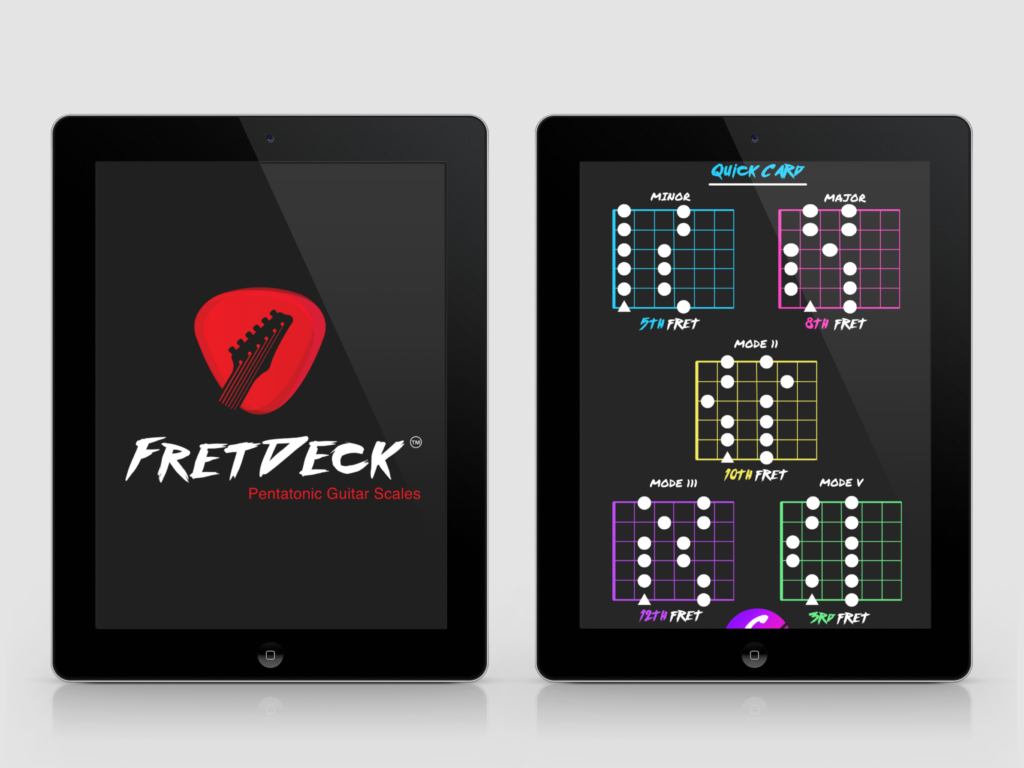
5. Practice with Purpose. Don’t just noodle aimlessly. Use a structured tool to guide you. For example, using a tool like the FretDeck card system can give you specific prompts and exercises to ensure you’re always working on something that makes you better.
This systematic approach is the key to finally connecting the dots between the major and minor pentatonic scales pdf.
Frequently Asked Questions
What’s the biggest difference between the major and minor pentatonic scale?
The primary difference is the mood they create. The minor pentatonic uses a flattened 3rd and 7th degree, giving it a bluesy, sad, or tense sound. The major pentatonic uses a major 3rd and major 6th, which sounds happy, bright, and open. While the shapes can be identical (in the case of relative major/minor), the note you treat as your “home base” or root note determines the overall sound.
Can I really use both major and minor pentatonic scales pdf in the same solo?
Absolutely! This is the secret sauce for most professional blues, rock, and country players. The art is in blending them. A common method is to use the minor pentatonic as your foundation and then “sprinkle in” notes from the major pentatonic (like the major 3rd and major 6th) to add melodic sweetness, especially over major chords. This hybrid approach is what separates intermediate players from advanced ones. We discussed this concept, which shows how you can combine major minor pentatonic scales for a sophisticated sound.
How do I know whether to use a major or minor pentatonic over a chord progression?
First, listen to the overall feel of the track. If it’s a happy pop song in G Major, the G Major pentatonic is your safest and best-sounding bet. If it’s a gritty blues song in E, the E Minor pentatonic will feel right at home. The best improvisers, a goal we cover in our guide to learning guitar scales, learn to switch between them to match the underlying chords as they change, creating a solo that perfectly complements the music.
You now have the map. You have the key. That feeling of being stuck is about to become a distant memory. Now, it’s time to pick up your guitar and unlock the player you were always meant to be. This knowledge of the major and minor pentatonic scales pdf is your path forward.
The Simple Guitar Practice System That Eliminates Guesswork
So You Can Stop Stalling… and Start Sounding Better Every Time You Pick Up the Guitar
👉 Get 52 Practice Prompts Now!