Are you searching for a clear, easy-to-use set of printable beginner guitar scales chart to finally unlock the fretboard? You’ve landed in the right place, because understanding scales is the secret key to going from “person with a guitar” to “guitar player.”
Imagine this for a moment. You pick up your guitar, put on a simple backing track, and your fingers just… know where to go. You aren’t just playing random notes hoping they sound good. Instead, you’re weaving a melody, telling a story, and playing a real guitar solo. That’s the power scales give you.
However, for most beginners, the fretboard looks like an unsolvable puzzle. It’s a confusing grid of 120+ notes, and the thought of improvising feels completely overwhelming. This is where having simple charts you can print and post on your wall becomes a game-changer.
The Simple Guitar Practice System That Eliminates Guesswork
So You Can Stop Stalling… and Start Sounding Better Every Time You Pick Up the Guitar
👉 Get 52 Practice Prompts Now!
Why The Fretboard Feels Like a Mystery
Does this sound familiar? You’ve learned a few chords. Maybe you can even switch between G, C, and D smoothly. But when you hear a killer solo in a song, you feel a mix of awe and frustration. You want to do that, but you have no idea where to even begin.
This feeling of being “stuck” is incredibly common. You noodle around on the high E string, playing notes that sound okay, but you lack the confidence to move around. Consequently, you feel like you aren’t making real progress. It’s the wall almost every aspiring guitarist hits.
The truth is, all your favorite guitar heroes aren’t just randomly guessing. They are using patterns—shapes that their fingers have memorized over thousands of hours of practice. These patterns are called scales. Moreover, learning them is far easier than you think, especially when you have a clear visual guide.
Free Printable Beginner Guitar Scales Chart
This is your roadmap out of the “chord box.” A scale is simply a sequence of notes that sound good when played together. Instead of memorizing individual notes all over the neck, you learn simple, moveable shapes. For example, once you learn one shape, you can move it up and down the neck to play in any key.
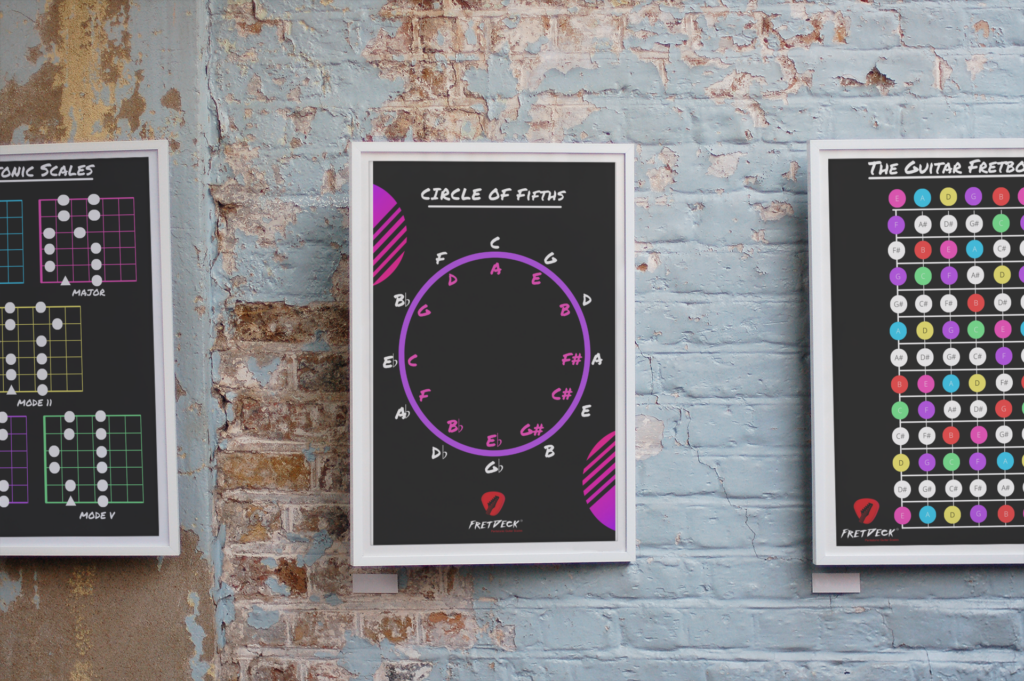
Think of them like stencils. You lay the stencil on the fretboard, and it shows you exactly which frets to press. That’s what our printable beginner guitar scales chart do for you. They remove the guesswork.
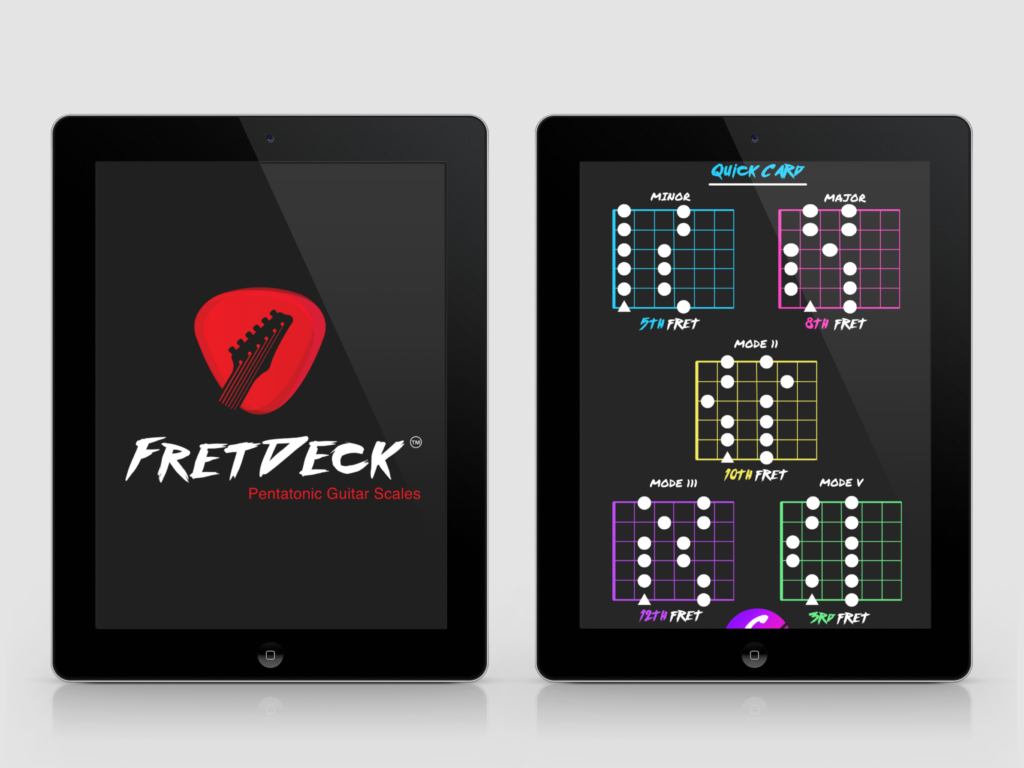
Below are the three most important scales every beginner must know. Don’t try to learn them all at once. Instead, pick one, print it out, and live with it for a week.
As you’ll soon see, these shapes will become second nature. You will begin to see them on the fretboard without even thinking.
The #1 Scale for Every Beginner: The Minor Pentatonic
If you only learn one scale this year, make it this one. The Minor Pentatonic scale is the backbone of blues, rock, pop, and country music. From Slash to B.B. King to David Gilmour, nearly every iconic guitarist uses this scale relentlessly.
Why is it so great for beginners? Because it only has five notes per octave (that’s what “penta” means), so the patterns are simple and easy to remember. Furthermore, every single note in the scale sounds good over a minor chord progression, making it almost impossible to play a “wrong” note. You can explore a lot more about its application on Fender’s official blog.
Here’s the most common shape, known as “Box 1.” The numbers represent which finger to use (1=index, 2=middle, 3=ring, 4=pinky), and the “R” indicates the root note. Let’s look at this shape in the key of A minor, starting on the 5th fret.
- Low E string: Frets 5 (1), 8 (4)
- A string: Frets 5 (1), 7 (3)
- D string: Frets 5 (1), 7 (3)
- G string: Frets 5 (1), 7 (3)
- B string: Frets 5 (1), 8 (4)
- High e string: Frets 5 (1), 8 (4)
See that? It’s a simple, vertical box shape. This is the foundation to so many great solos. For some more fundamental information, our guide on how to learn guitar scales is a perfect next step.
Unlocking Major Keys: The Major Scale
While the Minor Pentatonic is dark and bluesy, the Major Scale is bright, happy, and uplifting. It’s the “Do-Re-Mi-Fa-So-La-Ti-Do” scale you’ve known since you were a kid. As a result, it forms the basis for millions of pop melodies and cheerful rock riffs.
Learning the Major Scale is also your first step toward understanding music theory. It is the yardstick by which all other scales and chords are measured. As you get more advanced, you will discover that understanding the major scale is essential for songwriting and understanding chord construction. For a deep dive into music theory, check out this great resource from Guitar World.
This scale has seven notes, so the pattern is a little more complex. But don’t worry. Here is a very common and easy-to-finger shape for the G Major scale, starting on the 3rd fret.
- Low E string: Frets 3 (2), 5 (4)
- A string: Frets 2 (1), 3 (2), 5 (4)
- D string: Frets 2 (1), 4 (3), 5 (4)
- G string: Frets 2 (1), 4 (3), 5 (4)
- B string: Frets 3 (2), 5 (4)
- High e string: Frets 3 (2), 5 (4)
Notice how this pattern is a bit wider than the pentatonic shape. Practice it slowly until your fingers build muscle memory. That muscle memory is one of the most important beginner guitar tips we can offer.
The Simple Guitar Practice System That Eliminates Guesswork
So You Can Stop Stalling… and Start Sounding Better Every Time You Pick Up the Guitar
👉 Get 52 Practice Prompts Now!
The Feel of the Blues: The Blues Scale
Ready for the secret sauce? The Blues Scale is what gives blues and rock guitar that gritty, soulful, and slightly “dangerous” sound. And here’s the best part: it’s incredibly simple to learn.
Specifically, the Blues Scale is just the Minor Pentatonic scale with one extra note added. This one note, often called the “blue note,” creates a unique tension that sounds amazing. It adds instant flavor and personality to your playing.
Let’s go back to our A Minor Pentatonic scale from before. To turn it into the A Blues Scale, we just add one note.
- Low E string: Frets 5, 8
- A string: Frets 5, 7
- D string: Frets 5, 7
- G string: Frets 5, 6, 7
- B string: Frets 5, 8
- High e string: Frets 5, 8
That one extra note on the G string (the 6th fret) is the magic. When you play your Minor Pentatonic licks, try throwing that note in. As a result, you’ll immediately hear that classic bluesy sound. It’s a small change with a massive impact. These are the kinds of tricks that make using printable beginner guitar scales chart so effective.
From Printing to Playing: Your Action Plan
Knowing the scales is one thing; using them to make music is another. Here is a simple, 5-step process to take these diagrams from paper to performance.
1. Print and Post. Seriously, do this. Print out the one scale you want to focus on this week and tape it to the wall in front of your practice space. Constant visual reinforcement is powerful.
2. Focus on One Shape. Don’t overwhelm yourself. Pick one scale shape, like the Minor Pentatonic Box 1, and work on it exclusively until you can play it up and down without looking at the paper.
3. Use a Metronome. Start slow. Set a metronome to 60 bpm and play one note per click. Your goal is clean, clear notes, not speed. Speed is a byproduct of accuracy. A structured approach is key to a best practice routine.
4. Play Over Music. This is the most important step! Find a “backing track” on YouTube in the correct key (e.g., “A minor backing track”). Now, instead of playing the scale up and down, try to create small melodies using the notes from the scale shape. This is how you learn to improvise.
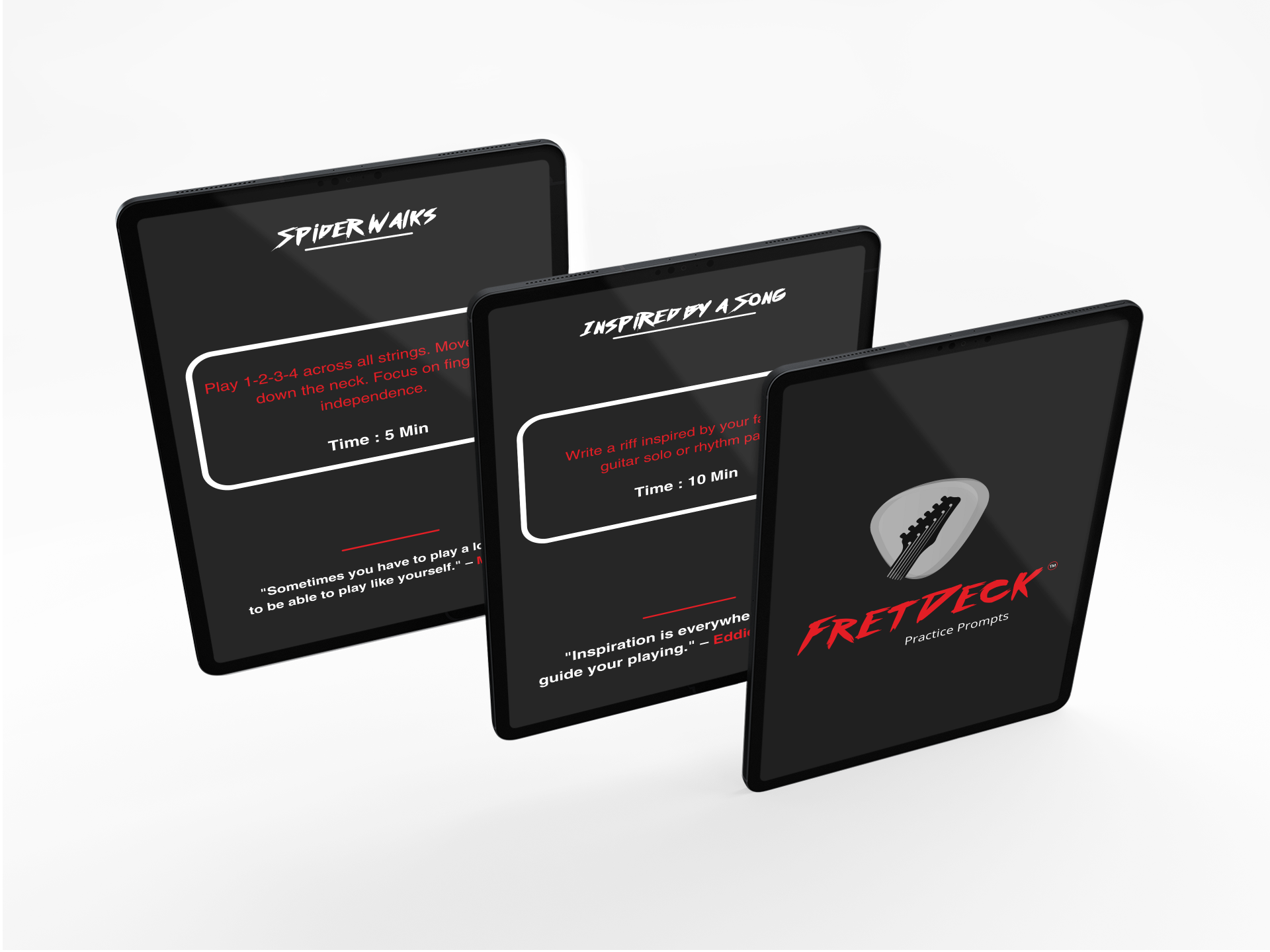
5. Break the Pattern. Don’t just play the scale linearly. Try skipping strings, playing notes in a different order, or repeating a short phrase. Tools like FretDeck offer practice prompts that can help randomize your exercises and build real creativity, preventing you from just running up and down scale boxes.
Frequently Asked Questions
Q: What’s the easiest guitar scale to learn first?
A: Without a doubt, the Minor Pentatonic Scale is the easiest and most useful scale for a beginner. The first “box” pattern is simple to visualize and memorize. Moreover, its universal application in rock and blues means you can immediately start playing along to songs you know and love.
Q: How many scales should a beginner learn?
A: Focus on depth, not breadth. Master the three scales discussed here: the Minor Pentatonic, the Major Scale, and the Blues Scale. Knowing these three patterns inside and out is infinitely more valuable than knowing a dozen scales poorly.
Q: Do I need printable beginner guitar scales chart to learn?
A: While you can learn from videos or apps, having physical printable beginner guitar scales chart offers a unique advantage. It removes the distraction of a screen, allowing you to focus purely on your guitar and the music. A simple printout on your wall is a constant, silent teacher that helps you commit these vital patterns to memory much faster. Therefore, we highly recommend you use our printable beginner guitar scales to accelerate your progress.
The Simple Guitar Practice System That Eliminates Guesswork
So You Can Stop Stalling… and Start Sounding Better Every Time You Pick Up the Guitar
👉 Get 52 Practice Prompts Now!
The Simple Guitar Practice System That Eliminates Guesswork
So You Can Stop Stalling… and Start Sounding Better Every Time You Pick Up the Guitar
👉 Get 52 Practice Prompts Now!