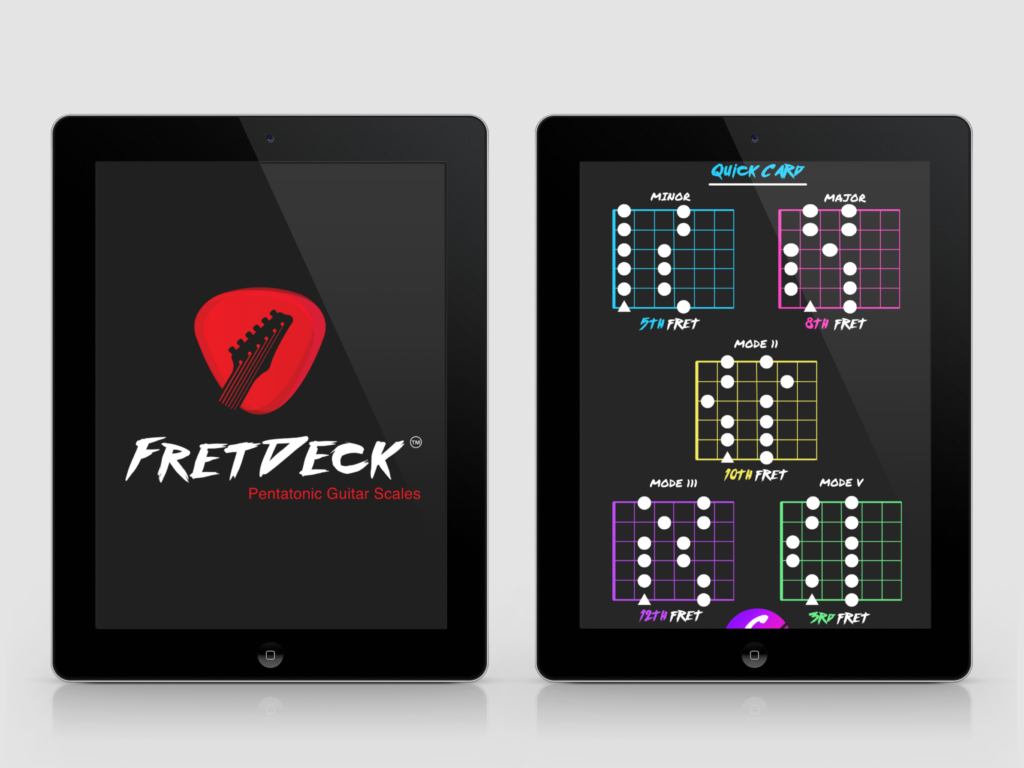


If guitar playing is a language, then the minor pentatonic scale is its most essential vocabulary.
It’s the first scale most players learn—and the last one they ever stop using. From bent blues notes and gritty rock solos to soulful melodies and modern fusion lines, this five-note scale shows up everywhere. It’s simple enough for beginners, deep enough for professionals, and powerful enough to carry an entire career.
This isn’t just another scale lesson. Think of this page as a chapter in a guitar method book—the one you come back to over and over.
In this guide, you’ll discover:
- What makes the minor pentatonic scale so iconic
- How to construct it and visualize it across the entire fretboard
- Phrasing techniques that turn patterns into music
- How the scale works in blues, rock, funk, and fusion
- A focused 30-minute daily practice routine
- How FretDeck™ accelerates everything you’re about to learn
By the end, you won’t just know the minor pentatonic scale—you’ll understand how to use it musically, confidently, and instinctively.
What Is the Minor Pentatonic Scale? (And Why It Works So Well)
Minimal. Melodic. Timeless.
The minor pentatonic scale is built from just five notes:
1 – ♭3 – 4 – 5 – ♭7

That’s it.
And yet, those five tones have shaped more guitar solos than any other scale in history. From early blues players to modern rock icons, this scale became popular not because it’s flashy—but because it works.
In the key of A minor, the notes are:
- A (root)
- C (minor third)
- D (perfect fourth)
- E (perfect fifth)
- G (minor seventh)
This structure creates the perfect balance of tension and release. There are no harsh “wrong” notes. Every tone feels usable. That’s why the minor pentatonic scale sounds good early—and keeps sounding good as your ears mature.
Its simplicity isn’t a limitation. It’s freedom.
Most guitar players don’t need more lessons.
They need a reset.
That’s why I created the FREE 10-Minute Guitar Reset—a simple way to:
Clear fretboard confusion
Connect chords and scales
Practice with confidence
You’ll also get 27 FREE Guitar Charts that make the neck finally make sense.
No fluff.
Just tools that work.
👉 Get the FREE Guitar Reset Charts
The Minor Pentatonic Scale on Guitar: Patterns That Repeat Everywhere
Most guitarists first meet the minor pentatonic scale as a box shape—often in A minor at the 5th fret.
Here’s that classic position:
e|----------------5--8--|
B|-----------5--8-------|
G|--------5--7----------|
D|-----5--7-------------|
A|--5--7----------------|
E|----------------5--8--|
This shape becomes familiar quickly because it’s movable. Slide it up or down the neck and you’ve changed keys instantly.
But here’s the deeper truth:
The minor pentatonic scale isn’t one box—it’s five connected positions that repeat across the fretboard.
Mastery doesn’t come from memorizing all five at once. It comes from owning one position, then learning how it connects to the next. When your fingers stop thinking in boxes and start seeing relationships, the fretboard opens up.
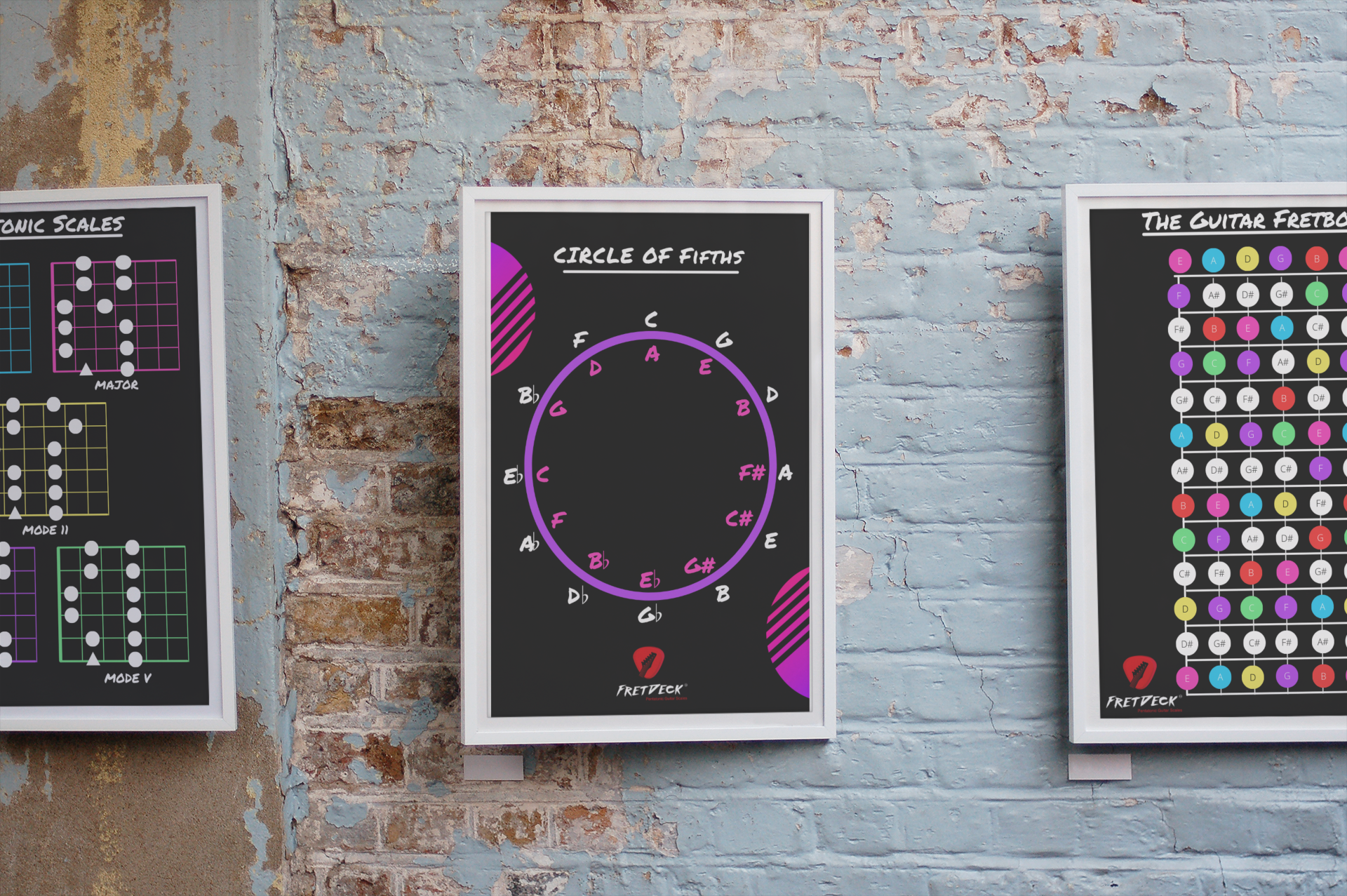
This is where most players stall—and where tools like FretDeck™ help you visualize the entire scale instantly in any key, without mental overload.
Turning Notes into Music: Phrasing with the Minor Pentatonic Scale
Knowing the scale gives you notes.
Phrasing gives you a voice.
Here are five foundational phrasing techniques that transform the minor pentatonic scale from an exercise into music.
1. String Bends
Bends create emotion.
A slow bend on the G string from the minor third toward the fourth can sound like longing, tension, or release—depending on how you shape it.
2. Slides
Slides connect ideas.
Instead of attacking every note, slide into key tones and let phrases breathe.
3. Double-Stops
Two notes at once add instant weight.
Try adjacent strings within the scale and bend one while holding the other—classic blues and soul vocabulary.
4. Vibrato
Vibrato is where personality lives.
A great vibrato can make a single note more powerful than a fast run.
5. Call and Response
Treat your solo like a conversation.
Play a short phrase, pause, then answer it with variation. Space is part of the music.
These techniques are why the minor pentatonic scale never gets old—your touch keeps changing, even when the notes stay the same.
How the Minor Pentatonic Scale Works Across Styles
One reason the minor pentatonic scale is so valuable is its versatility. The same five notes adapt to different genres simply by how you phrase them.
Blues
The scale’s natural home.
Focus on bends, vibrato, and call-and-response phrasing over dominant chords.
Rock
Turn up the aggression.
Use wider bends, higher register notes, and stronger rhythmic attacks.
Funk & R&B
Think rhythm first.
Short phrases, muted notes, and tight timing matter more than speed.
Americana & Roots
Keep it tasteful.
Use slides, open strings, and space to let the melody speak.
Fusion & Modern Styles
Superimpose the minor pentatonic over extended or modal harmony for tension and color.
This adaptability is why great players don’t abandon the minor pentatonic scale as they advance—they reinterpret it.
Most guitar players don’t need more lessons.
They need a reset.
That’s why I created the FREE 10-Minute Guitar Reset—a simple way to:
Clear fretboard confusion
Connect chords and scales
Practice with confidence
You’ll also get 27 FREE Guitar Charts that make the neck finally make sense.
No fluff.
Just tools that work.
👉 Get the FREE Guitar Reset Charts
A 30-Minute Daily Practice Routine That Actually Works
You don’t need hours. You need intention.
Here’s a simple routine that builds technique, ear training, and musical confidence:
5 Minutes – Warm-Up
Light chromatic movement and hammer-ons within one pentatonic position.
7 Minutes – Position Focus
Play one minor pentatonic box slowly. Hear each note’s function.
7 Minutes – Phrasing Practice
Spend one minute each on:
- Bends
- Slides
- Double-stops
- Vibrato
- Call-and-response
5 Minutes – Ear Training
Play two scale tones and identify the interval by ear.
6 Minutes – Improvisation
Jam freely. Record yourself. Listen back.
Repeat this routine 3–5 times per week. Within a month, your playing will feel more intentional—and more yours.
Accelerating the Process with FretDeck™
You can piece all this together slowly from random videos.
Or you can use a system built specifically for fretboard mastery.
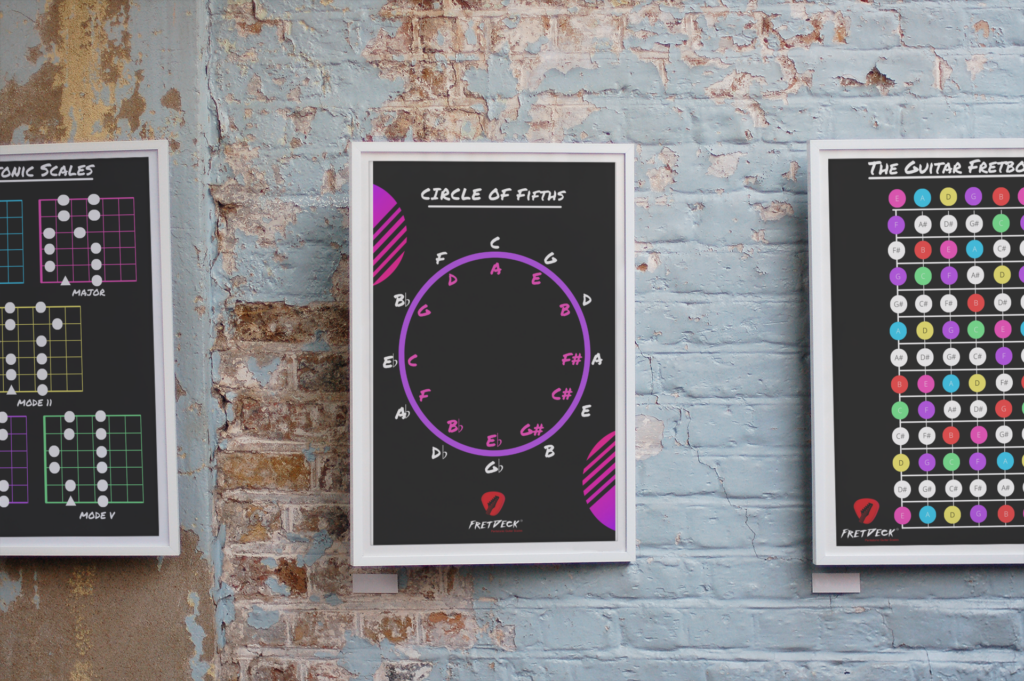
FretDeck™ is a visual, tactile learning tool designed to help guitarists:
- See every minor pentatonic position instantly
- Practice musical prompts instead of mechanical drills
- Connect scales across the neck without guesswork
- Build confidence through repetition and clarity
It’s not about learning more scales—it’s about owning the one that matters most.
Final Thought: Why the Minor Pentatonic Scale Never Leaves You
Here’s the truth most guitarists eventually discover:
You don’t need dozens of scales.
You need one scale, deeply understood.
The minor pentatonic scale grows with you.
It adapts to your taste, your ears, and your musical goals.
Master it slowly. Phrase it intentionally. Return to it often.
It will always be there—waiting for your next idea.
Useful Internal Link
Want to move beyond a single position and truly unlock the neck?
👉 How to Master the Guitar Fretboard Fast
Most guitar players don’t need more lessons.
They need a reset.
That’s why I created the FREE 10-Minute Guitar Reset—a simple way to:
Clear fretboard confusion
Connect chords and scales
Practice with confidence
You’ll also get 27 FREE Guitar Charts that make the neck finally make sense.
No fluff.
Just tools that work.
👉 Get the FREE Guitar Reset Charts
Related posts: