
guitar scale chart gets frustrating when every lesson feels like another loose page on the floor.
You try one thing on Monday, another thing on Wednesday, and by the weekend your hands are moving but your brain still feels lost. However, the problem is not your effort. The problem is that you are trying to stop guessing and start seeing real movement on the guitar.
Here is the tiny shift: stop collecting guitar advice like spare picks. Start running everything through one simple map.
Why guitar scale chart Feels Harder Than It Should
Most players do not fail because they are lazy. They fail because their practice has no sequence.
Specifically, they learn a shape, memorize a lick, watch a video, download a chart, and hope it all connects later. It rarely does. Therefore, guitar scale chart starts to feel like a pile of disconnected facts instead of a path.
The right book, PDF, or worksheet can change that fast. A strong resource gives you a trail to follow. However, you still need a system that tells you what to notice, what to repeat, and what to ignore.
This is the heart of mastering guitar scale chart — and most guitarists never get it.
Free Book: “Fret Logic” — Master the Fretboard Without Memorizing a Single Shape
Before we go any further, grab my free book Fret Logic — it’s the shortcut I wish I had when I was stuck staring at the neck wondering where the next note was.

Inside, you’ll learn the simple visual system that turns the fretboard from a confusing grid into a map you can actually see. No theory degree required. No boring drills. Just clarity.
👉 Download “Fret Logic” FREE here
What If You Could See the Fretboard Instead of Just Memorizing It?
Most guitarists spend years guessing where to put their fingers. They memorize shapes without understanding why — and the second they try to improvise or learn a new song, they’re lost again.
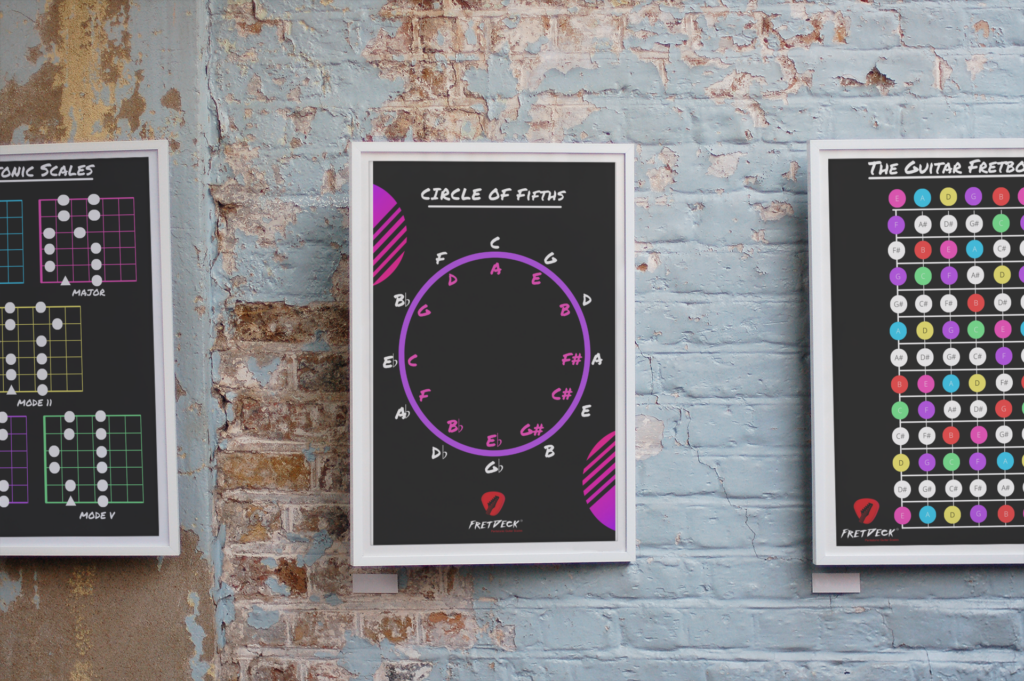
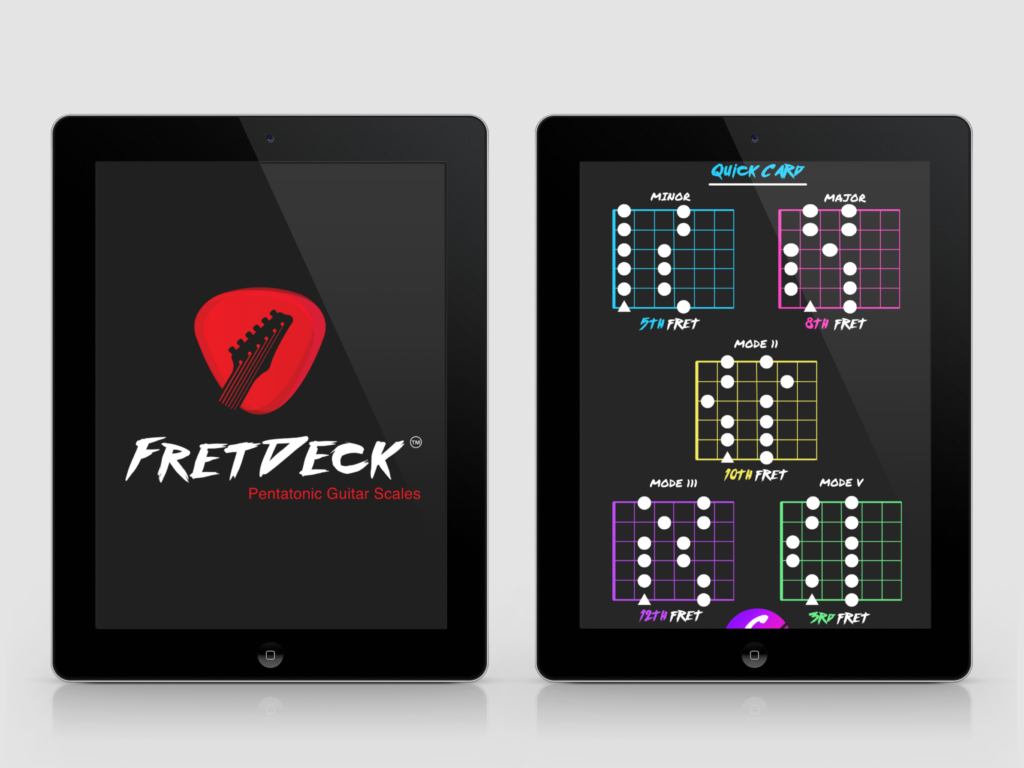
The FretDeck Practice Workstation changes that. It’s the interactive fretboard app that shows you exactly what to play, why it works, and how every note connects — so you finally understand the guitar instead of just copying tabs.
Whether you’re stuck in a rut, tired of noodling the same pentatonic box, or ready to unlock the entire neck — the FretDeck Practice Workstation gives you the visual roadmap to get there. All for just $14/month.
👉 Start Using the FretDeck Practice Workstation Now
The Small guitar scale chart Shift That Changes Everything
Here is the part most players miss: guitar scale chart is not really about stuffing more information into your head.
It is about building recognition. For example, if you can see where the root note lives, the chord shape stops feeling random. Moreover, if you can connect that root to the scale around it, your practice starts paying you back.
That is why a clear visual system beats scattered practice. You are not trying to become a theory professor. You are trying to make the fretboard feel less like a maze.
Keep that in mind every time you sit down to work on guitar scale chart.
Read this alongside beginner guitar tips if you need a simple starting point. Then pair it with a best practice routine so the idea turns into reps.
The Fret Logic Way To Make It Click
Fret Logic works because it gives your eyes a job before your fingers panic.
Instead of trying to memorize every possible pattern, you learn to spot relationships. As a result, guitar scale chart becomes less about guessing and more about seeing where the next note wants to go.
This is exactly why guitar books and PDFs are still powerful. The right one slows the chaos down. Specifically, Fret Logic gives you a visual map you can return to every time a lesson gets confusing.
If you want more scale context, use this with learn guitar scales. For broader authority reading, compare ideas from Guitar World and Premier Guitar.
And that is exactly why guitar scale chart feels so different once it clicks.
What If You Could See the Fretboard Instead of Just Memorizing It?
Most guitarists spend years guessing where to put their fingers. They memorize shapes without understanding why — and the second they try to improvise or learn a new song, they’re lost again.
The FretDeck Practice Workstation changes that. It’s the interactive fretboard app that shows you exactly what to play, why it works, and how every note connects — so you finally understand the guitar instead of just copying tabs.
Whether you’re stuck in a rut, tired of noodling the same pentatonic box, or ready to unlock the entire neck — the FretDeck Practice Workstation gives you the visual roadmap to get there. All for just $14/month.
👉 Start Using the FretDeck Practice Workstation Now
A Simple Practice Plan For guitar scale chart
Do not make this complicated. Complicated plans feel impressive, but simple plans get repeated.
1. Pick one tiny target for the day. 2. Find the root note before you play anything. 3. Say the note name out loud. 4. Play slowly enough to notice mistakes. 5. Repeat the same move in two keys. 6. Write down the one thing that finally made sense.
Furthermore, keep your sessions short. Ten focused minutes can beat an hour of wandering. The truth is, guitar scale chart rewards consistency over intensity.
If you remember nothing else about guitar scale chart, remember that.
Common Mistakes That Keep Players Stuck
The first mistake is chasing variety too early. Variety feels productive, but it often hides confusion.
The second mistake is practicing shapes without context. However, a shape only matters when you know what it is doing over a chord.
The third mistake is quitting a good resource too soon. A useful book or PDF needs repetition. Therefore, work one page until it becomes obvious under your fingers.
For chord context, bookmark this chord progression guide. Then come back to Fret Logic when you need the map to make sense.
FAQ
Is guitar scale chart good for beginners?
Yes. guitar scale chart is best for beginners when it is tied to one simple visual system. Otherwise, it can feel bigger than it really is.
How long should I practice this each day?
Start with ten focused minutes. Specifically, repeat one small move until it feels obvious before adding more.
Should I use a guitar book or an app?
Use both if they help you see the same idea clearly. A great book like Fret Logic gives you the map, and an app like FretDeck helps you test it in motion.
What If You Could See the Fretboard Instead of Just Memorizing It?
Most guitarists spend years guessing where to put their fingers. They memorize shapes without understanding why — and the second they try to improvise or learn a new song, they’re lost again.
The FretDeck Practice Workstation changes that. It’s the interactive fretboard app that shows you exactly what to play, why it works, and how every note connects — so you finally understand the guitar instead of just copying tabs.
Whether you’re stuck in a rut, tired of noodling the same pentatonic box, or ready to unlock the entire neck — the FretDeck Practice Workstation gives you the visual roadmap to get there. All for just $14/month.
👉 Start Using the FretDeck Practice Workstation Now
Related posts: