

Your search for the best apps for guitar chords probably feels like an endless scroll through the app store. You download one, poke at a few digital diagrams, learn a G chord you already knew, and then delete it a week later. Sound familiar? It’s a frustrating cycle that leaves you with a phone full of forgotten apps and no real progress on the fretboard.
You see flashy ads promising you’ll “master guitar in 7 days.” However, most apps are just glorified digital chord books. They show you the “what” (where to put your fingers) but never the “why” (how that chord connects to anything else). As a result, you’re left memorizing isolated shapes instead of truly understanding the language of music.
The truth is, most guitarists use these apps all wrong. They hunt for a single chord, find it, play it, and close the app. This is like using a dictionary to learn a new language one word at a time. You’ll never become fluent that way. You need context, connection, and a system.
The Endless Cycle of Chord Chart Apps
This vicious cycle is the biggest roadblock for aspiring players. You download an app hoping for a breakthrough. Instead, you get a static library of chord shapes. You can look up C Major, A minor, and G7, but you have no idea how they work together.
Consequently, your playing gets stuck in a rut. You noodle the same few chords you’re comfortable with. When you try to learn a new song, you hit a wall the second an unfamiliar chord like F#m7b5 appears. You scramble for your phone, look up the shape, awkwardly contort your fingers, and then promptly forget it.
This isn’t learning; it’s just-in-time lookup. It creates a dependency on the app without building any real, intuitive fretboard knowledge. You’re not building a mental map of the neck. Instead, you’re just renting directions to a single location, one trip at a time. It’s exhausting, and it’s why so many guitarists quit in frustration.
What If You Could See the Fretboard Instead of Just Memorizing It?
Most guitarists spend years guessing where to put their fingers. They memorize shapes without understanding why — and the second they try to improvise or learn a new song, they’re lost again.
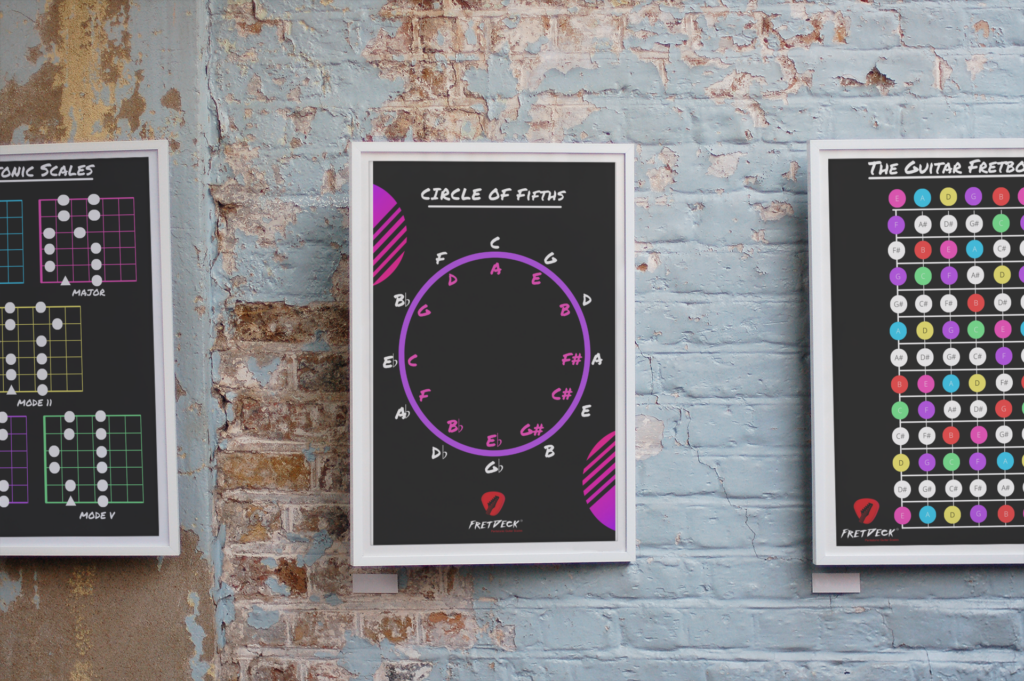
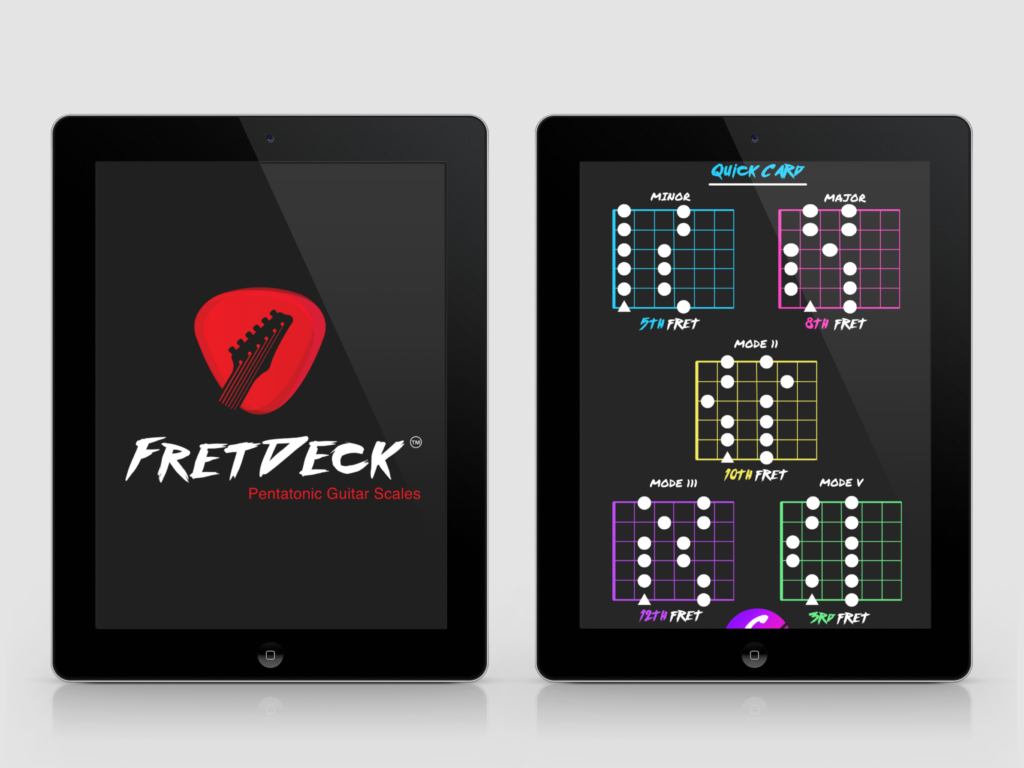
The FretDeck Practice Workstation changes that. It’s the interactive fretboard app that shows you exactly what to play, why it works, and how every note connects — so you finally understand the guitar instead of just copying tabs.

Whether you’re stuck in a rut, tired of noodling the same pentatonic box, or ready to unlock the entire neck — the FretDeck Practice Workstation gives you the visual roadmap to get there. All for just $14/month.
👉 Start Using the FretDeck Practice Workstation Now
Truth #1: Great Apps Teach Context, Not Just Shapes
The first secret the pros know is that a chord is meaningless in isolation. A C Major chord is just three notes. But knowing that it’s the “I” chord in the key of C, the “IV” chord in the key of G, and the “V” chord in the key of F—that’s where the magic happens.
A top-tier app doesn’t just show you a diagram. It shows you the chord’s function. For example, it will show you other chords that sound great with it. It connects the shape you’re learning to the scale it comes from. This is a fundamental concept many beginners miss, but you can get ahead by focusing on it early with the right tools. For more on this, check out our guide to learning guitar scales.
Therefore, when you evaluate an app, ask yourself this: does it help you build musical sentences, or does it just give you individual words? Look for features like “chords in key” or “progression builders.” These tools transform a static chart into a dynamic music theory lesson without the boring textbook feel.
Truth #2: The best apps for guitar chords Are Interactive
Static chord charts are dead. Why stare at a JPG of a chord when modern technology can do so much more? The most effective apps create a feedback loop that accelerates your learning.
Interactivity can mean many things. Some apps use your phone’s microphone to listen to you play, telling you if you’ve fretted the chord correctly. Others, like the popular Ultimate Guitar, feature interactive tabs that play along with you, so you can hear the chord in the context of the song. Moreover, this kind of audio-visual connection is crucial for training your ear.
The next level of interaction is a visual fretboard that responds to your touch. It allows you to tap a note and see all its locations, or select a scale and see every chord that can be built from it. This turns the fretboard from a mysterious block of wood into a logical, explorable map. As experts at Guitar World often note, visualization is key to breaking out of box patterns.
What If You Could See the Fretboard Instead of Just Memorizing It?
Most guitarists spend years guessing where to put their fingers. They memorize shapes without understanding why — and the second they try to improvise or learn a new song, they’re lost again.
The FretDeck Practice Workstation changes that. It’s the interactive fretboard app that shows you exactly what to play, why it works, and how every note connects — so you finally understand the guitar instead of just copying tabs.
Whether you’re stuck in a rut, tired of noodling the same pentatonic box, or ready to unlock the entire neck — the FretDeck Practice Workstation gives you the visual roadmap to get there. All for just $14/month.
👉 Start Using the FretDeck Practice Workstation Now
Truth #3: A Chord Finder Is Not a Practice Tool
This is the most common trap. You think you need a chord finder, but what you actually need is a practice partner. A finder is passive. A practice tool is active. It guides you.
A simple finder app is useful for that one-off moment you need to look up a chord. However, it does nothing to improve your playing over the long term. A true practice tool helps you structure your time effectively. It forces you to engage, to recall information, and to apply it. The search for the best apps for guitar chords should really be a search for the best practice systems.
For example, a great app will have a feature for building and saving chord progressions. You can then use this to practice your changes, work on your timing, and internalize how chords flow into one another. This is far more valuable than just looking up a shape. This deliberate practice is the core of any best practice routine.
Truth #4: Customization Changes Everything
One-size-fits-all learning doesn’t work for guitar. Your goals are unique, and your app should adapt to you, not the other way around. The ability to customize your experience is a hallmark of a truly powerful learning tool.
What does this look like? It means being able to save the specific chord voicings you’re working on. It means creating your own library of songs and progressions that are relevant to your musical taste. Instead of being stuck with “Twinkle, Twinkle, Little Star,” you can build a practice list of your favorite punk, blues, or pop songs.
Furthermore, apps like the FretDeck workstation allow you to highlight specific intervals or notes across the entire fretboard, tailoring the visual information to the exact concept you’re trying to master. This turns the app into a personal guitar lab. Looking for more info on building your own songs? Our chord progression guide is the perfect place to start.
Truth #5: The Goal Is To Outgrow The App
Here’s the biggest truth of all: the best apps for guitar chords are the ones you eventually don’t need. Their purpose isn’t to be a permanent crutch. Their purpose is to install the fretboard map directly into your brain.
Think of it like learning to ride a bike with training wheels. The training wheels are essential at first. They provide stability and build confidence. But the goal is always to take them off. A great app functions the same way. It provides the structure and visual aids you need until the patterns, shapes, and theory become second nature.
A legendary player from Fender’s artist roster doesn’t pull out their phone to find a G chord. The knowledge is ingrained. That should be your goal, too. Use the app as a deliberate tool to build that internal knowledge, not as a shortcut to avoid building it.
How to Choose The Right Chord App For You
Navigating the crowded market for chord apps can be tough. Your search for the best apps for guitar chords will be much easier if you follow a clear strategy. Use this simple checklist to make the right choice.
1. Define Your Primary Goal. Are you trying to learn songs, understand theory, or write your own music? Your goal determines which features matter most. Be specific. Don’t just look for “an app to learn chords.” Look for “an app to practice switching between barre chords for my favorite rock songs.”
2. Prioritize Interactivity and Feedback. Avoid static libraries. Look for apps that listen to you, play along with you, or allow you to explore the fretboard visually. This active engagement is what makes knowledge stick.
3. Look for a Progression Builder. This is a non-negotiable feature. The ability to create, save, and practice sequences of chords is how you move from being a “chord player” to a “song player.”
4. Check for a Clean User Interface. A cluttered, confusing app will just add to your frustration. The tool should get out of your way and let you focus on the guitar. If you can’t figure it out in five minutes, delete it.
5. Read Recent Reviews, Not Just Ratings. Pay attention to what users are saying about the latest updates. A great app from two years ago might be a buggy mess today. Look for reviews from users who sound like they have similar goals to you and see what they praise or criticize. Finding the best apps for guitar chords often means listening to the community.
Frequently Asked Questions (FAQ)
Are free chord apps good enough?
For absolute beginners, a free app can be a decent starting point to learn basic open chords. However, they are almost always limited. They often lack the interactive features, progression builders, and deep theoretical context that truly accelerate learning. Many are also filled with intrusive ads that disrupt your practice flow. Think of free apps as a quick test drive; you’ll likely need to upgrade to a premium tool for the real journey. These are rarely the best apps for guitar chords in the long run.
What’s the difference between a chord app and a tab app?
A dedicated chord app focuses on teaching you the chords themselves—their shapes, the notes they contain, and how they function in theory. A tab app (like Ultimate Guitar or Songsterr) is primarily for learning specific songs via tablature. While most tab apps include chord diagrams, their main purpose is song-learning. A great chord app is more of a theory and practice tool, while a tab app is a performance tool. Many players benefit from using both. For foundational skills, start with these beginner guitar tips.
Can an app really replace a guitar teacher for learning chords?
An app is a powerful supplement, but it cannot fully replace a great teacher. A teacher can provide personalized feedback on your technique, posture, and rhythm that an app simply can’t see. However, a high-quality app can be an incredible practice partner between lessons. It can help you drill chords, understand theory, and explore musical ideas on your own time, making your lessons with a human teacher even more productive.
What If You Could See the Fretboard Instead of Just Memorizing It?
Most guitarists spend years guessing where to put their fingers. They memorize shapes without understanding why — and the second they try to improvise or learn a new song, they’re lost again.
The FretDeck Practice Workstation changes that. It’s the interactive fretboard app that shows you exactly what to play, why it works, and how every note connects — so you finally understand the guitar instead of just copying tabs.
Whether you’re stuck in a rut, tired of noodling the same pentatonic box, or ready to unlock the entire neck — the FretDeck Practice Workstation gives you the visual roadmap to get there. All for just $14/month.
👉 Start Using the FretDeck Practice Workstation Now
Related posts: