If you’re desperately searching for the best way to learn pentatonic scales, you’ve landed in the right place. You’ve probably memorized a shape or two, but when it comes time to actually make music, it sounds more like a robotic exercise than a soaring guitar solo.
You run up and down the box, hitting all the “right” notes, but it feels empty. Lifeless. You listen to your heroes—Clapton, Page, King, Mayer—and wonder, “How do they get so much out of the same scale?”
The truth is, memorizing shapes is not the path. It’s just the first, tiny step on a much bigger journey. Let’s uncover the secret language of the pentatonic scale that turns players from students into storytellers.
The “Pentatonic Box” Prison
Does this sound familiar? You learned the A minor pentatonic scale, position one. Know it like the back of your hand. You can play it fast, slow, forwards, and backward.
But whenever a jam track in A minor comes on, you immediately jump to the 5th fret. You play the same licks you always play. Trapped, a prisoner in a six-string cage of your own making.
Sometimes you try to move to another part of the neck and it all falls apart. You hit wrong notes. You lose your place. It’s frustrating and discouraging. As a result, you retreat back to the safety of your box, feeling stuck and wondering if you’ll ever break free. This is the opposite of the best way to learn pentatonic scales; it’s a recipe for burnout.
The Simple Guitar Practice System That Eliminates Guesswork
So You Can Stop Stalling… and Start Sounding Better Every Time You Pick Up the Guitar
👉 Get 52 Practice Prompts Now!
Step 1: Learn the Five Shapes (But Not How You Think)
Yes, you need to know the five pentatonic positions. There’s no escaping it. But how you learn them makes all the difference. Stop thinking of them as five separate, isolated boxes. Instead, see them as interconnected neighborhoods in one big city that covers the entire fretboard.
First, you need a clear map of these five shapes. This is a foundational step, and you can find a deep dive on our guide to learning guitar scales. The goal isn’t just to memorize each shape individually. The goal is to see how they connect.
For example, notice that the top notes of Shape 1 become the bottom notes of Shape 2. The top notes of Shape 2 become the bottom notes of Shape 3, and so on. They overlap. They are one continuous scale.
Practice transitioning between them slowly. Don’t shred. Instead, play up Shape 1 and slide into the corresponding position in Shape 2. Play down Shape 2 and slide back into Shape 1. Do this for all five shapes until they feel less like boxes and more like a single, connected freeway.
The Best Way Learn Pentatonic Is Musically, Not Mechanically
Here’s the core secret. The single biggest mistake guitarists make is practicing scales without musical context. Running patterns is a finger exercise, not a musical one. The real best way to learn pentatonic scales is to make it sing.
How do you do that? You have to understand what’s happening underneath your solo. Specifically, you need to be aware of the chords. The pentatonic scale will sound good over a whole progression, but it sounds great when you emphasize notes that align with the current chord. These are called chord tones.
For example, in a simple A minor, D minor, E minor progression, you can use the A minor pentatonic scale over all of it. However, when the song moves to the D minor chord, if you land on a D note, your ear will perceive a powerful sense of resolution. That’s musicality. You can learn more about this concept in our chord progression guide.
Therefore, start practicing over simple backing tracks. Don’t just noodle. Try to end your phrases on a note that is in the chord being played. This simple shift in focus will transform your playing from aimless wandering to intentional, melodic statements.
The Simple Guitar Practice System That Eliminates Guesswork
So You Can Stop Stalling… and Start Sounding Better Every Time You Pick Up the Guitar
👉 Get 52 Practice Prompts Now!
Step 2: Break Free With Melodic Patterns and Phrasing
Now that you see the fretboard as one big, connected scale and you understand how to play with musical context, it’s time to add the fire. It’s time to learn the language of phrasing.
Phrasing is what separates the masters from the students. It’s the bending, sliding, vibrato, and rests that give the notes emotion and personality. A blues legend can bring a tear to your eye with just three notes, because of how they play them. This is the difference between speaking words and delivering a powerful speech.
Start incorporating these techniques into your scale practice:
- Bends: Bend from one scale tone up to another. This adds a vocal-like quality.
- Slides: Instead of picking every note, slide between them. This connects your ideas smoothly.
- Hammer-ons & Pull-offs: These techniques allow you to play faster, more fluid lines without picking every note.
- Vibrato: Don’t just let a note sit there. Give it life with a tasteful vibrato.
Rests: The notes you don’t* play are just as important as the ones you do. Leave space. Let your phrases breathe.
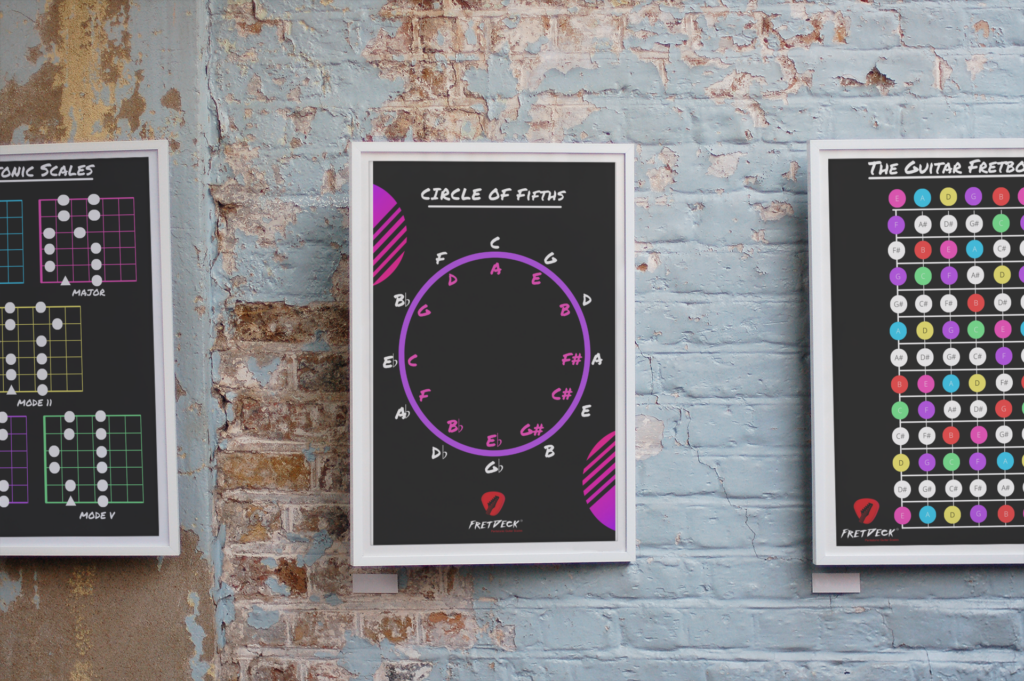
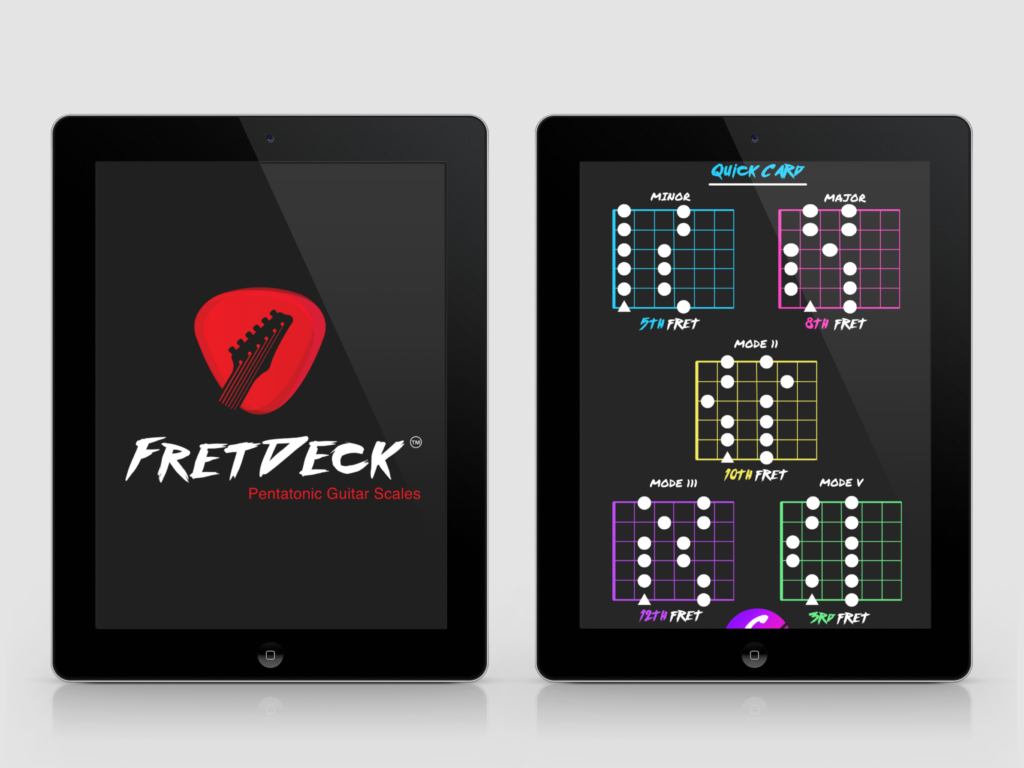
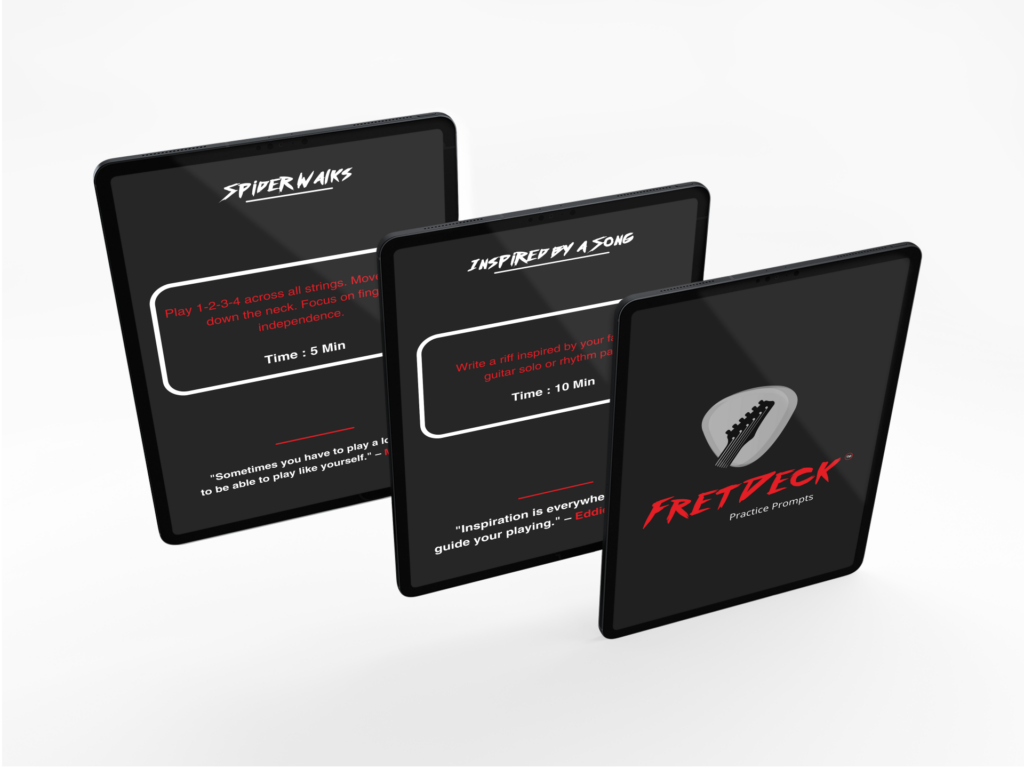
To get ideas for melodic patterns, you can use practice tools like the FretDeck card system, which gives you specific, musical prompts. Furthermore, you can find incredible lessons on phrasing from world-class players on sites like Guitar World.
The key is to think in short musical sentences, not long, rambling paragraphs of notes.
7 Practical Tips to Master the Pentatonic Scale
Let’s distill this down into an actionable practice plan. A consistent and focused approach is everything. Moreover, integrating these ideas into your best practice routine will yield massive results.
1. Hum Your Solos First. Before you play a note, try humming a simple melody over the backing track. This forces you to think musically first, then find the notes on the fretboard. It connects your ear to your fingers.
2. Steal Licks from the Greats. No one creates in a vacuum. Learn one short lick from your favorite guitarist each week. Analyze it. Why does it work? What techniques are they using? Sites like Fender’s blog often break down the styles of legendary players.
3. Use a Looper Pedal. Record a simple two-chord progression and practice soloing over it. This provides instant feedback and allows you to focus solely on your phrasing and melodic choices.
4. Focus on One Shape Per Week. While the goal is to connect them all, deep-dive into one shape at a time. Spend a week trying to create as much music as possible within the confines of just one position. You’ll be amazed at what you discover.
5. Connect Shapes With Slides. Make this a dedicated exercise. Play a short phrase in one position, and then slide up or down the same string into the next position to continue the phrase. This is the glue that holds everything together.
6. Target the Chord Tones. Put on a backing track and consciously try to land on the root note of each chord as it changes. This single exercise will do more for your musicality than hours of mindless shredding.
7. Combine Vertical and Horizontal Playing. Don’t just play up and down a box (vertical). Try creating melodies that move across the fretboard on one or two strings (horizontal). This is a crucial element and a key part of the best way to learn pentatonic scales for creating memorable hooks.
Frequently Asked Questions
What’s the difference between major and minor pentatonic?
The major and minor pentatonic scales are relatives. They actually use the exact same notes and shapes! The only difference is the “root note” or tonal center. For example, the A minor pentatonic scale uses the same notes as the C major pentatonic scale. The scale you use depends on whether the underlying chord progression has a major or minor feel.
How long does it take to learn the pentatonic scale?
You can memorize the first shape in an afternoon. You can probably memorize all five shapes in a week. However, truly learning the scale—internalizing it, connecting it to your ear, and using it to create compelling music—is a lifelong journey. But with the right approach, you can start sounding musical within a few weeks of dedicated practice. Remember, this isn’t a race.
Can I use the minor pentatonic over a major chord?
Absolutely! This is the foundation of the blues. Playing the minor pentatonic scale over a major or dominant chord progression creates that classic, bluesy tension. For example, playing A minor pentatonic over an A7 chord is the bread and butter of countless blues, rock, and country songs. This is a powerful concept that adds instant attitude to your playing. Finding the best way to learn pentatonic scales involves understanding these “rule-breaking” applications.
The Simple Guitar Practice System That Eliminates Guesswork
So You Can Stop Stalling… and Start Sounding Better Every Time You Pick Up the Guitar
👉 Get 52 Practice Prompts Now!