

You’ve typed “guitar learning app download” into your search bar, ready to finally master the guitar. That first step, the download itself, is the easy part; however, what happens next is what separates players who quit in six months from those who unlock the entire fretboard. There’s a weird shortcut pros use that has nothing to do with playing faster or memorizing more songs.
It’s a fundamental shift in how you see the instrument itself. Most beginners get stuck chasing points and streaks inside an app, treating the guitar like a video game. As a result, they never develop the one skill that actually matters: understanding the musical map beneath their fingers.
This guide will expose that shortcut. We’ll show you how to turn your app from a simple taskmaster into a powerful tool for genuine musical fluency. Forget just copying what’s on the screen; you’re about to learn how to think like a musician.
The Familiar Trap: Gamified Progress, Real-World Stall-Out
You found the perfect app. You completed your guitar learning app download. You even practiced for ten days straight and earned a digital badge. It feels like you’re making incredible progress, right?
However, a nagging feeling starts to creep in. You pick up your guitar without the app, and your mind goes blank. You can play the three chords from the app’s version of “Horse with No Name,” but you have no idea how to use those chords in another song. You try to improvise a little, and it sounds like a cat walking on a piano.
This is the gamification trap. Many apps are designed to keep you engaged with points, streaks, and achievements. While these are motivating, they often reward rote memorization instead of true comprehension. You learn what to play, but not why you’re playing it.
Consequently, your skills become trapped inside the app’s ecosystem. You become a master at following on-screen instructions but remain a beginner in the real world of music. This disconnect is incredibly frustrating and a primary reason so many aspiring guitarists burn out.
What If You Could See the Fretboard Instead of Just Memorizing It?
Most guitarists spend years guessing where to put their fingers. They memorize shapes without understanding why — and the second they try to improvise or learn a new song, they’re lost again.

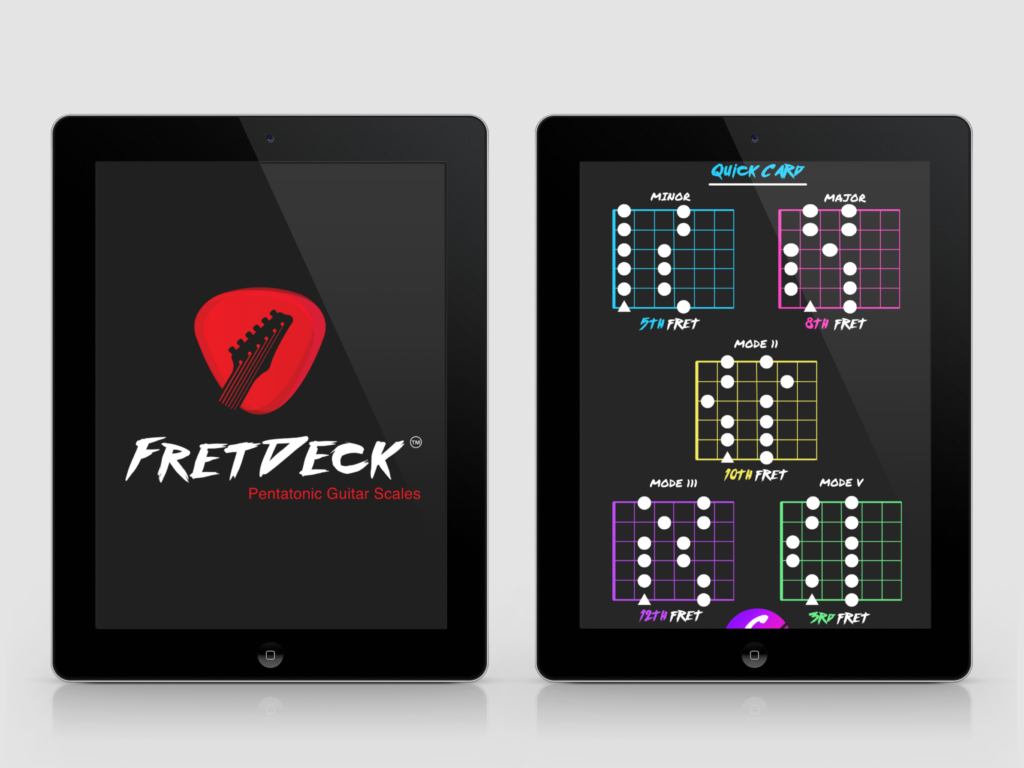
The FretDeck Practice Workstation changes that. It’s the interactive fretboard app that shows you exactly what to play, why it works, and how every note connects — so you finally understand the guitar instead of just copying tabs.
Whether you’re stuck in a rut, tired of noodling the same pentatonic box, or ready to unlock the entire neck — the FretDeck Practice Workstation gives you the visual roadmap to get there. All for just $14/month.
👉 Start Using the FretDeck Practice Workstation Now
The Pro’s Secret: Learning Visually, Not Just Mechanically
So, what’s the shortcut? It’s shifting your focus from mechanical repetition to visual understanding. Instead of just memorizing finger patterns, you need to start seeing the fretboard as a coherent map of notes, intervals, and patterns.
Think about it this way: learning a song from an app is like following GPS directions to a single location. It gets you there, but you don’t learn the layout of the city. If the GPS fails, you’re lost.
Conversely, visual learning is like studying the city map. You start to understand how the streets connect, where the neighborhoods are, and how to find shortcuts. Suddenly, you can navigate anywhere you want without turn-by-turn instructions. On the guitar, this means seeing how a C major scale connects to a G major scale or how an A minor chord shape can be moved up the neck.
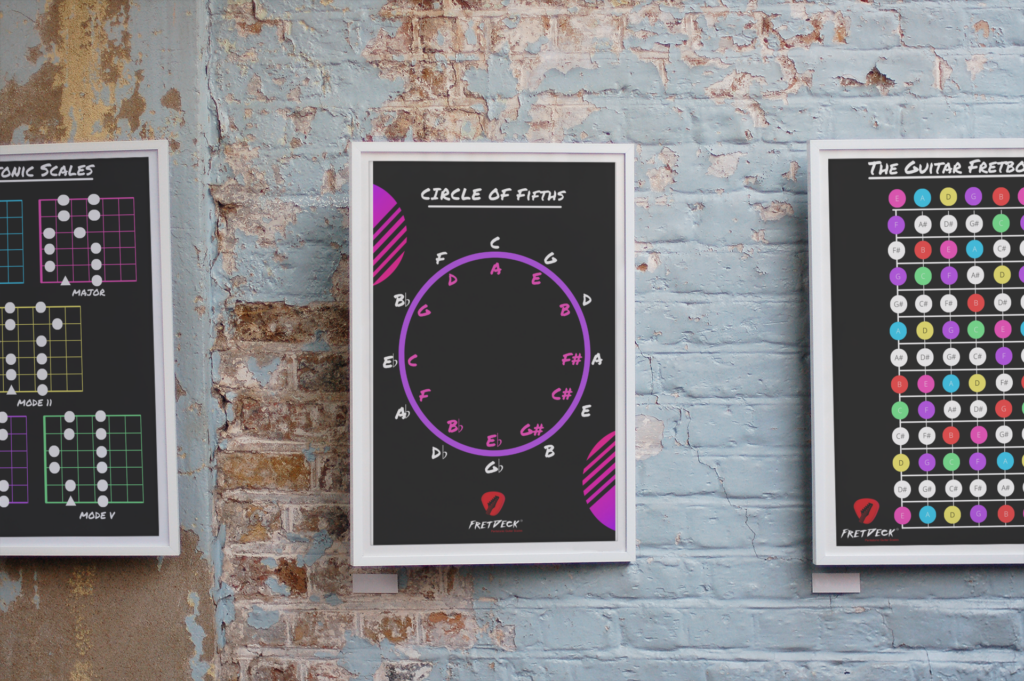
Tools designed for this purpose, like the FretDeck system, prioritize this visual connection over simple memorization. They help you see the relationships between notes across the entire fretboard. For example, instead of just learning one pentatonic “box,” you begin to see how all five boxes connect into a single, seamless pattern. This is the key to breaking free from predictable noodling.
Connecting Dots, Not Just Playing Them
This visual approach fundamentally changes how you practice. An exercise is no longer just a finger dexterity drill. Instead, it becomes a tool for mapping the fretboard.
For instance, when you practice scales, don’t just run them up and down. Focus on the intervals—the distance between the notes. Say the name of each note as you play it. Identify the root, the third, and the fifth. An excellent article on Guitar World breaks down several methods for fretboard memorization that go beyond simple drills.
Suddenly, you’re not just playing a scale; you’re internalizing the musical DNA of that scale. You’re connecting the dots. This is precisely why understanding how to learn guitar scales is about more than just speed; it’s about unlocking creative freedom.
This same principle applies to chords. Instead of just memorizing a G chord, see it as a collection of three notes: G, B, and D. Then, find those three notes elsewhere on the neck. You’ve just discovered a new way to play a G chord—an inversion. You are now creating music, not just copying it.
What If You Could See the Fretboard Instead of Just Memorizing It?
Most guitarists spend years guessing where to put their fingers. They memorize shapes without understanding why — and the second they try to improvise or learn a new song, they’re lost again.
The FretDeck Practice Workstation changes that. It’s the interactive fretboard app that shows you exactly what to play, why it works, and how every note connects — so you finally understand the guitar instead of just copying tabs.
Whether you’re stuck in a rut, tired of noodling the same pentatonic box, or ready to unlock the entire neck — the FretDeck Practice Workstation gives you the visual roadmap to get there. All for just $14/month.
👉 Start Using the FretDeck Practice Workstation Now
Why Your guitar learning app download Demands a Better Practice Loop
Your guitar learning app download is not the destination; it’s the starting line. To make it truly effective, you must integrate it into a structured, visual-first practice loop. Simply opening the app and following along for 20 minutes a day isn’t enough to build lasting skill.
A powerful practice loop consists of three phases: Learn, Apply, and Create.
1. Learn: Use your app to learn a new concept. This could be a new chord, a scale pattern, or a short lick. This is the information-gathering phase.
2. Apply: Immediately take that concept outside the app. If you learned a new chord progression, find a simple song that uses it. You can find excellent play-along tracks on sites like Fender Play. This step bridges the gap between the digital and physical worlds.
3. Create: Now, experiment with the concept. If you learned a scale, try improvising with it over a backing track. If you learned a new chord, try writing a simple melody over it. This is where true understanding is forged.
This loop forces you to move beyond passive learning. It makes every guitar learning app download more valuable because the app becomes a springboard for real musical application, not a closed-off game. Integrating it into your best practice routine ensures you are always growing.

5 Actionable Steps to Take After Your App Download
Ready to put this shortcut into action? Here are five practical steps to implement immediately after your next practice session.
1. Define a Micro-Goal. Don’s just “practice guitar.” Instead, set a tiny, specific goal like, “I will learn the four chords to ‘Let It Be’ and play them smoothly by Sunday.” This provides focus.
2. Schedule 10 Minutes of “Map-Making.” Dedicate ten minutes of every practice session purely to fretboard visualization. Don’t try to play fast. Just find all the ‘C’ notes on the neck, or trace the A minor pentatonic scale across three strings.
3. Take the App’s Lesson to a Real Song. Did your app teach you the Em-G-D-A progression? Great. Now go to a tab site, find a song with that progression, and try to play along. This is a critical step many players skip. These beginner guitar tips can help you navigate tabs more effectively.
4. Record Yourself (Audio Only). Once a week, record yourself playing something without the app. Don’t worry about mistakes. The goal is to hear what you actually sound like and identify where the app’s lessons aren’t translating.
5. Use It or Lose It. Take the single most important thing you learned—a lick, a chord, a concept—and use it in some form of improvisation or songwriting within 24 hours. A powerful chord progression guide can give you endless ideas for this.
FAQ: Making Your Guitar App Work For You
Still have questions? Here are some quick answers to common concerns about learning guitar with an app.
How long does it take to learn guitar with an app?
It varies wildly. If you only follow the app, you might learn a few songs in months but struggle to play outside of that context. However, if you use the visual learning method described here, you can start feeling creatively confident in as little as 3-6 months. Consistency is more important than session length.
Can a guitar learning app replace a real teacher?
An app is a fantastic supplement but a poor replacement. A great app provides structured content and immediate feedback, but a human teacher can spot bad habits in your posture or technique, tailor lessons to your specific goals, and answer nuanced questions. Use your app for daily practice and consider a teacher for periodic check-ins. A successful journey often involves a quality guitar learning app download paired with occasional expert guidance.
What’s the biggest mistake beginners make with guitar apps?
The biggest mistake is confusing app progress with musical progress. Racking up a 100-day streak is great for motivation, but it’s meaningless if you can’t pick up your guitar and play something original or jam with a friend. Always prioritize applying what you learn in a real musical context. The app is the gym; jamming and songwriting is the actual sport.
What If You Could See the Fretboard Instead of Just Memorizing It?
Most guitarists spend years guessing where to put their fingers. They memorize shapes without understanding why — and the second they try to improvise or learn a new song, they’re lost again.
The FretDeck Practice Workstation changes that. It’s the interactive fretboard app that shows you exactly what to play, why it works, and how every note connects — so you finally understand the guitar instead of just copying tabs.
Whether you’re stuck in a rut, tired of noodling the same pentatonic box, or ready to unlock the entire neck — the FretDeck Practice Workstation gives you the visual roadmap to get there. All for just $14/month.
👉 Start Using the FretDeck Practice Workstation Now
Related posts: