
Everything you’ve been told about finding the perfect beginner electric guitar app is probably wrong. You’ve been programmed to look for the app with the most songs, the flashiest interface, or the one that promises to make you a rock god overnight.
But here’s the secret the app stores won’t tell you: most of those apps are digital junk food. They give you a quick hit of satisfaction but leave you musically malnourished. They’re designed to keep you tapping, not to make you a real guitarist.
This guide is different. We’re going to shred the myths and expose what actually matters when choosing a tool that will either build your skills or bankrupt your motivation.
The App Store Graveyard: Why Most Guitar Apps Fail You
You download a hot new app with five-star reviews. For the first two days, you’re hooked. You play a simplified version of “Smoke on the Water” and the app throws digital confetti at you. It feels great.
Then, reality hits. The “lessons” are just glorified follow-the-bouncing-ball games. The song library is full of weird, unrecognizable backing tracks. You aren’t actually learning how to play; you’re just learning how to play the app’s game.
As a result, you get stuck. You can’t take what you “learned” and apply it to a real song with your friends. You can’t improvise a solo or understand why certain chords sound good together. The app has become a crutch, and soon, it joins the dozens of other forgotten icons on your phone’s last screen—a digital tombstone for your rock and roll dreams.
The problem is that these apps prioritize engagement over education. They teach you to memorize patterns without understanding the underlying theory. This is the fastest path to frustration and, ultimately, quitting.
What If You Could See the Fretboard Instead of Just Memorizing It?
Most guitarists spend years guessing where to put their fingers. They memorize shapes without understanding why — and the second they try to improvise or learn a new song, they’re lost again.

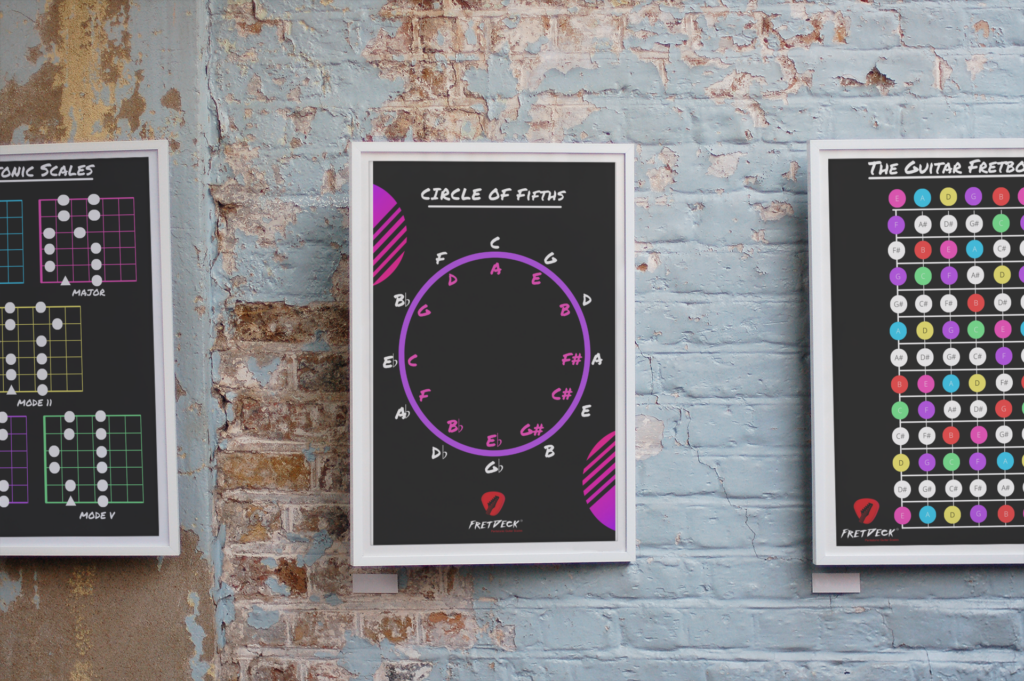
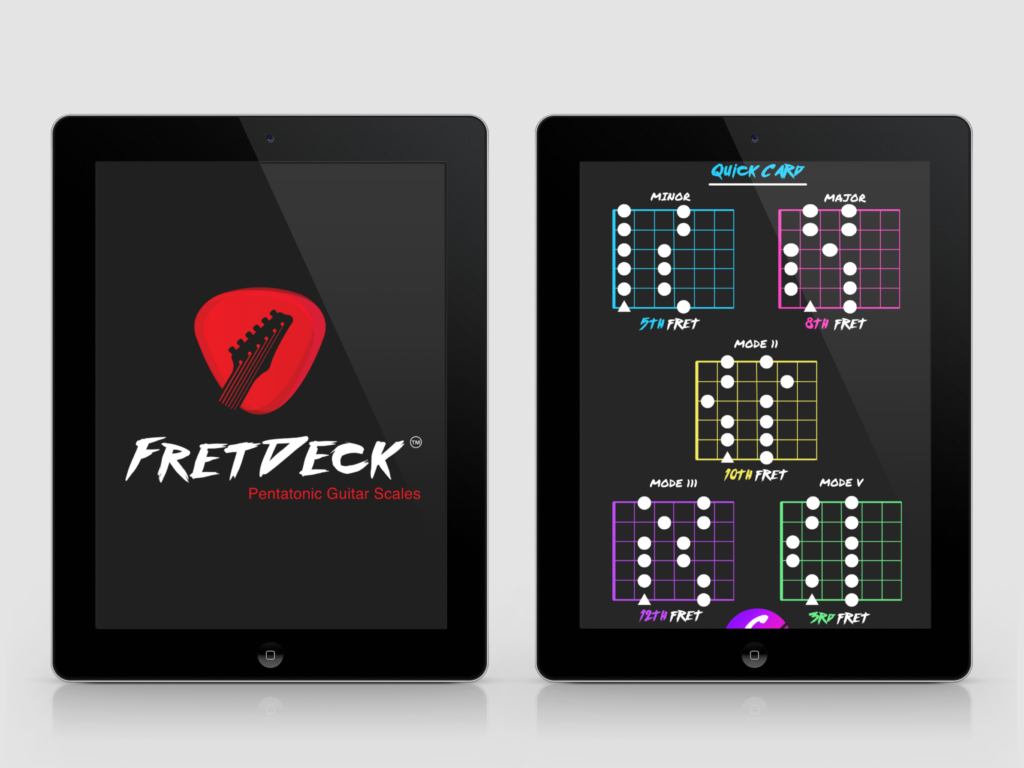
The FretDeck Practice Workstation changes that. It’s the interactive fretboard app that shows you exactly what to play, why it works, and how every note connects — so you finally understand the guitar instead of just copying tabs.
Whether you’re stuck in a rut, tired of noodling the same pentatonic box, or ready to unlock the entire neck — the FretDeck Practice Workstation gives you the visual roadmap to get there. All for just $14/month.
👉 Start Using the FretDeck Practice Workstation Now
The Feedback Loop: The Non-Negotiable App Feature
The single biggest difference between a useful app and a useless one is feedback. An app that just shows you a video or a tab chart is no better than a book. It’s a one-way conversation.

However, a modern beginner electric guitar app uses your device’s microphone to listen to you play. It tells you in real-time if you’re playing the right note, if your timing is off, or if that string is buzzing because your finger is in the wrong place.
This is the game-changer. This immediate, unbiased feedback is like having a patient instructor available 24/7. It accelerates your learning curve exponentially because you correct mistakes the moment you make them, before they become bad habits.
For example, services like Fender Play (which Fender.com promotes heavily) build their entire platform around this concept. They guide you through a lesson, and the technology verifies you’re playing it correctly before you move on. Without this feature, you’re just guessing.
Therefore, when you evaluate any app, your first question should be: “Does it listen to me?” If the answer is no, delete it and move on.
What Makes a beginner electric guitar app Truly Effective?
Beyond the essential feedback loop, several key components separate a top-tier learning tool from an overhyped beginner electric guitar app. A great app isn’t just one thing; it’s a complete ecosystem for your development.
Specifically, it should combine three core pillars: a structured path, practical application, and targeted skill drills.
First, a structured curriculum is non-negotiable. Noodling aimlessly through a giant song library is a recipe for disaster. A quality app should guide you from holding the pick correctly to playing your first barre chords and beyond. This path provides a clear sense of progress and ensures you’re not missing foundational skills. For more on this, check out our guide to building the best practice routine.
Second, it must focus on practical application—playing real songs. The theory is useless if you can’t use it. The app should have a robust library of popular songs, broken down into manageable pieces. This proves that the scales and chords you’re learning have a real-world purpose, which is a massive motivator.
Finally, it needs dedicated tools for technique. This includes things like a metronome for timing, backing tracks for improvisation, and specific drills for things like scales and arpeggios. These are the gym workouts that build your musical muscles. Tools like the FretDeck practice workstation are specifically designed to help you visualize and understand these concepts, moving you beyond simple memorization.
A solid beginner electric guitar app should feel less like a game and more like a comprehensive digital mentor.
What If You Could See the Fretboard Instead of Just Memorizing It?
Most guitarists spend years guessing where to put their fingers. They memorize shapes without understanding why — and the second they try to improvise or learn a new song, they’re lost again.
The FretDeck Practice Workstation changes that. It’s the interactive fretboard app that shows you exactly what to play, why it works, and how every note connects — so you finally understand the guitar instead of just copying tabs.
Whether you’re stuck in a rut, tired of noodling the same pentatonic box, or ready to unlock the entire neck — the FretDeck Practice Workstation gives you the visual roadmap to get there. All for just $14/month.
👉 Start Using the FretDeck Practice Workstation Now
How to Choose Your App and Actually Stick With It
Knowing what to look for is only half the battle. Now you need a strategy to pick the right app and integrate it into your life. Follow these steps to avoid wasting time and money.
1. Define Your Goal First
Don’t just search for “guitar app.” Get specific. Is your goal to learn campfire songs, shred metal solos, or write your own music? Your goal dictates the right tool. An app focused on country chicken-pickin’ won’t help you with drop-tuned riffs. Be honest about what you want to achieve before you even open the app store.
2. Abuse the Free Trial
Never, ever pay for an app upfront. Every reputable service offers a free trial period, typically from 7 to 14 days. Use this time ruthlessly. Test the lesson structure, see if you like the instructors, and check if their song library excites you. If you’re not genuinely excited by day three, cancel and try another.
3. Integrate It Into Your Routine
An app is useless if you don’t use it. The key is to schedule it. Don’t wait for inspiration to strike. Put “15 minutes of guitar app” on your calendar every single day. Making it a non-negotiable part of your daily beginner guitar tips is the only way to build momentum.
4. Supplement, Don’t Replace
Remember, an app is a tool, not the entire toolbox. Use it for structured lessons and feedback, but also spend time just playing. Put on a backing track and try to apply the scales you’ve learned. Try to figure out a song by ear. As Guitar World often advises, a mix of structured practice and creative play is the fastest way to improve. An app is there to guide your practice, not to be your only interaction with the instrument.
Frequently Asked Questions
### Can an app really replace a human teacher?
For motivation, accountability, and nuanced feedback, a great human teacher is unbeatable. However, an app provides 24/7 access to structured lessons and instant feedback on your playing, often for a fraction of the cost. The best approach for many beginners is to use an app for daily practice and supplement with a human teacher for monthly check-ins.
### How much should I pay for a beginner guitar app?
You should expect to pay a subscription fee, typically between $10 and $20 per month. Free apps are almost always a waste of time, filled with ads and lacking a structured curriculum. Any app charging significantly more than $20/month should be viewed with skepticism unless it offers truly unique, one-on-one features. Think of it as less than the cost of a single half-hour lesson.
### What’s the difference between a tuner app and a lesson app?
A tuner app does one thing: it helps you get your guitar in tune. It’s an essential utility, but it doesn’t teach you anything. A lesson app is a comprehensive platform with video lessons, song tutorials, practice exercises, and feedback technology to help you learn guitar scales and techniques. You need a tuner, but you learn with a lesson app.
What If You Could See the Fretboard Instead of Just Memorizing It?
Most guitarists spend years guessing where to put their fingers. They memorize shapes without understanding why — and the second they try to improvise or learn a new song, they’re lost again.
The FretDeck Practice Workstation changes that. It’s the interactive fretboard app that shows you exactly what to play, why it works, and how every note connects — so you finally understand the guitar instead of just copying tabs.
Whether you’re stuck in a rut, tired of noodling the same pentatonic box, or ready to unlock the entire neck — the FretDeck Practice Workstation gives you the visual roadmap to get there. All for just $14/month.
👉 Start Using the FretDeck Practice Workstation Now
Related posts: