
You downloaded every free guitar chords chart printable on the internet, didn’t you? Yet, the promise of easy learning feels just as far away as when you started. It’s a familiar story.
You have folders full of PDFs. Your screen is cluttered with JPEGs of every chord variation from A to Gsus4. However, when you pick up your guitar, your fingers still feel clumsy and your brain feels stuck. The connection between the dots on the page and the music in your head just isn’t happening.
Why Your Pile of Chord Charts Is a Trap
The problem isn’t your motivation. The problem is the approach. Most guitarists think that having more information is the key to getting better. They believe that if they just find the right chart, everything will magically fall into place.
This is a dangerous trap. A big list of chord shapes is just data. It isn’t knowledge. It teaches you what to play, but it never explains why. As a result, you memorize isolated shapes without understanding how they connect. You can’t see the patterns. You can’t build your own chord progressions. You’re just a glorified shape-copying machine.
Furthermore, this method creates immense frustration. Every new song feels like starting from scratch because you can’t see the common threads between them. Eventually, you hit a wall, and the guitar starts gathering dust. It’s not that you can’t learn; it’s that the tool you’re using is fundamentally broken for true musical understanding.
What If You Could See the Fretboard Instead of Just Memorizing It?
Most guitarists spend years guessing where to put their fingers. They memorize shapes without understanding why — and the second they try to improvise or learn a new song, they’re lost again.
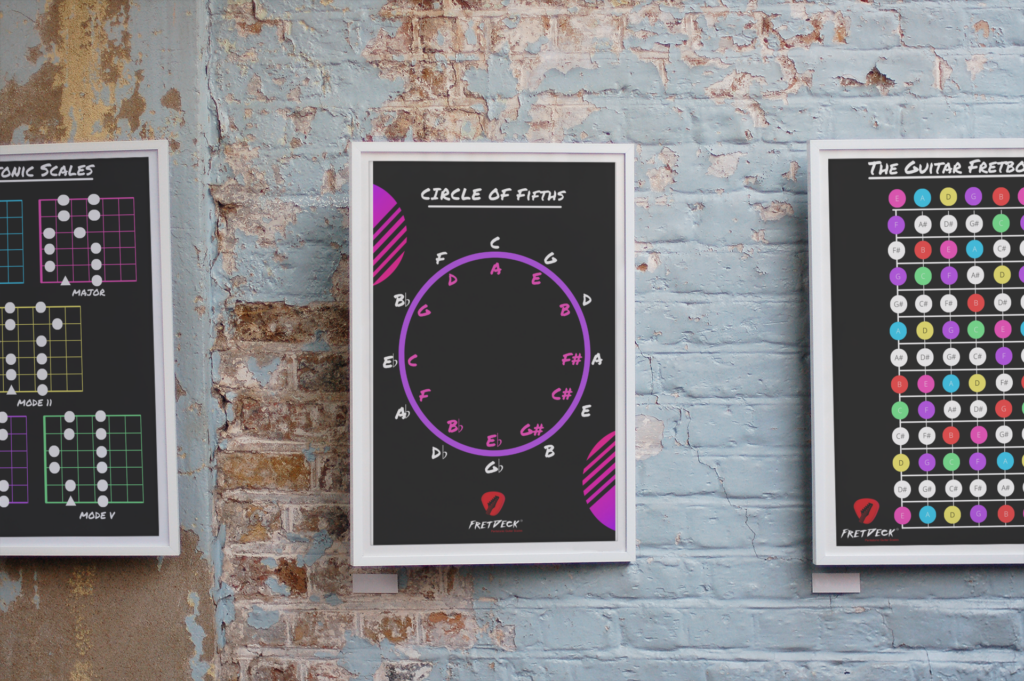
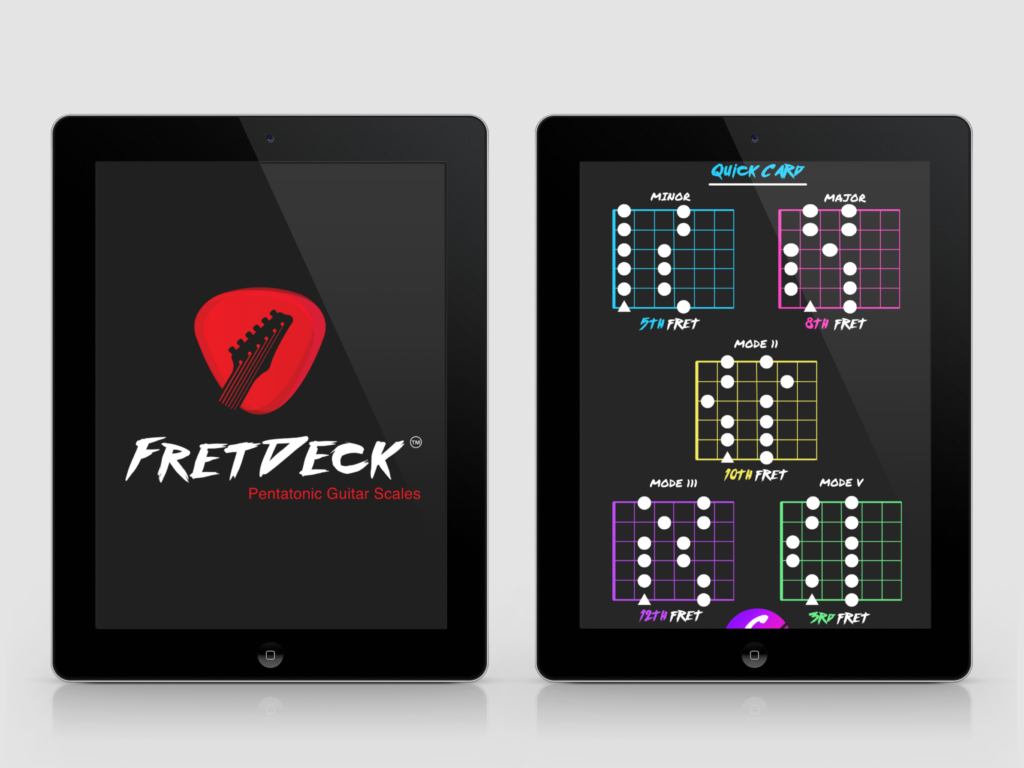
The FretDeck Practice Workstation changes that. It’s the interactive fretboard app that shows you exactly what to play, why it works, and how every note connects — so you finally understand the guitar instead of just copying tabs.
Whether you’re stuck in a rut, tired of noodling the same pentatonic box, or ready to unlock the entire neck — the FretDeck Practice Workstation gives you the visual roadmap to get there. All for just $14/month.

👉 Start Using the FretDeck Practice Workstation Now
The Tiny Shift: Moving From “What” to “Why”
Here is the one tiny shift that changes everything. Stop asking, “What shape do I make?” Instead, start asking, “Why does this shape make this chord?” The difference is profound.
A chord isn’t a random collection of dots on a grid. It’s a specific combination of notes. For example, a C Major chord is made of three notes: C, E, and G. Any time you combine those three notes anywhere on the fretboard, you are playing a C Major chord. The standard open C shape is just one way to do it.
When this clicks, the entire neck opens up. You stop seeing hundreds of disconnected shapes to memorize. Instead, you begin to see a logical system of notes. This insight is the foundation for everything more advanced: improvising, writing your own music, and learning songs by ear. For instance, innovative visual tools like the FretDeck system are built on this very principle of understanding note relationships, not just memorizing finger placements.
This mindset shift makes your practice time exponentially more effective. Now, every time you learn a new chord, you aren’t just learning a shape. You are learning a piece of the musical puzzle. In fact, this is one of the most powerful beginner guitar tips we can offer.

Your Actionable free guitar chords chart Blueprint
So, does this mean you should throw all your charts away? Not at all. It means you need to use a better type of chart and a better method. We’re not going for a giant, overwhelming poster. We’re going for a lean, actionable, and printable free guitar chords chart printable that focuses on the essentials.
Forget the 1,001 obscure jazz chords for now. You need to master the fundamental building blocks of virtually all popular music. These are the open major and minor chords:
- Major Chords: C, A, G, E, D
- Minor Chords: Am, Em, Dm
These eight chords unlock thousands of songs. Your goal is not just to memorize their shapes but to practice transitioning between them smoothly and cleanly. Specifically, focus on pairs like G to C, C to D, and Em to Am. This focus on clean transitions is the core of a truly best practice routine.
As you master these, you can start exploring the powerful CAGED system, which shows how these basic shapes connect all over the neck. It’s a concept that turns memorization into true fretboard navigation. For a deeper dive, Fender provides an excellent overview of the CAGED system that will help you visualize these connections.
What If You Could See the Fretboard Instead of Just Memorizing It?
Most guitarists spend years guessing where to put their fingers. They memorize shapes without understanding why — and the second they try to improvise or learn a new song, they’re lost again.
The FretDeck Practice Workstation changes that. It’s the interactive fretboard app that shows you exactly what to play, why it works, and how every note connects — so you finally understand the guitar instead of just copying tabs.
Whether you’re stuck in a rut, tired of noodling the same pentatonic box, or ready to unlock the entire neck — the FretDeck Practice Workstation gives you the visual roadmap to get there. All for just $14/month.
👉 Start Using the FretDeck Practice Workstation Now
Building Songs, Not Just Shapes
A chord by itself is static. The magic happens when you string chords together to create a chord progression. This is the harmonic backbone of a song.
The good news? You don’t need dozens of chords to start. Many of the most famous songs ever written use just three or four chords. For example, the I-IV-V (one-four-five) progression is a cornerstone of blues, rock, and pop music. In the key of G, this would be the chords G, C, and D. You already have those on your essential list.
Start practicing those changes: G-C-D-C. Can you hear a song in there? You’re literally one step away from playing thousands of hits. Take a look at a list of simple three-chord songs, like those often featured on Guitar World, and you’ll be amazed at how far these basic shapes can take you.
This is why understanding is so crucial. Once you know your core chords and understand how progressions work, you can use any free guitar chords chart as a reference, not a crutch. You’ll be able to quickly learn new songs because you recognize the patterns. It’s all about building a solid foundation using a simple chord progression guide.
5 Steps to Master Your Chord Chart
Ready to put this into action? Use this simple, repeatable process to turn any free guitar chords chart printable into real musical skill.
1. Start with One Chord. Pick one chord, like G major. Don’t worry about speed. Just focus on placing each finger correctly so that every string rings out clearly. Strum down, string by string, and eliminate any muted notes or buzzing.
2. Focus on Clean Transitions. Now, pick a second chord, like C major. Practice moving from G to C. Go incredibly slowly. Your goal is a clean, buzz-free switch. The speed will come naturally once your muscle memory is built correctly.
3. Use a Metronome. Even at a slow tempo (like 60 BPM), a metronome provides a crucial framework. Try to switch chords on the “one” count of each measure. This builds your internal rhythm and prepares you to play with other musicians.
4. Connect to a Simple Song. Find a simple two or three-chord song that uses the chords you’re practicing. Applying the chords to actual music is a massive motivator and makes the practice feel less like a drill and more like fun.
5. Review and Expand. Once a set of chords feels comfortable, add one more to your practice routine. Maybe you add D major to your G and C. Then Am. This slow, steady expansion is far more effective than trying to learn 20 chords at once.
Frequently Asked Questions (FAQ)
What are the first 5 chords a beginner should learn?
For maximum versatility, the best first five chords are G, C, D, Em, and Am. These chords are the basis for countless songs in the most common keys for guitar. They allow you to play simple but satisfying progressions almost immediately, which is a huge confidence booster.
How do I read a guitar chord chart?
A chord chart (or diagram) is a visual map of the fretboard. The vertical lines are the strings (low E on the left, high E on the right). The horizontal lines are the frets. Dots show you where to place your fingers, and the numbers inside them often suggest which finger to use (1=index, 2=middle, etc.). An “O” above a string means play it open, and an “X” means mute or don’t play that string.
Is it better to learn chords or scales first?
For most beginners aiming to play songs, chords should come first. Chords provide harmony and allow you to play the rhythmic foundation of a song quickly. However, scales are equally important for understanding melody and lead guitar. The best approach is to learn basic chords first, then begin incorporating simple scales like the minor pentatonic to see how they fit over those chords. You can explore our guide to learn guitar scales once you’re comfortable with your basic chord shapes. A good free guitar chords chart printable is your first step.
What If You Could See the Fretboard Instead of Just Memorizing It?
Most guitarists spend years guessing where to put their fingers. They memorize shapes without understanding why — and the second they try to improvise or learn a new song, they’re lost again.
The FretDeck Practice Workstation changes that. It’s the interactive fretboard app that shows you exactly what to play, why it works, and how every note connects — so you finally understand the guitar instead of just copying tabs.
Whether you’re stuck in a rut, tired of noodling the same pentatonic box, or ready to unlock the entire neck — the FretDeck Practice Workstation gives you the visual roadmap to get there. All for just $14/month.
👉 Start Using the FretDeck Practice Workstation Now
Related posts: