

Finding the right guitar app learn to play on feels like holding a golden ticket. Finally, a structured, engaging way to learn guitar without the hassle or cost of traditional lessons. But soon, for many, that initial excitement fades into a familiar frustration.
You follow the glowing dots on the screen. You play the chords when prompted. However, the moment you close the app and try to play a real song, it all falls apart. You’re back to square one, feeling like you’ve been playing a video game, not learning an instrument. It’s a common story, and it’s not your fault.
The problem isn’t your dedication; it’s the hidden flaw in how most apps teach.
Why Most Guitar Apps Feel Like Digital Flashcards
You downloaded the app with a clear goal: to play music. Instead, you find yourself trapped in a cycle of “Simon Says.” The app shows you a G chord, you play a G chord. The app shows you a C chord, you play a C chord. You get a high score, but do you truly understand the relationship between those chords?
For most players, the answer is no. This is the core issue. Many apps focus on content—more songs, more scales, more chords—without ever teaching you the context that connects them. Consequently, you memorize isolated shapes and patterns. You learn to copy, but you don’t learn to create.
This approach leaves you feeling dependent on the screen. As a result, you can’t improvise, write your own music, or figure out a song by ear. Moreover, you’re building a fragmented understanding of the fretboard, which is one of the biggest roadblocks for aspiring guitarists. It’s like learning a hundred words in a foreign language without knowing how to form a single sentence. You have the pieces, but you lack the glue to hold them together.
What If You Could See the Fretboard Instead of Just Memorizing It?
Most guitarists spend years guessing where to put their fingers. They memorize shapes without understanding why — and the second they try to improvise or learn a new song, they’re lost again.
The FretDeck Practice Workstation changes that. It’s the interactive fretboard app that shows you exactly what to play, why it works, and how every note connects — so you finally understand the guitar instead of just copying tabs.

Whether you’re stuck in a rut, tired of noodling the same pentatonic box, or ready to unlock the entire neck — the FretDeck Practice Workstation gives you the visual roadmap to get there. All for just $14/month.
👉 Start Using the FretDeck Practice Workstation Now
The “Context, Not Content” Breakthrough
The secret shift isn’t about finding an app with more songs or flashier graphics. In fact, the most effective tools often look simpler. The breakthrough happens when you switch your focus from learning more stuff to understanding how everything connects.
Think about it this way. Instead of just learning the A minor pentatonic scale in one box, what if you could see how those same notes appear all over the neck? What if you understood why a G chord, a C chord, and a D chord sound so good together? Suddenly, the fretboard transforms from a scary grid of random notes into a logical, predictable map.
This is the power of context. It’s the difference between being a passenger and being the driver. A good guitar app learn to play experience should be your GPS, showing you the routes and connections, not just telling you every single turn without explaining the destination. Furthermore, this contextual knowledge is what separates players who stay stuck for years from those who achieve fluency.
How a Modern guitar app learn to play Builds Connections
So, what does this new kind of contextual learning look like in practice? A modern guitar app learn to play moves beyond simple gamification. It prioritizes visualization and understanding over rote memorization. It doesn’t just show you what to play; it shows you why it works.
For example, instead of just giving you a chord diagram, a context-driven app shows you the notes that make up that chord (the root, third, and fifth). It then shows you where those same notes exist in other places on the fretboard. As a result, you start seeing the C major chord not as one rigid shape, but as a collection of notes—C, E, and G—that can be played in dozens of combinations.
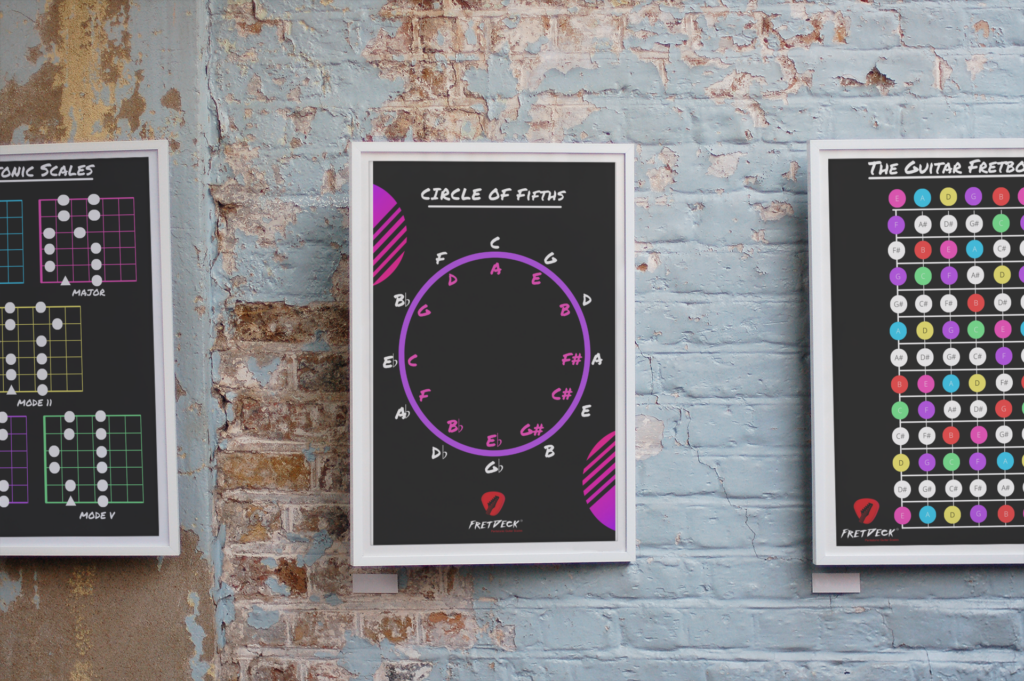
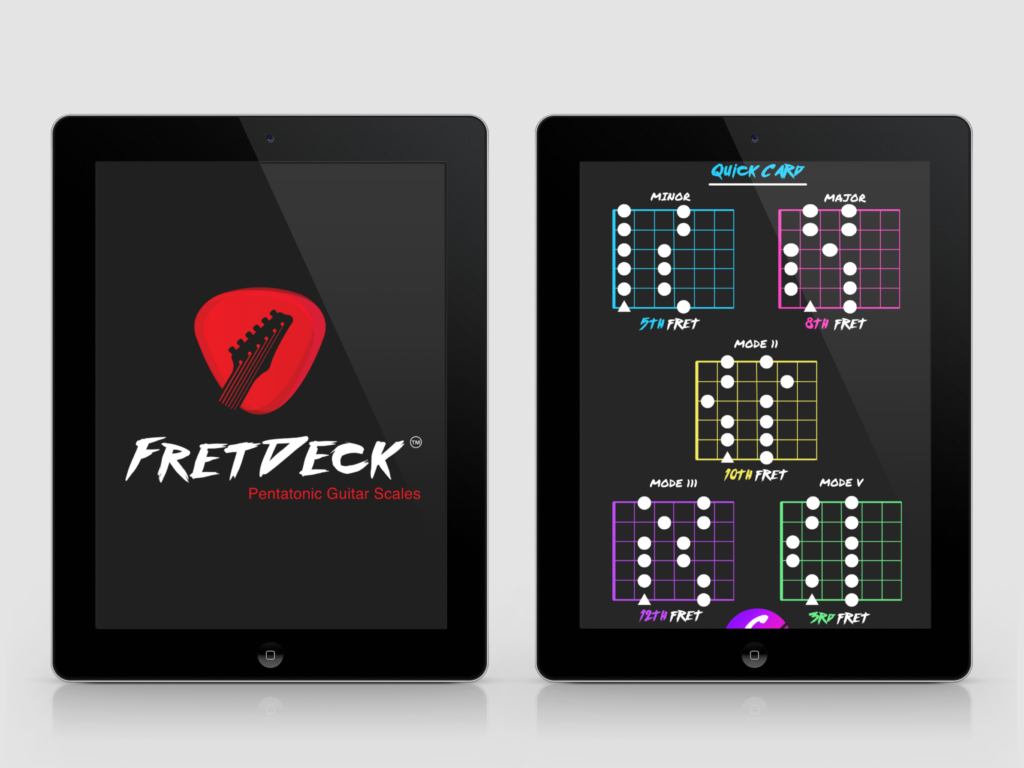
Tools like the FretDeck practice workstation are built on this exact philosophy. They help you visualize scales, modes, and arpeggios across the entire neck. This approach actively builds the mental connections that are essential for improvisation and songwriting. Specifically, it shifts your brain from “memorizing shapes” to “understanding music.” This is the subtle but profound change that makes everything click. Avoid these common beginner guitar tips that focus only on memorization.
What If You Could See the Fretboard Instead of Just Memorizing It?
Most guitarists spend years guessing where to put their fingers. They memorize shapes without understanding why — and the second they try to improvise or learn a new song, they’re lost again.
The FretDeck Practice Workstation changes that. It’s the interactive fretboard app that shows you exactly what to play, why it works, and how every note connects — so you finally understand the guitar instead of just copying tabs.
Whether you’re stuck in a rut, tired of noodling the same pentatonic box, or ready to unlock the entire neck — the FretDeck Practice Workstation gives you the visual roadmap to get there. All for just $14/month.
👉 Start Using the FretDeck Practice Workstation Now
Turning Practice Into Purposeful Play
When you embrace this contextual approach, your practice time transforms. It stops being a chore and starts becoming a creative exploration. Each session has a purpose beyond just hitting the right notes in the right order.
For instance, your goal might be to take one simple G-C-D progression and find three different ways to play it on the neck. Or you might explore how the notes of the C major scale relate to the frets on your guitar. This type of practice is infinitely more engaging and effective. You are actively solving musical puzzles, which builds deep, lasting skills.
This is what makes a great guitar app learn to play so powerful. It becomes a partner in your musical journey, not just a digital taskmaster. The famous guitar manufacturer Fender.com offers its own platform that aims to blend songs with lessons, acknowledging this need for application. When you have a tool that empowers this kind of exploration, you progress faster and, more importantly, have more fun doing it.
5 Practical Steps to Maximize Your App-Based Learning
To make this shift a reality, you need to change how you interact with your chosen learning app. Follow these five steps to ensure you’re building real, transferable skills.
1. Don’t Just Follow; Understand. After completing a lesson on a new chord or scale, ask yourself: “What are the notes I’m playing?” and “Where else can I find these notes?” Don’t move on until you can answer those questions.
2. Set One Micro-Goal Per Session. Instead of “practice guitar,” make your goal “master the transition between G and C” or “play the A minor pentatonic scale in the 7th position.” A focused goal makes your session ten times more effective. For ideas, check out this guide to the best practice routine.
3. Connect the App Lesson to a Real Song. Learned a new scale? Immediately go find a simple song that uses it. This crucial step bridges the gap between exercises and actual music. A quick search for “songs using the major scale” on a site like Guitar World can yield great results. This makes learning guitar scales far more exciting.
4. Record Yourself. Use your phone to record a one-minute clip of you playing what you just practiced. Listening back is the single best way to identify sloppy transitions, timing issues, or buzzing notes that you don’t hear while you’re focused on playing.
5. Spend Time Away From the Screen. The ultimate goal of a good guitar app learn to play is to make itself obsolete. Spend at least 25% of your practice time just noodling, experimenting, and playing without any digital guidance. This is where true creativity blossoms.
Frequently Asked Questions
Can you really learn guitar just from an app?
Absolutely, but with a caveat. You can learn the mechanics, theory, and a library of songs. However, an app can’t replicate the experience of playing with other musicians. Therefore, it’s best to use a guitar app learn to play as your primary guide and supplement it with real-world playing whenever possible.
How long does it take to learn guitar with an app?
This varies wildly. With consistent, focused practice (3-5 times a week) using a context-driven app, you can be playing basic songs comfortably within 2-3 months. Reaching an intermediate level where you can improvise and play more complex pieces could take a year or more. Consistency is far more important than the duration of each session.
What’s the difference between a free and a paid guitar app?
Free apps are great for dipping your toes in the water. However, they are often limited in scope and filled with ads. Paid apps typically offer a structured curriculum, advanced visualization tools, direct feedback technology, and a distraction-free environment. For serious learners, the small monthly investment is almost always worth it for the accelerated progress.
What If You Could See the Fretboard Instead of Just Memorizing It?
Most guitarists spend years guessing where to put their fingers. They memorize shapes without understanding why — and the second they try to improvise or learn a new song, they’re lost again.
The FretDeck Practice Workstation changes that. It’s the interactive fretboard app that shows you exactly what to play, why it works, and how every note connects — so you finally understand the guitar instead of just copying tabs.
Whether you’re stuck in a rut, tired of noodling the same pentatonic box, or ready to unlock the entire neck — the FretDeck Practice Workstation gives you the visual roadmap to get there. All for just $14/month.
👉 Start Using the FretDeck Practice Workstation Now
Related posts: