

The hunt for the best guitar books for beginners is a trap. You think the problem is finding the right book, but the real problem is the belief that more information equals more progress.
It doesn’t.
Most guitar books are 90% fluff. They are bloated with exercises you don’t need, theory you won’t use for years, and songs you don’t want to play. You are smart for seeking out resources, but you’ve been sold a lie. The lie is that you need to learn everything in the book.
You don’t. You need to learn the vital few things that produce nearly all the results.
The “More is Better” Information Hoard
Does your nightstand look like a guitar library’s graveyard? You’ve got a stack of books, a browser full of bookmarks, and a hard drive packed with PDFs. Yet, your fingers still feel clumsy. Your chord changes are still slow.
This is the classic 80/20 trap in action. You are spending 80% of your time collecting information and 20% of your time building actual skill. As a result, you feel busy, but you aren’t getting better.
The problem was never the book or the PDF. The right book is a powerful tool. The problem is that nobody showed you how to find the 20% of the material that truly matters. Furthermore, most books lack a coherent system, leaving you to connect the dots yourself. They give you ingredients, but no recipe.
This is where most beginners quit. They blame themselves, their talent, or their guitar. However, the real culprit is the method. They are drowning in good information without a system to apply it.

Free Book: “Fret Logic” — Master the Fretboard Without Memorizing a Single Shape
Before we go any further, grab my free book Fret Logic — it’s the shortcut I wish I had when I was stuck staring at the neck wondering where the next note was.
Inside, you’ll learn the simple visual system that turns the fretboard from a confusing grid into a map you can actually see. No theory degree required. No boring drills. Just clarity.
👉 Download “Fret Logic” FREE here
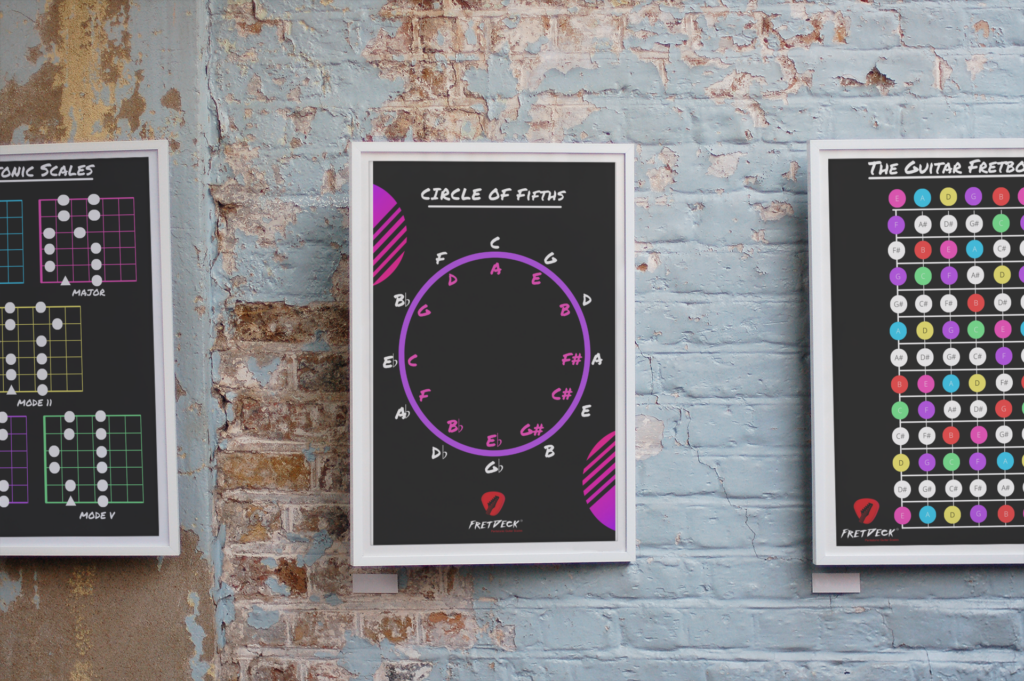
What If You Could See the Fretboard Instead of Just Memorizing It?
Most guitarists spend years guessing where to put their fingers. They memorize shapes without understanding why — and the second they try to improvise or learn a new song, they’re lost again.
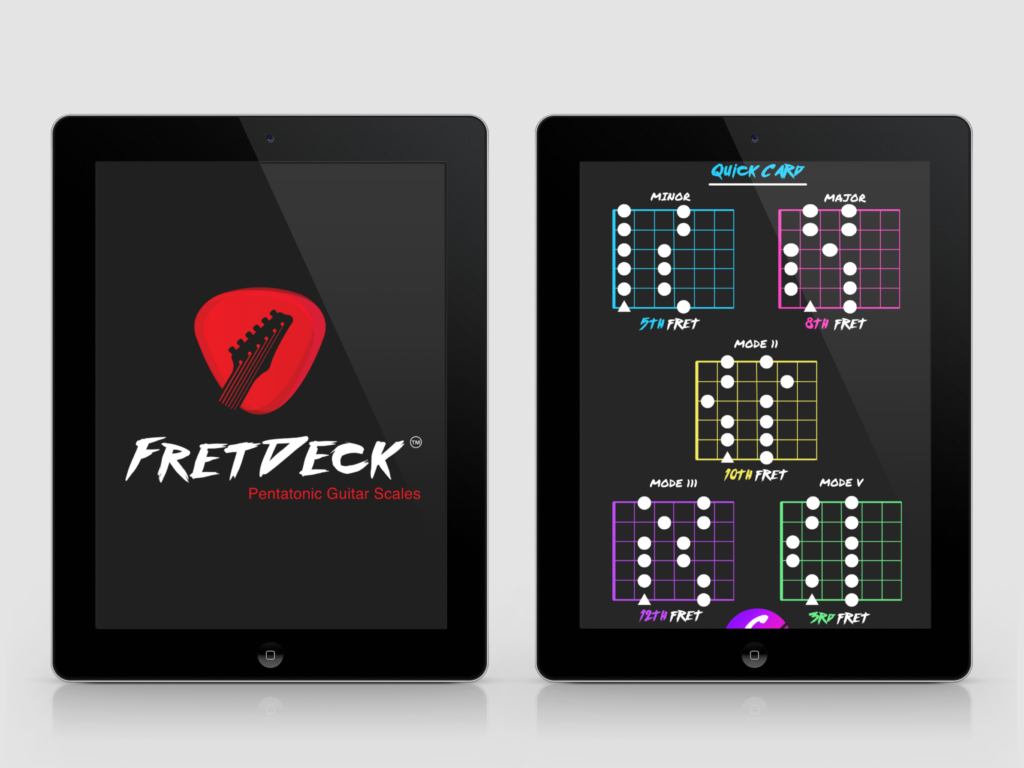
The FretDeck Practice Workstation changes that. It’s the interactive fretboard app that shows you exactly what to play, why it works, and how every note connects — so you finally understand the guitar instead of just copying tabs.
Whether you’re stuck in a rut, tired of noodling the same pentatonic box, or ready to unlock the entire neck — the FretDeck Practice Workstation gives you the visual roadmap to get there. All for just $14/month.
👉 Start Using the FretDeck Practice Workstation Now
The 20% That Drives 80% of Your Progress
Let’s cut through the noise. Vilfredo Pareto, an Italian economist, discovered that 80% of the land was owned by 20% of the people. This principle applies everywhere. 20% of your efforts produce 80% of your results.
For a beginner guitarist, the “vital few” skills are not complex scales or music theory.
Specifically, they are: 1. Clean Chords: Can you play the 8-10 essential open chords without buzzing or muting strings? 2. Smooth Transitions: Can you switch between those chords in time with a slow, steady rhythm? 3. Basic Strumming: Can you keep a simple down-up pattern steady for an entire song?
That’s it. That is the 20% that matters. If you master these three things, you can play thousands of songs. You can find a complete guide to essential chords in our chord progression guide. Most guitar books for beginners bury these core skills in dozens of pages of non-essential filler.
Your mission is to ignore the filler. Find the exercises that directly build these three skills and ruthlessly ignore everything else for now. A great book isn’t one with the most pages; it’s one that gets you to these core competencies the fastest.

The 80/20 Rule for Choosing guitar books for beginners
So, how do you spot a book that respects your time? Instead of looking for a “complete” guide, look for a “focused” guide. Use this simple filter.
A high-impact book does two things very well: First, it has a singular, stated outcome. The goal isn’t “learn guitar.” The goal is “play your first 10 songs” or “master the 5 most common chords.” This focus is a sign that the author understands the 80/20 principle.
Second, it provides a practice context. It doesn’t just show you a G chord. Tells you to practice switching from G to C for two minutes. It gives you a simple best practice routine you can apply immediately. Information without a practice context is useless trivia.
Avoid books that are encyclopedias. You don’t need to know the history of the instrument, as fascinating as it is. That’s a distraction. You need a direct path to making music. Look for authors who get you playing on page one, not page fifty. The experts at Fender often emphasize this “play first” mentality.
What If You Could See the Fretboard Instead of Just Memorizing It?
Most guitarists spend years guessing where to put their fingers. They memorize shapes without understanding why — and the second they try to improvise or learn a new song, they’re lost again.
The FretDeck Practice Workstation changes that. It’s the interactive fretboard app that shows you exactly what to play, why it works, and how every note connects — so you finally understand the guitar instead of just copying tabs.
Whether you’re stuck in a rut, tired of noodling the same pentatonic box, or ready to unlock the entire neck — the FretDeck Practice Workstation gives you the visual roadmap to get there. All for just $14/month.
👉 Start Using the FretDeck Practice Workstation Now
Beyond the Book: Creating the Feedback Loop
Here’s the part that 99% of guitar books miss completely. A book can give you the map, but it can’t tell you if you’re on the right road.
You need a feedback loop.
A feedback loop is simply a way of knowing if you’re doing something correctly. Without it, you could practice for an hour and just get better at playing the wrong thing. This is the single biggest reason beginners get stuck. They have no way to measure their progress or correct their mistakes.
How do you create this loop?
- Use Your Ears: Does your chord sound like the one in the recording? If not, why? Is a string buzzing? Is one muted? This is your primary feedback mechanism.
- Record Yourself: Use the voice memo app on your phone. Record yourself playing a chord progression. When you listen back, you will hear things your brain filters out while you’re playing.
Use a System: This is the most powerful method. A tool or system that provides immediate visual and auditory context is a massive accelerator. This is why an interactive tool like the FretDeck practice workstation is so effective; it shows you the what and the why* simultaneously, creating a powerful feedback loop that a static page can’t replicate.
The book is your instruction manual. The feedback loop is your quality control. You need both. For more foundational advice, check out these excellent beginner guitar tips.
Your 80/20 Practice Filter: 5 Questions to Ask
Before you start any practice session with your chosen guitar books for beginners, run the material through this 5-point filter. If it doesn’t pass, skip it and find something that does.
1. What is the ONE skill this page teaches? If you can’t name the single skill (e.g., “switching from C to Am”), the page is too cluttered. Move on. 2. How does this connect to a real song? Practicing random finger exercises is a low-leverage activity. Practicing the chords to a song you love is high-leverage. The context is motivating. 3. Can I practice this with a metronome or backing track? Music is rhythm. If you can’t practice the material in time, it’s not a musical exercise. It’s just a finger puzzle. 4. How will I know when I’ve “got it”? Define the win. For example, “I can switch between these four chords cleanly at 60 beats per minute.” A clear goal prevents endless, aimless noodling. 5. Am I collecting information or building a skill? Reading about technique is not the same as building muscle memory. Prioritize the exercises that get your hands moving correctly. Leading publications like Guitar World consistently feature lessons focused on application, not just theory.
FAQ: Cutting to the Chase
How many guitar books do I really need as a beginner?
One. You need one book that is built around a system, not just a collection of facts. The goal is to master one path, not to wander down ten different ones. Once you have exhausted the system in that one great book, then you can consider another.
Are free online guitar books for beginners worth it?
They can be, but you must be ruthless. A free PDF that just lists 100 chords is information overload. However, a free book like Fret Logic, which gives you a complete system for understanding the fretboard, is invaluable. The format isn’t the issue; the presence or absence of a coherent system is.
Should I learn chords or
Related posts: