Have you ever dreamed of playing a face-melting guitar solo? You can get there, and the first step is downloading your own guitar pentatonic scale pdf. In fact, this simple five-note scale is the secret weapon behind countless legendary guitarists, from B.B. King to Slash. It is the single most important tool for improvisation in rock, blues, and pop music.
This scale is your key to unlocking the fretboard. It provides a simple framework that sounds good over almost anything. However, many players get stuck and never move beyond the basics. They learn one small piece of the puzzle and wonder why their solos sound repetitive and uninspired.
The “Pentatonic Box” Trap
Does this sound familiar? You learned the minor pentatonic scale shape, probably in the key of A minor starting at the 5th fret. You practice it up and down. Consequently, you feel a jolt of excitement as you play your first real “lead guitar” notes.
But then, you get stuck. You’re trapped in that one little four-fret “box.” Every solo you try to play uses the same licks and the same patterns. As a result, your playing sounds robotic and predictable. You hear your heroes effortlessly gliding all over the neck, and you wonder, “How do they do that? There must be a missing piece.”
You feel like there’s a secret language of the fretboard that no one has let you in on. Moreover, you’re not sure how to connect what you know with the music you want to make. This frustration is the number one reason aspiring guitarists quit trying to learn solos. They hit a wall and simply don’t have a map to guide them.
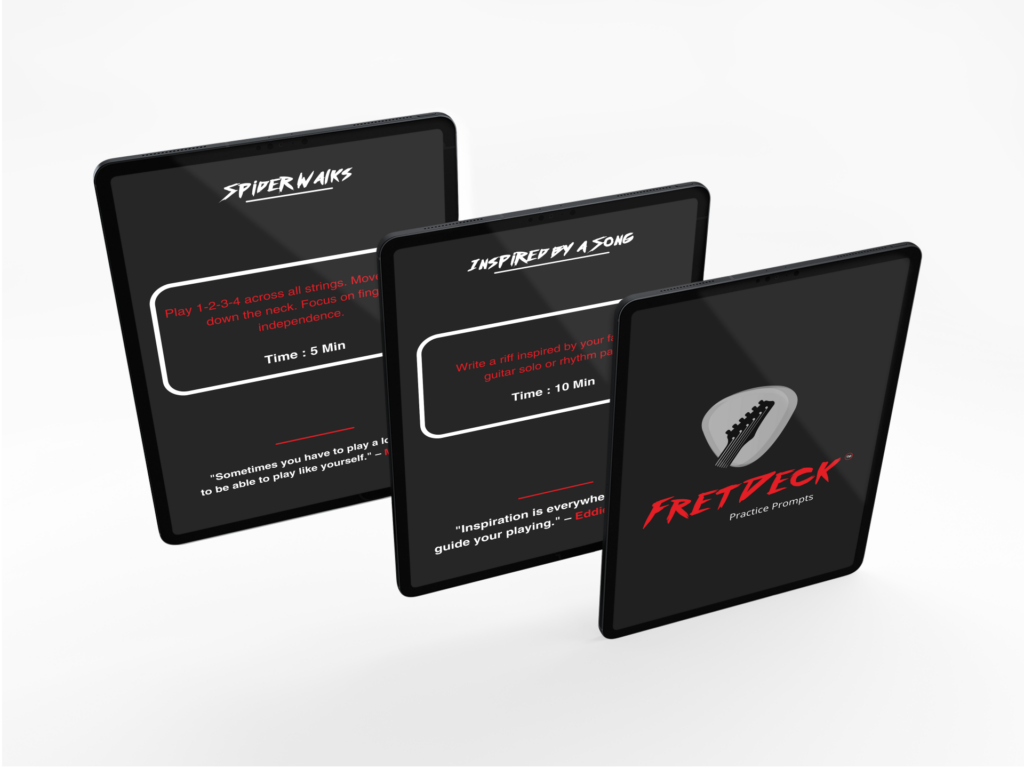
The Simple Guitar Practice System That Eliminates Guesswork
So You Can Stop Stalling… and Start Sounding Better Every Time You Pick Up the Guitar
👉 Get 52 Practice Prompts Now!
What Exactly Is the Pentatonic Scale?
The solution begins with understanding what you’re actually working with. The name sounds complex, but it’s incredibly simple. “Penta” means five, and “tonic” means tone. Therefore, it’s just a five-note scale.
Think about the standard major scale (Do-Re-Mi-Fa-So-La-Ti). It has seven notes. To create a pentatonic scale, we simply remove two of the notes that are most likely to clash with chords. Specifically, we remove the 4th and 7th degrees. As a result, we get a streamlined, powerful scale that is much easier to use for improvisation.
There are two main flavors you need to know:
1. The Minor Pentatonic: This is the sound of blues, classic rock, and heavy metal. It’s dark, moody, and full of attitude. When someone talks about “the pentatonic scale,” they are usually referring to this one. 2. The Major Pentatonic: This scale has a happier, sweeter sound. It’s perfect for country, folk, and melodic pop solos. Interestingly, it uses the exact same shapes as the minor pentatonic, you just start in a different place.
Understanding this distinction is one of the most powerful beginner guitar tips you will ever learn. It’s the first step to breaking out of that box.
Mastering the 5 Essential Pentatonic Shapes
Now for the big secret: that single “box” you learned is just one of five interconnected shapes. These five patterns cover the entire fretboard for any given key. When you see a player like David Gilmour play a soaring solo, he isn’t thinking about millions of notes; he is seamlessly connecting these five shapes.

Each shape acts as a stepping stone to the next one up the neck.
- Shape 1: This is the classic “box” shape you likely already know. It starts with the root note on the low E string.
- Shape 2: This shape connects to the top of Shape 1. It has a more vertical and diagonal feel.
- Shape 3: This one sits in the middle of the neck and contains some very useful, easy-to-play licks.
- Shape 4: Furthermore, this shape connects to Shape 3 and contains the famous “B.B. King Box,” a sweet spot for bluesy bends.
- Shape 5: Finally, this shape connects everything back to Shape 1, one octave higher up the neck.
Memorizing these five shapes is your complete roadmap. When you can see them all over the neck, you are never lost. You will always know which notes are “safe” to play, no matter where you are on the fretboard. For more detailed guides you can learn guitar scales with our in-depth tutorials.
The Simple Guitar Practice System That Eliminates Guesswork
So You Can Stop Stalling… and Start Sounding Better Every Time You Pick Up the Guitar
👉 Get 52 Practice Prompts Now!
Your Free Guitar Pentatonic Scale PDF Explained
To make this process as easy as possible, you need a clear visual guide. This is why a high-quality guitar pentatonic scale pdf is such a critical learning tool. Forget trying to decipher messy, hand-written tabs or confusing online diagrams. A good PDF lays everything out cleanly, allowing you to focus on what matters: playing music.
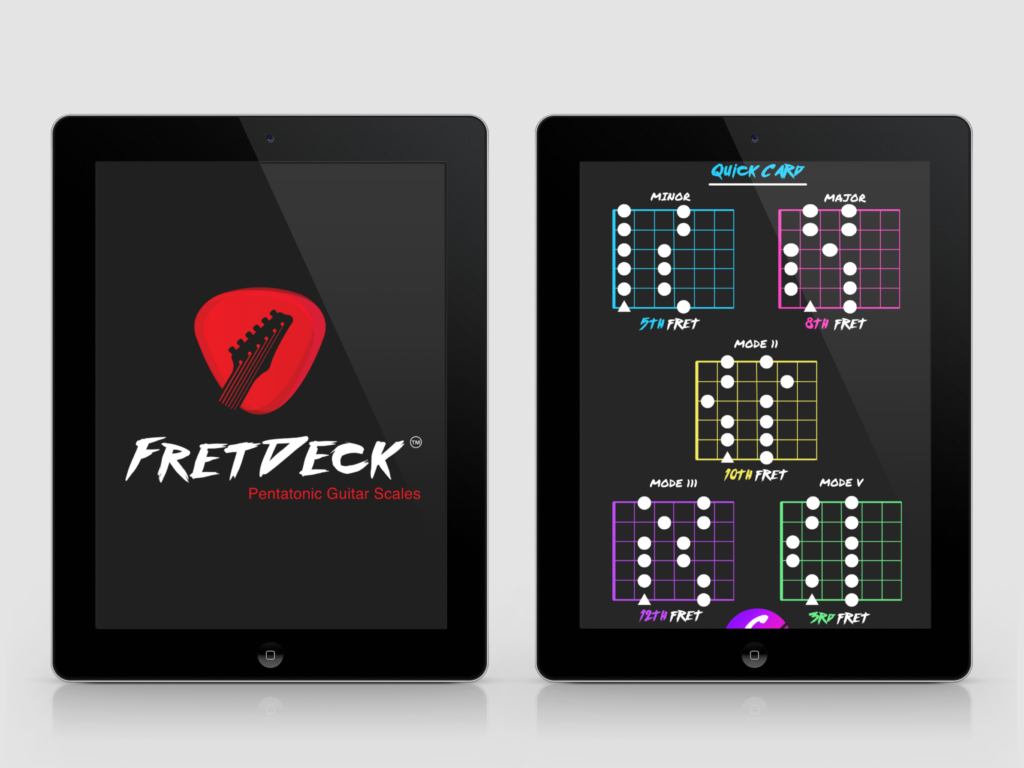
Our downloadable guitar pentatonic scale pdf is designed for clarity. Inside, you will find clean, easy-to-read diagrams of all five minor pentatonic shapes. We’ve highlighted the root notes in each shape, so you can always see where your tonal “home base” is. This is crucial for making your solos sound musical and resolved.
Think of this resource as your cheat sheet for fretboard freedom. You can print it out and put it in your practice space. You can also save it on your tablet or phone for quick reference anytime, anywhere. Having a reliable guitar pentatonic scale pdf means you spend less time guessing and more time playing.
Connecting the Shapes to Unlock the Fretboard
Learning the shapes is one thing; using them is another. The real magic happens when you learn to move smoothly between them. This is how you create long, flowing melodic lines that travel up and down the neck.
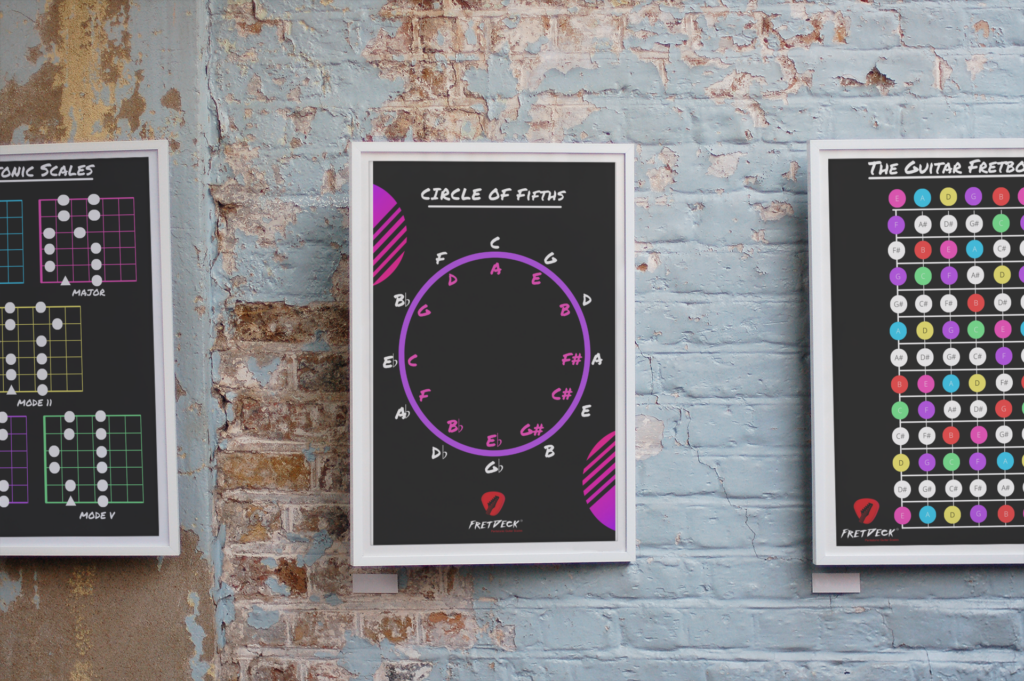
Start by identifying where two shapes overlap. For example, the top two strings of Shape 1 are the same notes as the bottom two strings of Shape 2. Practice playing up Shape 1 and, instead of stopping, continue right into Shape 2. Then, try coming back down. You can see these connections easily using fretboard visualization tools like the physical FretDeck cards that lay over your guitar neck.
Once you’re comfortable moving between two shapes, find a simple backing track. You can find thousands on YouTube for free. If the track is in A minor, you can use any of your five A minor pentatonic shapes over it. Great improvisers are just connecting these shapes and knowing how to target notes that sound good over the underlying harmony. You can explore a great article on legendary pentatonic licks over at Guitar World for inspiration. Understanding how scales work with harmony is key, which you can study in our chord progression guide.
7 Steps to Practice Pentatonic Scales Like a Pro
1. Master One Shape at a Time. Don’t try to learn all five at once. Specifically, focus on Shape 1 until you can play it ascending and descending without thinking.
2. Use a Metronome. Start slow! Accuracy is more important than speed. This builds your timing and muscle memory.
3. Practice in Sequences. Don’t just play up and down. For instance, try playing in groups of three notes (1-2-3, 2-3-4, 3-4-5, etc.). This breaks you out of the rut and helps you see new melodic possibilities.
4. Learn Simple Licks. Find one or two simple licks inside each shape. Learning how other players use the scale provides essential vocabulary for your own solos. Websites like MusicRadar are fantastic resources for lick ideas.
5. Connect Two Shapes. Once you know Shape 1 and Shape 2, focus your practice exclusively on moving between them. Find the overlapping notes and use them as a bridge.
6. Sing the Notes. As you play a note, try to sing it. This simple trick connects your ear to your fingers, which is the hallmark of every great improviser.
7. Improvise Daily. Even if it’s just for five minutes, put on a backing track and just… play. Don’t judge yourself. The goal is to explore and have fun. This is how the scale moves from an abstract concept in your head to a real tool under your fingers.
FAQ: Your Pentatonic Scale Questions Answered
What’s the difference between the major and minor pentatonic scale?
They are relative scales, meaning they use the exact same five shapes and notes. The only difference is the “root note” or tonal center you emphasize. For example, the A minor pentatonic scale uses the same notes as the C major pentatonic scale. If you are playing over a sad A minor chord, you emphasize the “A” notes. If you’re over a happy C major chord, you emphasize the “C” notes.
How do I know which pentatonic scale to use?
The easiest way to start is to match the key of the song. If the song is in E minor, you use the E minor pentatonic scale. If it’s in G major, use the G major pentatonic scale. As you advance, you’ll learn how to use different scales to create more complex sounds, but matching the key is the perfect starting point.
Why is this scale so popular with guitarists?
It’s popular because it’s incredibly versatile and forgiving. The notes within the scale have been pre-selected to sound good over a huge variety of common chord progressions in rock, blues, pop, and country. It’s hard to hit a “wrong” note, which makes it the perfect scale for beginners to start improvising and building confidence. Ultimately, a good guitar pentatonic scale pdf is your map to this amazing tool.
The Simple Guitar Practice System That Eliminates Guesswork
So You Can Stop Stalling… and Start Sounding Better Every Time You Pick Up the Guitar
👉 Get 52 Practice Prompts Now!