

Feeling lost in a sea of online lessons? These powerful guitar practice exercises for beginners will give you the clear, focused path you need to see progress fast. You pick up your guitar, excited to learn, but quickly find yourself noodling the same three notes, unsure of what to do next.
This isn’t about learning more random songs from tabs. It’s about building foundational skills that make everything you play sound better, feel easier, and become more musical. Consequently, you stop guessing and start playing with intention.
The Real Reason Your Fingers Feel Glued to the Fretboard
Does this sound familiar? You watch a YouTube tutorial, and the guitarist makes it look effortless. But when you try it, your fingers feel clumsy, your chord changes are painfully slow, and you get a nasty buzzing sound.
You start to think, “Maybe I just don’t have the talent for this.”
The truth is, it has nothing to do with talent. The problem isn’t you; it’s the random, unstructured approach many take to their practice. Simply trying to play songs without building the underlying mechanics is like trying to build a house without a foundation. As a result, you hit a plateau and feel stuck.
These ineffective habits lead to frustration and burnout. Specifically, you end up with sore fingertips and the feeling that you’re not making any real progress. The issue is that most advice fails to provide the right kind of targeted guitar practice exercises for beginners that build skill systematically.
What If You Could See the Fretboard Instead of Just Memorizing It?
Most guitarists spend years guessing where to put their fingers. They memorize shapes without understanding why — and the second they try to improvise or learn a new song, they’re lost again.
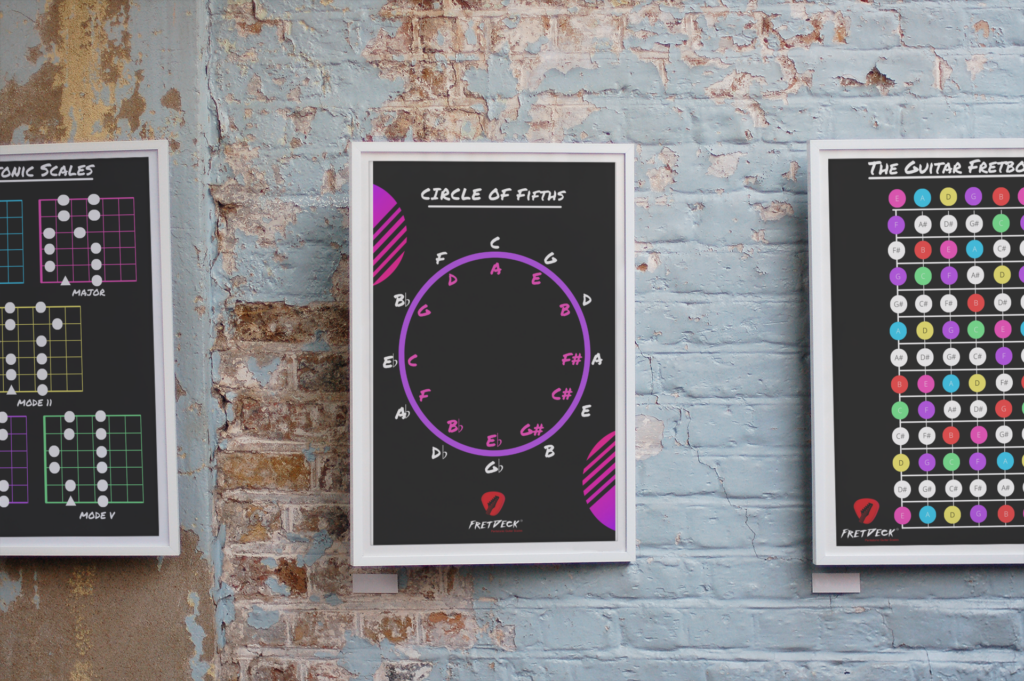
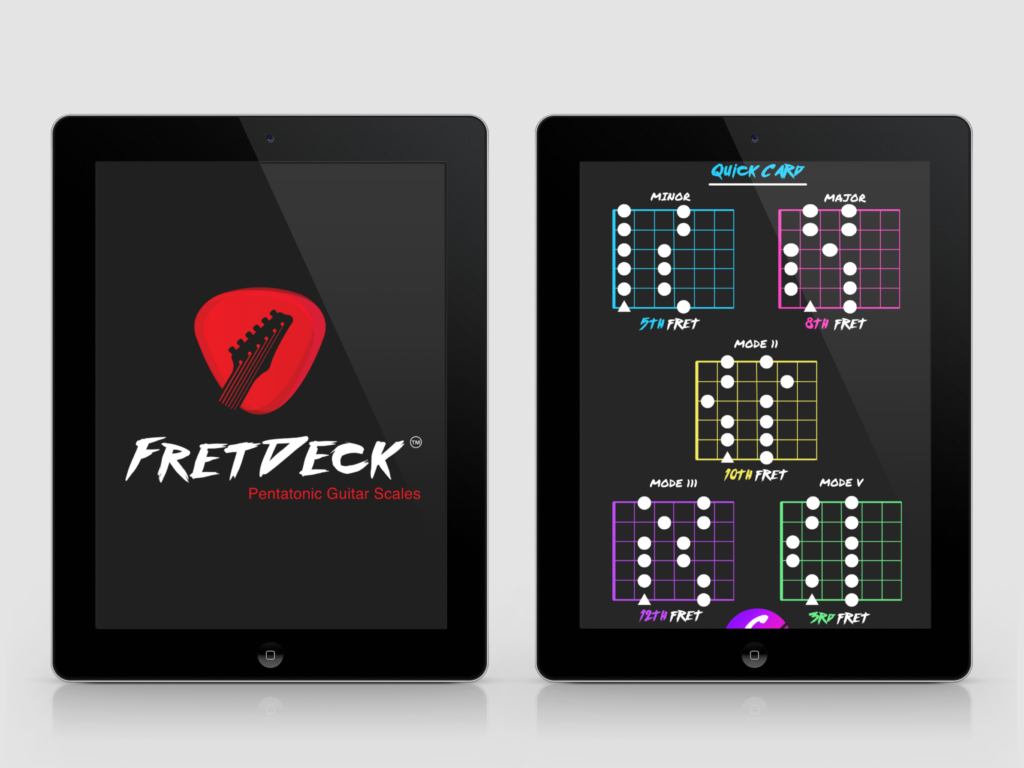
The FretDeck Practice Workstation changes that. It’s the interactive fretboard app that shows you exactly what to play, why it works, and how every note connects — so you finally understand the guitar instead of just copying tabs.

Whether you’re stuck in a rut, tired of noodling the same pentatonic box, or ready to unlock the entire neck — the FretDeck Practice Workstation gives you the visual roadmap to get there. All for just $14/month.
👉 Start Using the FretDeck Practice Workstation Now
The Foundation: Building Finger Independence and Strength
Before you can shred a solo or seamlessly switch between cowboy chords, your fingers need basic training. Think of it as sending your fingers to boot camp. Your goal here isn’t speed; it’s precision and control.
Therefore, we start with the single most important dexterity drill: The Spider Walk.
This exercise forces each of your four fretting-hand fingers to work independently. It may feel awkward at first, but stick with it. This is the bedrock of clean playing.
Here’s how to do it:
1. Place your index finger on the 1st fret of the low E string (the thickest one). 2. Next, place your middle finger on the 2nd fret of the same string. 3. Then, place your ring finger on the 3rd fret. 4. Finally, place your pinky finger on the 4th fret. 5. Play each note one at a time: 1-2-3-4. Listen carefully. Is each note clear? Or is it buzzing? 6. Once you’ve played them across the E string, move down to the A string and do the same thing: 1-2-3-4. 7. Continue this pattern across all six strings, all the way to the high E string.
Once you reach the high E string, go back up. Play 4-3-2-1 on the high E, then move to the B string and play 4-3-2-1, and so on until you’re back at the low E. Importantly, use a metronome set to a very slow speed (like 60 BPM). Focus on one clean note per click.
This simple drill builds finger strength, teaches your fingers to stay close to the fretboard, and improves your hand-synchronization. For a deeper dive into structuring your time, check out our guide on the best practice routine.
Your Core guitar practice exercises for beginners Blueprint
With your fingers waking up, it’s time to apply that dexterity to something more musical: changing chords. This is often the biggest hurdle for new players. The solution is focused, measurable repetition. This is where we implement our core guitar practice exercises for beginners blueprint.
Forget trying to strum a full song right away. Instead, isolate the chord change itself.
Introducing the “One-Minute Chord Change” Drill:
1. Pick two simple chords. For example, G major and C major.
2. Set a timer for 60 seconds.
3. Start on the G chord. Strum it once to make sure all notes are ringing out clearly.
4. Now, switch to the C chord as quickly and cleanly as you can. Strum it once.
5. That’s one change. Now go back to G.
6. Count how many successful, clean changes you can make in one minute.
Write down your number. Tomorrow, your only goal is to beat that number by one. This turns practice into a game and gives you a clear metric for progress. Moreover, it builds muscle memory far faster than sloppy, half-hearted song practice. While practicing chord changes, it’s easy to get lost. A visual tool like the FretDeck practice workstation can show you how these chords connect all over the neck, turning blind memorization into true understanding.
You can do this with any two chords you’re struggling with (Am to D, for example). This drill is the secret to making your chord transitions smooth and automatic. To learn more about which chords work well together, explore our chord progression guide.
What If You Could See the Fretboard Instead of Just Memorizing It?
Most guitarists spend years guessing where to put their fingers. They memorize shapes without understanding why — and the second they try to improvise or learn a new song, they’re lost again.
The FretDeck Practice Workstation changes that. It’s the interactive fretboard app that shows you exactly what to play, why it works, and how every note connects — so you finally understand the guitar instead of just copying tabs.
Whether you’re stuck in a rut, tired of noodling the same pentatonic box, or ready to unlock the entire neck — the FretDeck Practice Workstation gives you the visual roadmap to get there. All for just $14/month.
👉 Start Using the FretDeck Practice Workstation Now
Making Music, Not Just Noise: Rhythm and Timing
Clean chords are great, but without rhythm, you’re just making noise. Your strumming hand is the engine of your guitar playing. It provides the groove, the energy, and the pulse of the music.
Therefore, you must practice your right hand (or left, if you’re a lefty) in isolation.
The “Strumming Engine” Drill:
1. Choose a single, easy chord like E minor. You can even just lay your fretting hand lightly across the strings to mute them completely. The notes don’t matter here—only the rhythm does. 2. Set your metronome to 70 BPM. 3. Drill 1: Down Strums. For one minute straight, strum down on every single click of the metronome. ONE, TWO, THREE, FOUR. Focus on a relaxed, consistent motion from your wrist and forearm. 4. Drill 2: Eighth Notes. Now, strum down on the click and up in between the clicks. It will sound like “ONE-and-TWO-and-THREE-and-FOUR-and”. Do this for one minute. 5. Drill 3: Pattern Practice. Now combine them. Try a classic pattern: Down, Down-Up, Up, Down-Up.
By separating rhythm from the complexity of chord changes, you can focus 100% on developing a rock-solid internal clock. Major resources like Guitar World have countless articles on different strumming patterns you can apply once you’ve mastered this basic timing. A properly set up guitar will also make strumming feel much easier, a point often detailed in guides on sites like Fender.com.
5 Rules for Making Your Practice Stick
Great exercises are useless without the right mindset and structure. Following these rules will transform random noodling into effective guitar practice exercises for beginners.
1. Consistency Over Duration. Practicing for 15 focused minutes every single day is infinitely more effective than a heroic two-hour session once a week. Muscle memory is built through daily reinforcement.
2. Always Use a Metronome. I’ve said it three times, so it must be important. Playing with a metronome is non-negotiable. It is the only way to develop professional-level timing.
3. Start Slow, Focus on Cleanliness. Your primary goal is accuracy, not speed. Speed is an automatic byproduct of clean, efficient muscle memory. Never practice faster than you can play perfectly.
4. Record Yourself. Your ears can lie to you, but your phone’s camera won’t. Record a one-minute clip of your practice. You will immediately hear the buzzes, pauses, and timing issues you didn’t notice while playing. It’s the most honest coach you have.
5. Have a Micro-Goal for Each Session. Never sit down to “just practice.” Have a specific, tiny goal. For example: “Today, I will increase my G-to-C chord changes from 25 to 26 in one minute.” This provides direction and makes every session a win. For more foundational advice, see our ultimate list of beginner guitar tips.
FAQ: Your Beginner Questions Answered
How long should I practice guitar each day as a beginner?
Aim for 15-30 minutes of focused practice daily. Consistency is far more important than length. A short, daily session where you are fully engaged with specific drills will yield better results than hours of distracted playing.
Why do my fingers hurt so much when I practice?
Finger pain is normal at first! You’re building calluses. However, severe pain can be a sign of pressing too hard. This is often due to a guitar that is poorly set up (the “action” is too high). Ensure your guitar practice exercises for beginners are done on a properly adjusted instrument. Take short breaks and don’t play through sharp pain.
Should I learn scales or chords first?
You should learn them together. They are two sides of the same coin. Your first exercises should focus on chord changes (like G and C) to play songs, and a simple dexterity exercise (like the Spider Walk) which is essentially a chromatic scale. This balanced approach ensures both your musicality and technique develop together.
What If You Could See the Fretboard Instead of Just Memorizing It?
Most guitarists spend years guessing where to put their fingers. They memorize shapes without understanding why — and the second they try to improvise or learn a new song, they’re lost again.
The FretDeck Practice Workstation changes that. It’s the interactive fretboard app that shows you exactly what to play, why it works, and how every note connects — so you finally understand the guitar instead of just copying tabs.
Whether you’re stuck in a rut, tired of noodling the same pentatonic box, or ready to unlock the entire neck — the FretDeck Practice Workstation gives you the visual roadmap to get there. All for just $14/month.
👉 Start Using the FretDeck Practice Workstation Now
Related posts: