If you’re searching for guitar practice prompts that actually turn random playing into real, measurable progress, you’re about to discover the structured system most intermediate players wish they had years ago.
If you’ve ever picked up your guitar, played a few scales, ran through a solo, and then thought… “Did I actually get better?” — this article is for you.
Because here’s the truth:
Most guitar players don’t need more time.
They need guitar practice prompts.
The Day I Realized I Was Just Noodling
For years, my practice looked productive.
Metronome on.
Pentatonic scales.
A blues backing track.
Maybe a Robben Ford-inspired phrase.
But when I listened back? It felt random. Like I was circling the same ideas over and over.
I wasn’t building anything.
I was just maintaining comfort.
And that’s when it hit me:
Practice without direction is just musical procrastination.
What changed everything wasn’t a new scale.
It was structure.

The Simple Guitar Practice System That Eliminates Guesswork
So You Can Stop Stalling… and Start Sounding Better Every Time You Pick Up the Guitar
👉 Get 52 Practice Prompts Now!
What Are Guitar Practice Prompts?
Guitar practice prompts are specific, intentional challenges that tell you:
- What to play
- How to play it
- Why you’re playing it
- And what constraint makes it grow you
Instead of:
“Practice A minor pentatonic for 20 minutes.”
A prompt says:
“Create a 4-bar solo using only 3 notes from A minor pentatonic. No bends. Leave space after every phrase.”
Now you’re thinking.
Now you’re composing.
Now you’re improving.
That’s the difference between running drills and building musicianship.
Why Most Players Stay Stuck
Here’s what typically happens:
- You sit down.
- You warm up.
- You play what you already know.
- You repeat yesterday’s patterns.
There’s no constraint.
No creative boundary.
No deliberate focus.
And without those, improvement slows.
If you’ve ever Googled:
- “how to stop noodling”
- “structured guitar practice”
- “how to practice guitar efficiently”
You’re already feeling the problem.
You don’t lack discipline.
You lack a system.
Practice Like a Composer
Adam Levy talks often about phrasing as conversation.
He doesn’t just run scales.
He builds sentences.
Guitar practice prompts force that mindset.
Instead of:
“Play faster.”
You get:
“Create tension using only rhythmic variation.”
Instead of:
“Practice triads.”
You get:
“Write a chord progression using only top 3 strings triads in one position.”
Prompts turn mechanics into music.
The Simple Guitar Practice System That Eliminates Guesswork
So You Can Stop Stalling… and Start Sounding Better Every Time You Pick Up the Guitar
👉 Get 52 Practice Prompts Now!
Why Structured Prompts Work (Psychology Matters)
There’s a reason athletes use drills.
There’s a reason writers use constraints.
Constraints force creativity.
When your brain is limited, it goes deeper.
And when you complete structured challenges consistently, you build:
- Confidence
- Pattern recognition
- Fretboard fluency
- Real improvisational control
You stop reacting to the neck.
You start commanding it.
What Happens After 30 Days of Guitar Practice Prompts
If you follow daily guitar practice prompts for 30 days:
- Your phrasing improves
- Your timing tightens
- Your ideas become intentional
- You stop relying on muscle memory alone
- You start sounding like you
And here’s the hidden benefit:
You actually look forward to practicing.
Because you know exactly what you’re doing when you sit down.
The Problem With Most “Practice Plans”
Most practice plans are generic.
They say:
- 10 minutes scales
- 10 minutes chords
- 10 minutes soloing
That’s not direction.
That’s time blocking.
Prompts go deeper.
They create:
- Targeted musical focus
- Emotional intention
- Skill-specific pressure
- Immediate feedback loops
That’s how professionals practice.
The System I Wish I Had Years Ago
After years of random sessions, I built something simple:
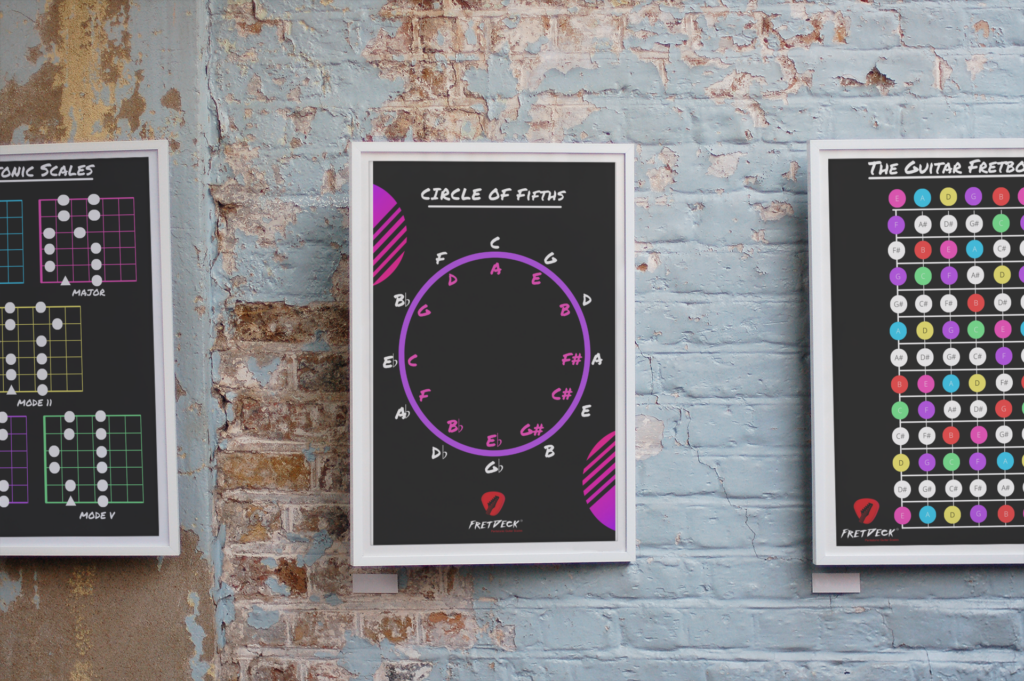
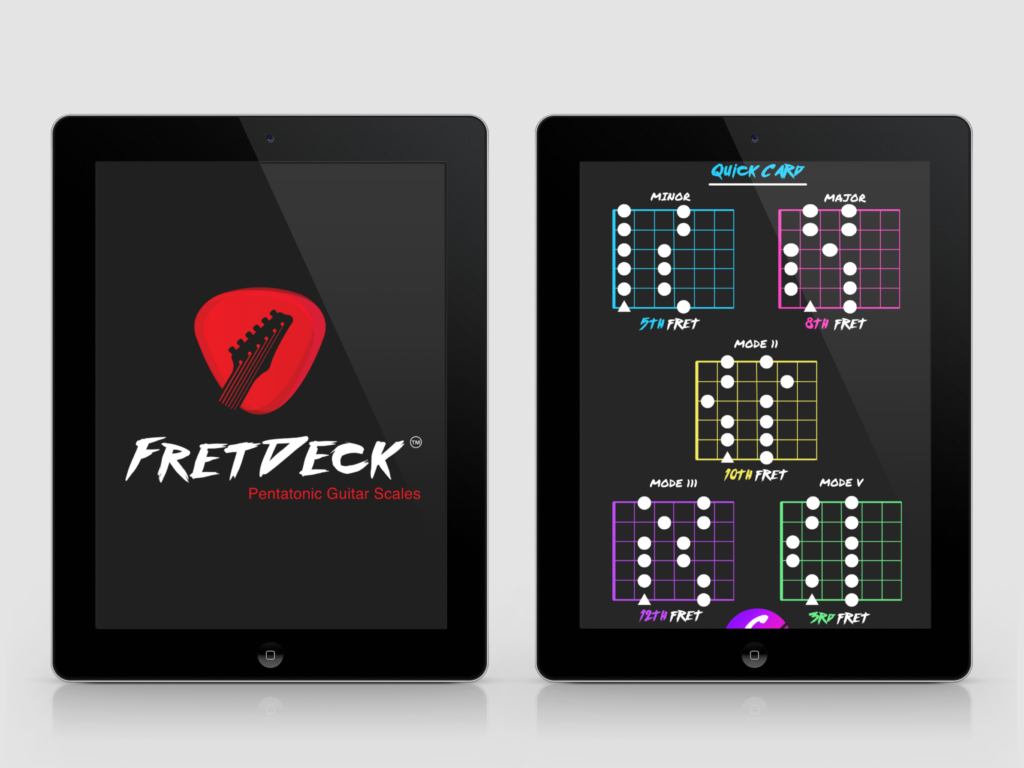
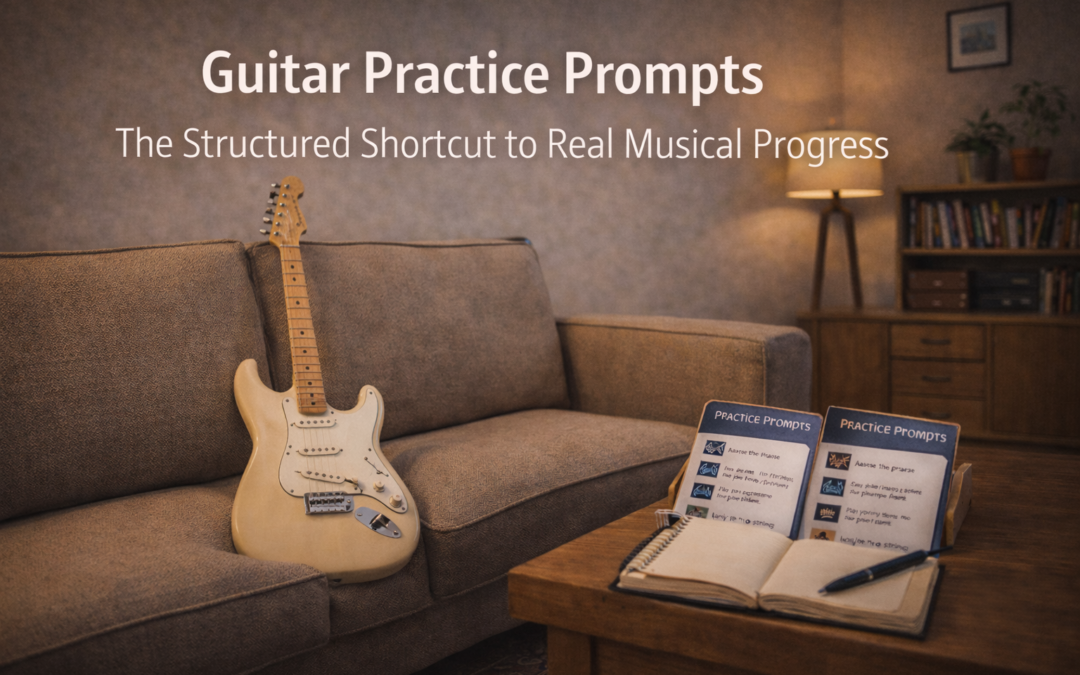
A deck of structured guitar practice prompts.
Each card gives you:
- A focused challenge
- A creative constraint
- A specific objective
- A clear musical outcome
No guessing.
No wasting time.
No scrolling YouTube for “what should I practice.”
You just pull a card.
And go.
👉 See the Practice Prompts here:
https://fretdeck.myclickfunnels.com/practice-prompts
This isn’t theory.
This is applied musicianship.
The Simple Guitar Practice System That Eliminates Guesswork
So You Can Stop Stalling… and Start Sounding Better Every Time You Pick Up the Guitar
👉 Get 52 Practice Prompts Now!
Who Guitar Practice Prompts Are For
These are for you if:
- You’re an intermediate player stuck in pentatonic loops
- You feel like your solos all sound the same
- You want structure but not rigidity
- You want to think like a musician, not just a technician
- You’re done wasting time
If you’re a total beginner learning your first chords, build fundamentals first.
But if you’re hungry for progress?
Prompts accelerate growth.
How To Use Guitar Practice Prompts (Simple Routine)
Here’s a powerful 30-minute structure:
5 minutes – Warm up
20 minutes – One focused prompt
5 minutes – Record and reflect
That’s it.
Consistency beats marathon sessions.
What Makes This Different From Free Advice?
You can find random ideas anywhere.
But systems win.
A deck of guitar practice prompts:
- Removes decision fatigue
- Creates daily accountability
- Forces creative growth
- Turns passive practice into active building
And the moment you remove friction from starting?
You practice more.
That’s the real secret.
The Real Question
Do you want to:
Keep noodling and hoping something changes?
Or train intentionally and actually hear yourself evolve?
Because six months from now, you’ll either:
- Still be circling the same licks
- Or be playing with clarity and control
The difference is structure.
👉 Grab the structured system here:
If you want to understand how structure transforms your sessions, read:
The Guitar Learning Tool That Finally Turns Practice Into Music
https://guitarfreaksblog.com/the-guitar-learning-tool-that-finally-turns-practice-into-music/
For deeper insight into phrasing and musical development:
- Adam Levy’s educational concepts on phrasing and musical storytelling
- Research on deliberate practice from psychologist Anders Ericsson
- Creative constraint techniques used in professional music composition
Final Thought
Guitar mastery isn’t about knowing more scales.
It’s about using what you know with intention.
And that starts with one focused prompt at a time.
If you’re serious about real progress, don’t leave your improvement to chance.
Pull a card.
Do the work.
Build the sound.
Your future playing will thank you.