

Are you searching for a guitar learning tool that actually accelerates your progress? The internet is overflowing with options, from a million YouTube videos to countless apps, but most of them just lead to more confusion and slower growth. It feels complicated, frustrating, and, frankly, much harder than it should be.
The truth is, learning guitar isn’t hard because you lack talent. It’s hard because you’ve been given the wrong map. You’re trying to navigate a complex highway by memorizing random turn-by-turn directions instead of understanding the layout of the city itself.
This article will show you why your current approach might be holding you back. More importantly, it will reveal a simpler, more intuitive way to think about learning guitar that makes the entire process click into place.
Why Most Learning Approaches Feel Like Hitting a Wall
You grab your guitar, filled with motivation. You pull up a lesson, start practicing a scale or a new chord, and for a moment, it feels like you’re getting somewhere. But soon, the familiar frustration creeps in. The chord change is still clunky, the scale feels like a meaningless finger exercise, and you have no idea how to actually use it in a real song.
This happens for a few key reasons. Firstly, many popular methods focus on rote memorization. They teach you “shapes” and “patterns” without explaining the musical context behind them. As a result, you can play a pentatonic box, but you can’t break out of it to create a truly melodic solo.
Secondly, passive learning is incredibly inefficient. Watching someone else play guitar on a video is not the same as actively engaging your own brain and fingers. Without a system that forces you to think and react, you’re building a habit of consumption, not a skill of creation. Every new concept feels isolated, and the fretboard remains a mystery. Consequently, you feel stuck, and the guitar starts gathering dust.
What If You Could See the Fretboard Instead of Just Memorizing It?
Most guitarists spend years guessing where to put their fingers. They memorize shapes without understanding why — and the second they try to improvise or learn a new song, they’re lost again.
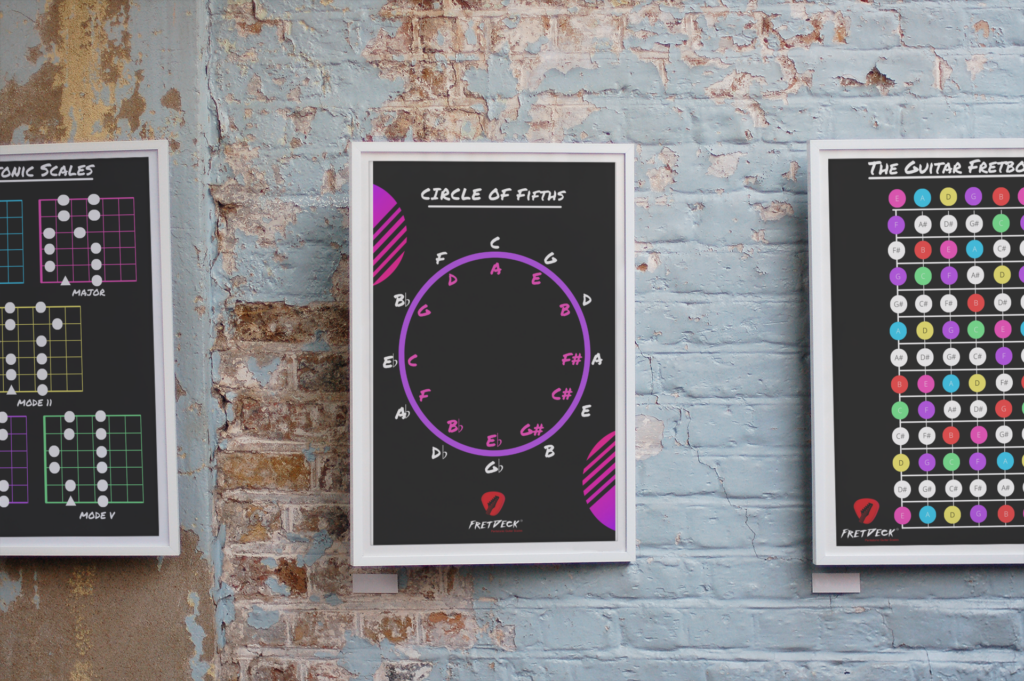
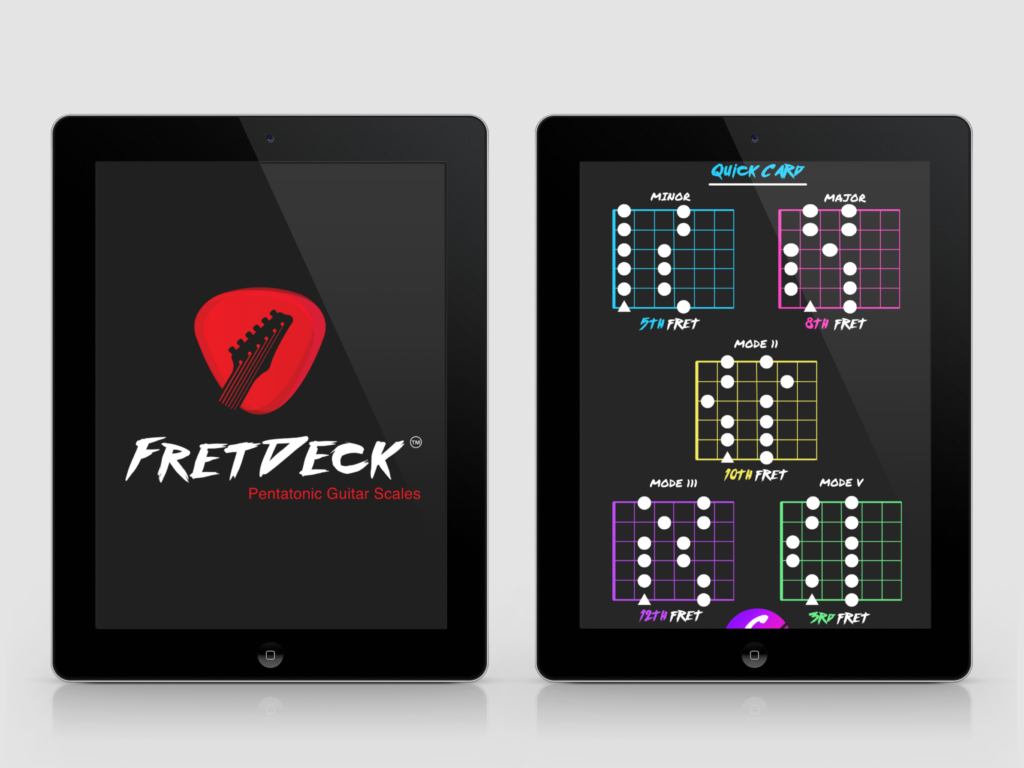
The FretDeck Practice Workstation changes that. It’s the interactive fretboard app that shows you exactly what to play, why it works, and how every note connects — so you finally understand the guitar instead of just copying tabs.

Whether you’re stuck in a rut, tired of noodling the same pentatonic box, or ready to unlock the entire neck — the FretDeck Practice Workstation gives you the visual roadmap to get there. All for just $14/month.
👉 Start Using the FretDeck Practice Workstation Now
The “Visual Connection” Breakthrough
The single biggest shift for any struggling guitarist is moving from memorizing finger placements to visualizing the fretboard as a connected musical system. Your brain is wired to recognize patterns and relationships visually. Think about it: you don’t memorize the location of every store in a mall; you build a mental map of how they relate to each other.
A powerful guitar learning tool applies this same logic to the neck. Instead of just showing you a static chord diagram, it should reveal how that chord is built from a scale. It should show you how the C, F, and G chords all contain notes from the C major scale, and how those notes appear all over the neck.
For example, when you finally see how scale patterns connect across strings, you’re no longer trapped in one position. Suddenly, the whole fretboard opens up. This visual understanding is the key that unlocks improvisation and songwriting. It’s the difference between reciting a script and having a real conversation. Furthermore, mastering this connection is easier than you think when you have a guide. For a deeper dive, check out our guide on how to learn guitar scales effectively.
Choosing An Interactive Guitar Learning Tool
Not all learning tools are created equal. The most effective ones are not passive; they are interactive. An interactive guitar learning tool forces you to engage, make decisions, and get immediate feedback, which rapidly accelerates the learning loop. This is a core concept that many guitarists miss, as detailed in articles on sites like Guitar World.
What does “interactive” actually mean in this context?
- It responds to you: It doesn’t just play a video. It might guide you through an exercise and provide real-time visual cues on the fretboard.
- It creates a feedback loop: When you play a note, the tool shows you how it fits (or doesn’t fit) into the current scale or chord. This immediate feedback corrects mistakes before they become bad habits.
- It builds connections: An advanced system, like the visual workstation offered by FretDeck, doesn’t just teach you one thing at a time. It shows you how a C major chord, a C major scale, and a C major arpeggio are all different expressions of the same seven notes.
This active engagement is what cements knowledge in your long-term memory. It shifts you from being a passive student who copies tabs to an active musician who understands the language of music. Ultimately, your choice of tool can make or break your progress.
What If You Could See the Fretboard Instead of Just Memorizing It?
Most guitarists spend years guessing where to put their fingers. They memorize shapes without understanding why — and the second they try to improvise or learn a new song, they’re lost again.
The FretDeck Practice Workstation changes that. It’s the interactive fretboard app that shows you exactly what to play, why it works, and how every note connects — so you finally understand the guitar instead of just copying tabs.
Whether you’re stuck in a rut, tired of noodling the same pentatonic box, or ready to unlock the entire neck — the FretDeck Practice Workstation gives you the visual roadmap to get there. All for just $14/month.
👉 Start Using the FretDeck Practice Workstation Now
Build a System, Not Just a Habit
Motivation comes and goes, but a system delivers results consistently. Randomly picking up the guitar to “practice” is a recipe for noodling the same licks you already know. A great guitar learning tool provides the structure you need to ensure every session pushes you forward, even if it’s just by 1%.
This system should give you a clear “what’s next.” After mastering a chord, the system should logically guide you to a common chord progression guide. After learning a scale, it should provide an exercise to use that scale musically. This removes the guesswork that kills so many guitar journeys.
Essentially, you are outsourcing the “what should I practice today?” decision to a proven framework. This allows you to put 100% of your mental energy into the act of playing and learning. You simply follow the path laid out for you. As a result, you build momentum. Each small win stacks on top of the last, creating a powerful snowball effect that makes continued practice feel exciting, not like a chore.
5 Practical Tips to Maximize Your Progress
Once you have the right tool, you need the right process. Here’s how to get the most out of every single practice session.
1. Set One Tiny Goal Per Session. Don’t try to “learn sweep picking.” Instead, aim to “play a three-string C major arpeggio cleanly at 60 bpm.” Specificity makes your practice measurable and achievable. This is one of our top beginner guitar tips.
2. Focus on “Why,” Not Just “What.” As you learn a new lick or chord, ask yourself: Why does this work? What scale is it from? How does it relate to the chord being played underneath? A good guitar learning tool should help you answer this.
3. Record Yourself. Use your phone to record a 30-second clip of your playing at the end of each session. Listening back reveals tiny timing flaws and inefficiencies your ears miss while you’re focused on playing.
4. Connect New Concepts to Old Songs. Just learned a new G7 chord? Go back to a simple song you know in the key of C and find a place to substitute it for a regular G chord. This ‘in the field’ application makes knowledge stick.
5. Slow Down to Speed Up. Your fingers learn motor patterns correctly at slow speeds. As experts at Fender.com often state, rushing creates sloppy habits that are hard to unlearn. Use a metronome and be brutally honest with yourself. Clean and slow is always better than fast and messy.
This systematic approach, powered by the right interactive tool, is the fastest way to break through plateaus and finally feel in command of the instrument.
FAQs About Guitar Learning Tools
Here are some common questions we get about finding the right learning path.
What is the fastest way to learn guitar?
The fastest way is not about a magic “hack.” It’s about consistent, focused practice with an interactive tool that provides immediate feedback. Instead of spending hours watching videos, spend 20 minutes a day actively engaging with a system that visually connects theory to the fretboard. A structured path is a crucial part of the best practice routine.
Can I learn guitar without a teacher?
Yes, you absolutely can, provided you have a high-quality guitar learning tool that acts as your guide. A great interactive app or program can provide the structure, exercises, and theoretical knowledge that a teacher would. It keeps you on a proven path and prevents you from building bad habits, which is the biggest risk of self-teaching without a system.
How do I stop getting stuck in a guitar rut?
A rut is usually a symptom of a knowledge gap. You’re stuck because you’ve exhausted what you know how to do. The solution is to use a learning tool to systematically explore a new concept—for example, modes, arpeggios, or triads—and show you how to apply it directly over chords and scales you already know. This injects new life and new sounds into your playing.
What If You Could See the Fretboard Instead of Just Memorizing It?
Most guitarists spend years guessing where to put their fingers. They memorize shapes without understanding why — and the second they try to improvise or learn a new song, they’re lost again.
The FretDeck Practice Workstation changes that. It’s the interactive fretboard app that shows you exactly what to play, why it works, and how every note connects — so you finally understand the guitar instead of just copying tabs.
Whether you’re stuck in a rut, tired of noodling the same pentatonic box, or ready to unlock the entire neck — the FretDeck Practice Workstation gives you the visual roadmap to get there. All for just $14/month.
👉 Start Using the FretDeck Practice Workstation Now
Related posts: