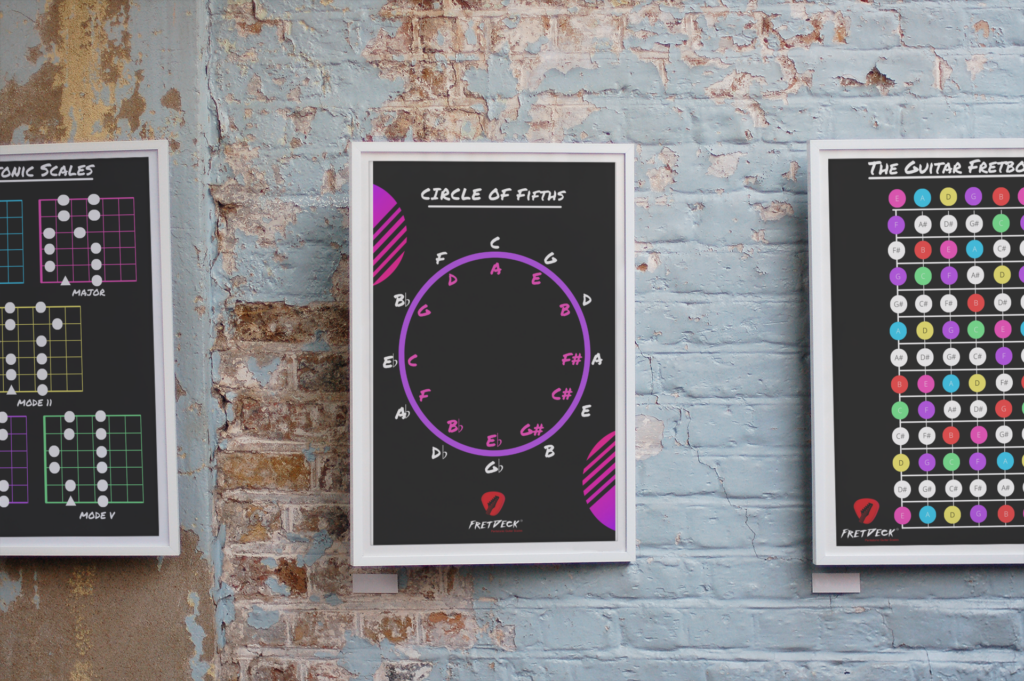

You’ve probably downloaded a guitar scale chart pdf before, hoping it would be the key to unlocking the fretboard. So why are you still stuck noodling in the same old box?
You see the dots, the fret numbers, and the root notes. It all seems so logical on paper. However, when you pick up your guitar, it feels like trying to navigate a foreign city with a map that’s missing all the street names. You can see the destination, but you have no real idea how to get there.
This isn’t your fault. The internet is flooded with promises of “ultimate” scale charts, but they all share the same fatal flaw. They show you a static snapshot, a single moment in time. They don’t teach you the system.
The “Chart Collector” Trap
Does your computer’s “Downloads” folder look like a graveyard of guitar ambitions? It’s likely filled with files named `pentatonic_all_positions.pdf`, `major_scale_modes.pdf`, and `blues_scale_licks.pdf`. You collected them, thinking more information was the answer.
However, the problem only got worse. Now you have dozens of charts, each with its own set of confusing boxes and patterns. You feel overwhelmed.
As a result, you revert to what you know: that one comfortable minor pentatonic box. It’s safe there. But it’s also a creative prison. Every solo starts to sound the same. You can play what’s on the chart, but you can’t create music with it. You can’t connect the boxes or transition smoothly up and down the neck.
The core issue is that a standard guitar scale chart pdf shows you the what but never the why. It gives you a shape to memorize but offers zero insight into how that shape connects to the next one, or how it relates to the chords you’re playing over. It’s like learning a few French phrases from a travel guide instead of understanding the language itself. You can order a coffee, but you can’t hold a conversation.
What If You Could See the Fretboard Instead of Just Memorizing It?
Most guitarists spend years guessing where to put their fingers. They memorize shapes without understanding why — and the second they try to improvise or learn a new song, they’re lost again.

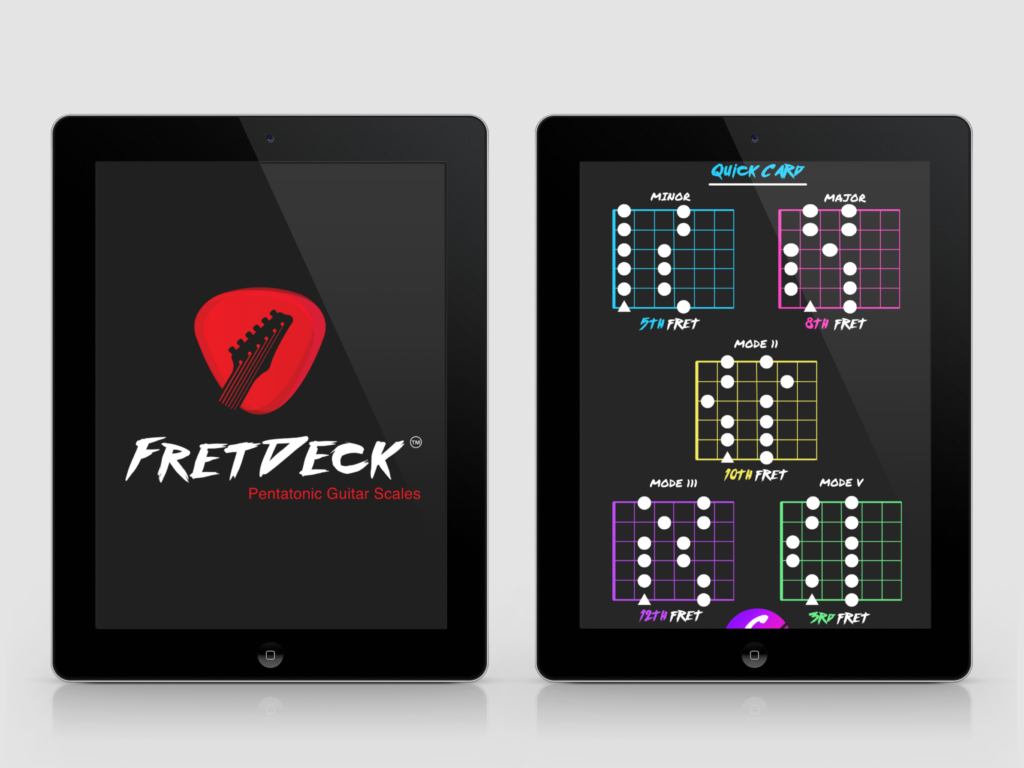
The FretDeck Practice Workstation changes that. It’s the interactive fretboard app that shows you exactly what to play, why it works, and how every note connects — so you finally understand the guitar instead of just copying tabs.
Whether you’re stuck in a rut, tired of noodling the same pentatonic box, or ready to unlock the entire neck — the FretDeck Practice Workstation gives you the visual roadmap to get there. All for just $14/month.
👉 Start Using the FretDeck Practice Workstation Now
The Shortcut: Thinking In Intervals, Not Shapes
Here’s the secret the pros know: they don’t think in rigid boxes. They think in intervals. An interval is simply the distance between two notes. This is the fundamental language of music that unlocks the entire fretboard.
For example, a major scale has a universal formula: Whole step, Whole step, Half step, Whole step, Whole step, Whole step, Half step (W-W-H-W-W-W-H). This formula is true for C major, G major, F# major—every single key.
A static PDF chart can’t teach you this dynamic relationship. It just shows you the fingering for A minor pentatonic in one position. But when you understand the interval formula, you can build any scale, starting on any note, anywhere on the neck. You’re no longer memorizing shapes; you are generating them on the fly because you understand the underlying structure.
This is the “weird” shortcut. It feels weird because it requires you to un-learn your dependency on chart shapes. Instead, you start seeing the fretboard as a grid of intervals. Consequently, the entire neck opens up. The “boxes” are still there, but now you see them as connected territories, not isolated islands.

How to Finally Move Beyond the Static Guitar Scale Chart PDF
Ready to make the shift? It starts with a simple exercise that no guitar scale chart pdf will ever show you. Forget all five positions of the pentatonic scale for a moment.
First, pick a single string, for instance, the low E string. Now, starting on the open E, play the major scale formula (W-W-H-W-W-W-H). A whole step is two frets, and a half step is one fret. You’ll play the open string, then the 2nd, 4th, 5th, 7th, 9th, 11th, and 12th frets. Say the interval names as you play: “Root, Major 2nd, Major 3rd, Perfect 4th…”
Do this until it feels natural. Then, try it on the A string. You’ll quickly notice the pattern is identical. You’re internalizing the sound and feel of the scale’s structure. Major guitar brands like Fender.com offer fantastic lessons that show these patterns, but the key is to build them from the interval formula yourself.
Next, try to build the scale across two strings. You’ll start to see how the standard “box” shapes are just a byproduct of this interval formula combined with the guitar’s tuning. Suddenly, the charts make sense on a much deeper level. You’re not just a “chart collector” anymore; you’re becoming a true musician who understands the fretboard.
What If You Could See the Fretboard Instead of Just Memorizing It?
Most guitarists spend years guessing where to put their fingers. They memorize shapes without understanding why — and the second they try to improvise or learn a new song, they’re lost again.
The FretDeck Practice Workstation changes that. It’s the interactive fretboard app that shows you exactly what to play, why it works, and how every note connects — so you finally understand the guitar instead of just copying tabs.
Whether you’re stuck in a rut, tired of noodling the same pentatonic box, or ready to unlock the entire neck — the FretDeck Practice Workstation gives you the visual roadmap to get there. All for just $14/month.
👉 Start Using the FretDeck Practice Workstation Now
Turning Static Dots into Musical Phrases
Knowing the scales is one thing. Making music with them is another entirely. This is where most players who rely on charts get permanently stuck. They can run a scale up and down at lightning speed, but their solos sound robotic and uninspired.
The solution is to stop practicing scales and start practicing music. Instead of playing notes one after another, try playing them in intervals like 3rds or 4ths. For example, in the C major scale (C, D, E, F, G, A, B), play C then E, then D then F, then E then G, and so on. Instantly, it sounds more like a melody.
Furthermore, the most critical step is connecting your scales to chords. A great solo doesn’t just float over the music; it interacts with the underlying chords. This practice is called chord tone targeting. It means you emphasize the notes of the current chord while using other scale tones as passing notes. An in-depth guide on how to learn guitar scales will help you make this crucial connection.
This is where an interactive tool becomes far superior to a PDF. For example, a visual tool like the FretDeck Practice Workstation can show you a scale pattern and simultaneously highlight the chord tones for the current chord in the progression. This makes the connection visual and immediate. You see exactly which notes will sound best, transforming your playing from guesswork into confident, melodic expression. You can read more about melodic phrasing in resources from top publications like Guitar World.
5 Actionable Drills to Escape the PDF Rut
1. The One-String Solo: Put on a simple backing track. Now, try to improvise a solo using only one string. This forces you to think melodically and horizontally, breaking your reliance on vertical box shapes.
2. Sing What You Play: Before you play a note from a scale, try to sing it. This connects your ear to your fingers. It’s one of the fastest ways to start playing what you hear in your head. It’s one of our top beginner guitar tips.
3. Connect Two Boxes: Take two adjacent pentatonic shapes you “know.” Instead of treating them as separate, find the overlapping notes. Spend your entire practice session just moving between those two boxes smoothly.
4. Target the 3rd: While improvising, consciously try to land on the 3rd of each chord as it changes. The 3rd (major or minor) defines the chord’s quality, and hitting it will make your solos sound instantly more professional.
5. Limit Yourself to Three Notes: Pick just three notes from a scale. For example, the root, the minor 3rd, and the 4th from the minor pentatonic. Improvise an entire solo using only those three notes. This forces you to be creative with rhythm and phrasing instead of just running up and down a stale pattern. This is a pillar of a best practice routine.
Your Questions Answered
What’s the most important scale to learn first?
The minor pentatonic scale. It’s simple, versatile, and found in countless rock, blues, and pop songs. But the key is to learn its formula (Root, b3, 4, 5, b7) and how it relates to the major scale, rather than just memorizing one position from a guitar scale chart pdf.
Are guitar scale charts completely useless?
Not at all! Think of them as a beginner’s map or a quick reference. They are excellent for getting a first look at a new scale’s shape. The danger comes from treating them as the final destination. Use them as a starting point, but immediately work on understanding the underlying interval structure to truly master the scale.
How do I connect scales to chords?
The magic is in “chord tone targeting.” Every chord is made of specific notes. When you’re soloing, the notes from the scale that are also in the chord will sound the strongest. For example, over a G major chord (G-B-D), the notes G, B, and D from your scale will sound like “home.” Use the other scale notes to travel between these strong points. Understanding this relationship is key to mastering any chord progression guide.
What If You Could See the Fretboard Instead of Just Memorizing It?
Most guitarists spend years guessing where to put their fingers. They memorize shapes without understanding why — and the second they try to improvise or learn a new song, they’re lost again.
The FretDeck Practice Workstation changes that. It’s the interactive fretboard app that shows you exactly what to play, why it works, and how every note connects — so you finally understand the guitar instead of just copying tabs.
Whether you’re stuck in a rut, tired of noodling the same pentatonic box, or ready to unlock the entire neck — the FretDeck Practice Workstation gives you the visual roadmap to get there. All for just $14/month.
👉 Start Using the FretDeck Practice Workstation Now
Related posts: