
You’ve probably downloaded a free guitar scale charts pdf hoping it would be the magic key to unlocking the fretboard. So many of us believe that having these diagrams will instantly make scales “click,” transforming our noodling into masterful solos.
However, you’ve likely discovered the harsh reality. The PDF sits on your desktop, a collection of dots and numbers that feels more like homework than music. You memorize a shape, play it up and down, but the second the backing track changes key, you’re lost.
This cycle is frustrating, and it keeps countless guitarists stuck. They know the shapes but can’t make music with them. The secret isn’t more charts; it’s a completely different way of seeing what those charts are trying to tell you.
The Static Trap of Scale Charts
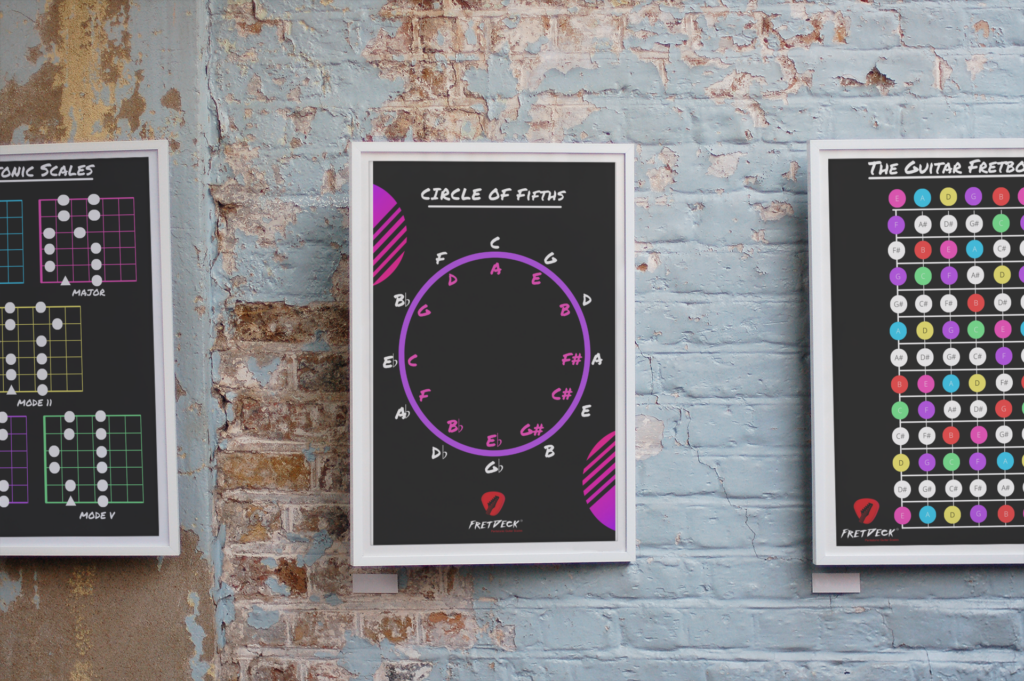
That folder of diagrams on your computer represents a common problem. You collect them because you believe knowledge is power. But a guitar scale charts pdf isn’t knowledge; it’s just raw data, and it’s presented in the worst possible way.
Think about it. The chart shows you a static “box” shape. It doesn’t tell you which notes are the most powerful to land on. It doesn’t show you how that box connects to the next one up the neck. As a result, your solos sound like you’re running up and down a ladder instead of telling a story.
This trap is why so many players plateau. They can play the minor pentatonic scale in one position until their fingers bleed, but they can’t improvise freely. They are prisoners of the box shape, unable to break out and navigate the fretboard with confidence. This is a common hurdle for new players, and many great beginner guitar tips focus on breaking this exact habit. The PDF becomes a crutch that actually hinders your growth.
What If You Could See the Fretboard Instead of Just Memorizing It?
Most guitarists spend years guessing where to put their fingers. They memorize shapes without understanding why — and the second they try to improvise or learn a new song, they’re lost again.
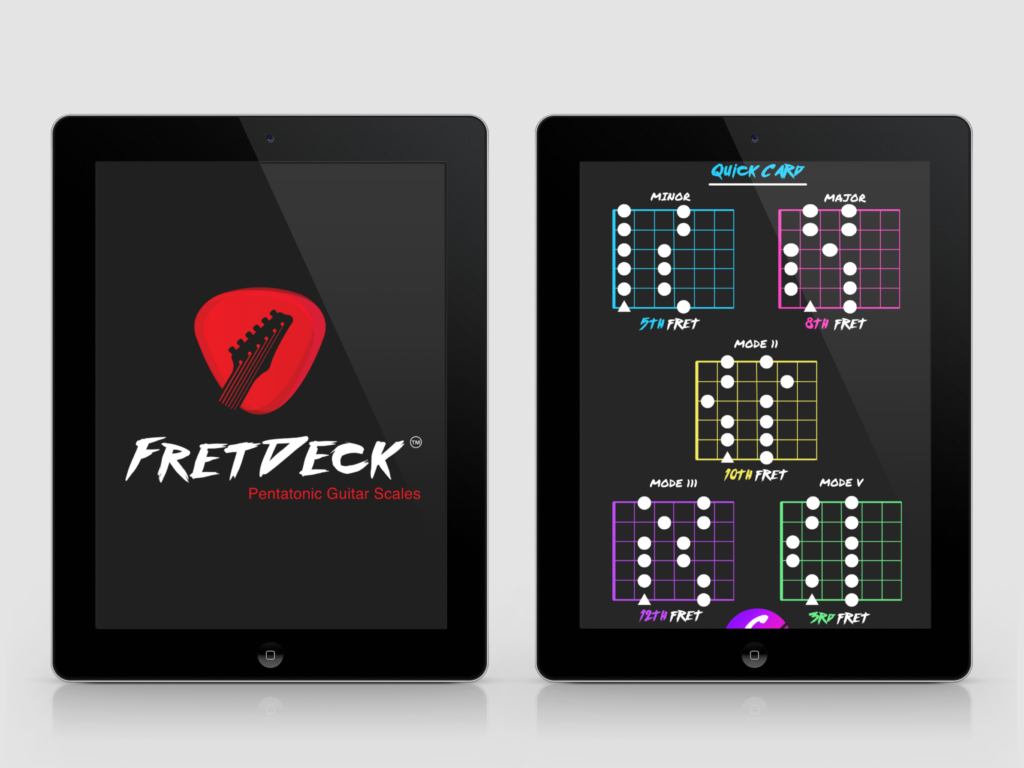
The FretDeck Practice Workstation changes that. It’s the interactive fretboard app that shows you exactly what to play, why it works, and how every note connects — so you finally understand the guitar instead of just copying tabs.

Whether you’re stuck in a rut, tired of noodling the same pentatonic box, or ready to unlock the entire neck — the FretDeck Practice Workstation gives you the visual roadmap to get there. All for just $14/month.
👉 Start Using the FretDeck Practice Workstation Now
The Shortcut: From “Shapes” to “Pathways”
The shortcut pros use isn’t a new, secret scale. Instead, it’s a mental shift. They stopped seeing scales as isolated boxes and started seeing them as interconnected pathways that cover the entire neck.
Imagine a map. Your guitar scale charts pdf is like a single, zoomed-in picture of one city block. You can see the buildings on that block, but you have no idea how the streets connect to the next block over, let alone the entire city.
A professional guitarist, on the other hand, sees the whole city grid. They know that the “road” they’re on (the scale) continues up and down the neck. They can effortlessly move from one position to the next because they aren’t “changing boxes”; they are simply continuing along the same path.
This is the fundamental difference. One player is trapped in a box. The other is free to roam the entire fretboard. They achieve this by focusing on how the patterns connect, not just the patterns themselves.
Why Your guitar scale charts pdf Fails at This
Your static PDF is the primary reason you are stuck thinking in boxes. It’s a flawed tool for a dynamic and musical process. Here is precisely why it holds you back from seeing the bigger picture.
First, a PDF is not interactive. It cannot show you the most important note in the entire scale: the root note. It just presents all the dots as equal, when in reality, your phrases should resolve to the root note for a sense of finality. A great resource from Fender’s own blog explains the power of the pentatonic scale, but even their charts are static.
Furthermore, a piece of paper can’t guide you from one position to the next. The “shortcut” is learning to slide seamlessly between a note in Box 1 and a note in Box 2. A PDF shows you Box 1 and Box 2 separately, leaving you to guess how they stitch together. This is where most players give up.
Finally, a guitar scale charts pdf is musically mute. It doesn’t connect the dots on the page to the sounds you need to hear in your head. True mastery comes when you can hear a melody and instantly know where to find those notes on the fretboard. Charts alone will never build that crucial ear-to-fretboard connection.
What If You Could See the Fretboard Instead of Just Memorizing It?
Most guitarists spend years guessing where to put their fingers. They memorize shapes without understanding why — and the second they try to improvise or learn a new song, they’re lost again.
The FretDeck Practice Workstation changes that. It’s the interactive fretboard app that shows you exactly what to play, why it works, and how every note connects — so you finally understand the guitar instead of just copying tabs.
Whether you’re stuck in a rut, tired of noodling the same pentatonic box, or ready to unlock the entire neck — the FretDeck Practice Workstation gives you the visual roadmap to get there. All for just $14/month.
👉 Start Using the FretDeck Practice Workstation Now
Building Your Fretboard GPS
So, how do you ditch the static charts and build this internal “Fretboard GPS”? You do it by focusing on connection points and intervals, not just memorizing finger placements.
The first step is to internalize the sound and feel of the scale. This goes beyond just running the pattern up and down. You need to sing the notes as you play them. This simple exercise starts building the bridge between your fingers, your ears, and your brain.
Next, you must learn to see the root notes everywhere. For any given key, say A minor, your job is to find every single ‘A’ note on the fretboard. These are your safe havens—your musical home base. Suddenly, the entire neck becomes anchored, not just one little box.
Then, you begin connecting the shapes. Instead of trying to learn all five pentatonic positions at once, just take two adjacent ones. Find the notes they share. Practice sliding between those two positions on a single string. This small exercise is the key to breaking out of the box. You’re no longer jumping between shapes; you’re flowing between them. To truly cement this, you must apply it to your playing, which is why a structured best practice routine is so important.
Interactive tools can accelerate this process immensely. For example, using a visual aid like the FretDeck workstation shows you these pathways in real-time, helping you build that mental map far faster than a static PDF ever could.
5 Steps to Escape the PDF Trap Forever
Ready to take action? Here is a practical, step-by-step process to move beyond relying on that old guitar scale charts pdf.
1. Master One Position, Musically. Before trying to connect anything, make music in one box. Put on a backing track and try to create simple, 3-note phrases. End your phrases on the root note. This teaches you control and musicality, not just speed.
2. Identify the “Connector” Notes. Look at two adjacent scale patterns. Find the notes on each string that are closest to each other. These are your bridges. For instance, the top note of a shape on the G string might be just two frets away from the bottom note of the next shape on the same string.
3. Practice Single-String Runs. Pick one string, for example, the B string. Now, play only the notes of the scale that fall on that single string, playing them all the way up the neck. This forces you to think horizontally and breaks the vertical box-shape habit instantly. Publications like Guitar World often feature lessons on this very concept.
4. Target and Land. As you improvise, give yourself a mission. For example: “I will start in Position 1 and land my phrase on the root note in Position 3.” This goal-oriented practice is infinitely more effective than mindless noodling. It actively builds your fretboard GPS.
5. Ditch the Chart. Once you start an exercise, put the chart away. Use your ear and your memory. It’s okay to make mistakes. The struggle to find the right note is what actually builds the strong neural pathways you need. The goal is to internalize the map, which you can’t do if you’re constantly looking at the paper. If you need a guide, you will find our guide to learning guitar scales very helpful.
Frequently Asked Questions
Are all guitar scale charts PDFs useless?
Not entirely. A guitar scale charts pdf can be a decent starting reference for seeing the basic shape for the first time. However, its usefulness ends there. Think of it as a dictionary. It can tell you what a word is, but it can’t teach you how to write a story. Use it to get the initial pattern, then immediately move to the dynamic practice methods described above.
What’s the best scale to learn first?
The minor pentatonic scale is overwhelmingly the best choice for your first scale. It’s used in countless rock, blues, and pop songs, so your ear is already familiar with its sound. More importantly, it has a simple, easy-to-finger pattern and sounds good over many different chords, making it very forgiving for improvisation.
How long does it take to move beyond charts?
This depends entirely on your quality of practice, not the quantity. Spending 20 minutes a day on focused, “connector” exercises will get you there much faster than two hours of mindless repetition. For most dedicated players, the shift from “box-thinker” to seeing the whole neck can start to click within a few weeks of deliberate practice. Consistency is the key.
What If You Could See the Fretboard Instead of Just Memorizing It?
Most guitarists spend years guessing where to put their fingers. They memorize shapes without understanding why — and the second they try to improvise or learn a new song, they’re lost again.
The FretDeck Practice Workstation changes that. It’s the interactive fretboard app that shows you exactly what to play, why it works, and how every note connects — so you finally understand the guitar instead of just copying tabs.
Whether you’re stuck in a rut, tired of noodling the same pentatonic box, or ready to unlock the entire neck — the FretDeck Practice Workstation gives you the visual roadmap to get there. All for just $14/month.
👉 Start Using the FretDeck Practice Workstation Now
The Simple Guitar Practice System That Eliminates Guesswork
So You Can Stop Stalling… and Start Sounding Better Every Time You Pick Up the Guitar
👉 Get 52 Practice Prompts Now!
Related posts: